
arc of the east tour kashmir
New Market Calcutta
Mother Masala Tours
A Historic Marketplace of Trade, Food and Everyday Life
New Market, officially Sir Stuart Hogg Market, opened on Lindsay Street in central Calcutta on 1 January 1874, during British rule. Designed by Richard Roskell Bayne and built by Mackintosh Burn & Company, it was established to serve the European population of Calcutta. Sir Stuart Hogg, a city commissioner, gave the market its official name in 1903. After India gained independence in 1947, the name New Market remained popular. Today, the surrounding shopping district serves people from across Calcutta, a city with more than four million residents within its municipal limits. New Market Calcutta
New Market Calcutta: Timeless Artifacts
New Market is a working shopping complex rather than a religious site or museum. Its most recognisable historic feature is the clock tower, installed during the 1930s after being brought from Huddersfield, England. Inside, the covered lanes are arranged around different types of merchandise, including clothing, footwear, household goods, flowers, spices, meat, fish and cheese. The original red-brick structure reflects the market's nineteenth-century origins, although later repairs and additions have changed parts of the site. As you walk through, see how the historic framework continues to accommodate everyday trade.
Ancient Mosaics: Impeccable Craftsmanship
The market dates from the nineteenth century, so its construction belongs to the colonial period rather than antiquity. Richard Roskell Bayne designed the original building, which opened on 1 January 1874. Mackintosh Burn & Company carried out the construction. The red brickwork, covered passages and historic clock tower give the complex its distinctive appearance. The tower, installed in the 1930s, was imported from Huddersfield in England. Instead. Notice the practical composition of the covered shopping lanes, where the original building design organised many different trades within one municipal marketplace. New Market Calcutta
The Pulse of the Local Community
New Market forms part of everyday commercial life. Shopkeepers sell clothing, leather goods, footwear, kitchen utensils, flowers, fresh produce, spices and specialty foods. Some family businesses have traded here for generations, while other stalls cater to changing shopping needs. The wider district includes people from different religious and linguistic communities, reflecting Kolkata's varied population. Market work involves negotiating prices, receiving deliveries, arranging merchandise and maintaining customer relationships throughout the day. You'll see regular shoppers alongside people searching for particular fabrics, ingredients or gifts. The atmosphere can become hectic during major shopping periods, particularly before Durga Puja and Christmas. Each section has its own activity and familiar trading routines.
Capturing the Magic: A Photographic Haven
The historic clock tower, red-brick frontage and covered shopping lanes provide distinctive photographic subjects. You'll find colourful flower displays, neatly arranged spices, fabric stacks and traditional food counters throughout the complex. Look for the contrast between the original building and later additions. Ask permission before photographing shopkeepers or customers, and check restrictions around individual stalls. New Market Calcutta
A Culinary Journey: Savor the Flavour
Food shopping is an important part of the experience here. Look for Bandel cheese, a small, traditionally Portuguese-influenced cheese associated with Bandel in West Bengal. It is commonly sold in smoked and unsmoked forms, with a salty flavour. Another well-known stop is Nahoum & Sons, the Jewish bakery established by Nahoum Israel Mordecai in 1902. Its fruit cake is especially associated with Christmas in Kolkata. Around the market, food counters sell spices, pickles, tea, dried fruit and other ingredients used in Bengali cooking. We'll have opportunities to explore regional flavours and learn how different products are prepared, preserved and used in everyday meals.
Festivals of Devotion: Honouring the Sacred and the Divine
Durga Puja is one of te major annual celebrations, honouring the Goddess Durga and her victory over the buffalo demon Mahishasura. The festival follows the Hindu lunar calendar, generally falling in September or October, with the principal celebrations spanning several days. Dates change each year, so check the calendar for dates. New Market becomes an important shopping destination in the lead-up, when families purchase clothing, gifts, footwear and food for the celebrations. Christmas brings another seasonal tradition, with shoppers seeking cakes and festive treats from established businesses such as Nahoum & Sons. These are citywide celebrations rather than festivals organised exclusively by the market. New Market Calcutta
The Connection With the Gods
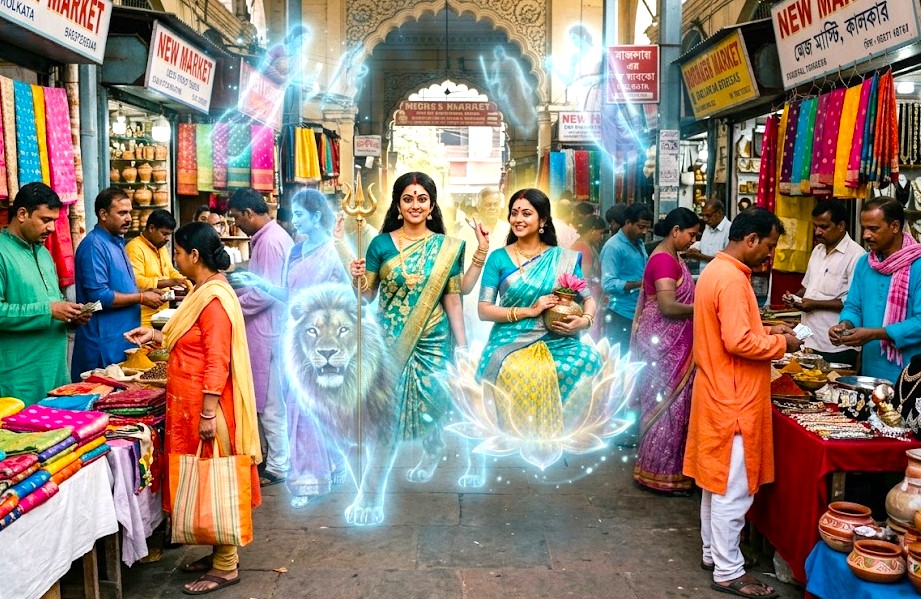
New Market is a commercial site, not a temple dedicated to a particular deity. However, its trading calendar reflects the religious traditions followed throughout Calcutta. Durga Puja honours Goddess Durga, who defeats Mahishasura in Hindu mythology, symbolising the triumph of good over evil. Lakshmi, associated with prosperity, is also worshipped by many Hindu households, including during Lakshmi Puja after Durga Puja. These celebrations influence purchases of clothing, household goods, flowers and sweets. Calcutta's population includes Hindu, Muslim, Christian and other religious communities, and the surrounding district serves people with varied customs.
Serendipitous Meetings: Beyond the Main Path
Exploring the surrounding lanes gives us a chance to find specialist traders and products that are easy to miss from the main entrance. Look for fabric merchants, leather goods, flower sellers, spice counters, bakeries and shops supplying kitchen utensils. Nahoum & Sons offers a particularly interesting connection with Kolkata's Baghdadi Jewish community and its history of trade. Elsewhere, vendors arrange ingredients, preserve foods and prepare goods for everyday customers.
Resilience and Renewal: Overcoming Adversity’s
Fire has repeatedly tested this historic marketplace. On 13 December 1985, a major blaze destroyed a substantial part of the original building, including sections of its north-western area. The damaged sections were rebuilt, and a new complex followed. On 20 July 2011, another fire affected part of the market near the clock tower. Further fires were reported in sections of the wider market in May 2015. Each incident raised concerns about electrical systems, firefighting equipment and access for emergency crews. Traders continued their work through periods of disruption, while rebuilding altered parts of the original structure. New Market Calcutta
Explore, Discover, Connect: Grab Your Toothbrush, Lets Go
We're heading into central Calcutta to explore a marketplace where historic brickwork, specialist shops and everyday trading come together. Enter through the Lindsay Street area and follow the covered lanes, looking for fabrics, footwear, household goods, spices and familiar local food products. The historic clock tower offers a useful landmark as you move between sections. Allow time to compare prices, stop at Nahoum & Sons if it is open, and explore the adjoining streets for further shops and food counters. Comfortable footwear will help, as some passages can become crowded and movement may be slow during festival shopping periods.
Symphony of Generosity: Offerings from Wanderers to Residents
Shopping here creates direct exchanges between customers and local traders. Purchases support shop owners, employees, suppliers and the wider network that brings clothing, food, household goods and specialty products into the market. Buying from an established bakery or choosing goods from a specialist stall can also help sustain longstanding businesses. In return, you'll gain access to products that reflect Calcutta's trading history, along with practical knowledge about ingredients, fabrics and local shopping customs. Fair bargaining is part of many transactions, respect the work involved and avoid treating every purchase as a contest for the lowest price. Spending thoughtfully allows us to take home useful goods while contributing to the livelihoods connected with this historic commercial district.
Step Inside The Story - View All Tour Itineraries & Details

We’re here to offer genuine, thoughtful guidance if your interested in travelling to India. As a small, dedicated team, we pay close attention to every detail so you can focus on enjoying the experience while we take care of the planning. We believe the best trips begin when someone truly listens to what you want and how you like to travel, so the journey feels right for you and contributes to a happy, positive group on tour. Our communication stays clear, straightforward, and respectful at every step, with the goal of helping you feel understood, supported, and confident from first contact to the end of your journey.
Click Catherine Frith - About The Founder
Click Discover Life Travel - All Tours and More
Click Why We Are Different - Unique, Safe, Transparent