Unique Insights Into The Deities Of India
Lakshmi: Radiance of Wealth
Discover Life Travel
Emergence from the Cosmic Ocean
During a celestial event of immense importance, the Samudra Manthan or the Churning of the Ocean of Milk, the gods and demons worked together to obtain the nectar of immortality. From the swirling cosmic sea emerged fourteen divine treasures. One of these was a goddess of breathtaking beauty, standing on a fully bloomed lotus, radiating a golden light. The story of Lakshmi's birth from the Churning of the Ocean is a tale of auspicious manifestation. Her appearance, fully formed and resplendent, signified the return of fortune, beauty, and divine grace to the cosmos, and all beings, celestial and terrestrial, rejoiced at her divine emergence. Lakshmi Radiance of Wealth
Potent Symbols of Abundance: Lakshmi Radiance of Wealth
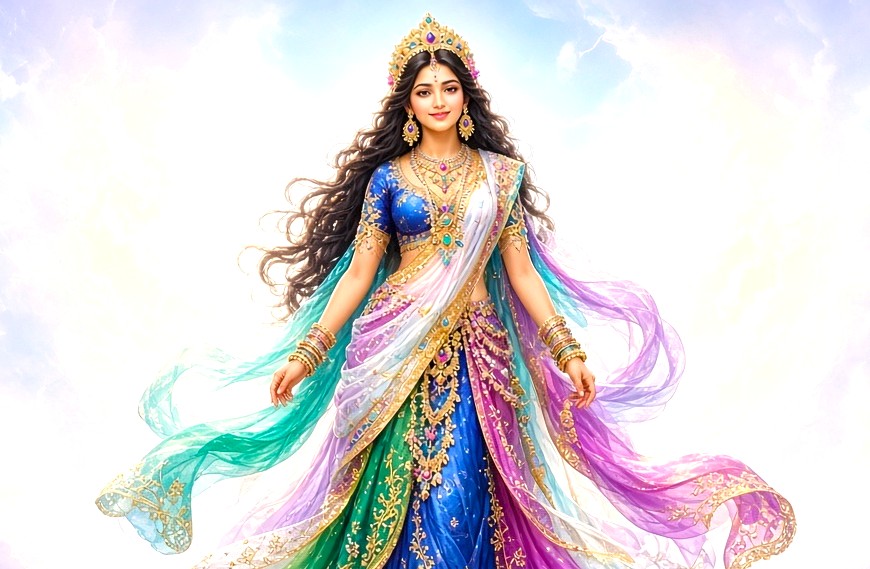
Every element associated with Lakshmi is a powerful symbol of prosperity and spiritual well-being. The symbolism of the lotus flower represents purity, beauty, and spiritual enlightenment; she blossoms in muddy waters, showing that purity can arise from any circumstance. The gold coins continuously flowing from her hand signify limitless material and spiritual wealth. The two or four elephants often shown with her represent royal power and wisdom, and when they are shown spraying water, it symbolizes the cleansing of spiritual impurities. Her red saree, adorned with gold embroidery, represents continuous creative activity and the power to grant wealth.
The Ultimate Divine Couple
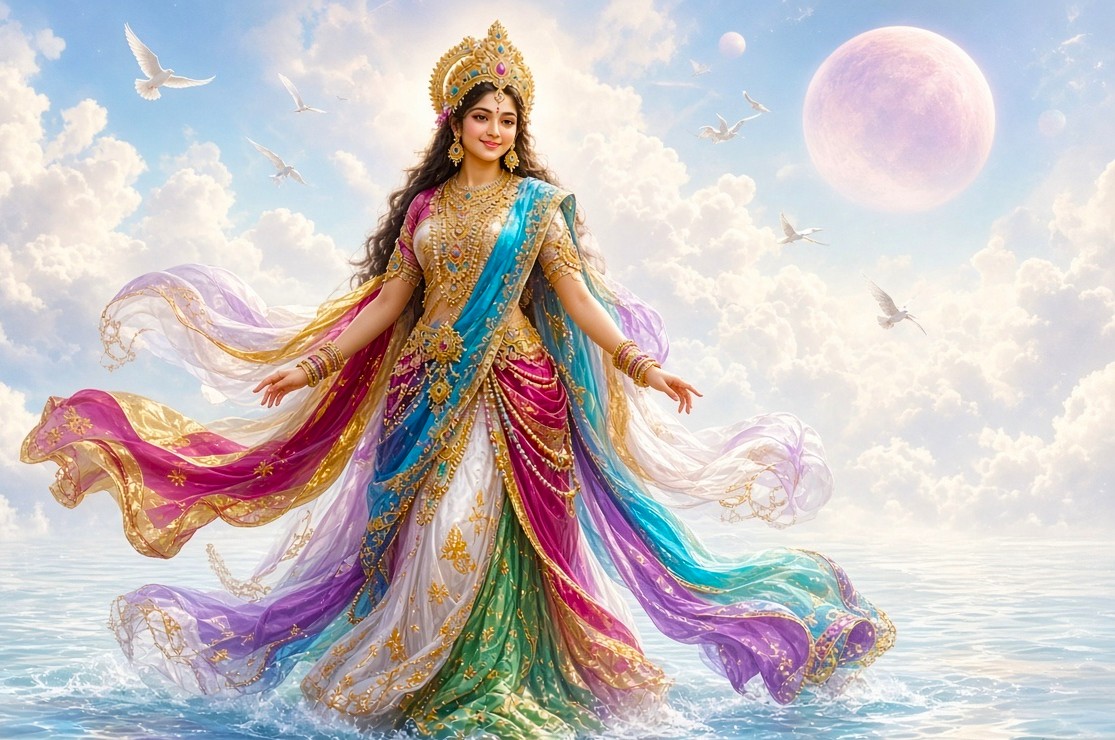
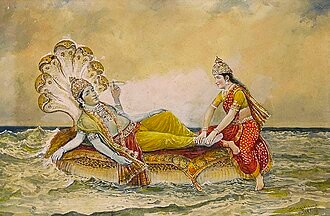
Lakshmi is the eternal consort of Vishnu, the preserver of the universe. The divine relationship of Lakshmi and Vishnu is the archetypal bond of divine love, harmony, and righteousness. She is the energy (Shakti) that gives him the power to maintain cosmic order. While Vishnu represents the eternal truth and dharma, Lakshmi embodies the means to achieve it: wealth, beauty, fertility, and grace. Their union is inseparable; where there is Vishnu, there is Lakshmi. She has no parents in the traditional sense, having emerged from the cosmic ocean, symbolizing her as a self-manifested force of auspiciousness. Lakshmi Radiance of Wealth
Born of Radiance, Wed to Truth
Upon her divine emergence from the Ocean of Milk, Lakshmi was presented to the assembly of gods and demons. Holding a garland of victory, the varmala, she surveyed all the celestial beings. The story of Lakshmi choosing Vishnu as her husband is deeply symbolic. She chose the righteous and serene Vishnu, the preserver of dharma, over all others. This act signifies that true prosperity and fortune will only reside where there is righteousness, truth, and cosmic order. Her "childhood" was this moment of glorious manifestation, and her "marriage" was the immediate, eternal union with the principle of cosmic preservation.
The Great Tale of Sudama
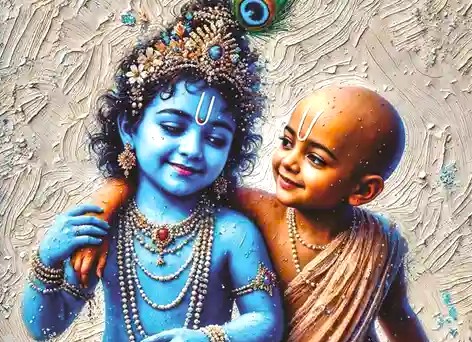
A well-known story illustrates Lakshmi’s grace acting through her consort, Vishnu. The story of Krishna and his poor friend Sudama is a beautiful lesson in devotion. Sudama, living in extreme poverty, visited his childhood friend, Lord Krishna (an avatar of Vishnu), bringing a humble gift of flattened rice. Krishna received him with immense love and honor. Sudama, shy and overwhelmed, was unable to ask for help. Upon returning home, he found his small hut transformed into a golden palace, filled with every comfort and abundance. This miracle was the silent blessing of Goddess Lakshmi, bestowed upon the deserving devotee through the grace of Lord Vishnu.
The Wise Owl and Divine Sounds
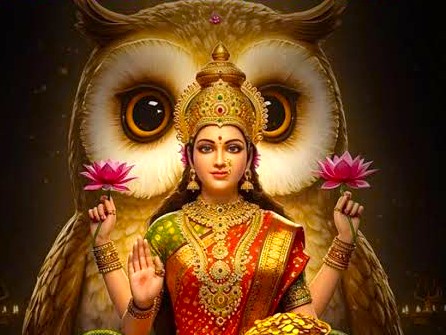
Lakshmi's choice of vehicle is deeply symbolic and instructive. The meaning of the owl as Lakshmi's vahana is multifaceted. The owl, a nocturnal bird, can see clearly in the darkness, representing the wisdom to see beyond the veil of ignorance and to find knowledge even in adversity. It encourages her devotees to seek spiritual wealth, which shines brightest when the material world is dark. She is associated with the auspicious sound of the shankha (conch), which is one of Vishnu's primary emblems. Its sound is believed to purify the environment and attract positive, prosperous vibrations. Lakshmi Radiance of Wealth
Triumph Over Misfortune
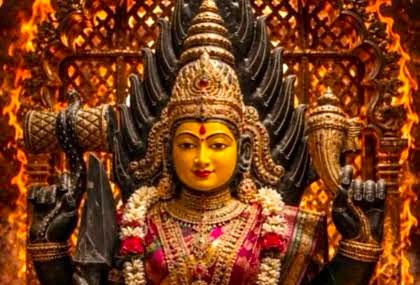
Lakshmi's triumph is a gentle yet powerful victory over lack and suffering. Her primary "war" is a constant, benevolent struggle against her antithesis, Alakshmi, the goddess of misfortune, strife, and poverty. The spiritual victory of Lakshmi over Alakshmi is achieved through cleanliness, hard work, righteousness, and devotion. Where there is light, cleanliness, harmony, and diligent effort, Lakshmi resides, and Alakshmi naturally departs. Her triumph is the establishment of shubha labha - auspicious prosperity - in the homes and hearts of her devotees, replacing discord with harmony and scarcity with abundance, both materially and spiritually.
Eternal Union Across Incarnations
As the divine consort of Vishnu, Lakshmi's existence is eternally linked to his. She is beyond the cycle of ordinary death, representing an everlasting principle of prosperity. The story of Lakshmi's incarnations as Sita and Radha shows her unwavering devotion. Whenever Vishnu descends to Earth as an avatar to restore dharma, Lakshmi incarnates alongside him to be his consort and support his mission. She was born as Sita to be the wife of Rama, as Radha to be the divine love of Krishna, and as Rukmini to be his queen. This eternal union demonstrates that divine energy and divine consciousness are forever inseparable.
Her Message of Righteous Prosperity
Lakshmi's core message is that wealth is a divine tool meant to support a righteous life. The empowering message from Goddess Lakshmi about wealth is that prosperity should be acquired through honest, diligent effort and used for the good of oneself, one's family, and society. She encourages generosity, charity, and the pursuit of both material and spiritual well-being. She teaches that true abundance is a balanced state that includes health, family, knowledge, and inner peace, not just monetary wealth. Her message is a call to create a prosperous and harmonious life founded on the principles of dharma.
The Golden Ray of Abundance
As the embodiment of the universe's creative and life-sustaining frequencies. She is most powerfully connected to the Anahata (Heart) Chakra, for love and grace, and the Manipura (Solar Plexus) Chakra, for willpower and prosperity. The key frequency she embodies is that of abundance, beauty, harmony, and effortless grace. Her aura radiates the magnificent golden ray of divine prosperity and enlightenment. Meditating on her and this golden light helps to heal financial anxieties, attract opportunities, and fill one's energetic field with the vibration of success, beauty, and divine favor. Lakshmi Radiance of Wealth
The Power of the Blooming Lotus
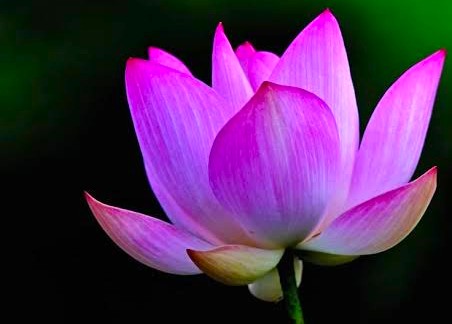
Lakshmi is a peaceful, benevolent deity who does not wield destructive weapons. Her power is creative, nurturing, and life-affirming. The symbolism of the lotus as Lakshmi's divine instrument is key to understanding her power. The lotus represents her ability to create purity and beauty from any environment. She uses her divine grace as her "weapon" against poverty and suffering. Her power lies in her blessings, which she bestows with an open hand. The blooming lotus is her promise that spiritual growth and prosperity can be achieved by anyone, regardless of their background, if they live a life of purity and devotion.
Venus, Fridays, and Sacred Geometry
Devotion to Lakshmi is intricately woven into the cosmic calendar and sacred patterns. The astrological planet associated with her is Venus, which governs love, beauty, luxury, comfort, and wealth. Fridays (Shukravar) are considered her most sacred day of the week, an auspicious time for her worship. The most powerful sacred geometric diagram for invoking her energy is the Sri Yantra, the ultimate symbol of divine abundance. Worshipping Lakshmi during the auspicious Hora of Venus on a Friday, while meditating on the Sri Yantra, is considered an extremely powerful practice for attracting her divine grace. Lakshmi Radiance of Wealth
The Eight Forms of Divine Wealth
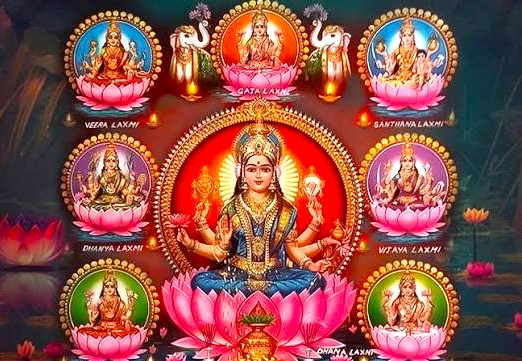
To show the multifaceted nature of prosperity, Lakshmi is worshipped in a group of eight divine forms. The story and meaning of the Ashtalakshmi mantras reveal that true wealth is more than just money. These eight forms are: Adi Lakshmi (the primordial mother), Dhana Lakshmi (monetary wealth), Dhanya Lakshmi (agricultural wealth), Gaja Lakshmi (power and royalty), Santana Lakshmi (progeny and family), Veera Lakshmi (courage and strength), Vidya Lakshmi (knowledge and wisdom), and Vijaya Lakshmi (victory and success). Worshipping the Ashtalakshmi provides a holistic path to achieving a balanced and truly abundant life.
Alakshmi, The Shadow of Misfortune
To appreciate light, one must understand darkness. The story of Alakshmi, the elder sister of Lakshmi, represents the opposite of all that Lakshmi embodies. Alakshmi is the goddess of poverty, strife, discord, and misfortune. It is believed that she enters homes that are unclean, where people are lazy, quarrelsome, or dishonest. The two sisters have an agreement: Lakshmi will only reside in places that are pure, harmonious, and righteous. Therefore, by keeping one's home and heart clean and engaging in diligent work, one naturally welcomes Lakshmi and causes Alakshmi to depart.
The Giver of Spiritual Wealth
While she is famous for material blessings, her greatest gift is spiritual abundance. The role of Lakshmi in granting spiritual prosperity is paramount. She is the giver of Vidya (divine knowledge), a clear intellect, and a peaceful mind. Her grace removes the "poverty of the soul" - ignorance, anxiety, and a lack of purpose. As the consort of Vishnu, she guides devotees on the path of dharma, helping them to accumulate the true wealth of good karma, devotion, and a deep connection to the divine. This inner prosperity is considered far more valuable and enduring than any external riches she can bestow. Lakshmi Radiance of Wealth
The Celebration of Light: Diwali
The most important festival associated with the goddess is the grand festival of lights. The significance of worshipping Lakshmi during the Diwali festival is central to the celebration. On the new moon night of Diwali, homes are meticulously cleaned and decorated with lamps (diyas) and lights to welcome her presence. It is believed that on this night, the goddess visits the homes of her devotees, bestowing blessings of wealth and prosperity for the year ahead. The light symbolizes the victory of good over evil and the dispelling of spiritual darkness, creating the perfect environment for her divine grace to enter.
Incarnations Alongside Her Lord
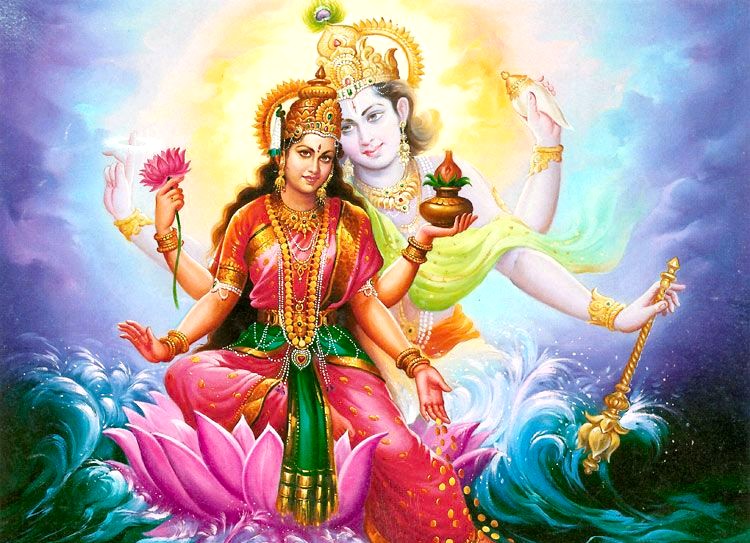
Lakshmi's devotion to Vishnu is so complete that she follows him in every earthly mission. The story of Lakshmi's avatars Sita, Radha, and Rukmini demonstrates her eternal role as his divine partner. When Vishnu incarnated as the righteous prince Rama, she was born as Sita, the epitome of purity and wifely devotion. When he came as the divine cowherd Krishna, she manifested as Radha, his supreme love and counterpart in the divine play (lila), and also as Rukmini, his chief queen. These incarnations highlight her adaptability and her unchanging role as the source of strength and grace for the preserver of the universe. Lakshmi Radiance of Wealth
The Gaja Lakshmi Abhishekam Ritual
One of the most powerful iconographic representations shows the goddess being honored by celestial beings. The symbolism of the Gaja Lakshmi Abhishekam depicts Lakshmi seated on a lotus while two elephants stand beside her, pouring sacred water over her from golden vessels. This image represents a royal consecration, affirming her status as the supreme goddess of wealth and sovereignty. The elephants symbolize royal authority and the rain-giving clouds, which bring fertility and abundance to the land. This ritual bath (abhishekam) is a powerful symbol of purification, renewal, and the bestowal of divine grace and prosperity upon the world.
Step Inside The Story - View All Tour Itineraries & Details

We’re here to offer genuine, thoughtful guidance if your interested in travelling to India. As a small, dedicated team, we pay close attention to every detail so you can focus on enjoying the experience while we take care of the planning. We believe the best trips begin when someone truly listens to what you want and how you like to travel, so the journey feels right for you and contributes to a happy, positive group on tour. Our communication stays clear, straightforward, and respectful at every step, with the goal of helping you feel understood, supported, and confident from first contact to the end of your journey.
Click Catherine Frith - About The Founder
Click Discover Life Travel - All Tours and More
Click Why We Are Different - Unique, Safe, Transparent