Unique Insights Into The Deities Of India
Mahishasura: Tenacious Demon King
Discover Life Travel
The Buffalo Demon Born of a Curse
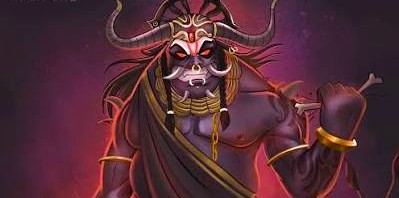
The origin of the great Asura, Mahishasura, is a tale of ascetic power, a potent curse, and a lust for power. His father was Rambha, the king of the Asuras. Desiring a son who would be invincible, Rambha performed severe penance to the fire god, Agni. When he saw a beautiful female water buffalo (mahishi), he was filled with desire and mated with her. However, another male buffalo, enraged, killed Rambha shortly after. In his dying moments, Rambha's boon from Agni took effect. From the womb of the female buffalo, a being was born who was part man and part buffalo, possessing immense strength and a fierce, demonic nature. This divine origin story of the demon king Mahishasura created a powerful being destined to challenge the gods themselves. Mahishasura Tenacious Demon King
Mahishasura Tenacious Demon King: The Conquest of the Three Worlds
Unlike the gods who reside in a single celestial abode, Mahishasura's location was wherever he conquered. His story begins in Patala, the netherworld kingdom of the Asuras. However, his ambition knew no bounds. After consolidating his power and amassing a colossal demonic army, his goal was the conquest of all three worlds. His main triumph was the successful invasion and capture of Svarga Loka, the celestial heaven of the gods. By driving out Indra and the Devas, he usurped the heavenly throne. For a time, Mahishasura's location was the very court of Indra, from where he ruled the cosmos, plunging the universe into an age of adharma and demonic oppression.
The Buffalo Head of Unbridled Ego
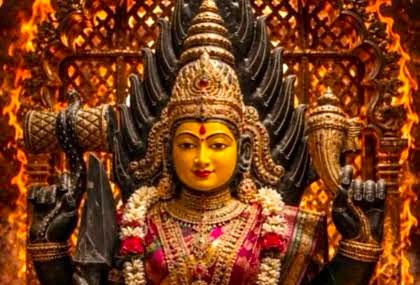
The symbols of Mahishasura are potent emblems of brute force, uncontrolled ambition, and the dangers of a runaway ego. His most defining symbol is his own shapeshifting buffalo form, a symbol of tamasic power. The buffalo represents immense, grounded, and stubborn strength, but when uncontrolled, it becomes a force of blind destruction. His mighty mace or club symbolizes his reliance on brute force over wisdom. The darkness and chaos that followed his reign are symbolic of the cosmic imbalance caused when ego and selfish desire are allowed to rule without check. He is the ultimate symbol of the powerful but ignorant ego that believes it is invincible. Mahishasura Tenacious Demon King
The Demonic Lineage of an Asura King
Mahishasura's family is one born of demonic ambition and mystical power. His father was Rambha, the powerful king of the Asuras, whose penance was the catalyst for his birth. His mother was a she-buffalo, who was actually a cursed princess named Shyamala. This unique parentage gave him the bloodline of an Asura king and the physical form and strength of a mighty buffalo. While not having a traditional divine family, his "children" were his massive demonic armies, led by fearsome generals like Chikshura and Tamra. His lineage was not one of piety, but one defined by a relentless and hereditary quest for power over the gods. Mahishasura Tenacious Demon King
A Youthful Rise to Demonic Supremacy
Born with immense power, he wasted no time in establishing his dominance. The story of Mahishasura's rise to power among the Asuras was swift and brutal. His unique ability to shapeshift at will made him an unpredictable and terrifying warrior. He could switch between his formidable buffalo form and his powerful human-like demon form in the blink of an eye. He challenged and defeated all other powerful Asuras, consolidating their armies under his single, undisputed command. His youth was not one of study, but of conquest and subjugation, forging a unified and powerful demonic empire with one single goal: the overthrow of the Devas.
The Boon of Invincibility from Lord Brahma
To fulfill his ambition of conquering the heavens, he knew he needed a divine advantage. The story of Mahishasura's penance to the creator god Brahma is a classic tale of a boon with a fatal loophole. He performed intense austerities for thousands of years, standing on one leg, until a pleased Brahma appeared to grant him a wish. Mahishasura, filled with arrogance, asked for the boon of immortality. When Brahma refused, he cleverly asked for a boon that he could not be killed by any man or god. In his hubris, he never considered that a woman could possibly possess the power to defeat him. Brahma granted this boon, making Mahishasura virtually invincible. Mahishasura Tenacious Demon King
The War Cry of the Conquering Demon
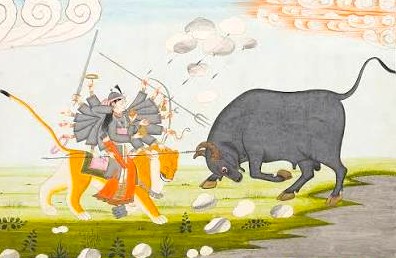
Mahishasura does not ride a divine vehicle: his own monstrous buffalo form is his transport and his weapon. The symbolism of Mahishasura being his own powerful vehicle shows that his power comes from his own raw, physical nature. He thunders across the battlefield like a living battering ram, his hooves shaking the very foundations of the earth. His musical instrument is not a flute or a conch of auspiciousness, but the terrifying war cry of the demonic horde. The roar from his buffalo form and the cacophony of his demonic army were instruments of fear, designed to demoralize his enemies and announce the arrival of chaos and adharma.
The Overthrow of Heaven's Divine King
Armed with Brahma's boon, Mahishasura was ready for his ultimate conquest. The story of his victory over Indra and the Devas was a humiliating defeat for the gods. He led his colossal army and stormed the gates of Amaravati, Indra's capital. The Devas fought bravely, but their celestial weapons were useless against the boon-protected demon king. One by one, they were defeated. Indra himself was forced to flee his own throne. Mahishasura's greatest triumph was this successful usurpation of heaven. He cast the gods out, making them homeless refugees, and installed himself as the new, undisputed king of the universe.
The Final Battle Against the Great Goddess
The reign of Mahishasura ended when the combined rage of the displaced gods manifested as a single, supreme being. The epic story of his death at the hands of Goddess Durga is the central legend of the Devi Mahatmyam. The gods, having pooled their divine energies, created the magnificent warrior goddess Durga, bestowing upon her their greatest weapons. The battle between Durga, riding her lion, and the shapeshifting Mahishasura raged for nine days and nine nights. He changed his form from a lion to an elephant to a mighty warrior, but she countered his every move. Mahishasura Tenacious Demon King
The Decapitation by the Divine Trident
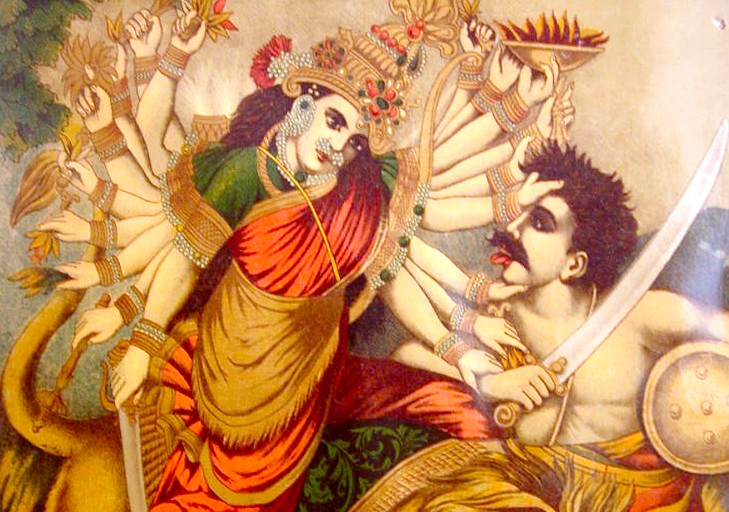
On the tenth and final day of the battle, the goddess brought the conflict to its dramatic conclusion. The story of Mahishasura's final moments and decapitation is a moment of supreme divine victory. As he shifted back into his most powerful form, the monstrous buffalo, Durga pinned him to the ground with her foot. As he tried to emerge from the buffalo's mouth in his human form, the goddess, with a mighty thrust, plunged her trident into his chest. With a swift movement of her divine sword, she then severed Mahishasura's head from his body, finally killing the invincible demon and liberating the three worlds from his tyranny. This victory is celebrated annually as Vijayadashami.
A Cautionary Tale of Ego and Hubris
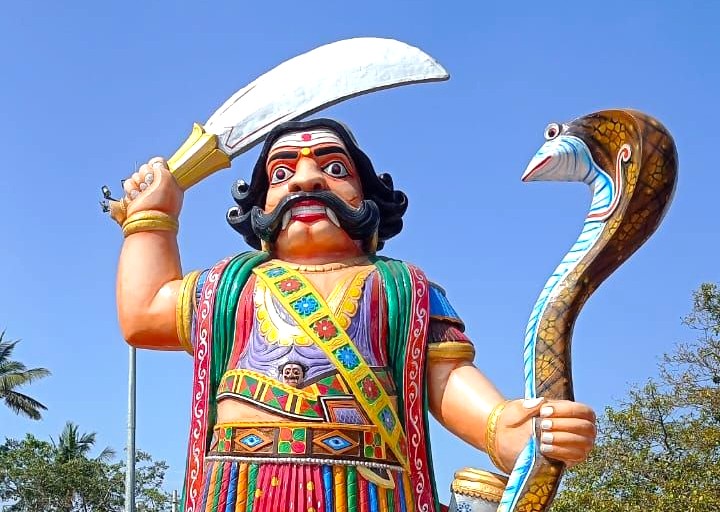
Mahishasura's life serves as the ultimate cautionary tale against the dangers of an unchecked ego. The powerful message for humanity from Mahishasura's story is that no matter how much power, wealth, or strength one accumulates, it is all meaningless without wisdom and humility. His fatal flaw was his hubris; his belief that he was invincible and his disdain for the power of the feminine. His story teaches that ego, when inflated by power, leads to blindness and ultimately to self-destruction. He is a powerful reminder that all worldly power is temporary and that true strength lies in respecting the cosmic order, not trying to dominate it.
The Muladhara Chakra and the Ray of Tamasic Ego
Mahishasura represents the most primal, earthly, and deluded forms of energy. He is the embodiment of the Muladhara (Root) Chakra when it is corrupted by tamasic (dark) energy. This chakra governs survival and security, but when perverted, it leads to greed, hoarding, and brute force. The key frequency that Mahishasura embodies is that of dense, ego-driven materialism. His auric field is a murky, dark brown or black ray, representing ignorance, stubbornness, and a complete disconnection from higher consciousness. His energy is the gravitational pull of the ego that keeps the soul trapped in the lowest states of awareness. Mahishasura Tenacious Demon King
The Mace of Brute, Unthinking Force
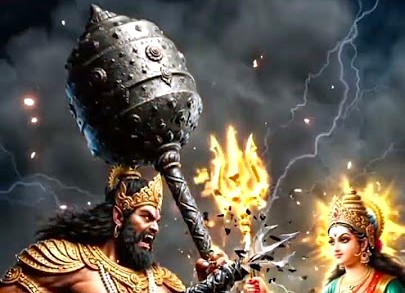
The primary weapon wielded by Mahishasura in his humanoid form is a colossal mace or club. The symbolism of Mahishasura's mace as a weapon of brute force is a direct reflection of his character. Unlike the divine, mantra-powered weapons of the gods, the mace is a tool of pure physical strength. It is used to smash, crush, and destroy through sheer, overwhelming power. It represents his approach to every problem: not through intellect, strategy, or righteousness, but through the application of raw, physical domination. It is the weapon of a bully, the tool of an ego that believes might make right.
Astrology and the Shadow of the Ego
While not a divine being to be worshipped, Mahishasura's energy is reflected in the malefic and shadow aspects of astrology. His nature resonates with the negative qualities of the planet Mars, such as aggression, violence, and uncontrolled anger. More profoundly, he is connected to Rahu, the north node of the moon, which represents insatiable worldly desire, materialism, and the illusion that leads to a puffed-up ego. His sacred geometry is a chaotic, asymmetrical shape, representing the disruption of divine order and the imbalance he created in the cosmos. His story serves as a reminder of the dangers of an afflicted Mars or Rahu in one's astrological chart.
The Vanquishing of a Local Tyrant
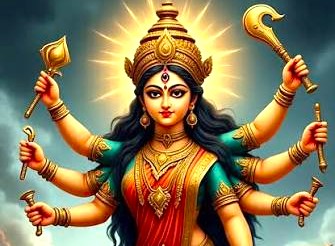
The great battle is often localized in stories that celebrate the Goddess's victory. The city of Mysore in Karnataka gets its name from Mahishasura, and Chamundi Hills overlooking the city is believed to be the very spot where the final battle took place. Local legends in Mysore tell of the terror the people faced under the rule of a monstrous "buffalo-king" who terrorized the region. The arrival of the goddess Chamundeshwari (a form of Durga) and her subsequent slaying of the demon is seen as a historical and spiritual liberation of the land itself, making the goddess the eternal protector of the city. Mahishasura Tenacious Demon King
The Ultimate Shapeshifter of Illusion
One of Mahishasura's most formidable powers was his ability to change his form at will. His role as a great shapeshifter in his battle against Durga was his primary strategy. During the epic duel, he constantly changed his form to confuse and overwhelm the goddess. He became a mighty lion, a great elephant, a fierce warrior with a thousand arms, and finally, the colossal buffalo. This ability represents the deceptive and ever-changing nature of the ego and worldly illusion (maya). The ego constantly changes its tactics and appearances to avoid being destroyed by divine wisdom.
A Boon with a Fatal Flaw
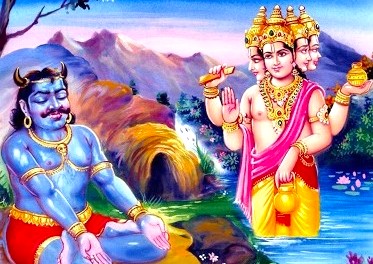
The very source of Mahishasura's power was also the seed of his destruction. The story of the loophole in Mahishasura's boon of invincibility is a central theme. In his arrogance and patriarchal pride, he could not conceive of a female being powerful enough to challenge him. He meticulously protected himself from every god, demon, man, and beast, but he left himself vulnerable to a woman. This fatal oversight is a powerful mythological statement on the supreme power of the divine feminine (Shakti). It shows that the power he discounted and disdained would ultimately be the very force that would lead to his annihilation. Mahishasura Tenacious Demon King
The Grandfather of Demonic Hordes
Mahishasura was the was the commander-in-chief of a vast and terrifying demonic force. His role as the leader of a great Asura army against the gods made him a cosmic threat. His generals, like Chikshura, Durdhara, and Tamra, led divisions of demons into battle, overwhelming the Devas with sheer numbers and brute force. This army represents the proliferation of negative thoughts and egoistic desires that, when gathered under a single powerful ambition, can overthrow the divine order within one's own consciousness and in the world at large.
The Mahishasuramardini: Slayer of the Buffalo Demon
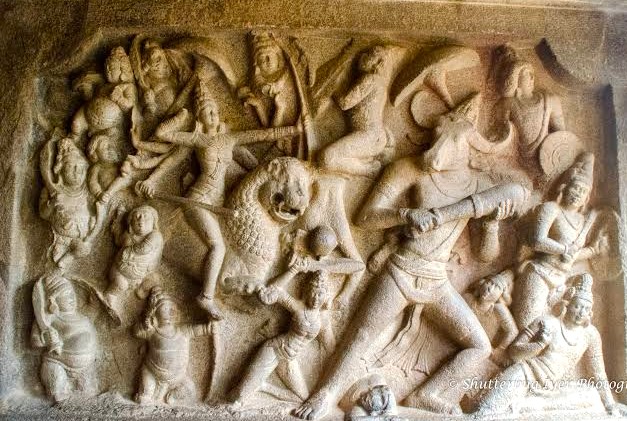
The enduring legacy of Mahishasura is that of the demon who was so powerful he necessitated the creation of the supreme goddess. He is forever immortalized in the name of his vanquisher: Durga Mahishasuramardini, the slayer of Mahishasura. His story is inseparable from hers. He is the ultimate antagonist whose immense evil served the divine purpose of bringing forth the ultimate good. His power was the catalyst for the unification of all divine energies into one supreme form, and his defeat is the most powerful and celebrated testament to the ultimate and inevitable triumph of good over evil. Mahishasura Tenacious Demon King
Step Inside The Story - View All Tour Itineraries & Details

We’re here to offer genuine, thoughtful guidance if your interested in travelling to India. As a small, dedicated team, we pay close attention to every detail so you can focus on enjoying the experience while we take care of the planning. We believe the best trips begin when someone truly listens to what you want and how you like to travel, so the journey feels right for you and contributes to a happy, positive group on tour. Our communication stays clear, straightforward, and respectful at every step, with the goal of helping you feel understood, supported, and confident from first contact to the end of your journey.
Click Catherine Frith - About The Founder
Click Discover Life Travel - All Tours and More
Click Why We Are Different - Unique, Safe, Transparent