Unique Insights Into The Spices Of India
Spice Route: India
Discover Life Travel
Forest Aromatics Become Food
Long before written recipes, people across the subcontinent learned that certain roots, seeds, barks, and leaves could make food safer, tastier, and easier to digest. Early everyday aromatics - like ginger-like rhizomes, mustard-family seeds, and native peppers - were practical tools: they masked staleness, reduced odors, and made simple grains or meat feel satisfying. As cooking vessels improved, roasting and grinding turned these plants into repeatable flavors instead of occasional finds. Over time, “spice” became more than heat; it meant fragrance, appetite, digestion, and preservation in one. This early knowledge set the base for later cuisine, medicine, and long-distance trade. Spice Route India
Spice Route India: Harappan Kitchens And Exchange
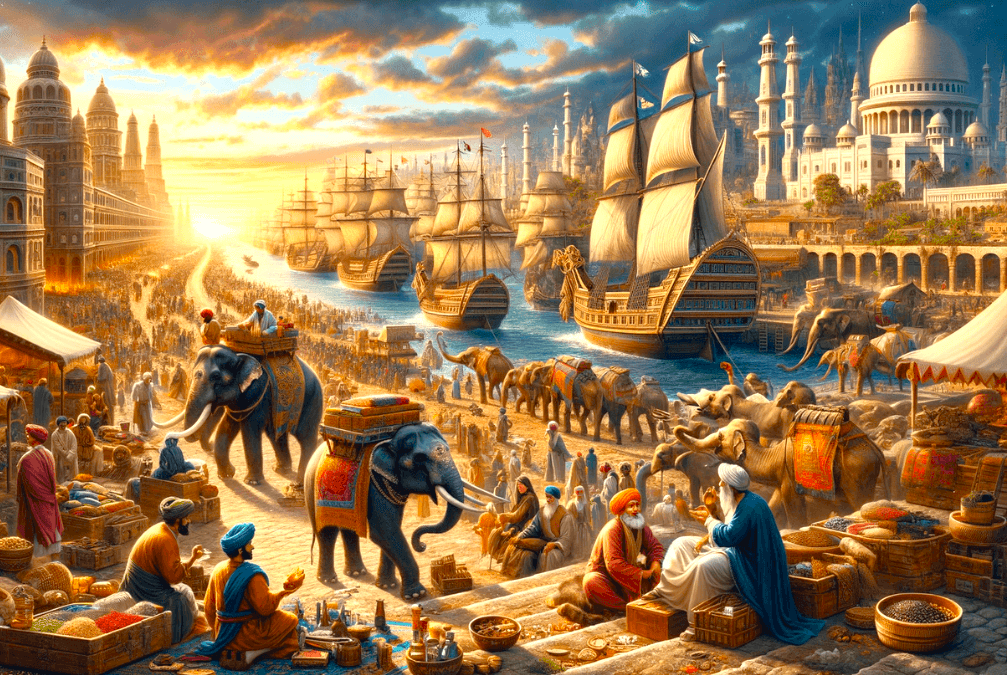
In the Indus Valley (Harappan) world, urban life pushed food toward standard routines - storage, grinding, cooking, and trading staples and flavorings. Even without naming every spice with certainty, we can see the pattern: cities needed preserved foods, reliable seasonings, and household techniques that traveled from one settlement to another. Grinding stones, storage jars, and carefully planned streets hint at organized provisioning, where aromatic seeds and resins could move alongside grain and oil. As regional exchange grew, tastes likely began to diversify - coastal ingredients meeting inland ones. The result was an early template: spices as part of supply chains, not only home gardens.
Vedic Fire, Flavor, Offering
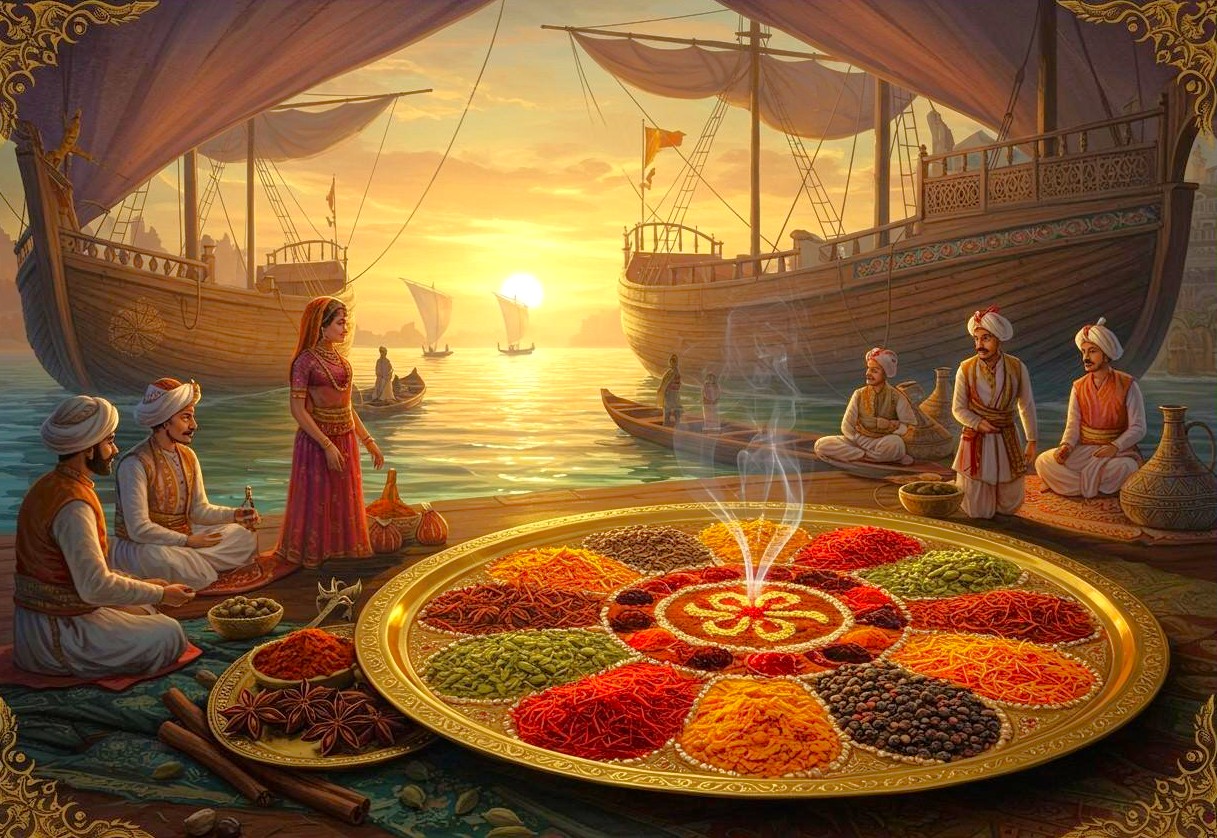
With Vedic culture, aromas gained a second life: not only in food, but in ritual fire and offerings. Ghee, herbs, and fragrant materials shaped how the sacred was experienced - through smoke, scent, and chant - so “good smell” became linked with purity and auspiciousness. In kitchens, the same logic encouraged careful handling of ingredients: roasting, tempering in fat, and combining multiple aromatics to create layered taste rather than single-note heat. Spices also began to carry social meaning - hospitality, status, and seasonal discipline. Once flavor and ritual were connected, spices became part of identity: what a community ate, offered, and considered wholesome. Spice Route India
Ayurveda Organizes Spice Use
Ayurveda systematized what households already sensed: spices affect the body in patterned ways. Ingredients such as ginger, black pepper, long pepper (pippali), turmeric, cumin, coriander, and asafoetida (hing) were discussed not just for taste, but for digestion, balance, and recovery - often used in combinations rather than alone. This turned spicing into a kind of everyday “home pharmacy,” where a meal could be adjusted for season, age, and appetite. Spices became the bridge between kitchen and clinic: rasam-like broths, spiced milk, pickles, and decoctions all served dual roles. A clear theory made transmission easier across regions and generations.
Sangam Ports And Pepper

In the Tamil-speaking South, especially during Sangam-era networks, the coast became a gateway where spices moved like currency. Black pepper from the Western Ghats and cardamom from forested hills gained special importance because they were potent, storable, and highly desired beyond India. Ports linked inland growers, river routes, and ocean ships timed to monsoon winds. Spices also shaped local food culture: sourness, heat, and fragrance balanced seafood, rice, and lentils, while pepper became both everyday seasoning and export star. The key shift here is scale - spices were no longer only regional markers; they were global goods that pulled India into wider maritime worlds.
Rome’s Taste Meets Malabar
By the early centuries CE, Mediterranean appetite for Indian spices intensified, and Indian ports on the western coast - often grouped under the “Malabar” imagination - became famous entry points. Pepper, in particular, traveled as a high-value, low-volume commodity that justified long voyages. Indian traders, shipowners, and coastal kingdoms benefited from this demand, while foreign buyers treated Indian spices as luxury, medicine, and prestige. The trade wasn’t only pepper: aromatics, textiles, gems, and ivory often moved together, with spices as the headline. This period strengthened India’s role as a spice hub, connecting producers in forests and hills to buyers across seas through finance, shipping skill, and port administration. Spice Route India
Monsoons Teach Ocean Timing
A defining feature of Indian spice history is not merely what grew, but how people learned to move it: monsoon navigation. Knowledge of seasonal winds made routes predictable, turning the Arabian Sea and Bay of Bengal into timed highways. That predictability encouraged specialization - some regions focusing on cultivation, others on processing, packaging, warehousing, and shipping. It also encouraged “spice literacy”: grading pepper, drying cardamom, preventing moisture damage, and maintaining aroma during storage. Coastal communities built cultures around boats, harbors, and traders speaking multiple languages of commerce. The more reliable the voyage became, the more spices moved from occasional luxury into steady trade - supporting larger states, temple economies, and urban markets.
Arab Merchants Shape Markets
From late antiquity into the medieval period, Arab and Persian Gulf trading networks played a major role in linking Indian spices to West Asia, North Africa, and Europe. Indian ports became nodes in a broader commercial world that valued trust, credit, and repeat contracts as much as ships. Spices were ideal for this system: compact, durable, and easy to price by quality. On India’s side, coastal polities gained revenue and influence by protecting harbors, regulating weights, and enabling merchant communities. On the culinary side, contact encouraged exchange: new aromatics, new sweet-sour balances, and new preservation techniques traveled both ways. The spice story here is not conquest; it is commerce shaping taste across oceans. Spice Route India
Europe Hunts Direct Access
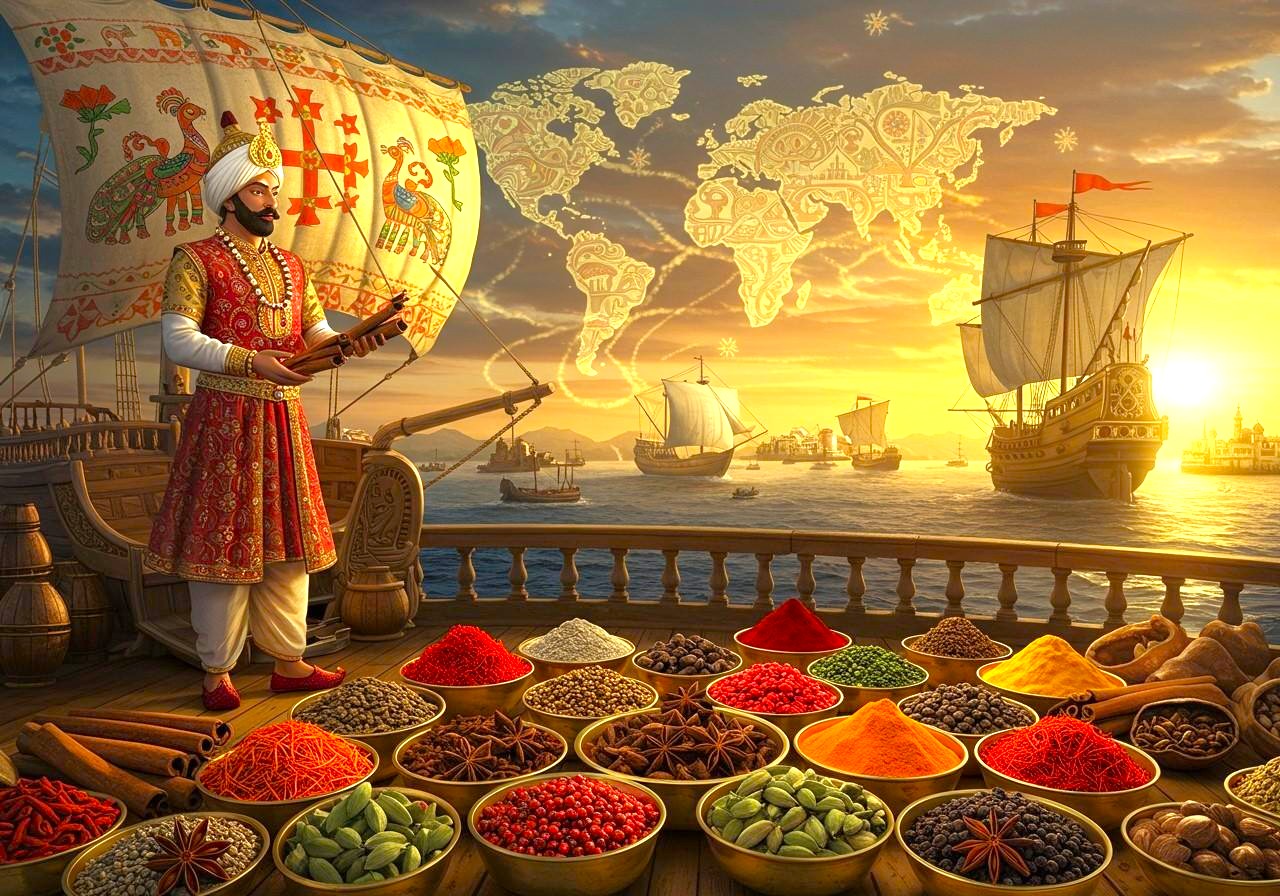
When Portuguese fleets entered the Indian Ocean, they were chasing a simple goal: direct control of spice supply without paying middlemen. Pepper from the western coast became a focal point, and competition over ports, passes, and shipping lanes intensified. Europeans did not “discover” Indian spices - India had long grown, used, and exported them - but European militarized trade changed the rules of access and taxation. Over time, Dutch, French, and British competitors followed, each trying to lock in purchasing rights, influence coastal rulers, and standardize export grades. Locally, spice cultivation continued in farms and forests, but global pricing and coercive trade practices increasingly shaped incentives. The spice route became not only a trade story, but a power story.
Company Rule Reorders Production
Under expanding Company and later imperial administration, spice commerce became more bureaucratic: surveys, contracts, port controls, and commodity thinking. Some regions saw intensification - more organized export streams, new plantation-like arrangements in places, and stronger links between rail/road infrastructure and market delivery. At the same time, many spices remained profoundly local: turmeric, cumin, coriander, mustard, and chilies anchored daily cooking far from ports. (Chilies, introduced earlier from the Americas, became deeply Indian over centuries, transforming heat profiles and regional masalas.) The result was a dual economy: spices as global commodities and spices as household essentials. This period also produced modern categories—“cash crop,” “export quality,” “market rate”—that still shape spice farming today. Spice Route India
Modern India’s Spice Identity
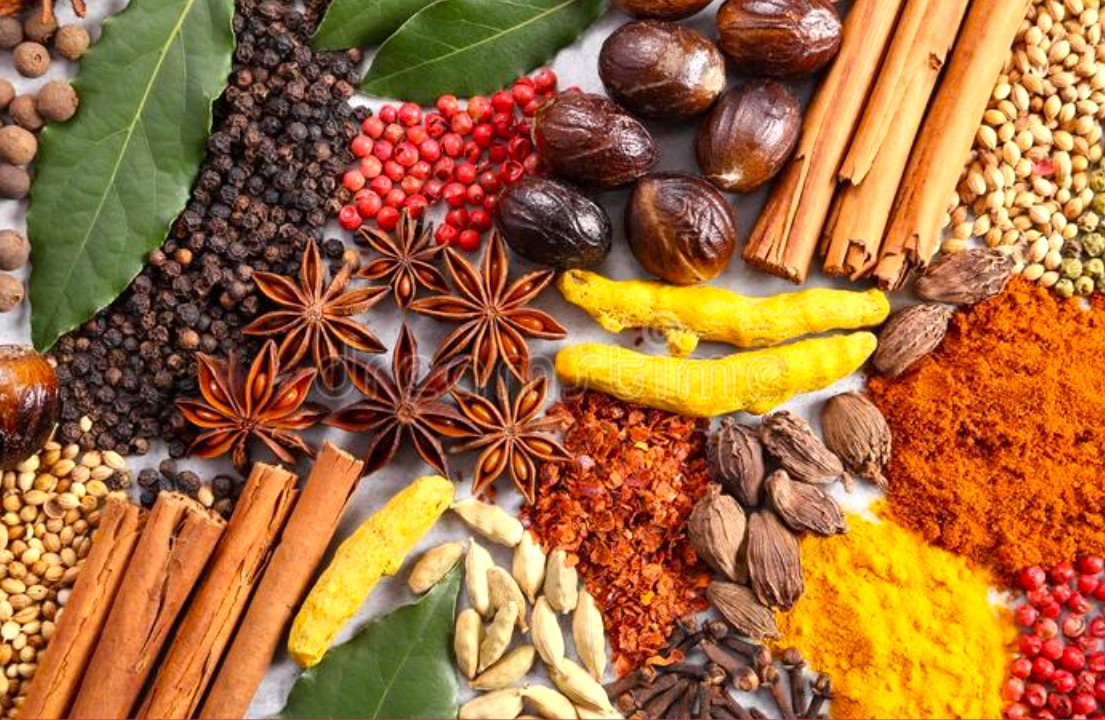
Contemporary India inherits every earlier layer: ritual aroma, Ayurvedic logic, coastal trade memory, and mass everyday cooking. Spices are now both farm products and cultural signatures - with regional blends, branded powders, and renewed attention to origin through GI tags and quality standards. Supply chains have modernized (cleaning, grinding, packaging, testing), yet the core logic remains ancient: spices are chosen for balance - heat, fragrance, bitterness, sweetness, sourness - plus digestion and comfort. India also sits in a global spice conversation, exporting and importing, adapting new tastes while defending old ones. From forest aromatics to modern kitchens, the narrative stays consistent: spices are India’s way of turning geography into flavor, and flavor into identity.
Step Inside The Story - View All Tour Itineraries & Details

We’re here to offer genuine, thoughtful guidance if your interested in travelling to India. As a small, dedicated team, we pay close attention to every detail so you can focus on enjoying the experience while we take care of the planning. We believe the best trips begin when someone truly listens to what you want and how you like to travel, so the journey feels right for you and contributes to a happy, positive group on tour. Our communication stays clear, straightforward, and respectful at every step, with the goal of helping you feel understood, supported, and confident from first contact to the end of your journey.
Click Catherine Frith - About The Founder
Click Discover Life Travel - All Tours and More
Click Why We Are Different - Unique, Safe, Transparent