Unique Insights Into The Deities Of India
Vishvakarma: Architect Of Creation
Discover Life Travel
The Self-Born Lord of All Creation
In the earliest Vedic hymns, before the codification of the Puranas, Vishvakarma existed as a supreme, primordial deity. The divine origin story of Vishvakarma is not of a conventional birth, but of self-manifestation. He is described in the Rig Veda as the unborn, self-emergent architect of the universe, the one who existed before creation and who designed the very fabric of the cosmos. He is the divine force who measured out the realms, gave the gods their names, and established the fundamental laws of form and structure. His origin is not an event in time, but the timeless principle of divine creativity itself. Vishvakarma Architect of Creation
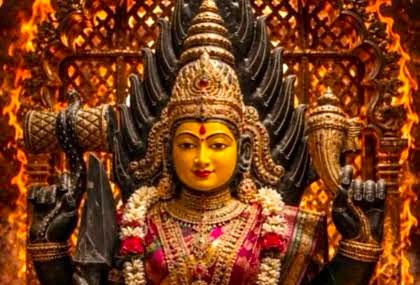
Vishvakarma Architect of Creation
Vishvakarma’s abode is not a single location, but every magnificent structure he has ever built. His creative fingerprint is found across the three worlds. His greatest triumphs include the construction of Indraprastha, the magical palace of the Pandavas, built on a rugged piece of land that he transformed into a marvel of illusions. He is the builder of Svarga Loka, the celestial heaven of Indra, and the magnificent golden city of Dwarka, the island fortress of Krishna, which he built in a single night. His most infamous creation was the golden city of Lanka, the original abode of the god of wealth, Kubera, before it was usurped by the demon king Ravana.
The Divine Tools of Cosmic Construction
The symbols of Vishvakarma are the sacred tools of the divine artisan, each representing a principle of creation. The symbolism of Vishvakarma's building tools is central to his identity. He holds a water pot (kamandalu), representing the primordial waters of creation and the elixir of life. He holds a book, representing the Vedas and the sacred science of architecture (Sthapatya Veda). He holds a builder's measuring tape or rule, symbolizing precision, planning, and cosmic measurement. Finally, he holds a noose and a club, but these are tools of binding and shaping, representing his power to give form to raw, chaotic matter. Vishvakarma Architect of Creation
A Family of Divine Artisans and Power
Vishvakarma’s family tree is a lineage of immense power and creative skill. As the son of the creator god Brahma (in some traditions), or the son of the sage Prabhāsa, his lineage is divine. His wife is often named as Ghritachi, a celestial Apsara. His children carried on his creative legacy. His most famous daughter was the beautiful Sanjna, who married the Sun God Surya. His sons were powerful figures like Nala, the divine monkey-architect who built the Rama Setu bridge to Lanka, and Trisiras. Through his daughter Sanjna, he is the maternal grandfather of Manu (progenitor of humanity), Yama (god of death), and the Ashvins (divine physicians).
The Celestial Designer's Eternal Youth
As a primordial god of creation, Vishvakarma has no "childhood" in the mortal sense. His "youth" was the dawn of time, the period when he assisted Brahma in the grand design of the universe. The story of Vishvakarma designing the cosmos shows him as an eternal, ever-active force. He was never a child who needed to learn his craft; he was born with the complete knowledge of all arts and sciences. His entire existence has been a continuous process of designing, building, and creating, from the smallest ornament to the grandest celestial city, making him the eternally busy and ever-essential divine engineer. Vishvakarma Architect of Creation
The Unfinished Deities of Puri
One of the most famous stories is a tale of divine impatience. The story of Vishvakarma carving the Jagannath idols is a cornerstone of the Puri temple's lore. After King Indradyumna was instructed to carve deities from a sacred log, Vishvakarma appeared as an old, frail carpenter. He agreed to do the job on one strict condition: he must be sealed inside the temple and left completely undisturbed for 21 days. After about two weeks, the anxious queen, hearing no sound, convinced the king to open the doors. The moment they did, Vishvakarma vanished, leaving the idols of Jagannath, Balabhadra, and Subhadra forever unfinished, without proper hands or feet.
The Divine White Goose of Creation
The vehicle upon which the divine architect travels is as pure and discerning as his creative mind. The symbolism of the Hamsa (divine swan or goose) as Vishvakarma's vehicle is profound. The Hamsa represents purity, wisdom, and the creative spirit. Just as the mythical Hamsa can separate milk from water, Vishvakarma can discern the divine potential within raw matter and extract a perfect creation. By riding the swan, he demonstrates that his creative process is not just mechanical, but guided by pure consciousness and divine wisdom, soaring above the mundane to bring heavenly designs down to earth. Vishvakarma Architect of Creation
The Maker of Every Divine Weapon
Vishvakarma’s greatest "triumph" is his indispensable role as the divine armorer. His war is fought by proxy, as he is the celestial artisan who forged the weapons of the gods. His workshop produced the most powerful armaments in the cosmos. His supreme victory was the creation of the Vajra, the divine thunderbolt of Indra, which he crafted from the bones of the sage Dadhichi, creating a weapon powerful enough to slay the demon Vritra. He also created the Sudarshana Chakra for Vishnu and the mighty Trishula (trident) for Shiva. Every major victory of the gods was made possible by a weapon forged in Vishvakarma's divine smithy.
The Architect Who Humbled a God
While a servant of the gods, Vishvakarma also had the power to teach them humility. After defeating Vritra, Indra became arrogant and commanded Vishvakarma to build him a palace of unparalleled grandiosity. As Indra's demands grew ever more extravagant, Vishvakarma appealed to Brahma, who in turn appealed to Vishnu. Vishnu visited Indra disguised as a Brahmin boy, who pointed out an endless procession of ants. He explained to Indra that each ant in the line was a former Indra, in a previous life cycle. This story of Vishvakarma teaching Indra a lesson in humility showed the king of gods the temporary nature of his own power and the eternal, cyclical nature of Vishvakarma's creative work.
His Message: Create with Skill and Humility
Vishvakarma’s life is a divine blueprint for all creators, artisans, and builders. The empowering message from him is that the act of creation is a sacred and divine duty. He teaches the importance of skill, precision, and dedication to one's craft. His festival, Vishvakarma Puja, is a day when artisans worship their tools, acknowledging that the divine works through them. He also teaches humility; despite being the creator of all magnificent things, he remains the humble divine servant. His message is to create with the highest skill possible, but to do so with a sense of service, not for personal ego.
The Sacral Chakra and a Ray of Creative Gold
As the ultimate creator and builder, Vishvakarma's energy is centered in the body's creative wellspring. He is a master of the Svadhisthana (Sacral) Chakra, the center of creativity, design, and manifestation. The key frequency that Vishvakarma embodies is that of divine design and perfect execution. His auric field is a brilliant golden and white light ray, representing the purity of his consciousness and the golden perfection of his creations. Meditating on his energy is believed to unblock creativity, improve practical skills, and help bring one's own creative ideas into physical form. Vishvakarma Architect of Creation
The Science of Architecture as His Weapon
Vishvakarma’s celestial "weapon" is not an instrument of war, but the profound knowledge he possesses. The Sthapatya Veda, the sacred science of architecture, is his ultimate tool. This knowledge, which he authored, contains the divine principles of design, engineering, and sacred geometry. With this knowledge, he can create structures that are not just beautiful, but are in perfect harmony with cosmic laws, promoting health, happiness, and prosperity. This knowledge is his power, a "weapon" that allows him to build impregnable fortresses, create cities of perfect harmony, and shape the very structure of the universe.
Mercury, Venus, and the Geometry of Creation
Vishvakarma’s divine qualities are reflected in the planets of skill and beauty. He is strongly associated with the planet Mercury, which governs craftsmanship, intellect, and detailed work. His mastery over beautiful forms and luxurious designs also connects him to the planet Venus. He is the divine embodiment of these two planets working in perfect harmony. His sacred geometry is the square, the foundational shape of all Vastu Purusha Mandalas, the divine grid upon which all sacred architecture is based. The square represents stability, structure, and the perfection of manifested form. Vishvakarma Architect of Creation
The Divine Father of the Sun's Wife
Vishvakarma played a crucial role in the family life of the Sun God himself. The story of him tempering the Sun God's brilliance is a tale of fatherly love. His daughter, Sanjna, was married to Surya but could not bear her husband's intense heat and fled. To solve the problem and reunite the couple, Vishvakarma, the master craftsman, literally put the Sun God on his lathe. He carefully "shaved" away an eighth of Surya's brilliance, making his heat and light pleasant and bearable. The divine "shavings" from this process were then used by Vishvakarma to forge the Sudarshana Chakra for Vishnu and the Trishula for Shiva.
The Architect of the Gods' Flying Machines
Vishvakarma's skill was not limited to static structures; he was also the inventor of celestial vehicles. The role of Vishvakarma in building the Vimanas (flying chariots) of the gods showcases his advanced engineering prowess. He is credited with designing and constructing these magnificent flying machines, which could travel between worlds at the speed of thought. The most famous of these was the Pushpaka Vimana, originally built for Brahma, which was later given to Kubera and then stolen by Ravana. This demonstrates that Vishvakarma's knowledge extended to advanced aeronautics and divine technology.
The Patron Saint of the Working Class
Vishvakarma is one of the most accessible and beloved deities for a vast segment of the Indian population. The worship of Vishvakarma by artisans, craftsmen, and laborers makes him a god of the people. On Vishvakarma Puja day, factories, workshops, and industrial houses all come to a standstill. Workers, from welders and mechanics to software engineers and weavers, clean their tools and machines and worship them as a manifestation of the divine creator. He is the patron saint of the skilled worker, the god who dignifies all forms of labor and craftsmanship as a sacred act. Vishvakarma Architect of Creation
The Lord Who Weighs the Universe
In his earliest Vedic form, Vishvakarma's power was absolute and cosmic. As the divine architect, he was also the divine smith and carpenter who "welded" the universe together. The Vedic conception of Vishvakarma as the original creator depicts him with eyes, faces, and feet on all sides, a truly omnipresent being. He is the one who established the primal mold, the blueprint for all of existence. This early form shows him not just as a builder of palaces, but as the ultimate cosmic intelligence, the divine mind that conceived of space, time, and matter itself. Vishvakarma Architect of Creation
Step Inside The Story - View All Tour Itineraries & Details

We’re here to offer genuine, thoughtful guidance if your interested in travelling to India. As a small, dedicated team, we pay close attention to every detail so you can focus on enjoying the experience while we take care of the planning. We believe the best trips begin when someone truly listens to what you want and how you like to travel, so the journey feels right for you and contributes to a happy, positive group on tour. Our communication stays clear, straightforward, and respectful at every step, with the goal of helping you feel understood, supported, and confident from first contact to the end of your journey.
Click Catherine Frith - About The Founder
Click Discover Life Travel - All Tours and More
Click Why We Are Different - Unique, Safe, Transparent