Unique Insights Into The Deities Of India
Jagannath, Balabhadra and Subhadra: The Divine Trinity
Discover Life Travel
The Unfinished Creation of a Divine Family
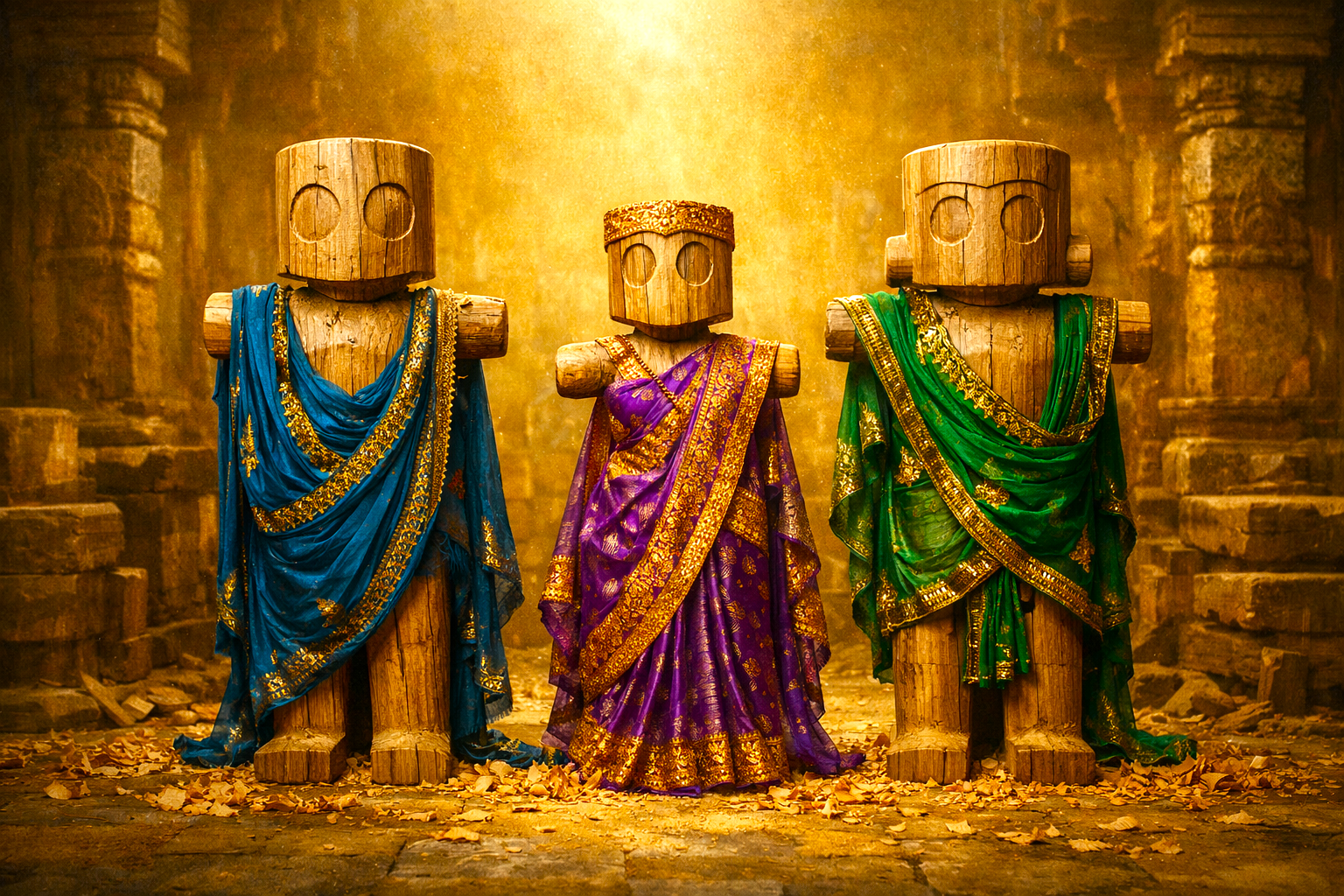
The origin of the holy trinity is a powerful legend of a king's devotion and a divine test. Following a divine command, King Indradyumna commissioned the carving of the sacred idols from a mystical log. The celestial architect Vishwakarma agreed to the task, but on the condition that he be left completely undisturbed for 21 days. When the anxious king and queen forced the door open prematurely, Vishwakarma vanished, leaving the divine family of Jagannath, Balabhadra, and Subhadra unfinished. This act left them with their signature abstract forms, forever symbolizing a god whose true form is beyond human comprehension and who can be worshiped even in an incomplete state. Jagannath Balabhadra and Subhadra The Divine Trinity
Jagannath Balabhadra and Subhadra The Divine Trinity
The primary dwelling of the Divine Trinity is one of India's four great pilgrimage sites. The Jagannath Temple in Puri as the home of the sacred triad is their earthly palace. Here, they are not treated as static idols, but as living, royal members of a family. They are woken, bathed, dressed, and fed daily in elaborate rituals. The temple complex is their kingdom, where they preside over a court, listen to the grievances of their subjects, and interact in a deeply personal way with their priests and devotees. This living tradition makes the temple a vibrant center of devotion for the entire family unit.
Three Unique Forms, One Divine Reality
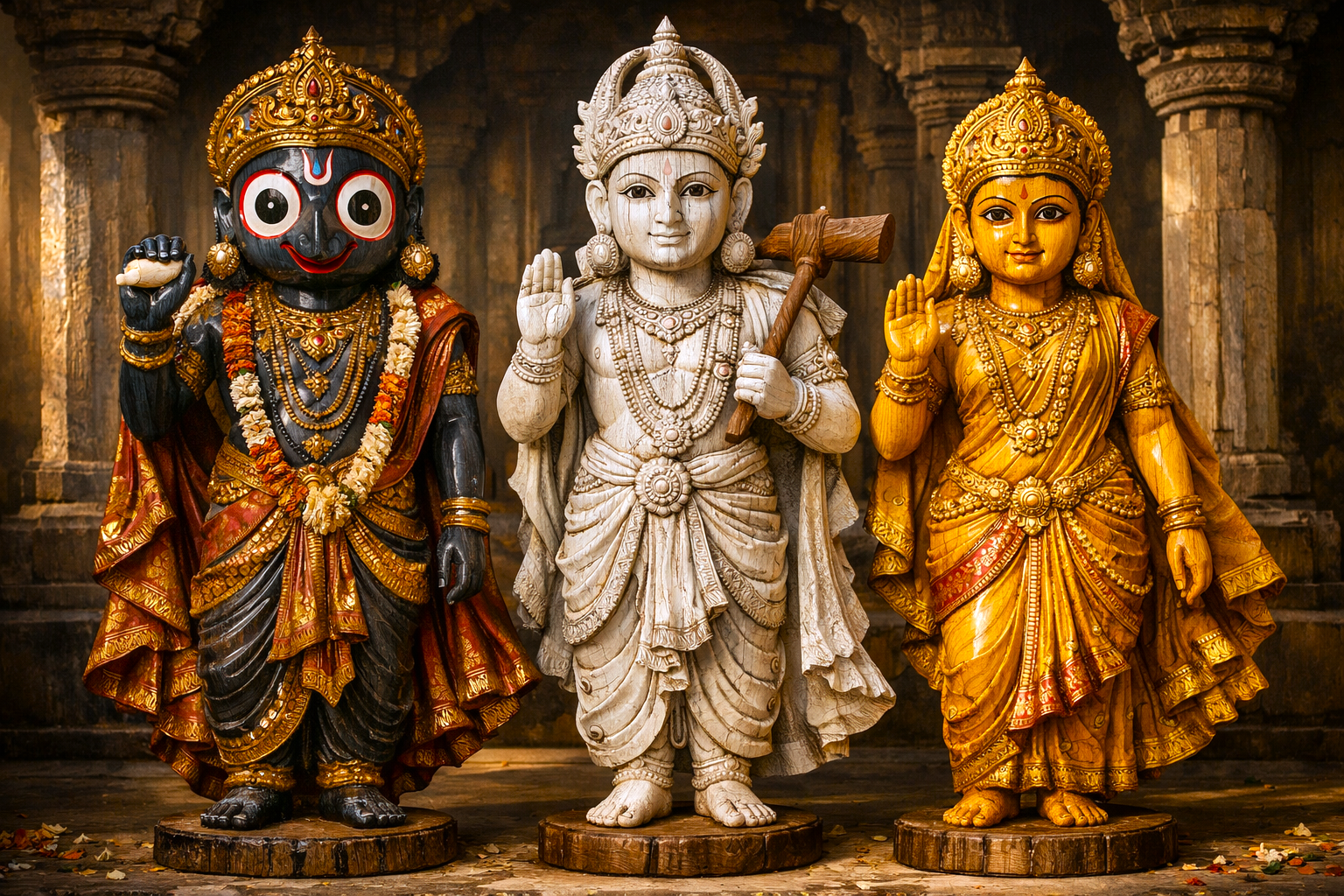
The appearance of the three deities is a profound statement on the nature of the divine. The symbolism of the three distinct abstract forms of the deities is central to their philosophy. Jagannath's dark form and large round eyes represent the infinite, all-perceiving cosmos. Balabhadra's white form and elongated head symbolize consciousness and the material world. Subhadra's yellow form and oval shape represent the nurturing, benevolent energy that flows between them. Together, their non-anthropomorphic, tribal-inspired forms transcend standard iconography, suggesting that the divine manifests in myriad ways and is not limited to a single image. Jagannath Balabhadra and Subhadra The Divine Trinity
Balabhadra: The Mighty God of Strength and Stability
The towering white figure in the trinity is the elder brother, Balabhadra. Strongly identified with Lord Balarama, the elder brother of Krishna, Balabhadra represents strength, stability, and righteousness. His white color symbolizes purity and knowledge. He is also associated with Shesha Naga, the cosmic serpent, which is often reflected in the serpent-like hood carved above his head. As the god of agriculture, he sometimes holds a plow, symbolizing his role in nurturing the earth and providing sustenance. He is the steadfast protector, the reliable elder brother who provides support and strength to the divine family.
Subhadra: The Auspicious Divine Sister
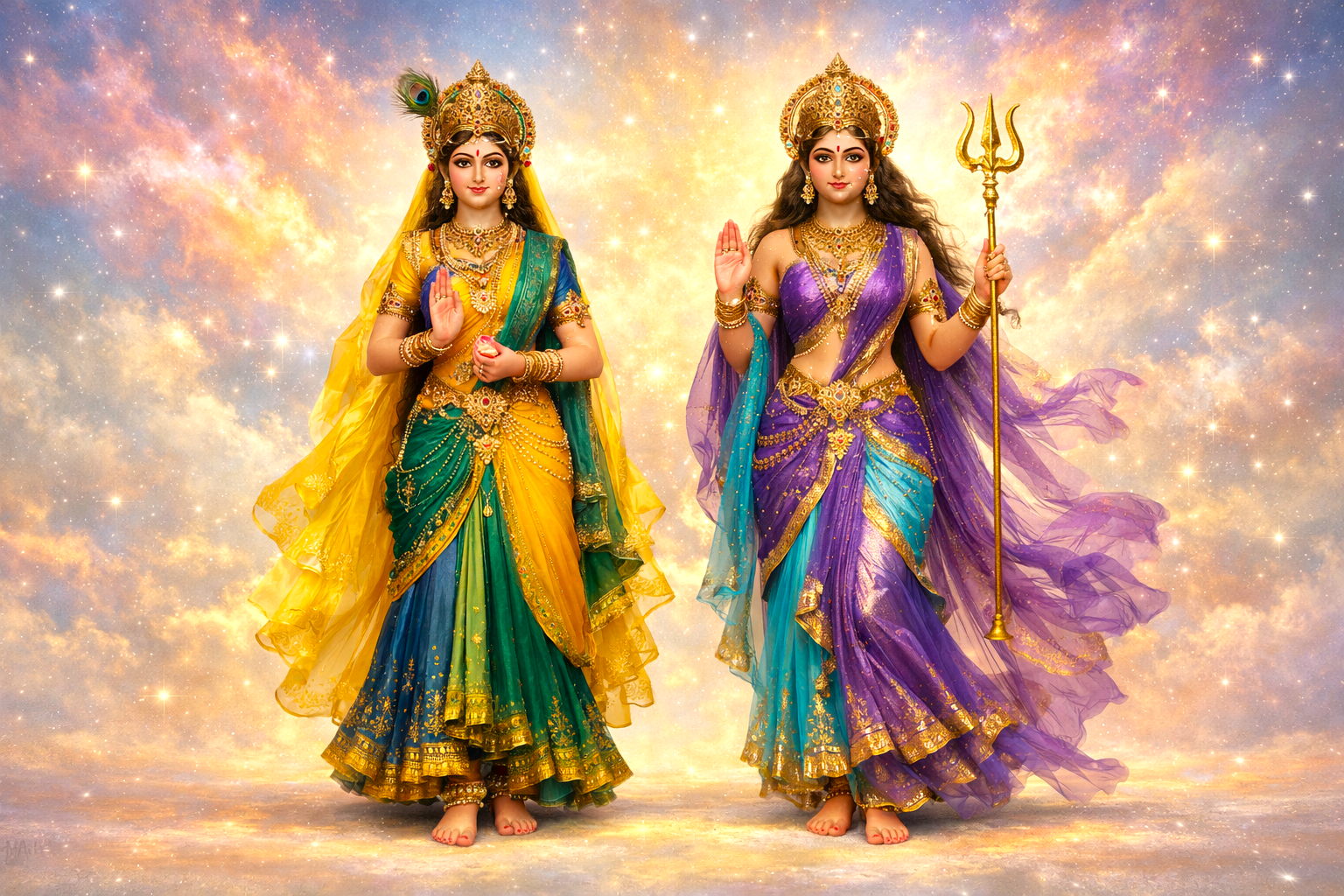
The smaller, yellow-hued deity placed between her two powerful brothers is their beloved sister, Subhadra. As the divine feminine energy of the Jagannath Trinity, she represents Shakti, the creative and nurturing force of the universe. Her yellow color is associated with auspiciousness, turmeric, and prosperity. While her brothers represent the vast cosmos and immense strength, Subhadra is the embodiment of grace, compassion, and well-being. Worshipped as a benevolent mother and sister, her presence on the altar signifies the completeness of the divine, which must include the gentle, life-giving power of the feminine. Jagannath Balabhadra and Subhadra The Divine Trinity
A Divine Family Outing: The Ratha Yatra Festival
The grandest festival associated with the trinity is their annual journey to visit their aunt. The Ratha Yatra as the divine family's journey to the Gundicha Temple is a spectacular event. The three deities leave the main temple and are placed on their magnificent, colossal chariots. This journey is not a solitary one; it is a family outing. Pulled by hundreds of thousands of devotees, the three chariots of Jagannath (Nandighosha), Balabhadra (Taladhwaja), and Subhadra (Darpadalana) travel together down the Grand Road in a joyous procession. It is a celebration of their familial bond and their desire to be with their people.
The Great Renewal: Rebirth of the Divine Siblings
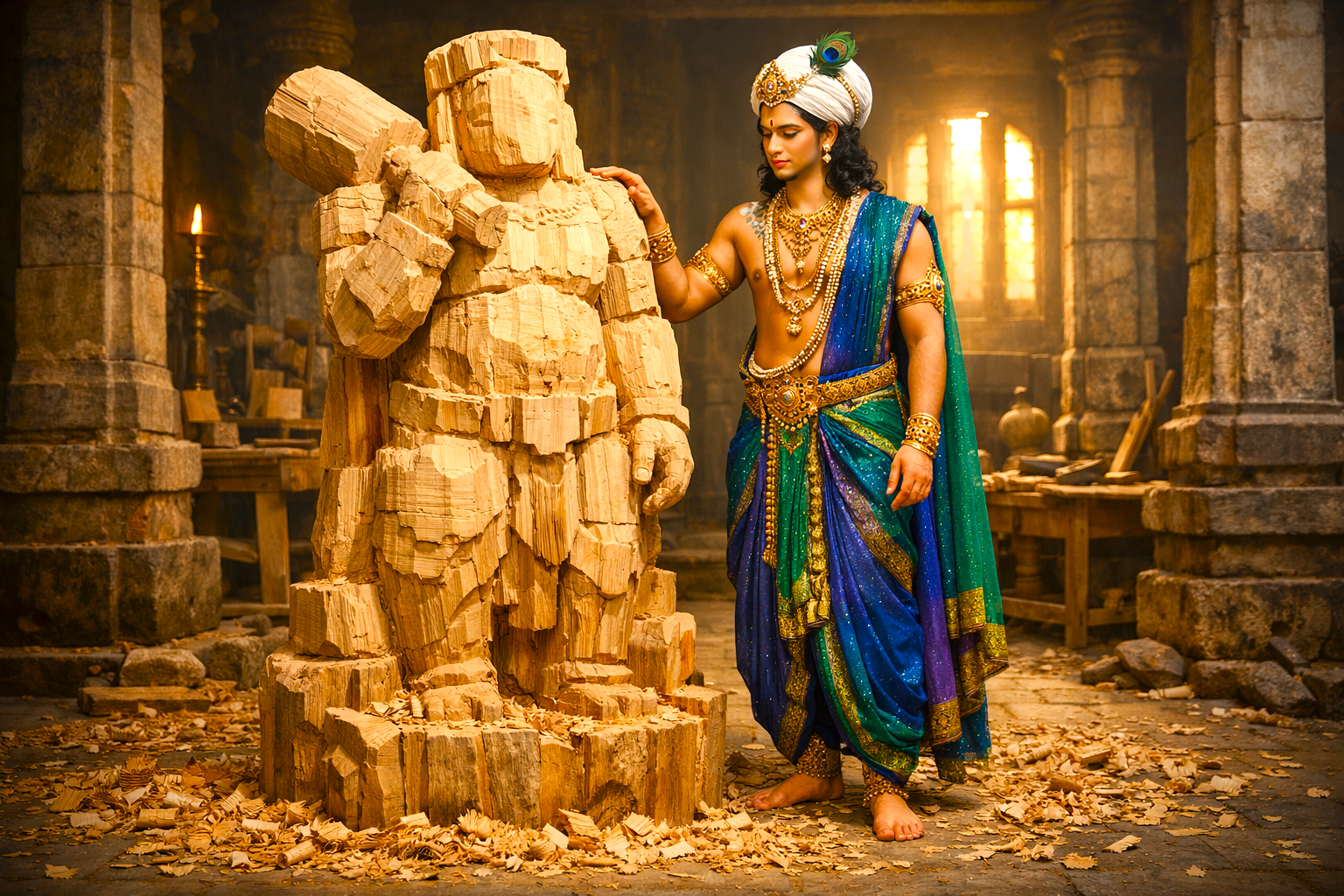
In a unique ritual that symbolizes the transmigration of the soul, the wooden bodies of the three deities are periodically renewed. The Nabakalebara ritual as the recreation of the trinity is a mystical event. Every 12 to 19 years, new idols for all three deities are secretly carved from sacred Neem trees. In a highly sacred and secret ceremony, the 'Brahma Padartha', or soul-substance, is transferred from the old idols to the new ones. This collective "death" and "rebirth" of the entire trinity reinforces the concept of the immortal soul leaving an old body for a new one, a lesson taught through the lives of the gods themselves. Jagannath Balabhadra and Subhadra The Divine Trinity
Jagannath: The Dark Lord of the Universe
At the center of the triad is the enigmatic Lord Jagannath. As the Supreme Being in the Jagannath Trinity, his dark color symbolizes the infinite, formless Absolute (Brahman) that contains all of creation. He is identified with Krishna and the supreme preserver, Vishnu. His large, round eyes convey his unblinking compassion for all beings. Though he is the most powerful, he chooses to be flanked by his beloved siblings, showing that the supreme being finds his greatest joy in loving relationships and familial bonds. His position is not one of aloof supremacy but of a loving, central figure in a divine household. Jagannath Balabhadra and Subhadra The Divine Trinity
The Sudarshana Chakra: The Fourth Pillar of Power
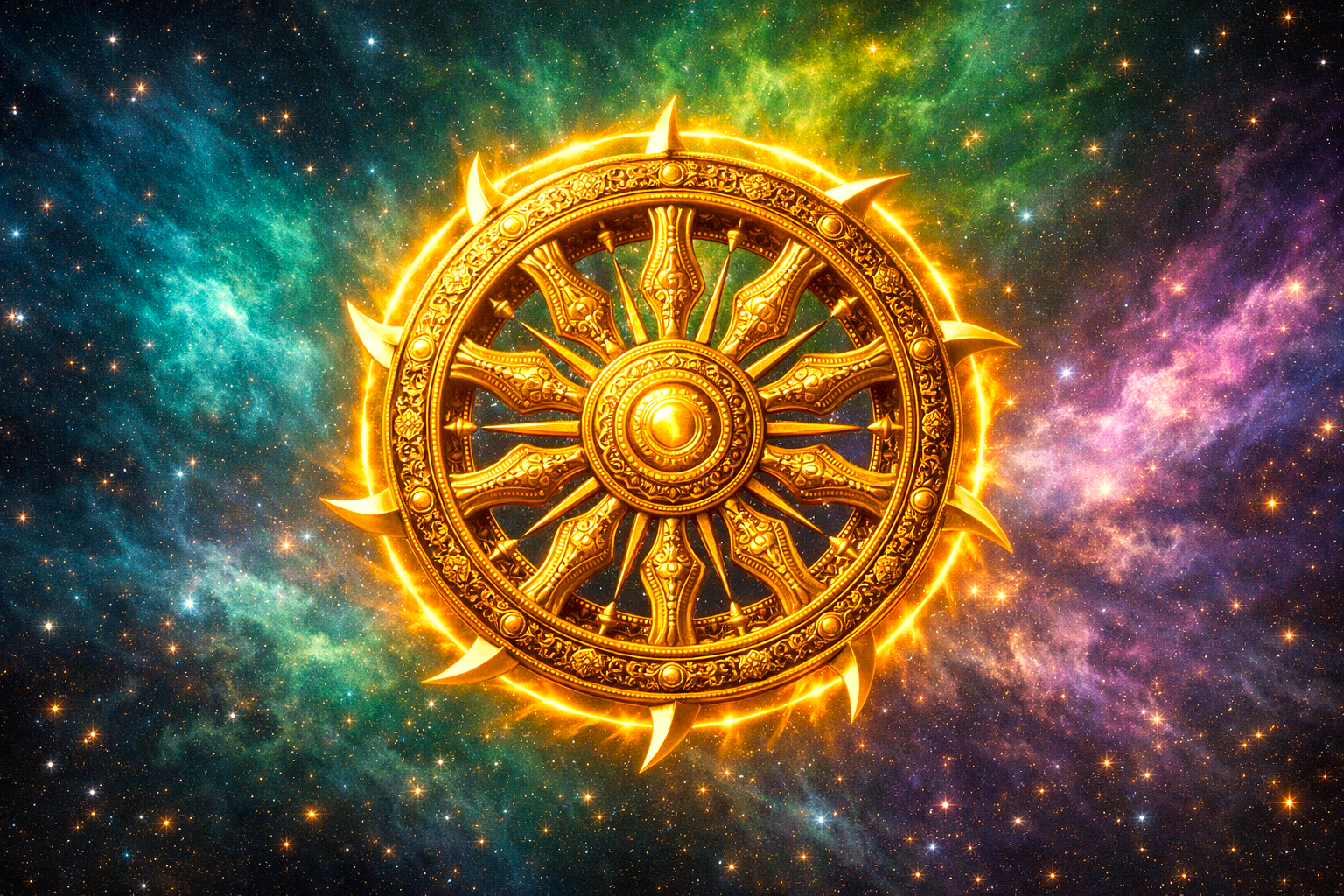
Though called a trinity, there is a fourth member on the altar: a red, pillar-like wooden post. This is the Sudarshana Chakra, worshipped as a deity alongside the trinity. It is the divine discus of Vishnu, representing his will and power to protect Dharma. Its presence signifies the protective power that guards the divine family. During the Ratha Yatra, the Sudarshana Chakra is first moved from the temple and placed on Subhadra's chariot, symbolizing that the divine power first ensures the safety of the feminine energy. Its worship as a distinct entity adds another layer of complexity and power to the divine grouping.
A Syncretic Union of All Faiths
The unique forms of the three deities have allowed them to be seen as a symbol of universal harmony. The trinity as a symbol of inter-faith harmony is one of its most powerful aspects. Over the centuries, different sects have interpreted the triad according to their own beliefs. Vaishnavas see them as Krishna, Balarama, and Subhadra. Shaktas see Jagannath as Bhairava and Subhadra as the great goddess Devi. The three idols have even been interpreted by Buddhists as representing the Buddha, Dharma, and Sangha. This adaptability makes the trinity a powerful symbol of unity in diversity, a spiritual home for all.
The Divine Abduction and a Sister's Love
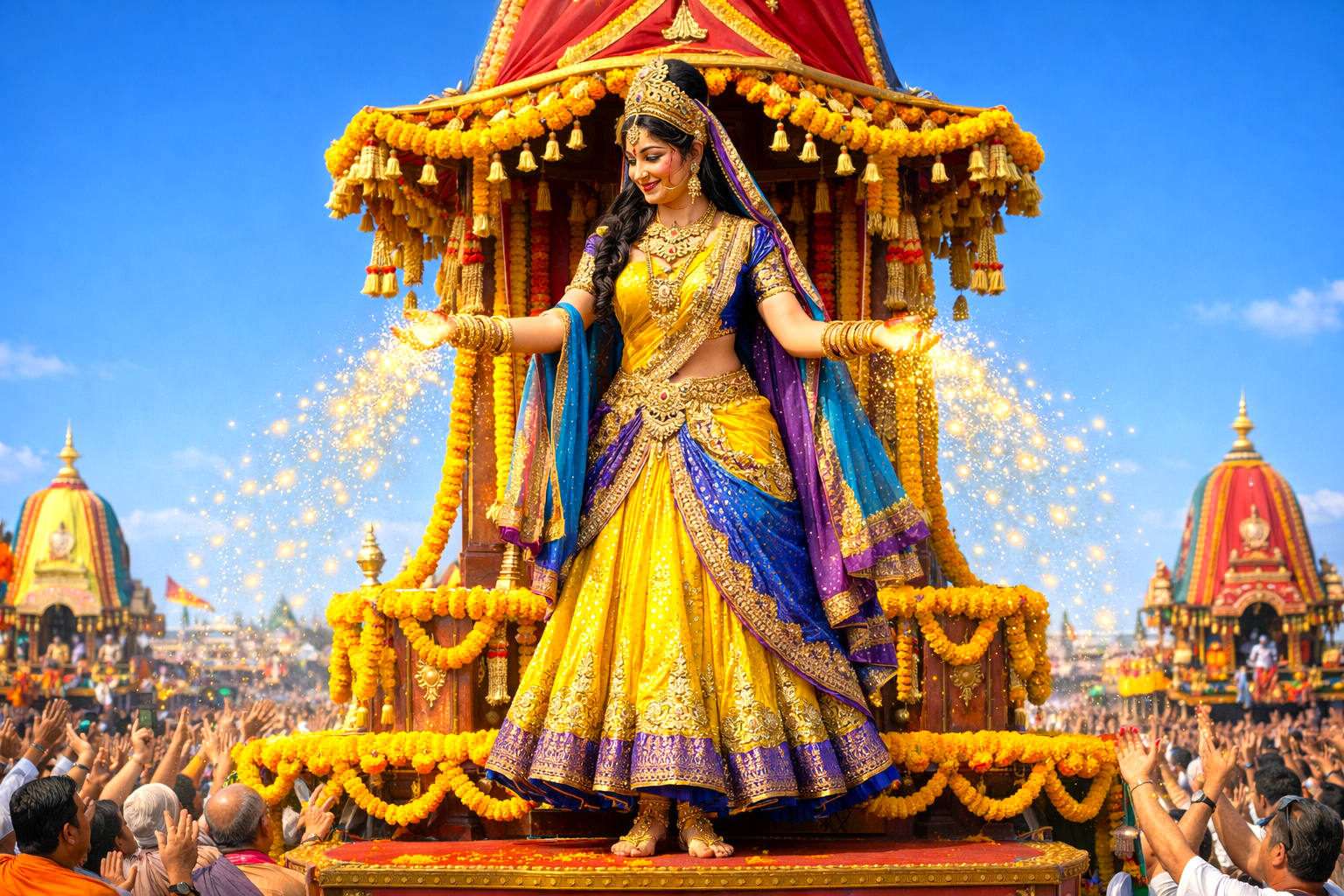
A local legend explains the origin of the Ratha Yatra and highlights the sister's central role. The story of Subhadra's desire to visit Dwarka is a charming tale. Subhadra expressed a wish to travel from Dwarka to see the glories of the city. Her two devoted brothers, Krishna (Jagannath) and Balarama (Balabhadra), immediately fulfilled her desire by placing her on a chariot between their own and taking her on a grand tour. This story reframes the Ratha Yatra not just as a journey to an aunt's house, but as an act of profound brotherly love, where the entire festival is arranged to fulfill the wish of the beloved sister. Jagannath Balabhadra and Subhadra The Divine Trinity
The Colors of the Three Gunas
The distinct colors of the three deities are often interpreted through the philosophical lens of the three Gunas, or qualities of nature. The symbolism of the colors of Jagannath, Balabhadra, and Subhadra is rich with meaning. Balabhadra's white represents Sattva, the quality of purity, harmony, and knowledge. Subhadra's yellow represents Rajas, the quality of passion, activity, and energy. Jagannath's black represents Tamas, which in this context is not darkness or ignorance, but the formless, unmanifest state of the Absolute, the background upon which all qualities play. The trinity thus represents the entire spectrum of cosmic reality. Jagannath Balabhadra and Subhadra The Divine Trinity
The Final Journey's Shared Path
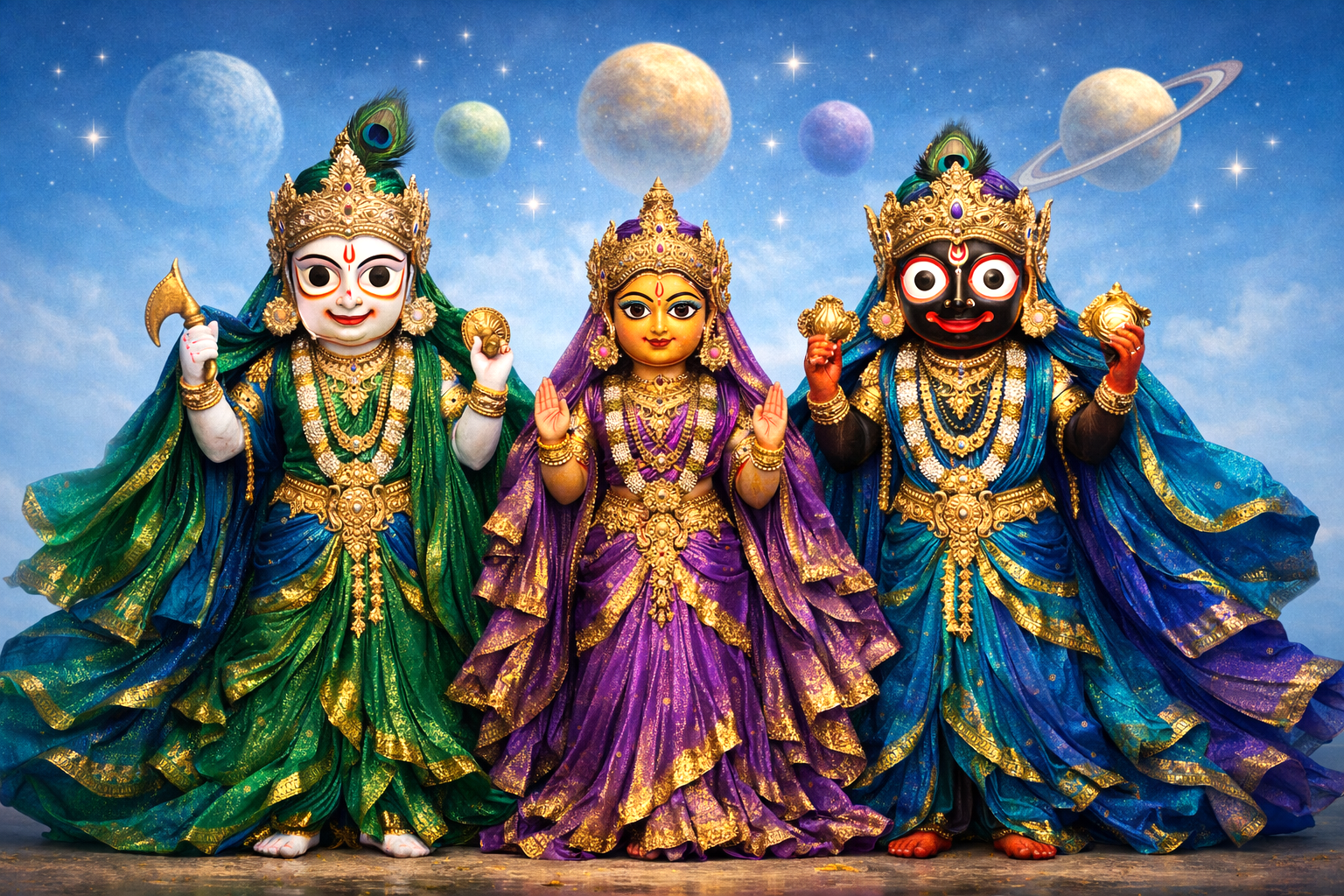
The journey of the divine siblings is always a shared one, from beginning to end. Just as they emerge together in the Nabakalebara and travel together in the Ratha Yatra, they are worshipped as an inseparable unit. The concept of the trinity as an inseparable divine unit is a core teaching. One cannot truly worship Jagannath without acknowledging the presence of his brother and sister. This interdependence teaches a profound lesson about community and relationships, showing that even the Supreme Being is not an isolated entity but finds completeness and joy in the company of his beloved divine family.
The 'Human-Like' Gods of Puri
The most endearing aspect of the trinity is their deeply human-like nature. The worship of the Puri trinity with human-like rituals makes them uniquely accessible. They get sick, they feel hot and cold, they go on vacation, and they have family squabbles (as seen in the Hera Panchami festival, where a jealous Lakshmi breaks Jagannath's chariot). This anthropomorphic worship allows devotees to form a deep and personal bond with them, approaching them not with fear and awe, but with the familiar love one would show to a parent, a brother, or a sister, making devotion a simple and heartfelt affair.
A Message of Love, Loyalty, and Community
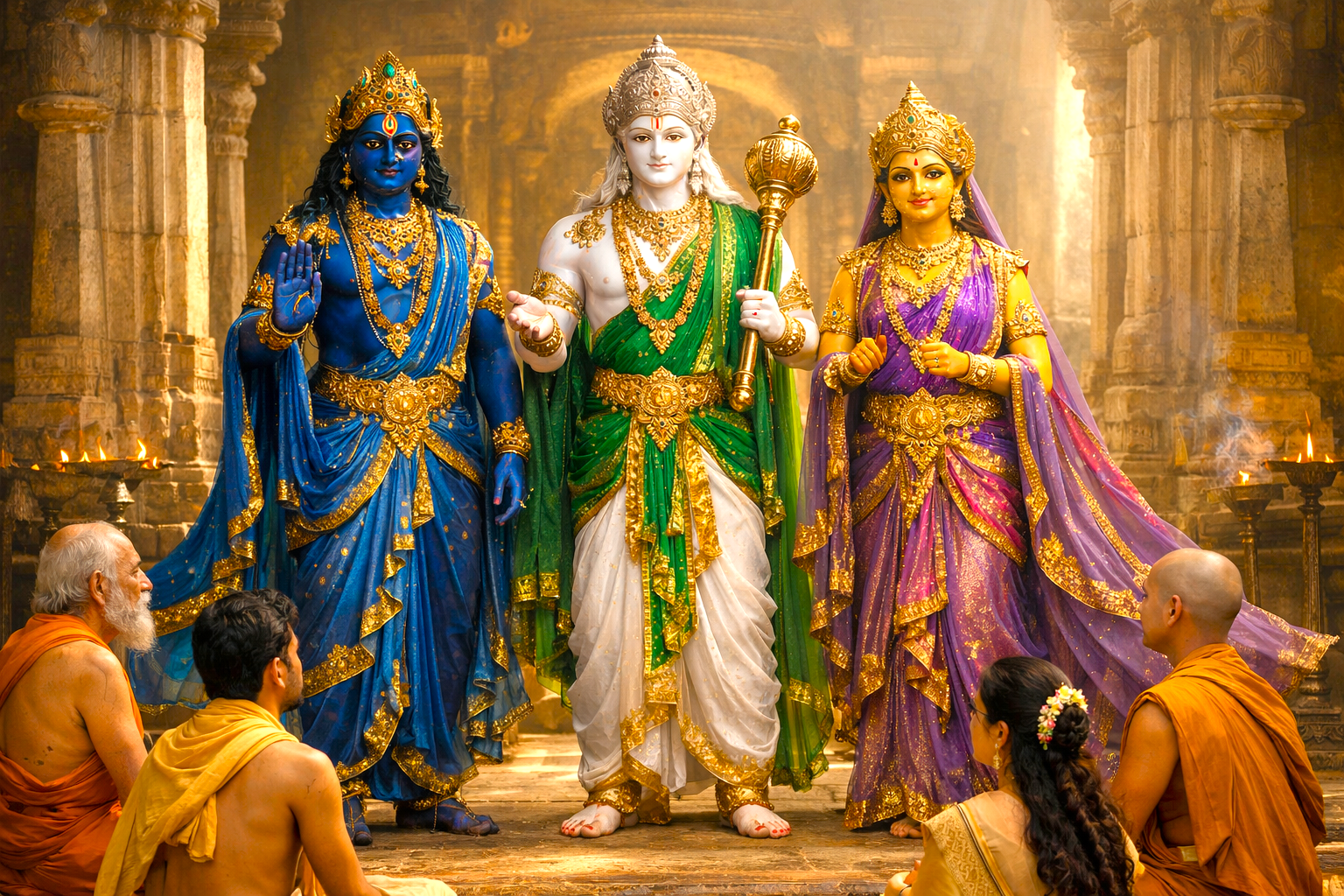
Ultimately, the Divine Trinity of Jagannath, Balabhadra, and Subhadra offers a powerful and comforting message. The empowering message of the divine sibling trinity is that the foundation of the universe is love and relationship. They teach that strength (Balabhadra) and compassion (Subhadra) are the essential supports for the Supreme Being (Jagannath). Their collective worship emphasizes that spiritual life is not a solitary journey but one that is enriched and made complete through family, community, and selfless love. They are the ultimate divine family, welcoming all of humanity into their loving embrace. Jagannath Balabhadra and Subhadra The Divine Trinity
Step Inside The Story - View All Tour Itineraries & Details

We’re here to offer genuine, thoughtful guidance if your interested in travelling to India. As a small, dedicated team, we pay close attention to every detail so you can focus on enjoying the experience while we take care of the planning. We believe the best trips begin when someone truly listens to what you want and how you like to travel, so the journey feels right for you and contributes to a happy, positive group on tour. Our communication stays clear, straightforward, and respectful at every step, with the goal of helping you feel understood, supported, and confident from first contact to the end of your journey.
Click Catherine Frith - About The Founder
Click Discover Life Travel - All Tours and More
Click Why We Are Different - Unique, Safe, Transparent