Unique Insights Into The Deities Of India
Indra: King of Heaven
Discover Life Travel
The First-Born King of the Gods
Indra is the celebrated king of the Devas and the powerful god of thunder, rain, and storms. The story of Indra's birth to Aditi and Kashyapa marks him as one of the chief Adityas, the divine sons of the infinite goddess Aditi. Born fully grown and already brandishing his divine weapons, he was destined for leadership. He swiftly established his supremacy through his immense power and valor, leading the celestial gods in their eternal struggle against the Asuras. His very birth was a promise of a new, powerful order for the gods, an era to be ruled by a dynamic and forceful king. Indra King of Heaven
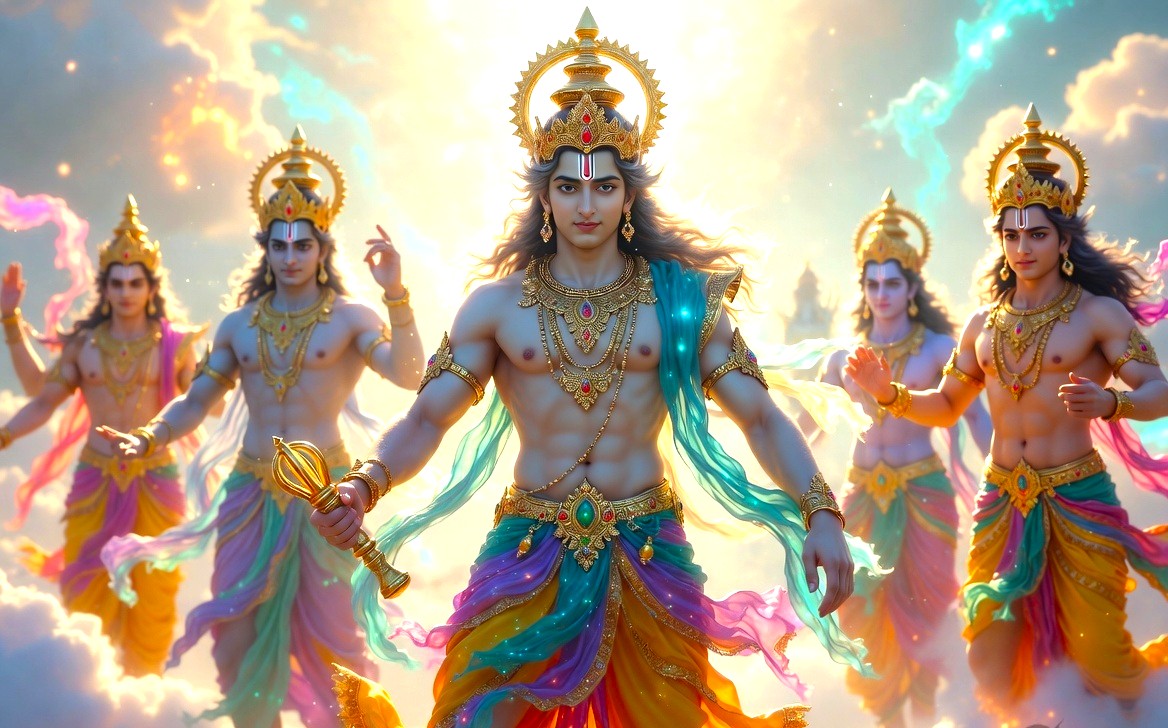
Indra King of Heaven: The Celestial Capital of Amaravati
The magnificent abode of Indra is Svarga Loka, the celestial heaven, and his capital city is the glorious Amaravati, situated on the cosmic Mount Meru. This divine city is a paradise of untold splendors, crafted by the celestial architect Vishvakarma. It is a realm free of sorrow, age, and disease, where the air is filled with the music of the Gandharvas (celestial musicians) and the beauty of the Apsaras (celestial dancers). It is from the great assembly hall, Sudharma, in this celestial court of Indra in Amaravati, that he governs the heavens, dispenses justice, and enjoys the pleasures of his hard-won sovereignty.
The Thunderbolt and the Rainbow
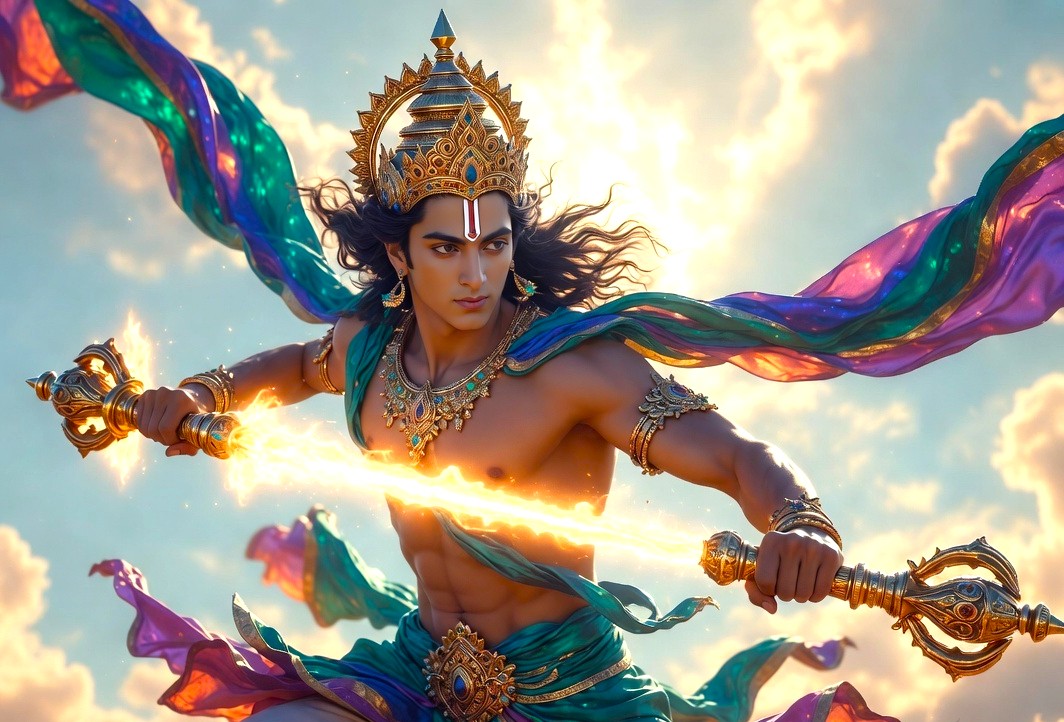
The symbols associated with Indra are emblems of immense power and natural phenomena. His primary and most feared weapon is the Vajra, the divine thunderbolt weapon, crafted from the bones of the sage Dadhichi, making it an indestructible force. The rainbow is considered Indra's divine bow, the Indradhanush, which he uses after a storm has passed. Another key symbol is the conch shell, which he blows to announce victory. Collectively, his symbols represent his complete dominion over the sky, the storms, and his absolute power to vanquish the forces of darkness and drought.
The Divine Family of the Heavenly King
Indra’s family is one of celestial royalty and power. He is the son of the sage Kashyapa and the mother goddess Aditi. His beautiful and devoted wife is Queen Shachi (also known as Indrani), the personification of divine grace and beauty. Together, they have a son, Jayanta, and a daughter, Jayanti. Indra is also the divine father of the great Pandava hero, Arjuna, whom he fathered with Kunti. His court is a grand extended family that includes all the Deva gods, who look to him as their leader and protector in times of cosmic crisis. Indra King of Heaven
The Rise to Celestial Sovereignty
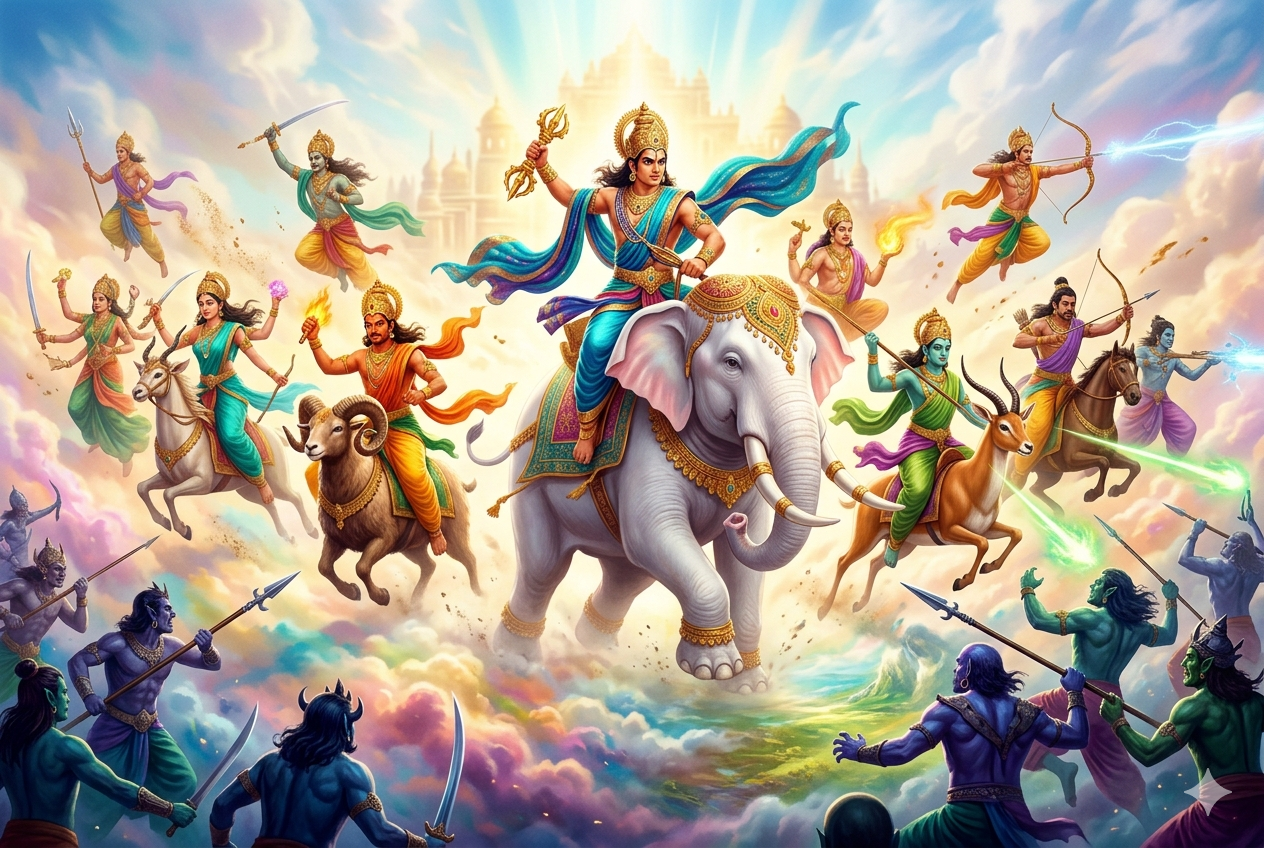
Indra's youth was a rapid and decisive climb to power. The story of Indra becoming the king of the Devas is of merit and might. He proved his worthiness through his unparalleled strength, strategic mind, and his unwavering commitment to protecting the gods from their enemies, the Asuras. He led the Deva armies to numerous victories, establishing himself as the most capable warrior and leader. The other gods, recognizing his supreme ability to maintain order and ensure their safety, willingly elected him as their sovereign, a position he would have to defend for eons to come.
The Heroic Slaying of the Great Serpent
Indra’s most famous and defining heroic deed is his epic battle with a monstrous demon. The story of Indra slaying the great demon Vritra is a cornerstone of Vedic mythology. Vritra was a colossal serpent-like Asura who had coiled himself around the mountains, trapping all the waters of the universe and causing a catastrophic drought. Indra, fortified by the divine elixir Soma and wielding his mighty Vajra, engaged the demon in a cosmic battle. After a fierce struggle, he shattered the mountains with his thunderbolt, slaying Vritra and releasing the life-giving waters to flow back into the world, establishing his role as a savior god. Indra King of Heaven
The Four-Tusked White Elephant, Airavata
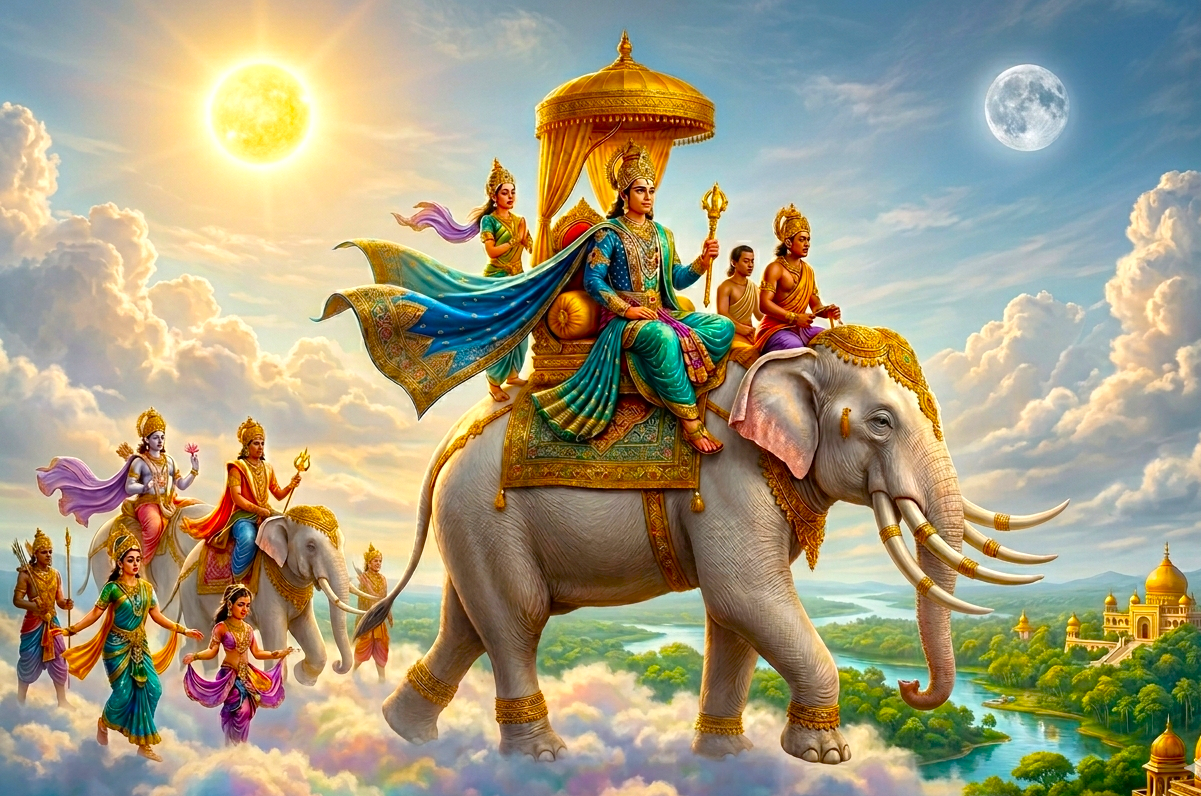
The magnificent vehicle that the king of the gods rides is a symbol of his royal majesty and power over the rains. The symbolism of the white elephant Airavata, Indra's divine mount, is deeply significant. Airavata, who emerged from the Churning of the Ocean, is a colossal four-tusked white elephant. He is believed to be able to draw water from the underworld with his trunk and spray it into the clouds, which Indra then releases as rain. By riding this majestic creature, Indra reveals his sovereignty and his vital role as the god who brings rain and fertility to the earth.
The Liberation of the Cosmic Waters
Indra’s greatest triumph is the one that cemented his reputation as a protector of life itself. The story of Indra's triumph of releasing the waters from Vritra was a cosmic reset. By defeating the drought demon, he restored the fundamental rhythm of the universe, ensuring that the waters, symbolic of life, grace, and prosperity, were no longer hoarded but flowed freely for all beings. This triumph established him as a benevolent deity whose primary role was to fight against the forces that hoard and stagnate, and to ensure the continuous, dynamic flow of life-giving resources throughout the cosmos.
A God's Need for Soma and Immortality
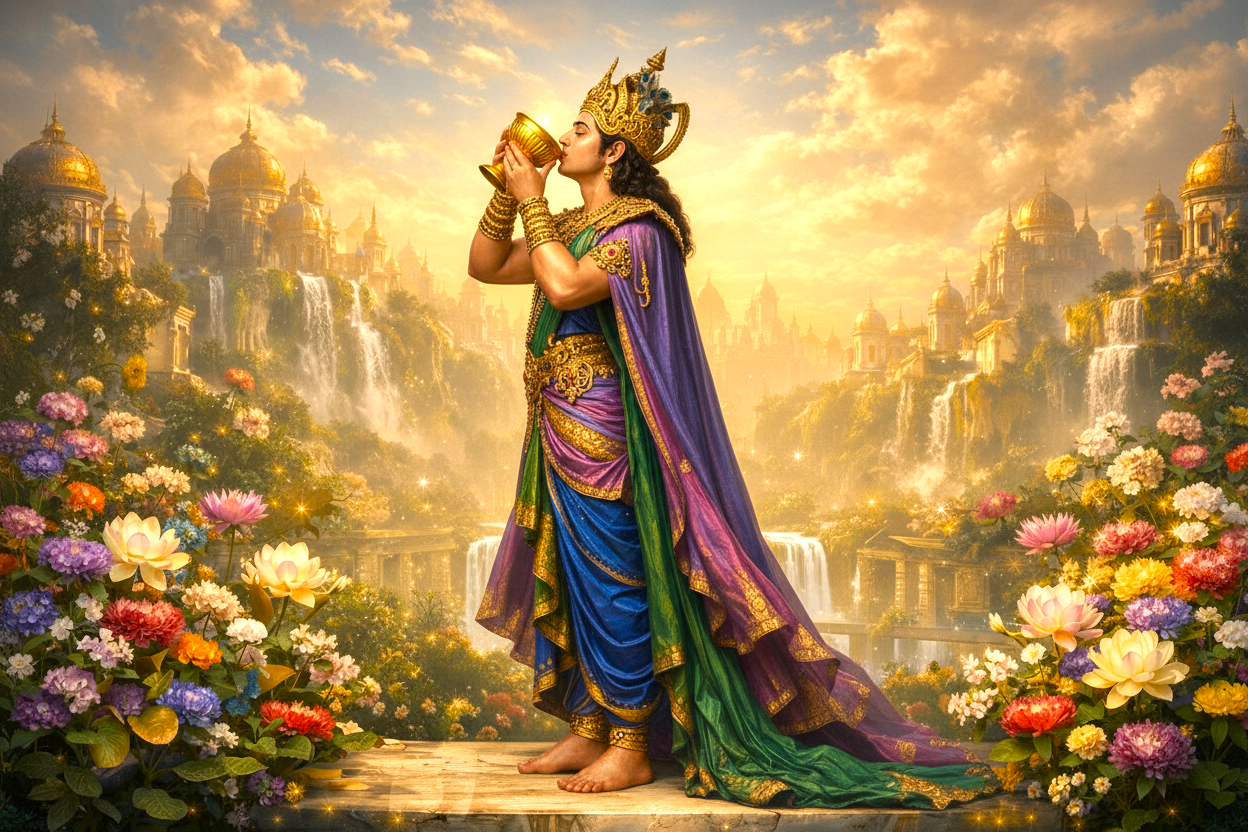
Unlike the supreme Trimurti, Indra's power and immortality are not absolute and require sustenance. His dependence on Soma and the Amrita nectar is a key aspect of his character. Soma is a divine intoxicating drink that grants him the ecstatic energy and strength needed for battle, especially against Vritra. Amrita, the nectar of immortality obtained from the ocean churning, grants him and the Devas their longevity. This reliance shows that Indra’s power, while immense, is conditional and must be constantly renewed through ritual (Soma) and divine grace (Amrita). Indra King of Heaven
A Message of Leadership and Its Perils
Indra's life offers a complex message about the nature of power. The empowering message from Indra about leadership is that a king must be strong, decisive, and willing to fight to protect his people and uphold righteousness. However, his story is also a cautionary tale. His frequent arrogance, jealousy, and insecurity about his throne show the dangers of pride and luxury that come with power. He teaches that leadership requires not just strength, but also vigilance against one's own ego, a lesson he often learns through humbling encounters with sages and other deities.
The Solar Plexus of Power and Ambition
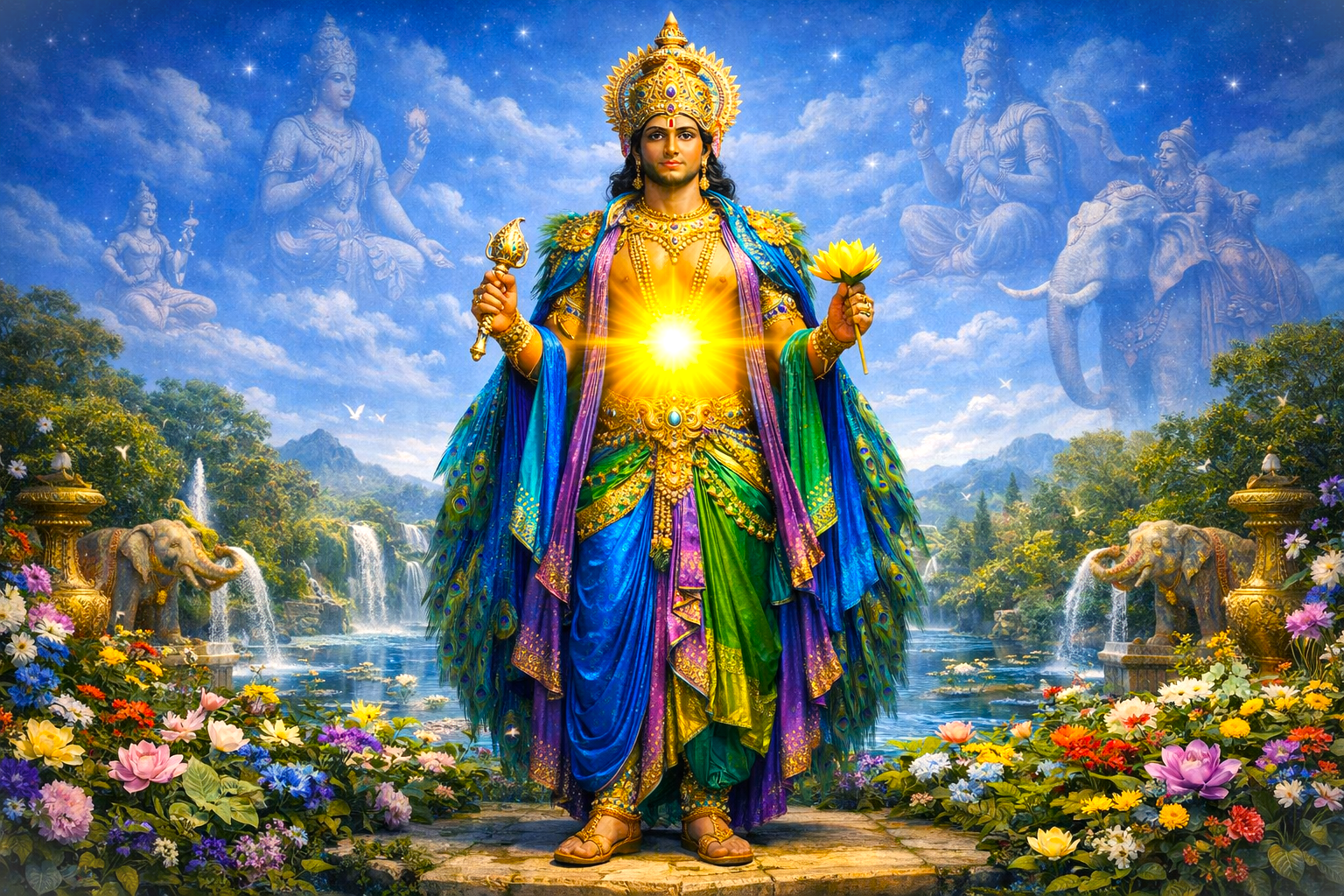
As the ambitious and powerful king of the gods, Indra's energy resonates with the body's center of power and will. He is the embodiment of the Manipura (Solar Plexus) Chakra, the center of personal power, ambition, and authority. The key frequency that Indra embodies is that of sovereign command and active, fiery leadership. His aura is a brilliant golden-yellow, the color of sunlight and royal power. Meditating on Indra can help to boost confidence, develop leadership qualities, and energize the will to overcome challenges. Indra King of Heaven
The Unconquerable Thunderbolt of Dharma
Indra’s signature weapon is the most famous in the celestial arsenal. The Vajra was forged from the bones of the sage Dadhichi, who willingly sacrificed his own body for the cause of the gods. This origin makes the weapon not just a tool of power, but an instrument of Dharma, infused with the power of ultimate self-sacrifice. It is an unstoppable weapon that can cleave mountains and slay the most powerful of demons. It represents the concentrated force of righteousness, a power that, when wielded by a worthy leader, can overcome any obstacle.
The Humbling of a God by a Child
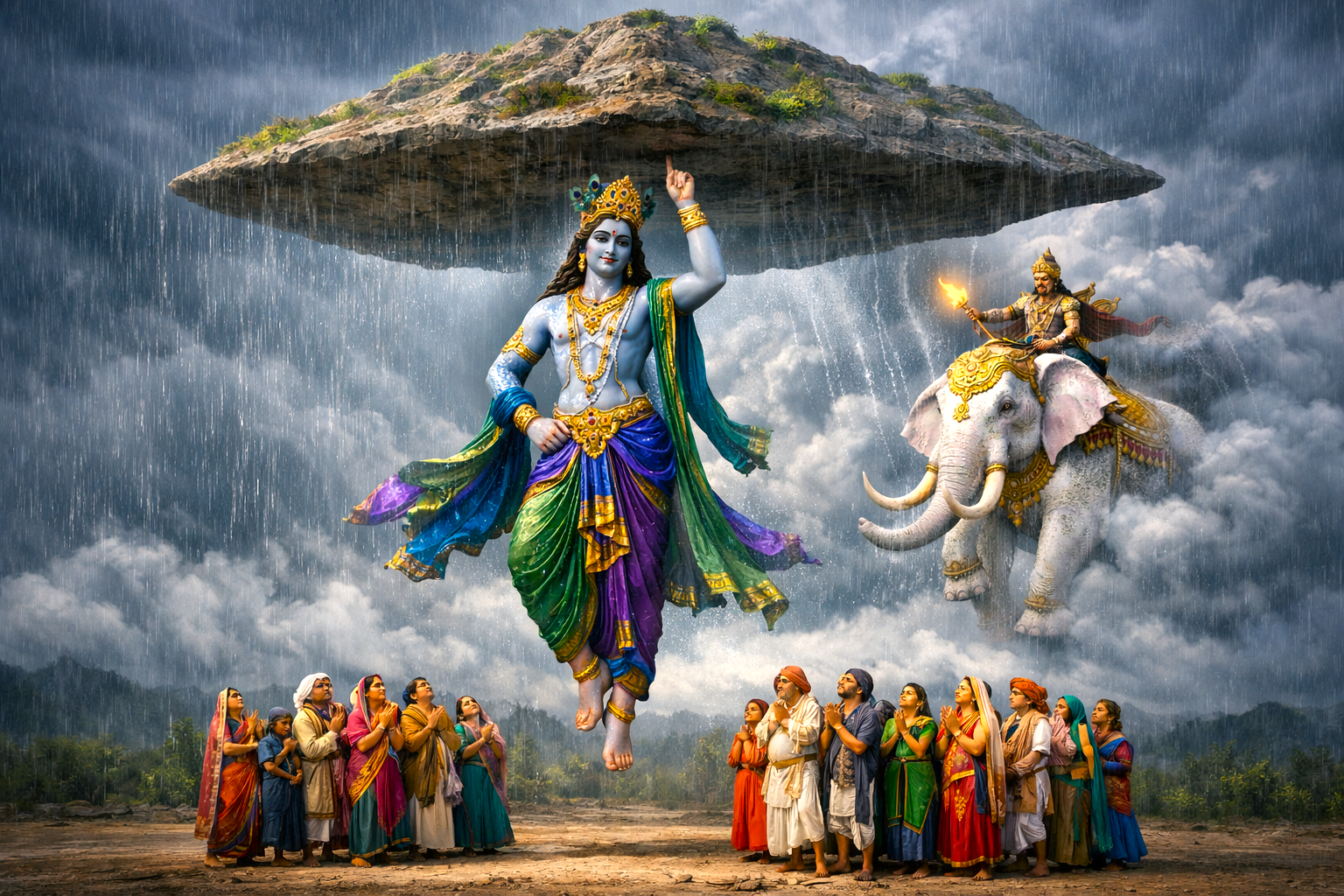
A famous story from Krishna's life serves as a lesson in Indra's pride. The story of Krishna humbling Indra's pride with Govardhan Hill is a classic tale. When Krishna convinced the villagers of Vrindavan to stop their traditional worship of Indra, the god of rain flew into a rage. He unleashed a catastrophic storm to flood the village. The young Krishna calmly lifted the entire Govardhan mountain on his little finger, providing a perfect shelter for all the villagers and their cattle. After seven days, a defeated and humbled Indra came down and begged for Krishna's forgiveness, learning that divine love is more powerful than divine might.
The Seducer of Ahalya: A God's Flaw
One of the most famous stories illustrating Indra's flaws is his deception of a sage's wife. The story of Indra's seduction of Ahalya and the curse of sage Gautama is a powerful cautionary tale. Desiring the beautiful Ahalya, Indra took the form of her husband, the sage Gautama, and seduced her. When the sage discovered the transgression, he cursed Indra to be covered with a thousand female organs, a mark of his shame and lust. He also cursed Ahalya to turn to stone. Indra's curse was later changed to a thousand eyes, making him the ever-watchful god.
The Fearful King of Heaven
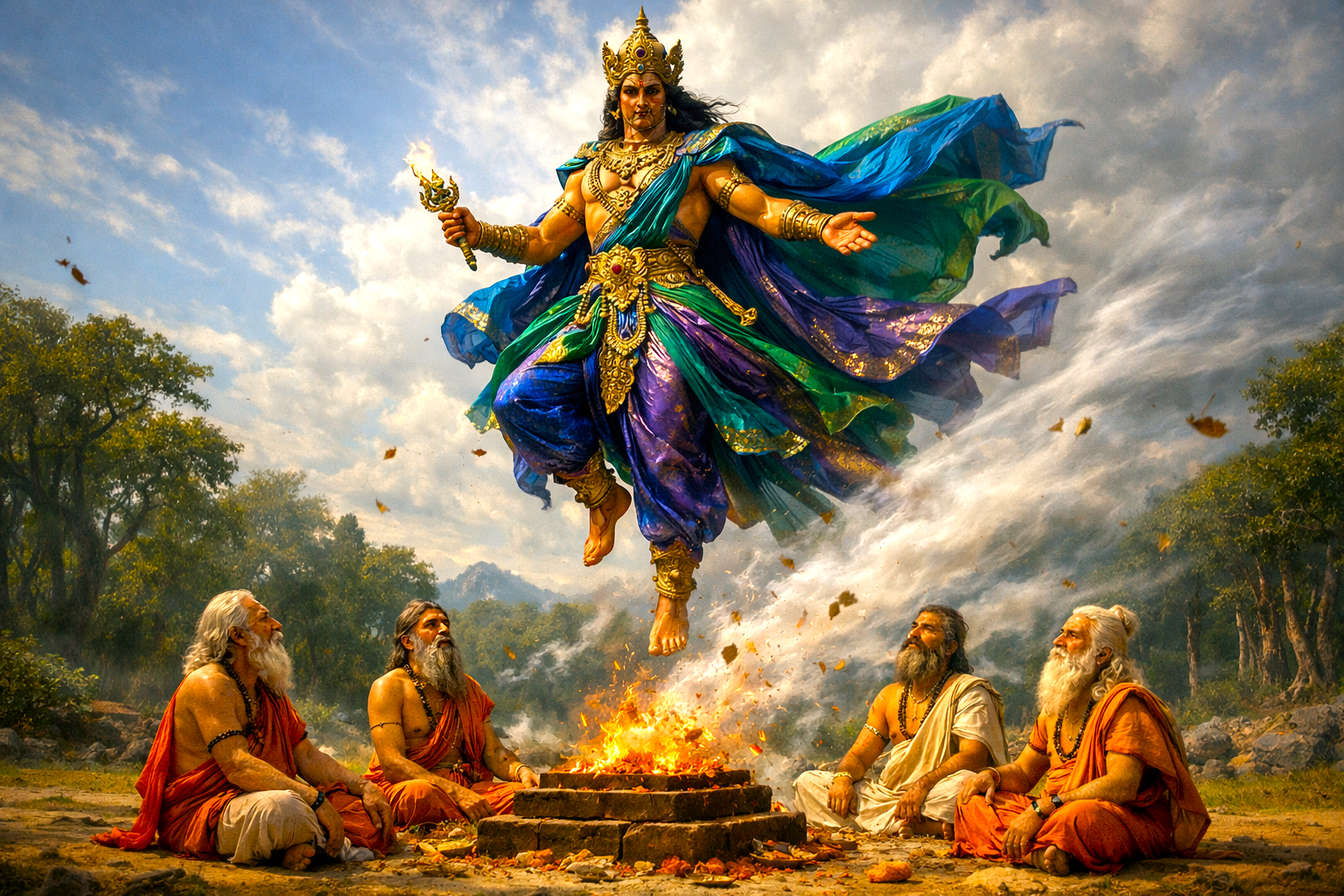
A recurring theme in the Puranas is Indra's deep-seated insecurity about his position. The stories of Indra disrupting the penance of great sages are numerous. Whenever a powerful king or sage would perform extreme austerities, Indra would become fearful that they were accumulating enough power to challenge him for the throne of heaven. To break their penance, he would often send his most beautiful Apsaras, like Menaka or Urvashi, to seduce them and distract them from their spiritual goal. This behavior highlights his primary character flaw: a clinging to power and a fear of being replaced.
The Waning of a Vedic God's Power
While he was the supreme deity of the Vedic period, Indra's prominence has diminished over time. The concept of Indra's declining importance in later Hinduism is a significant theological shift. In the Vedas, he is the most celebrated and invoked god. However, in the later Puranic traditions, the supreme roles were taken over by the Trimurti of Brahma, Vishnu, and Shiva. Indra was recast as a powerful, flawed and subordinate king of a lower heaven. This reflects a shift in Hindu thought from propitiating the gods of nature towards a more philosophical and devotional focus on the supreme, ultimate reality.
The Lord of Celestial Pleasures
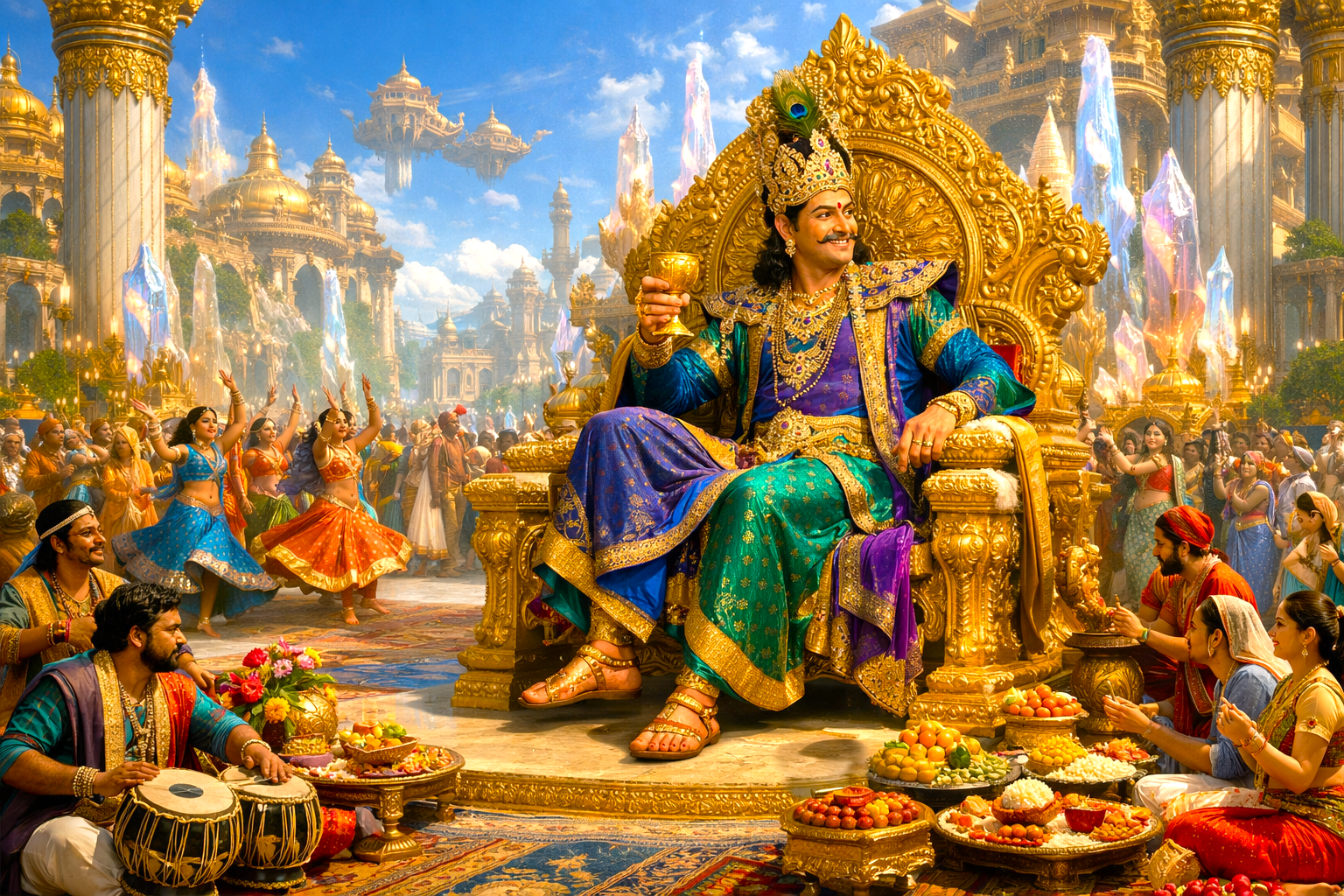
Indra's court is the ultimate destination for worldly and sensual pleasures. The role of Indra as the lord of the Apsaras and Gandharvas makes his heaven a place of endless entertainment. The Apsaras are celestial nymphs of breathtaking beauty, who are master dancers, while the Gandharvas are handsome demigods who are divine musicians. They perform constantly in his court, creating an atmosphere of eternal celebration and delight. This aspect of his realm represents the highest form of material and sensual reward available in the cosmos, a prize sought by many kings and warriors. Indra King of Heaven
Step Inside The Story - View All Tour Itineraries & Details

We’re here to offer genuine, thoughtful guidance if your interested in travelling to India. As a small, dedicated team, we pay close attention to every detail so you can focus on enjoying the experience while we take care of the planning. We believe the best trips begin when someone truly listens to what you want and how you like to travel, so the journey feels right for you and contributes to a happy, positive group on tour. Our communication stays clear, straightforward, and respectful at every step, with the goal of helping you feel understood, supported, and confident from first contact to the end of your journey.
Click Catherine Frith - About The Founder
Click Discover Life Travel - All Tours and More
Click Why We Are Different - Unique, Safe, Transparent