Unique Insights Into India
Shiva: Paradox of the Ascetic
Discover Life Travel
The Self-Manifested, Eternal Transformer
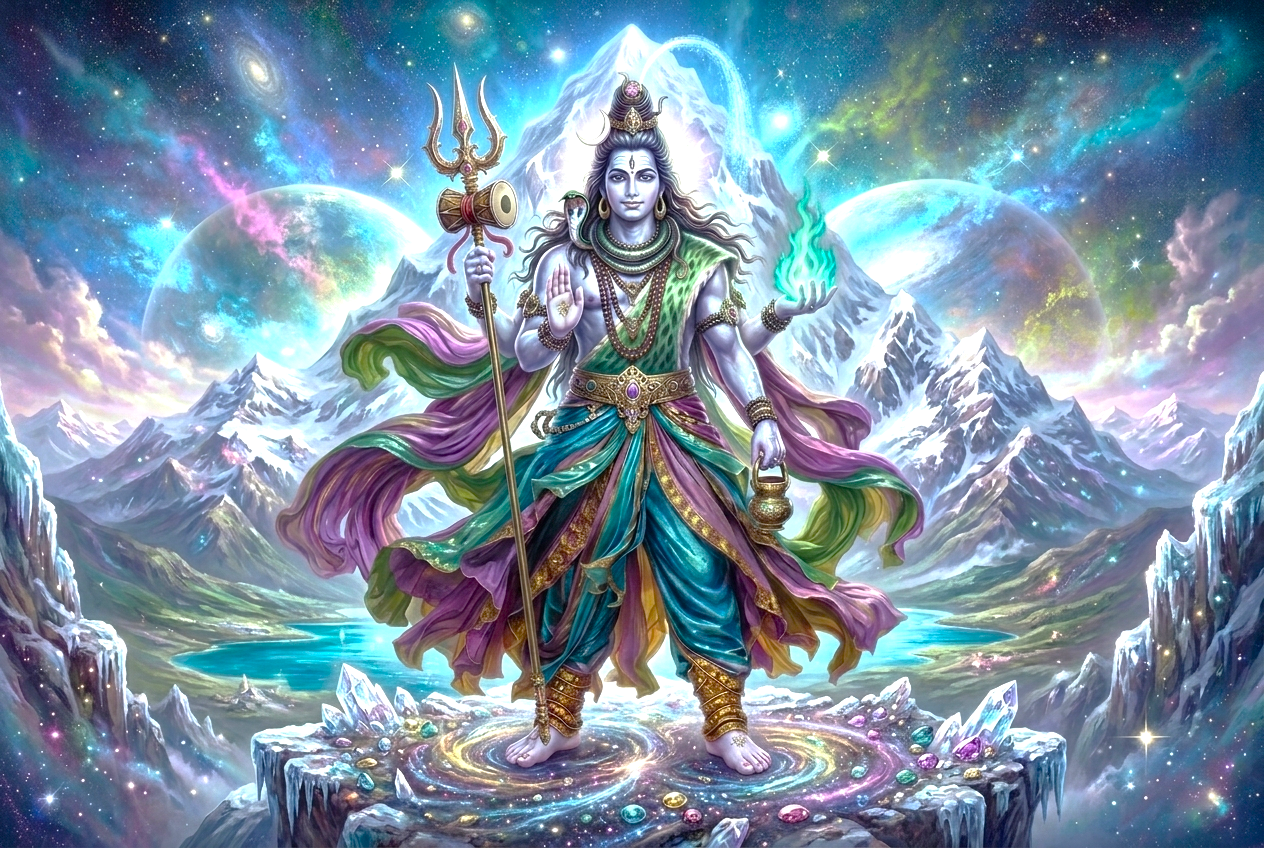
Lord Shiva is Swayambhu - the self-created and eternal consciousness that exists beyond beginnings and endings. He is one of the three supreme beings in the Hindu Trimurti, responsible for pralaya, the profound dissolution of the universe which paves the way for new creation. The story of Shiva's origin as the self-created eternal god is one of perpetual existence, transcending the concept of birth. His primary abode is the magnificent, ice-capped Mount Kailash, the sacred abode of Shiva, a real and revered peak in the Himalayas of Tibet. This mountain is a powerful spiritual landmark, considered the cosmic axis and the stairway to heaven, from where he watches over the cosmos in a state of perpetual meditation. Shiva Paradox of the Ascetic
The Potent Symbols of Divinity: Shiva Paradox of the Ascetic
Every symbol associated with Shiva is a universe of meaning. The deep meaning of the symbols of him reveals the secrets of existence. His trident, the Trishula, represents his power over the three fundamental qualities of nature (gunas), the three states of consciousness, and the past, present, and future. The crescent moon on his head signifies his control over time itself. The serpent Vasuki coiled around his neck represents the dormant kundalini energy and his mastery over fear and mortality. His third eye symbolizes the higher perception of reality beyond ordinary sight, and the sacred ash (vibhuti) smeared on his body signifies his enlightened perspective on the material world.
The Perfect Divine Cosmic Family
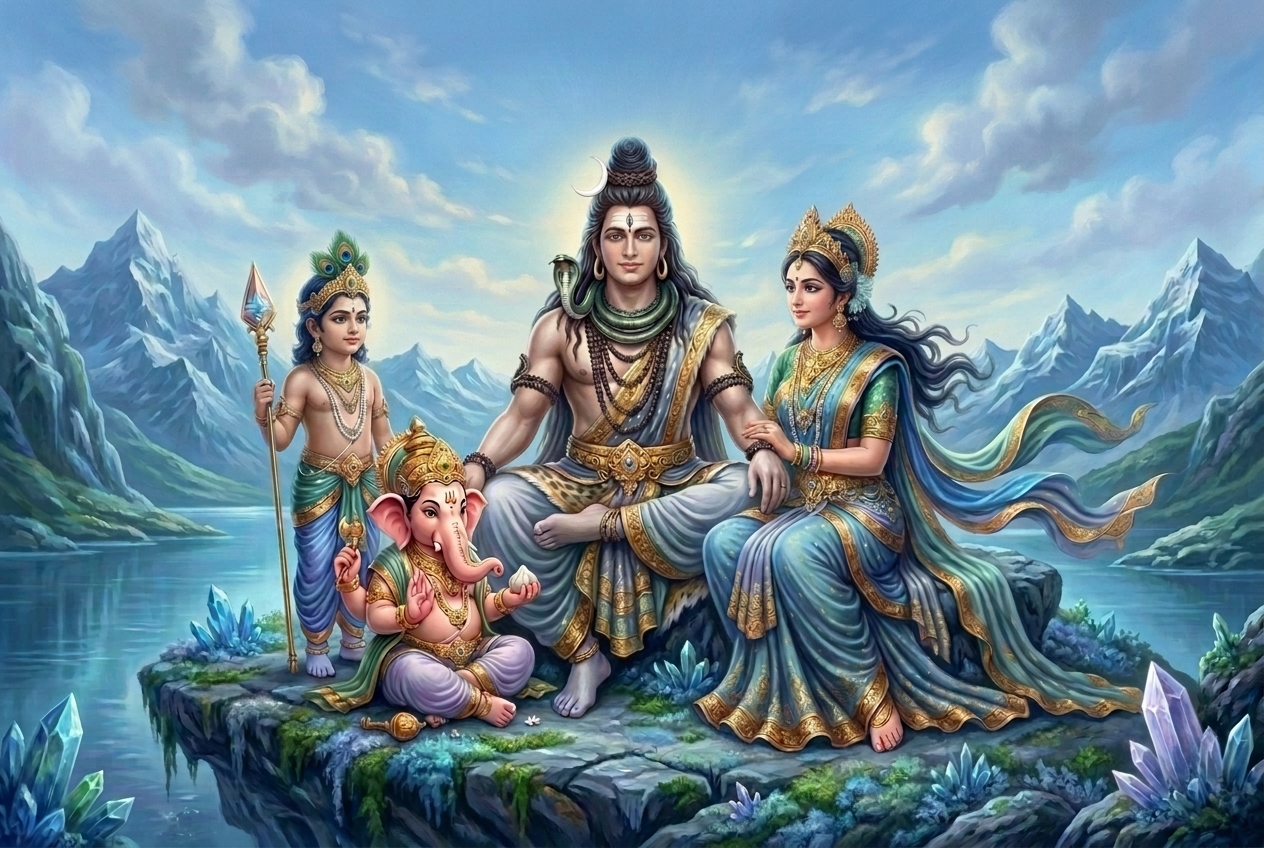
Shiva forms the archetypal divine family, a perfect blend of ascetic power and worldly grace. The divine family of Shiva and Parvati is central to Hindu devotion. His consort is the Parvati, the reincarnation of Sati and the embodiment of Shakti (divine energy). They are Ardhanarishvara, the half-male, half-female god, symbolizing the unified nature of consciousness and energy. He is the father of the wise, elephant-headed Lord Ganesha, the remover of obstacles, and the valiant warrior Lord Kartikeya, the commander of celestial armies. As Shiva is self-created, he represents his status as the ultimate source.
From Ascetic to Householder
Shiva's journey to marriage is a profound narrative of cosmic balance. The story of his marriage to the goddess Parvati is one of great penance and devotion. After the passing of his first wife, Sati, Shiva entered a deep, world-sustaining meditation. Parvati, born as the daughter of the mountain king Himavat, undertook years of severe ascetic penance to win his heart. Her unwavering devotion awakened Shiva from his meditative trance, encouraging him to embrace his householder responsibilities. This union symbolizes the essential harmony between intense spiritual detachment and compassionate worldly engagement for the benefit of the cosmos. Shiva Paradox of the Ascetic
The Blue-Throated Savior of Worlds
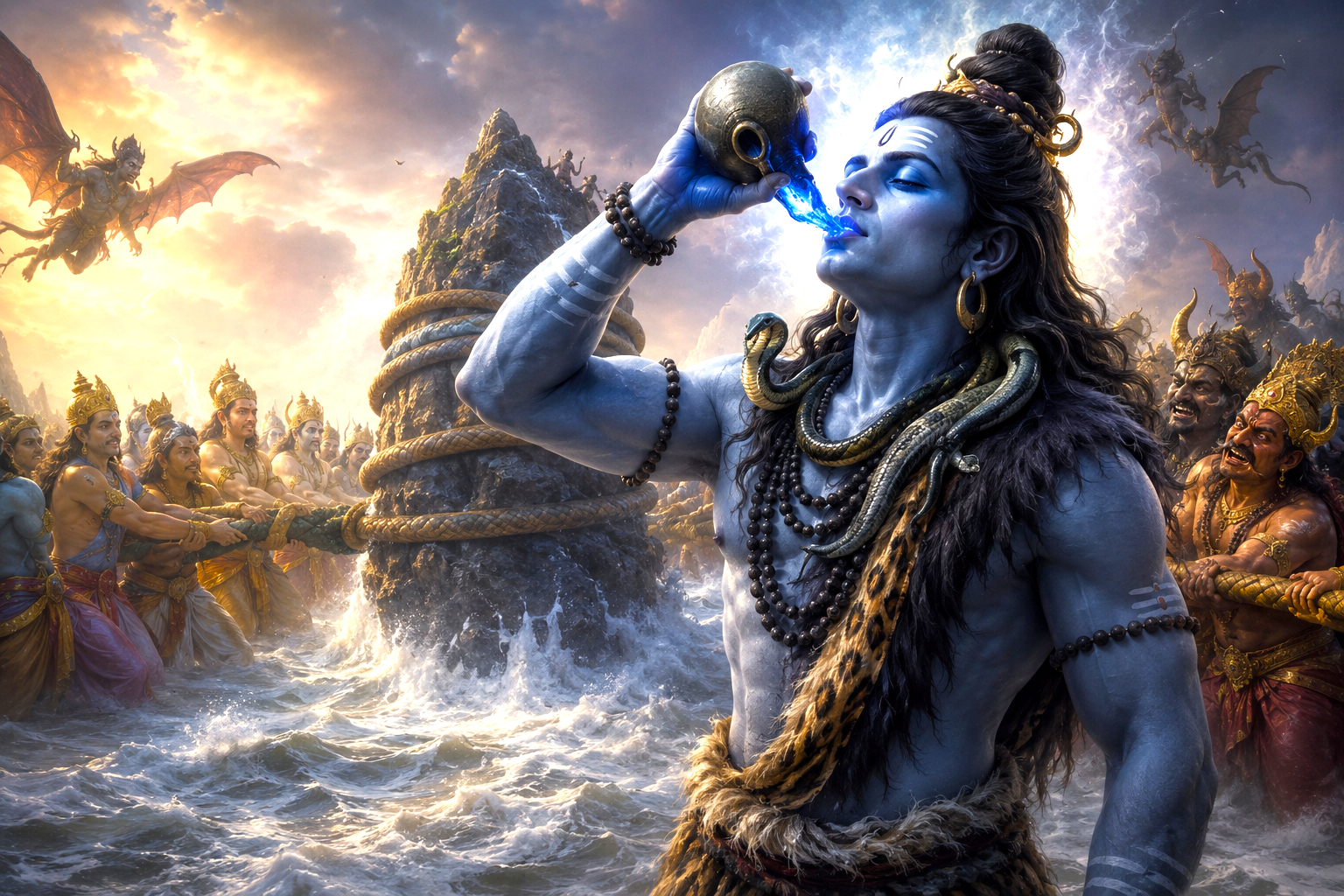
One of his most famous tales reveals his ultimate compassion. The story of why Shiva is called Neelkanth (The Blue-Throated One) originates from the Samudra Manthan or the Churning of the Ocean. When the gods and demons churned the cosmic ocean to obtain the nectar of immortality, a potent substance called Halahala emerged, powerful enough to affect all of creation. As others fled in terror, Shiva calmly collected the substance and drank it. Parvati, his consort, pressed his throat, containing the substance there and turning it blue. This act shows how Shiva saved the world from the Halahala poison through his own grace.
The Bull and the Cosmic Drum
Shiva's companions are as symbolic as he is. The significance of Nandi the bull as Shiva's vahana (vehicle) is profound. Nandi represents eternal devotion, righteousness (dharma), strength, and the joy of selfless service. Meditating upon Nandi is said to grant the devotee the strength and focus to connect with Shiva. Shiva's musical instrument is the small, hourglass-shaped drum, the Damaru. The rhythmic sound created by the cosmic sound of Shiva's Damaru drum is believed to be the Shabda Brahman, the primordial sound of creation itself. It is from this sound that the universe expands and into which it merges during cosmic dissolution. Shiva Paradox of the Ascetic
Transformer of the Three Cities
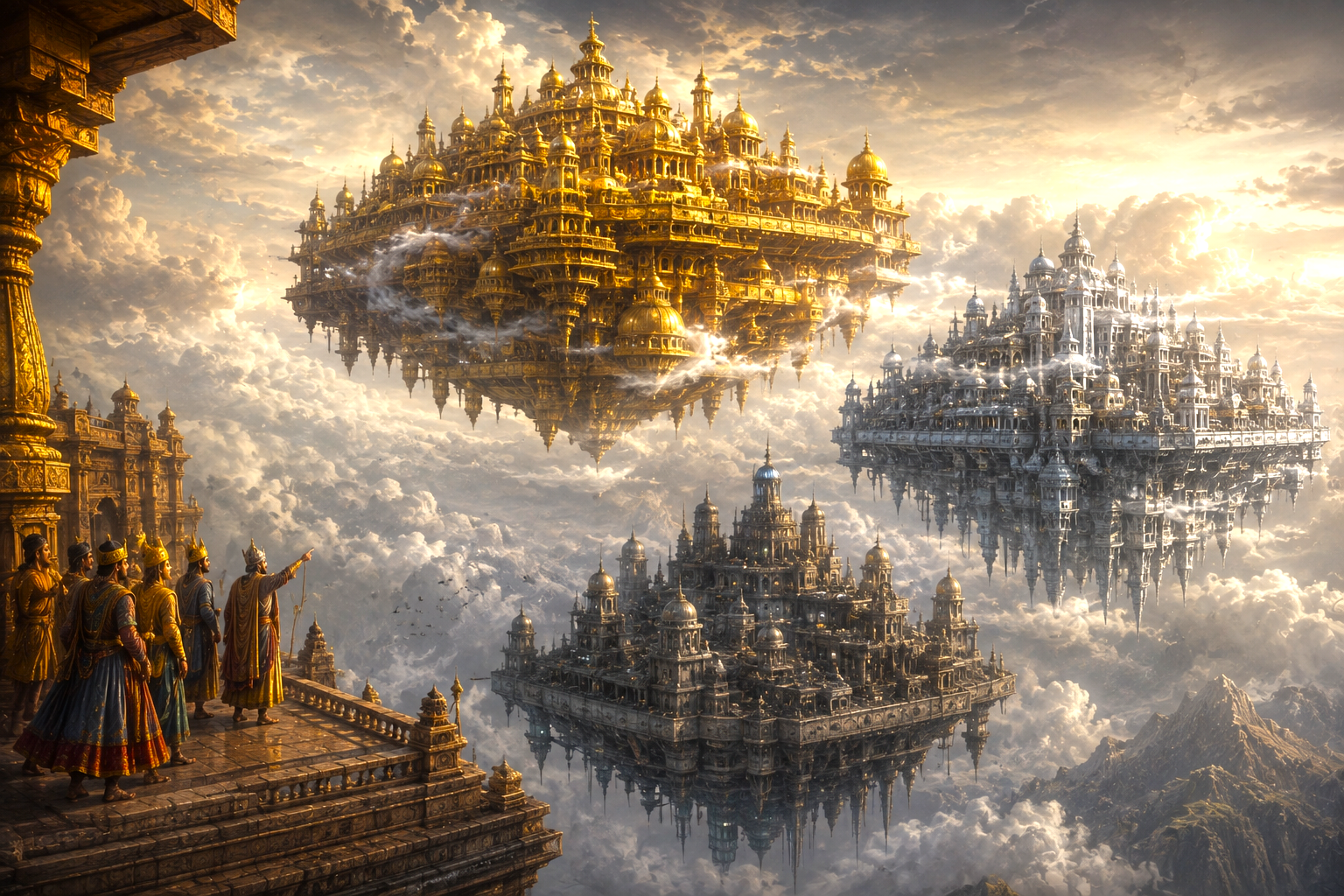
His role as a transformer is to transmute evil to restore order. The story of Shiva as Tripurantaka, the transformer of three cities, exemplifies this. The demon brothers Tarakaksha, Vidyunmali, and Kamalaksha were granted three flying cities of gold, silver, and iron, which they used to create chaos in the universe. When their actions grew extreme, the gods pleaded with Shiva for help. In one of Shiva's greatest acts of cosmic justice, he mounted a celestial chariot, drew his great bow Pinaka, and with a single, all-powerful arrow, the Pashupatastra, he liberated all three cities and the demons within them simultaneously.
Tandava: The Dance of Transformation
Shiva is eternal and part of the cosmic cycle. The passing of his first wife, Sati, provoked a reaction that reshaped the world. The story of Shiva's Tandava dance after Sati's passing is a powerful display of divine grief and energy. When Sati transitioned in her father's sacrificial fire, an impassioned Shiva appeared, lifted her form, and began the Rudra Tandava, a dance of dissolution that held the potential to transform the cosmos. To bring peace, Vishnu used his Sudarshana Chakra to create the sacred Shakti Peethas from Sati's essence. The places where the parts fell became powerful centers of goddess worship.
Shivas Message
The ultimate message from Shiva is that true freedom lies within. The empowering message for humanity is to find bliss and liberation by mastering the mind and senses. He teaches the power of meditation, detachment, and self-control. Shiva shows that one can be spiritual while living in the world, living with full awareness of its illusions and attachments. He is the ultimate symbol of fearlessness, teaching his devotees to embrace all aspects of life - creation and dissolution, joy and sorrow - with a calm and steady mind, knowing that the true self is eternal and serene amidst worldly chaos. Shiva Paradox of the Ascetic
The Crown Chakra and Cosmic Rays
Shiva embodies the highest state of spiritual attainment and the key frequencies of transcendence. He represents the Sahasrara Chakra, the thousand-petaled crown chakra, the gateway to supreme consciousness and divine union. His auric field is a brilliant, diamond-white light, encompassing all rays and colors, signifying his status as the source of all. The key frequency that Lord Shiva embodies is that of pure, silent, formless consciousness - the still point around which the entire universe dances. Meditating on him helps to activate the crown chakra, purify one's aura, and attune the individual soul to the frequency of cosmic consciousness and ultimate liberation.
Pashupatastra: The Ultimate Weapon
Shiva is the master of all celestial weaponry, with one weapon standing above all. The story of the divine celestial weapon Pashupatastra shows it is the most powerful and irresistible weapon in all of creation. It can be discharged by the mind, eyes, words, or a bow. The Pashupatastra was used by Shiva to liberate Tripurasura, the three demonic cities, with a single shot. Later, he gifted this weapon to the hero Arjuna after testing his valor. It is capable of transforming creation and is bestowed upon a warrior who possesses immense self-control, discipline, and righteousness. Shiva Paradox of the Ascetic
Lord of Time and Sacred Geometry
Shiva’s cosmic influence extends to time, space, and planetary forces. The astrological associations and planets related to Lord Shiva include Saturn (Shani), which represents discipline, detachment, and karma, and the Moon (Chandra), which he wears as an ornament, signifying his mastery over the mind and time. His sacred geometric shape is the Shiva Linga, the symbol of formless universal consciousness. This elliptical shape represents the unmanifested, creative potential from which all creation emerges. The most sacred times for his worship are during the festival of Maha Shivaratri and on Mondays, especially during the holy month of Shravan.
The Auspicious Lingam of Creation
The Shiva Linga is one of the most profound symbols in Hinduism. The true meaning of the Linga as a symbol of creation is that it represents the formless, genderless, all-pervading Absolute Reality, or Brahman. It is the cosmic pillar, the axis mundi, with a nature beyond beginnings and endings. The base, or yoni, represents Shakti, the divine feminine energy, the manifest universe. The Lingam rising from the yoni symbolizes the manifestation of consciousness into the material world. Together, they represent the indivisible union of matter and energy, the divine masculine and feminine principles that are the source of all existence.
The Fierce and Benevolent Protector
Shiva manifests in many forms, both fearsome and gentle. The meaning of his Bhairava and Bholenath forms shows his dual nature. As Kaal Bhairava, he is the fierce protector of sacred places, the lord of time who wields a club to transform the ego and vanquish negativity. This powerful form is worshipped to overcome obstacles and fear. Conversely, he is lovingly called Bholenath, the "Innocent Lord." In this form, he is easily pleased, grants boons to his devotees with compassion, and embodies simple, unconditional grace. This duality teaches that the same divine power can be both a ferocious protector and a gentle, benevolent guide. Shiva Paradox of the Ascetic
The Cosmic Dance of Creation
Shiva's most iconic form is that of the cosmic dancer. The symbolism of Shiva's Tandava dance as Nataraja depicts him as the lord of the dance, performing his divine act within a circle of fire. This dance has five purposes: creation (srishti), preservation (sthiti), dissolution (samhara), concealment (tirobhava), and grace (anugraha). He stands upon the demon of ignorance, Apasmara. In one hand, he holds the drum of creation; in another, the fire of transformation. His raised hand offers protection, while his other hand points to his lifted foot, the refuge for the liberated soul. It is a brilliant metaphor for the entire cycle of cosmic existence.
The Great Night of Lord Shiva
The most significant festival dedicated to Shiva celebrates his divine importance. The story and significance of the Maha Shivaratri festival commemorates several events: the night of his marriage to Parvati, the night he performed the Tandava dance, and the night he drank the Halahala substance. Devotees remain awake all night, fasting, chanting mantras like "Om Namah Shivaya," and performing pujas. It is believed that on this night, the planetary positions create a powerful upsurge of spiritual energy in the human system, making it an ideal time for meditation and achieving a deeper connection with one's own consciousness.
Conquering Mortality Itself
One of Shiva's most inspiring stories is his victory over mortality. The story of how he saved his devotee Markandeya from Yama is a testament to the power of faith. Young Markandeya was destined to transition at sixteen. As the God of Mortality, Yama, arrived, Markandeya clung to a Shiva Linga in fervent prayer. When Yama threw his noose, it encircled the Linga as well. In response, Shiva burst forth from the Lingam in his powerful form and blessed Yama, granting Markandeya the boon of eternal youth. This story shows Shiva as Kalanataka, the master of time and mortality. Shiva Paradox of the Ascetic
Healing Miracles at Ancient Temples
Today, countless devotees report experiencing Shiva's grace. A powerful modern miracle story of Shiva's healing power in India comes from the Vaitheeswaran Koil temple in Tamil Nadu, dedicated to Shiva as the "God of Healing." A devotee suffering from a chronic and painful skin condition, for which other avenues offered little comfort, made a pilgrimage to the temple. He performed the prescribed rituals, bathing in the temple tank and offering prayers with deep faith. Within weeks of returning home, his condition began to miraculously improve, an event he attributes solely to the divine intervention and healing power of Lord Shiva at this sacred site.
The Ganges' Descent to Earth
Shiva played a pivotal role in bringing the holiest river to Earth. The story of he caught the River Ganges in his hair is a tale of immense power and grace. When the sage Bhagiratha performed penance to bring the celestial river Ganga to Earth to purify his ancestors' ashes, the gods knew that the force of her descent could overwhelm the world. Bhagiratha prayed to Lord Shiva for help. As Ganga descended from the heavens in a powerful torrent, Shiva stood calmly and caught her in his matted locks, taming her potent energy and releasing her in gentle streams that flowed across the plains of India, becoming a source of life and purification for all. Shiva Paradox of the Ascetic
Step Inside The Story - View All Tour Itineraries & Details

We’re here to offer genuine, thoughtful guidance if your interested in travelling to India. As a small, dedicated team, we pay close attention to every detail so you can focus on enjoying the experience while we take care of the planning. We believe the best trips begin when someone truly listens to what you want and how you like to travel, so the journey feels right for you and contributes to a happy, positive group on tour. Our communication stays clear, straightforward, and respectful at every step, with the goal of helping you feel understood, supported, and confident from first contact to the end of your journey.
Click Catherine Frith - About The Founder
Click Discover Life Travel - All Tours and More
Click Why We Are Different - Unique, Safe, Transparent