Unique Insights Into The Deities Of India
Ravana: Rise of a Titan
Discover Life Travel
The King of Lanka
Ravana's origins are a complex tapestry of divine sagehood and demonic lineage. He was born in the village of Bisrakh, near modern-day Greater Noida in India, to the great Brahmin sage Vishrava and the Rakshasa princess Kaikesi. This story of Ravana's birth to Sage Vishrava and Kaikesi makes him a half-Brahmin and half-Rakshasa. His paternal grandfather was the sage Pulastya, one of the seven great mind-born sons of Lord Brahma. This sacred lineage gave Ravana profound intellectual capabilities and a deep knowledge of the Vedas and sacred rituals from birth, a foundation upon which he would build his immense power and complex character, blending scholarly wisdom with demonic ambition. Ravana Rise of a Titan
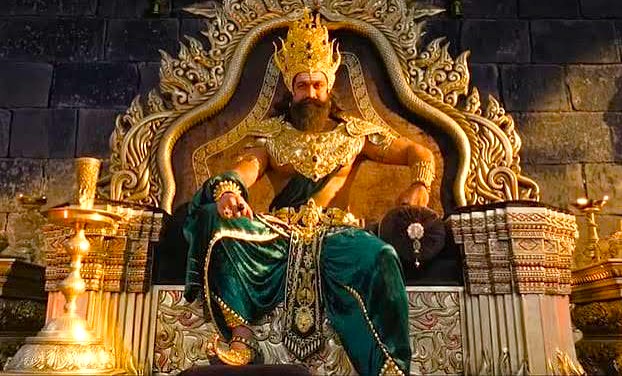
Ravana Rise of a Titan: Lord of the Golden Lanka
After performing intense austerities, Ravana was granted immense power and sought a kingdom befitting his stature. He forcefully took the magnificent island kingdom of Lanka from his half-brother, Kubera, the god of wealth. The story of Ravana conquering the golden city of Lanka established his sovereignty. This island, identified with modern-day Sri Lanka, was described as a paradise of unimaginable wealth and beauty, with golden palaces and lush gardens. Ravana ruled from this island fortress, with landmarks like the stunning Sigiriya (sometimes associated with his palace) serving as a testament to the architectural and engineering prowess of his kingdom, a golden citadel from which he would challenge the gods themselves.
The Ten Heads of Ego
Ravana’s most recognizable feature is his ten heads, a powerful visual metaphor for his immense knowledge and insatiable desires. The symbolism of Ravana's ten heads and their meaning represents his mastery over the four Vedas and the six Shastras (ancillary scriptures), making him one of the most learned scholars of his time. However, these heads also symbolize the ten great evils or negative emotions: lust (kama), anger (krodha), delusion (moha), greed (lobha), pride (mada), envy (matsarya), the mind (manas), intellect (buddhi), will (chitta), and ego (ahamkara). His form is a constant reminder that immense knowledge without humility can lead to an all-consuming ego. Ravana Rise of a Titan
A Family of Powerful Rakshasas
Ravana surrounded himself with a family that was as formidable and powerful as he was. The family of Ravana, his wife Mandodari and his sons, formed the core of his kingdom's strength. His chief wife, Mandodari, was a virtuous and beautiful woman who often advised him towards the path of righteousness. His most famous son was the mighty warrior Indrajit (Meghanada), who had conquered Indra himself and possessed an arsenal of celestial weapons. His brothers, the deep-sleeping giant Kumbhakarna and the noble Vibhishana, who eventually defected to Rama's side, were both powerful figures, making the royal family of Lanka a force that could challenge the heavens.
A Youth of Intense Austerity
Ravana’s immense power earned through one of the most severe acts of penance ever performed. The story of Ravana's penance to Brahma and Shiva is a tale of extreme determination. To gain invincibility, the young Ravana performed intense austerities for thousands of years. As an offering to Brahma, he severed his own heads one by one. Each time he cut off a head, a new one grew back, allowing him to continue his penance. Finally, pleased by his incredible willpower, Brahma appeared and granted him a boon of near-invincibility, making him immune to harm from gods, demons, and celestial beings.
The Abduction of Goddess Sita
The single act that defined Ravana’s destiny and sealed his doom was the kidnapping of Sita. The story of Ravana's abduction of Sita from Panchavati was an act of vengeance. To avenge the humiliation of his sister, Surpanakha, at the hands of Rama and Lakshmana, Ravana devised a deceptive plan. He sent a magical golden deer to lure Rama away, and then appeared before Sita disguised as a wandering ascetic. Forcibly abducting her, he carried her away to his kingdom of Lanka in his flying chariot, the Pushpaka Vimana. This single act of adharma set in motion the epic conflict that would lead to the great war. Ravana Rise of a Titan
The Flying Chariot and Veena
Ravana possessed divine artifacts that showcased his power and refinement. His famous vehicle was the Pushpaka Vimana, Ravana's magical flying chariot. This magnificent chariot originally belonged to his half-brother Kubera and could travel at the speed of thought, expanding or contracting to accommodate any number of passengers. Beyond his martial prowess, Ravana was a connoisseur of the arts and a master musician. His chosen instrument was the Rudra Veena, which Ravana played to please Lord Shiva. He was such a gifted player that he composed the powerful Shiva Tandava Stotram, a hymn of praise that moved Shiva himself, revealing the deep artistic and devotional side of his complex personality.
The Final War with Rama
Ravana's refusal to return Sita led to one of the greatest wars in epic history. The story of the final war between Ravana and Lord Rama was a cataclysmic battle fought in Lanka. Despite losing his greatest warriors, including his brother Kumbhakarna and his son Indrajit, Ravana’s pride and ego would not let him surrender. A mighty and terrible warrior, he faced Rama in a final, apocalyptic duel. The battle raged with celestial weapons, but ultimately, Rama unleashed the divine Brahmastra, which pierced Ravana's heart and ended the life of the mighty Rakshasa king, bringing the epic war to a dramatic close. Ravana Rise of a Titan
A Legacy of Ambition and Power
Ravana’s life, though villainous, serves as a powerful cautionary tale. The empowering message from Ravana's life story is a complex lesson about the nature of power, ambition, and ego. He teaches that knowledge and power, when unguided by humility and righteousness, can lead to self-destruction. His story is a powerful reminder that no matter how intelligent, strong, or prosperous one becomes, disrespecting dharma and succumbing to one's own ego will ultimately lead to downfall. His legacy is that of a brilliant, capable ruler whose tragic flaw was his inability to control his own pride, making him a timeless example of greatness corrupted.
The Solar Plexus and Fiery Will
Ravana's entire being was a furnace of ambition, desire, and personal power. He is a pure embodiment of the Manipura (Solar Plexus) Chakra, the center of willpower and ego. This chakra governs ambition, identity, and the drive to control one's environment. The key frequency that Ravana embodies is that of intense, fiery, and unrestrained personal will. His aura would have been a blazing mixture of the red ray of passion and the dark, smoky energy of ego and attachment. His energy demonstrates how an overactive and imbalanced Manipura Chakra can lead to a tyrannical desire for control and a disregard for moral boundaries. Ravana Rise of a Titan
The Mighty Divine Brahmastra Weapon
As a result of his immense knowledge and devotion, Ravana possessed a terrifying arsenal of celestial weapons. He was a master of divine weaponry, his most powerful was the Brahmastra, the divine weapon of Lord Brahma, possessed by Ravana. He received this ultimate weapon through his lineage and severe penance. The Brahmastra was an infallible missile capable of causing apocalyptic destruction. Ravana and his son Indrajit used it effectively in the war against Rama's army, revealing their supreme command over divine military science. His possession of such a weapon made him one of the most feared beings in all the three worlds. Ravana Rise of a Titan
Saturn's Shadow, a King's Sigil
Ravana's life of immense power, authority, and ultimate, karmic downfall is deeply tied to planetary energies of discipline and justice. The astrological planet associated with Ravana is Saturn (Shani). Saturn governs ambition, authority, discipline, and the delivery of strict karmic justice. Ravana's intense penance and rise to power reflect Saturn's boons, while his eventual destruction reflects Saturn's role as the great judge. There is no standard sacred geometry for Ravana, but his kingdom of Lanka, described as a trikuta (three-peaked) fortress, could be seen as his sigil - a symbol of impenetrable, multifaceted power.
Conqueror of the Three Worlds
Before his final defeat, Ravana's military career was one of unparalleled success. The story of Ravana's conquest of the three worlds cemented his reputation as an invincible king. With the boons from Brahma, he waged war against the gods (devas), defeating their king, Indra, and conquering the heavens. He subdued the asuras in the netherworlds and established his dominion over the world of mortals. He was the undisputed master of all he surveyed, with even the planetary deities (navagrahas) being forced to serve him. These triumphs showcased his strategic genius and immense power, making his eventual defeat at the hands of a mortal prince even more significant. Ravana Rise of a Titan
An Unrivaled Devotee of Shiva
Despite his demonic nature, Ravana was one of the most ardent and sincere devotees of Lord Shiva. The story of Ravana's devotion to Shiva is legendary. In one tale, to please Shiva, Ravana attempted to lift Mount Kailash. When Shiva pressed the mountain down, trapping Ravana's hands, Ravana, in immense pain, ripped out one of his arms and used his nerves as strings to fashion a makeshift veena. He then sang praises to Shiva for a thousand years. This act of supreme devotion resulted in him composing the famous Shiva Tandava Stotram. Pleased, Shiva blessed him and granted him an invincible divine sword, the Chandrahas. Ravana Rise of a Titan
The Master of Astrology and Science
Ravana was not just a warrior; he was a scholar of the highest order. He was a master of many sciences, with a particular genius for astrology. The legend of Ravana as the author of the Ravana Samhita positions him as a grandmaster of astrology and predictive sciences. The Ravana Samhita is a classic astrological text that is still studied today. It is said that at the time of his son Indrajit's birth, Ravana, using his astrological might, commanded all the planets to align in a favorable position to grant his son immortality. Only Saturn (Shani) defied him, leading Ravana to punish the planet, an act that sealed his own ill fate.
Lingering Legends of a King's Power
Even today, in parts of India and Sri Lanka, Ravana is remembered not just as a villain, but as a powerful and capable king. There are several local traditions and temples in India where Ravana is worshipped. In places like Mandsaur in Madhya Pradesh and Kakinada in Andhra Pradesh, communities revere him as a great scholar and a powerful devotee of Shiva. These traditions focus on his positive attributes - his knowledge, his administrative skill, and his unwavering devotion - viewing him as a tragic hero whose great virtues were ultimately overshadowed by a single, fatal flaw, his pride and ego.
The Tragic Story of Vedavati
Ravana’s eventual downfall was foreshadowed by an earlier transgression. The story of Ravana's encounter with the sage Vedavati is a precursor to his abduction of Sita. Vedavati, a beautiful ascetic performing penance to win Lord Vishnu as her husband, was accosted by Ravana. When he tried to force himself upon her, she cursed him, stating that she would be reborn to be the cause of his destruction. She then self-immolated. It is believed that she was reborn as Sita. This story highlights Ravana’s fatal flaw - his lust - and establishes a deep karmic link that ensures his actions will lead to his own demise.
The Final Rites by a Noble Brother
After Ravana was slain on the battlefield, his rites were a matter of great concern. The story of Ravana's funeral rites performed by Vibhishana shows the importance of dharma even for an enemy. Initially, Vibhishana, Ravana's noble brother who had joined Rama, refused to perform the funeral rites for his sinful sibling. However, Lord Rama intervened, explaining that all enmity ends with death. He instructed Vibhishana to perform the proper ceremonies, stating that Ravana, despite his actions, was a great and powerful king who deserved the respect of a proper funeral. This act highlights Rama's righteousness and the complex, familial end to the great war. Ravana Rise of a Titan
The King Who Challenged Death
Such was Ravana's power that he sought to conquer the very forces of nature and divinity. A powerful legend describes his desire to build a direct path to heaven. The story of Ravana's attempt to build a stairway to heaven is a symbol of his immense ego and ambition. He commanded his architects to construct a staircase that would allow anyone to reach the celestial realm without merit or death, thus challenging the authority of the gods and the laws of karma. This project, like his defiance of Yama (the God of Death), showcased his ultimate goal: to achieve absolute control over all realms of existence, a hubris that guaranteed his eventual downfall.
Step Inside The Story - View All Tour Itineraries & Details

We’re here to offer genuine, thoughtful guidance if your interested in travelling to India. As a small, dedicated team, we pay close attention to every detail so you can focus on enjoying the experience while we take care of the planning. We believe the best trips begin when someone truly listens to what you want and how you like to travel, so the journey feels right for you and contributes to a happy, positive group on tour. Our communication stays clear, straightforward, and respectful at every step, with the goal of helping you feel understood, supported, and confident from first contact to the end of your journey.
Click Catherine Frith - About The Founder
Click Discover Life Travel - All Tours and More
Click Why We Are Different - Unique, Safe, Transparent