Unique Insights Into The Deities Of India
Sugriva: The Crown in Exile
Discover Life Travel
Divine Sons of a Solar Father
In the age of the Ramayana, the gods took birth as mighty Vanaras (divine monkeys) to aid Vishnu's incarnation as Rama. The divine origin story of the brothers Vali and Sugriva marks them as beings of immense celestial power. Vali, the elder, was the spiritual son of Indra, the king of the gods, inheriting his immense strength, courage, and pride. Sugriva, the younger, was the spiritual son of Surya, the Sun God, inheriting his radiance, intelligence, and a more steady, righteous nature. Born to the Vanara king Riksharaja, these two brothers were destined to rule the great kingdom of Kishkindha, their divine parentage setting the stage for their future glory and conflict. Sugriva The Crown in Exile
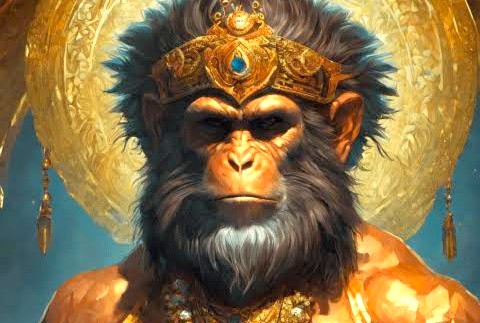
Sugriva The Crown in Exile: The Mighty Monkey Kingdom
The kingdom over which the brothers were destined to rule was a beautiful and strategic stronghold. The location of the Vanara kingdom of Kishkindha is identified with the region around modern-day Hampi in Karnataka, an area of rugged hills, caves, and the sacred Pampa Sarovar lake near the Tungabhadra river. This sacred geography of Kishkindha was a natural fortress, with its capital protected by a formidable mountain cave. It was from this seat of power that Vali ruled and from a nearby cave on the Rishyamuka mountain that the exiled Sugriva took refuge, the landscape itself becoming a crucial part of their dramatic story.
The Invincible Strength and the Steadfast Loyalty
The symbols of Vali and Sugriva represent their core natures. For Vali, his primary symbol was his own immense physical strength and the golden chain given to him by Indra, which amplified his power. He needed no other weapon, as his body was a divine instrument of war. For Sugriva, his symbol is his unwavering loyalty and his eventual alliance with Lord Rama. The fire lit to sanctify their pact is a key symbol of his story. While Vali represents raw, untamed power and royal authority, Sugriva represents strategic alliance, enduring loyalty, and the power that comes from aligning oneself with Dharma. Sugriva The Crown in Exile
A Fraternal Bond Shattered by Misunderstanding
The family story of Vali and Sugriva is a tragic tale of brotherly love turned to bitter enmity. As sons of Riksharaja, they were princes of Kishkindha. Vali's wife was the beautiful and wise Tara, and their son was the mighty warrior Angada. Sugriva's wife was Ruma. The central "family" dynamic of their story is the fraternal relationship between Vali and Sugriva itself. Initially, they shared a deep bond of love and mutual respect, with Vali as the powerful king and Sugriva as his loyal minister. This idyllic brotherhood was shattered by a single, catastrophic misunderstanding that would redefine their lives and the future of their kingdom. Sugriva The Crown in Exile
The Demon in the Cave and a Brother's Betrayal
The story of their conflict begins with a battle against a demon. The story of the misunderstanding between Vali and Sugriva started when a powerful buffalo demon named Mayavi challenged Vali to a fight. Vali pursued the demon into a deep cave, instructing Sugriva to wait outside for him. Sugriva waited for a whole year. Finally, hearing demonic roars and seeing a stream of blood emerge from the cave, Sugriva assumed his brother had been killed. To prevent the demon from escaping, he rolled a massive boulder to seal the cave entrance. He then returned to Kishkindha, where the ministers, believing the kingdom was without a king, reluctantly crowned him.
A Furious King's Exile and a Stolen Wife
Inside the cave, Vali had actually defeated and killed the demon. He returned to the entrance only to find it sealed. After a great effort, he broke free and returned to Kishkindha, his heart filled with rage. Seeing Sugriva on the throne, he was consumed by a sense of betrayal. The story of Vali exiling Sugriva and stealing his wife Ruma was an act of furious, misguided revenge. He refused to listen to any explanation, beat Sugriva mercilessly, and drove him from the kingdom. To add to the humiliation, Vali took Sugriva’s wife, Ruma, for himself, an act of adharma that would ultimately seal his own doom.
The Boon That Made a Warrior Invincible
Vali's incredible power was not just from his father, Indra, but was amplified by a unique and formidable boon. The divine boon that gave Vali half of his opponent's strength made him virtually unbeatable in a direct confrontation. The boon stated that in any one-on-one fight, half of his enemy's power would be transferred to him, making him stronger and his opponent weaker. This is why no god, demon, or Vanara could ever defeat him in a fair fight. This boon was the source of his immense confidence and pride, but it also contained a fatal flaw: it only worked in a face-to-face battle. Sugriva The Crown in Exile
The Alliance Forged with a Desperate Lord
It was in his exile that Sugriva had his fateful meeting with the divine. The story of Sugriva's alliance with Rama and Hanuman took place on the Rishyamuka mountain. Rama, himself in exile and searching for his abducted wife Sita, was led to Sugriva by Hanuman. The two exiled princes - one divine, one Vanara - found common cause. They lit a sacred fire and made a pact. Rama promised to help Sugriva defeat Vali and regain his kingdom, and in return, Sugriva promised to commit his entire Vanara army to the search for Sita. This alliance was the pivotal moment that would lead to both their redemptions.
The Hidden Arrow That Struck Down the Invincible
To fulfill his promise, Rama devised a plan that used Vali’s own pride against him. The story of Lord Rama killing Vali from behind a tree is one of the most debated episodes in the Ramayana. Rama instructed Sugriva to challenge Vali to a fight. During the fierce duel between the brothers, Rama, concealed behind a tree, shot an arrow that struck Vali in the chest. As he lay dying, Vali confronted Rama, questioning the righteousness of his hidden attack. Rama explained that Vali's adharma - stealing his own brother's wife - made him no better than an animal to be hunted, and that the punishment was just. Sugriva The Crown in Exile
A Message: The Perils of Pride and Misunderstanding
The lives of Vali and Sugriva offer a powerful and tragic lesson. The empowering message from the story of Vali and Sugriva is a cautionary tale about the destructive power of misunderstanding, arrogance, and the refusal to listen. Vali's tragedy was his pride; he was so sure of his own strength and righteousness that he would not listen to his brother's explanation. Sugriva's story is one of loyalty and the power of aligning oneself with Dharma. He shows that even when one is weak and powerless, a strategic and righteous alliance can lead to ultimate victory. Their story is a timeless reminder to communicate, forgive, and choose one's allies wisely.
The Solar Plexus and the Solar Ray of Power
As sons of powerful gods, the brothers are connected to the chakra of power and will. Vali, in particular, is an embodiment of the Manipura (Solar Plexus) Chakra, the center of raw power, ambition, and ego. His immense strength was centered here. Sugriva, as the son of the Sun God, also draws his power from this chakra, but his is a more balanced, righteous energy. The key frequency they both embody is that of royal authority and martial power. Vali's auric field was a fiery, aggressive red, while Sugriva's was a more stable, righteous golden-yellow ray, reflecting his solar parentage. Sugriva The Crown in Exile
The Raw Power of Fists and Trees
The Vanaras did not typically use forged weapons; their bodies and the environment were their tools of war. The Vanaras' fighting style using their fists and natural weapons was their greatest strength. Vali's primary weapon was his own body, his fists as powerful as Indra's thunderbolt. In their duel, both he and Sugriva uprooted massive trees and wielded them as clubs, and threw giant boulders as projectiles. This primal fighting style represents a raw, untamed power, a strength drawn directly from nature itself, unrefined by the artifice of metal weapons.
The Sun and Jupiter in the Royal Chart
Vali and Sugriva's royal and martial natures are reflected in the planets of kingship and authority. As the spiritual son of Indra, the king of the gods, Vali embodies the qualities of a powerful Jupiter, the planet of expansion and authority, but in its more arrogant aspect. Sugriva, as the son of Surya, is a direct representative of the Sun, the planet of kingship, honor, and righteousness. Their story can be seen as an astrological drama: the fall of a proud, misguided Jupiter and the rise of a righteous Sun, aided by divine intervention. Sugriva The Crown in Exile
The Ruler and the Minister of Kishkindha
Before their conflict, the brothers were a perfect governing team. The role of Vali as king and Sugriva as his minister was a period of great prosperity for Kishkindha. Vali was the charismatic and powerful ruler, the face of the kingdom and its chief protector. Sugriva was the wise and loyal advisor, managing the daily affairs of the kingdom and providing counsel to his powerful brother. This partnership shows the ideal balance of power and wisdom, a harmony that was shattered by a single tragic misunderstanding, leading to the ruin of their relationship and the near-ruin of their kingdom.
The King Who Commanded Fear and Respect
Vali was not just strong; he was a king who commanded absolute authority. In one story, the demon king Ravana, in his arrogance, came to challenge Vali. Vali was in the middle of his morning prayers by the ocean. He simply tucked the mighty Ravana under his arm and continued his prayers, flying from one ocean to the next, with Ravana trapped and helpless. This story of Vali humiliating the demon king Ravana shows the sheer scale of his power. He was a force of nature, a king whose strength was so immense that even the most powerful demon in the cosmos was like a mere insect to him.
The Tragic Hero of Unbeatable Strength
Vali is one of the most complex and tragic figures in the Ramayana. He is not a simple villain. The concept of Vali as a tragic hero is a key interpretation of his character. He was brave, powerful, and a good king, beloved by his people. His fatal flaw was his pride and his uncontrollable rage, which led him to commit a terrible adharma against his own brother. His final conversation with Rama is not a plea, but a reasoned argument from a proud king questioning the ethics of his own death. He is a tragic figure whose own great strength and pride became the instruments of his downfall. Sugriva The Crown in Exile
The King Who Fulfilled His Sacred Promise
After being crowned king, Sugriva's story became one of fulfilling his vow to Rama. The role of Sugriva in the search for Sita was his great dharma. He immediately mobilized the entire Vanara race, sending search parties in all four directions. He put his best general, Hanuman, on the most promising southern route. He committed his resources, his people, and his own life to Rama's cause. Though he had a brief moment of hesitation, he ultimately fulfilled his promise completely, his massive army becoming the crucial force that allowed Rama to bridge the ocean and wage war against Ravana.
Step Inside The Story - View All Tour Itineraries & Details

We’re here to offer genuine, thoughtful guidance if your interested in travelling to India. As a small, dedicated team, we pay close attention to every detail so you can focus on enjoying the experience while we take care of the planning. We believe the best trips begin when someone truly listens to what you want and how you like to travel, so the journey feels right for you and contributes to a happy, positive group on tour. Our communication stays clear, straightforward, and respectful at every step, with the goal of helping you feel understood, supported, and confident from first contact to the end of your journey.
Click Catherine Frith - About The Founder
Click Discover Life Travel - All Tours and More
Click Why We Are Different - Unique, Safe, Transparent