Unique Insights Into The Gods Of India
Black Krishna: Mathura - Uttar Pradesh
Discover Life Travel
The Midnight Savior's Divine Birth
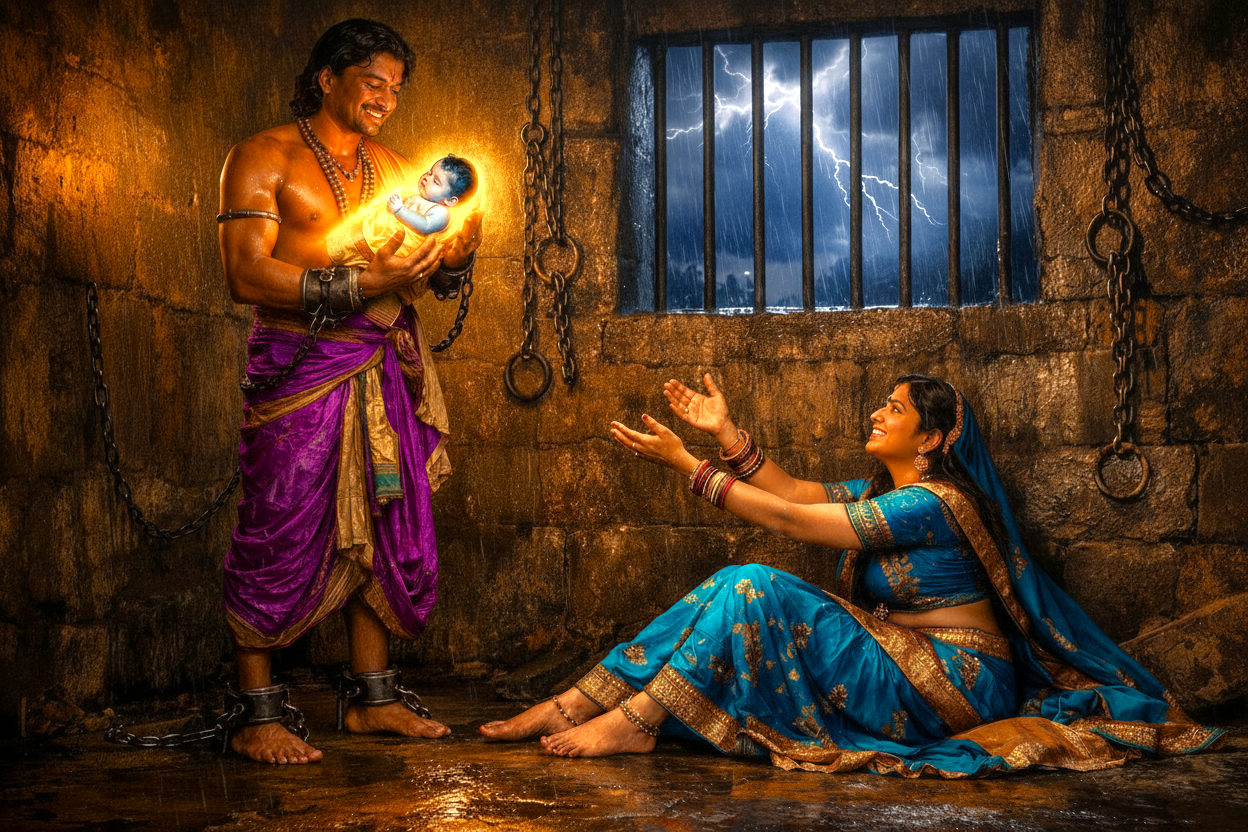
In the ancient city of Mathura, under the tyrannical rule of King Kamsa, a divine prophecy foretold that the eighth son of his sister, Devaki, would be his doom. On a dark, stormy night, in the depths of a prison cell, the savior was born. The story of Krishna's birth to Devaki and Vasudeva is a tale of hope in darkness. He appeared in his divine four-armed form, radiating light, before taking the form of a human baby. In a miraculous series of events, his father Vasudeva carried him across the flooding Yamuna river to the village of Gokul, swapping him with a newborn girl to protect him from Kamsa's wrath. Black Krishna Mathura Uttar Pradesh
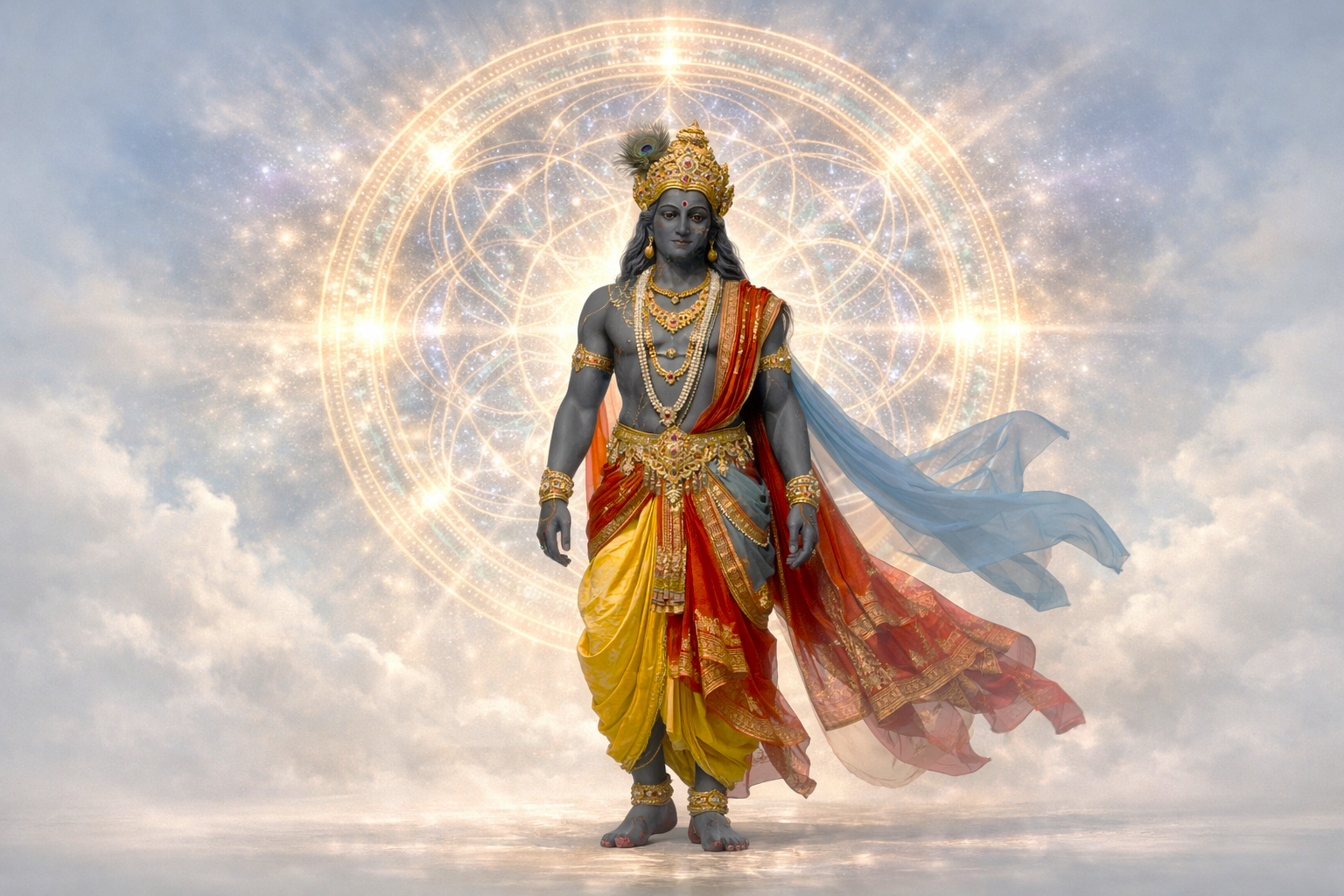
The All-Attractive Dark Complexion: Black Krishna Mathura Uttar Pradesh
The most profound and captivating aspect of his form is his dark, monsoon-cloud-like skin. The deep meaning of Krishna's dark blue or black skin is a central part of his philosophy. His name, Krishna, itself means "all-attractive" and also "the dark one." This color is not mundane; it represents the infinite, immeasurable, and mysterious nature of the supreme reality, like the endless, dark sky. Just as the deep ocean appears dark, his complexion holds all the colors and all of existence within it. It symbolizes a beauty that transcends physical form and a reality that is beyond the grasp of the ordinary mind.
Symbols of Divine Love and Play
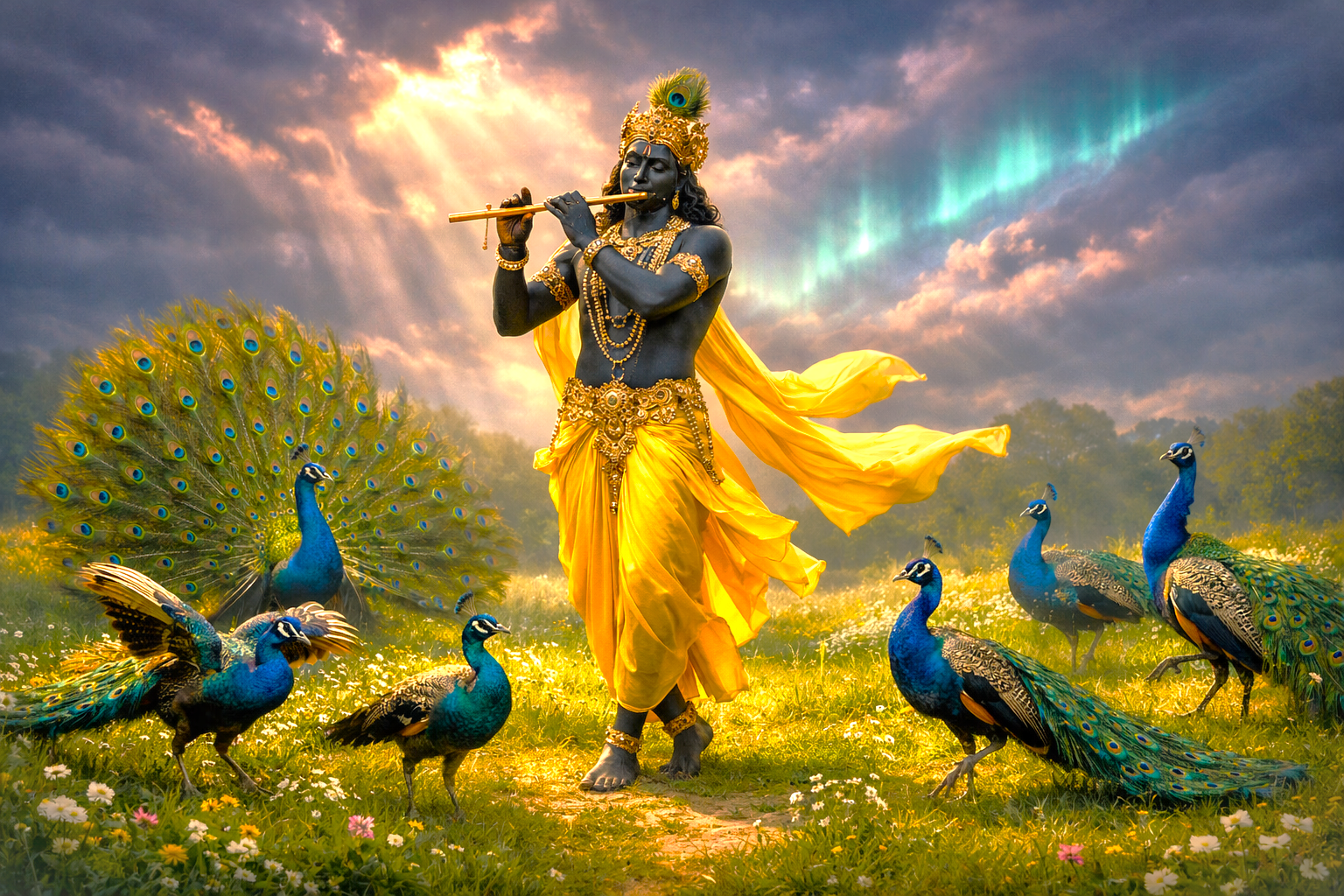
The symbolism of Krishna's peacock feather (Mayur Pankh) represents his beauty and the fact that he is free from ego, as the peacock displays its beauty without vanity. The divine flute or Bansuri, and its captivating music, symbolizes the call of the divine, a sweet melody that draws the individual soul (Jiva) away from worldly distractions and back towards a loving union with God. His yellow silk dhoti (pitambara) represents the light of the sacred Vedas, and the Kaustubha gem on his chest signifies the pure consciousness of all living beings.
The Center of a Loving Family
Krishna's family life is a beautiful tapestry of parental, friendly, and romantic love. He was raised by his foster parents, the loving Yashoda and the village chief Nanda in Vrindavan. Their relationship symbolizes vatsalya rasa, or parental love for God. His elder brother was Balarama, an incarnation of Shesha Naga. His most famous romantic connections are with Radha, his eternal consort and embodiment of pure devotional love (bhakti), and with Rukmini, his chief queen in Dwarka. His family life demonstrates that the divine can be experienced through many different flavors of loving relationships. Black Krishna Mathura Uttar Pradesh
The Divine Child's Playful Pastimes
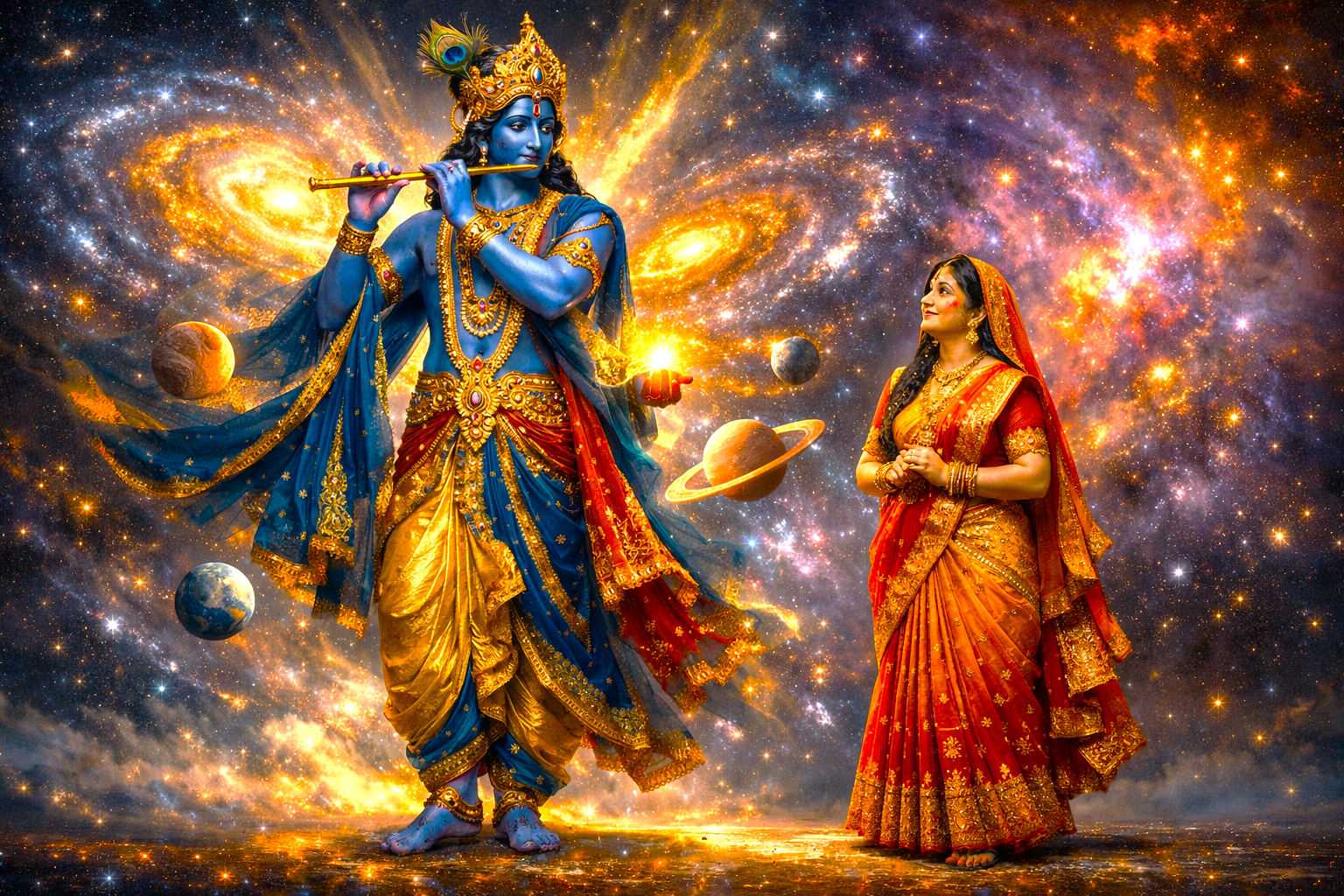
Krishna’s childhood in the pastoral paradise of Vrindavan is a series of enchanting and divine plays, or lilas. The childhood pastimes of Krishna in Vrindavan are beloved stories that reveal his divinity in playful ways. These include stealing butter from the homes of the village women (gopis), an act that symbolizes him stealing the pure, loving hearts of his devotees. Another tale is when he revealed the entire universe within his mouth to his mother Yashoda. These acts show the path to the divine can be one of joy, mischief and loving exchange.
The Sweet Melody of the Soul
The sound of Krishna's flute is no ordinary music. The divine frequency of Krishna's flute music is the irresistible call of the supreme being to the individual soul. When he played his flute in the forests of Vrindavan, all beings - cows, deer, birds, and especially the gopi cowherd maidens - would become completely enchanted. They would abandon all their worldly duties and run to him, drawn by the beautiful and haunting melody. This symbolizes the soul's deep, innate yearning to reunite with its divine source, a call so powerful that it eclipses all material concerns.
The Mountain-Lifting Protector
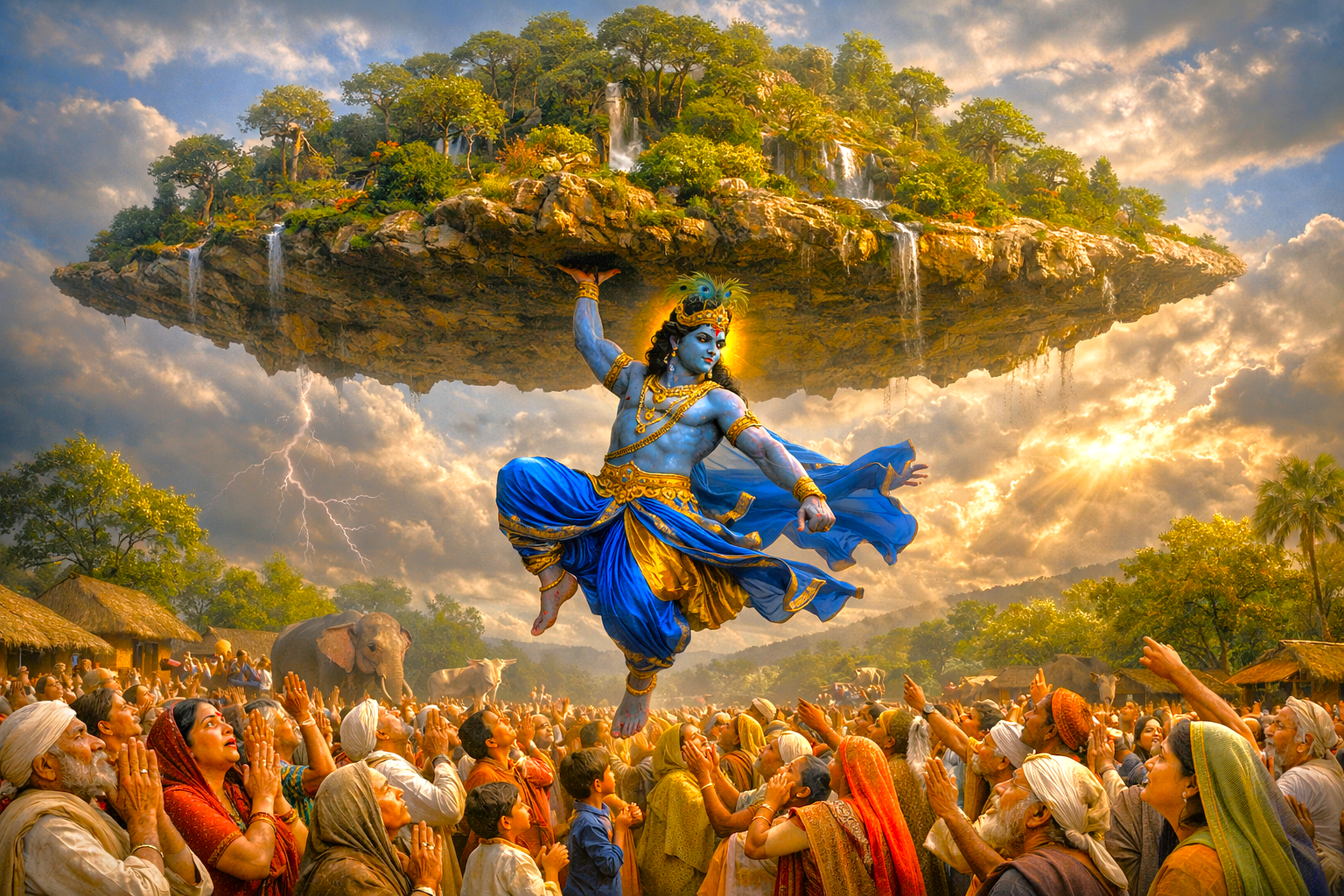
A powerful story from his youth demonstrates his role as a protector. The story of Krishna lifting Govardhan Hill is a lesson in true devotion. When the villagers of Vrindavan prepared a sacrifice for Indra, the god of rain, Krishna convinced them to worship the Govardhan Hill and their cows instead, which were their true source of livelihood. An enraged Indra unleashed a terrifying, week-long deluge to drown the village. Krishna lifted Govardhan Hill on his little finger, holding it up like an umbrella until Indra's pride was humbled.
The Great War's Divine Strategist
While he vowed not to pick up a weapon, Krishna was the single most important figure in the great Mahabharata war. The role of Krishna as the strategist and guide in the Mahabharata was decisive. He served as the charioteer for his dear friend and devotee, Arjuna. From this position, he guided the Pandavas with his supreme political and military strategy. His wisdom, foresight, and timely advice were the deciding factor in the Pandavas' victory against a much larger and more powerful army. This role shows that divine guidance and sharp intellect are more powerful than any physical weapon. Black Krishna Mathura Uttar Pradesh
The Eternal Song of the Gita
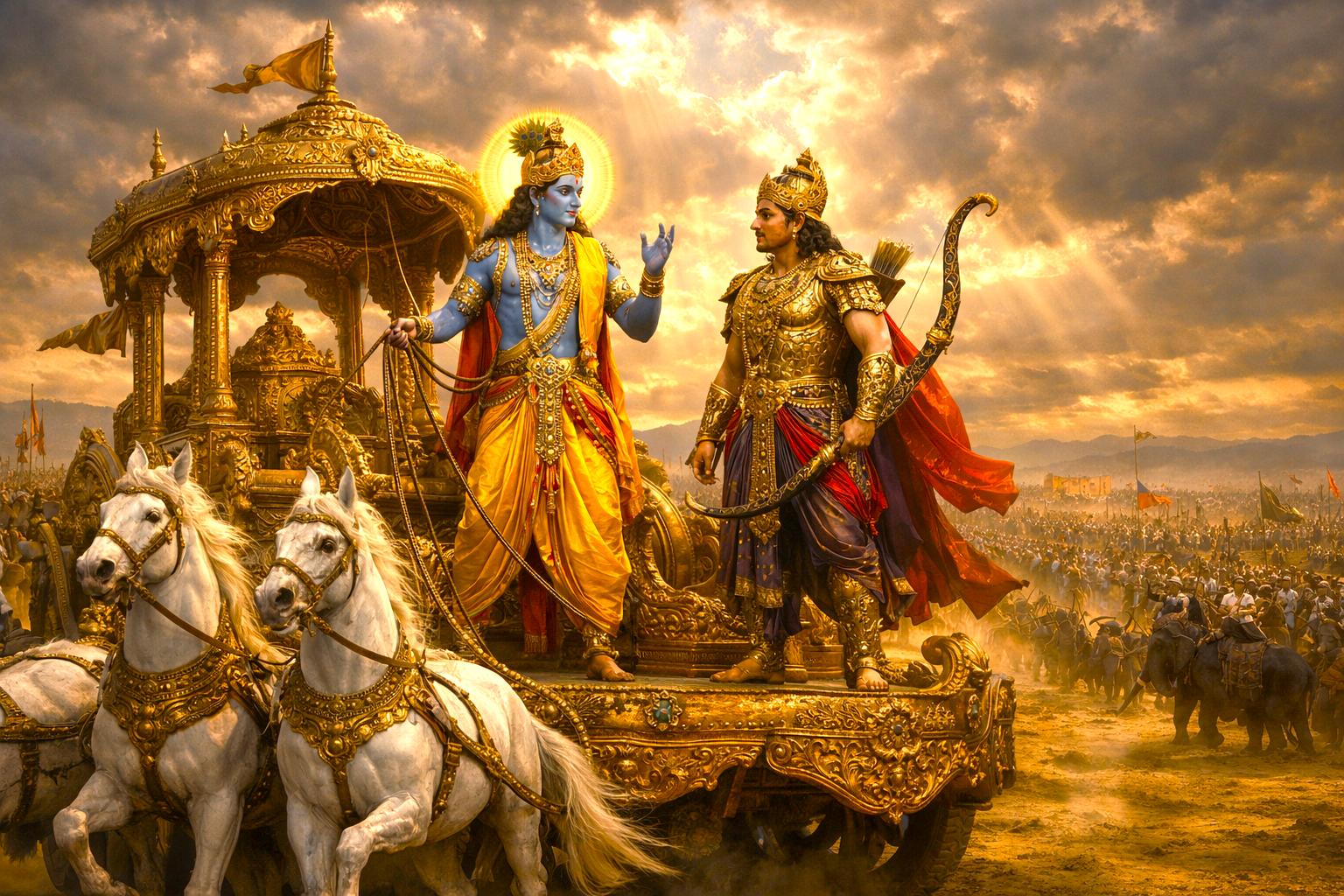
The most profound moment of the Mahabharata is Krishna's discourse to a despairing Arjuna. The divine message of Krishna in the Bhagavad Gita is timeless. On the battlefield, seeing Arjuna paralyzed by grief, Krishna delivered the sacred sermon of the Gita. He taught the importance of performing one's duty without attachment to the results (karma yoga), the path of knowledge (jnana yoga), and the supreme path of loving devotion (bhakti yoga). This teaching provides a guide to living a spiritual life while actively engaging with the world.
The Heart Chakra and Blissful Love
Krishna is the supreme embodiment of divine love, bliss, and attraction. He is the master of the Anahata (Heart) Chakra, the center of unconditional love, compassion, and divine joy. The key frequency that Krishna embodies is Ananda, or pure spiritual bliss. His very nature is to attract souls and engage them in a loving relationship. His aura is often described as a radiant blue or violet ray, representing the highest levels of spiritual consciousness and divine love. Meditating on Krishna helps to open the heart, remove emotional blockages, and experience the profound joy of a personal connection with the divine. Black Krishna Mathura Uttar Pradesh
The Unstoppable Spinning Discus
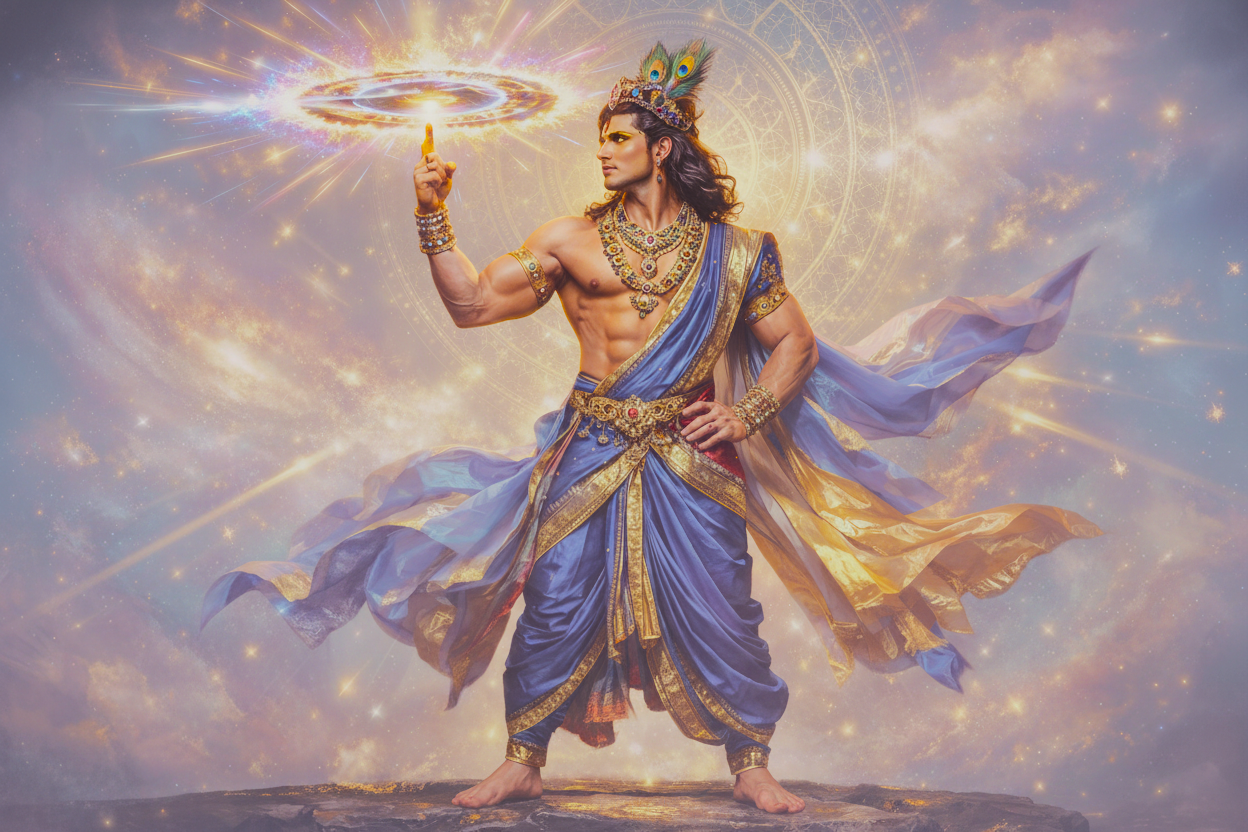
Krishna's ultimate weapon is a spinning disc of pure energy and light. The power of the Sudarshana Chakra, Krishna's divine weapon, is absolute. This discus, gifted to him by the fire god Agni, is more a physical object than a manifestation of his divine will. It is sentient and, once unleashed, never misses its target, destroying all evil and returning to his finger. It represents the power of divine law and the light of knowledge that cuts through the darkness of ignorance. Used it to slay the demon Shishupala and to protect his devotees from harm.
The Lord of Love and Celebration
Krishna's nature is one of joyful celebration, which is reflected in his festivals. The significance of the Janmashtami and Holi festivals is central to his worship. Janmashtami, his birthday, is celebrated with fasting, devotional singing, and a midnight celebration re-enacting his birth. Holi, the festival of colors, finds its roots in Krishna's playful pastimes, where he would douse Radha and the gopis with colored water. This festival embodies his playful, joyful, and all-embracing spirit, where social barriers are broken in a carnival of color and love.
Mercury, Venus, and the Cosmic Flute
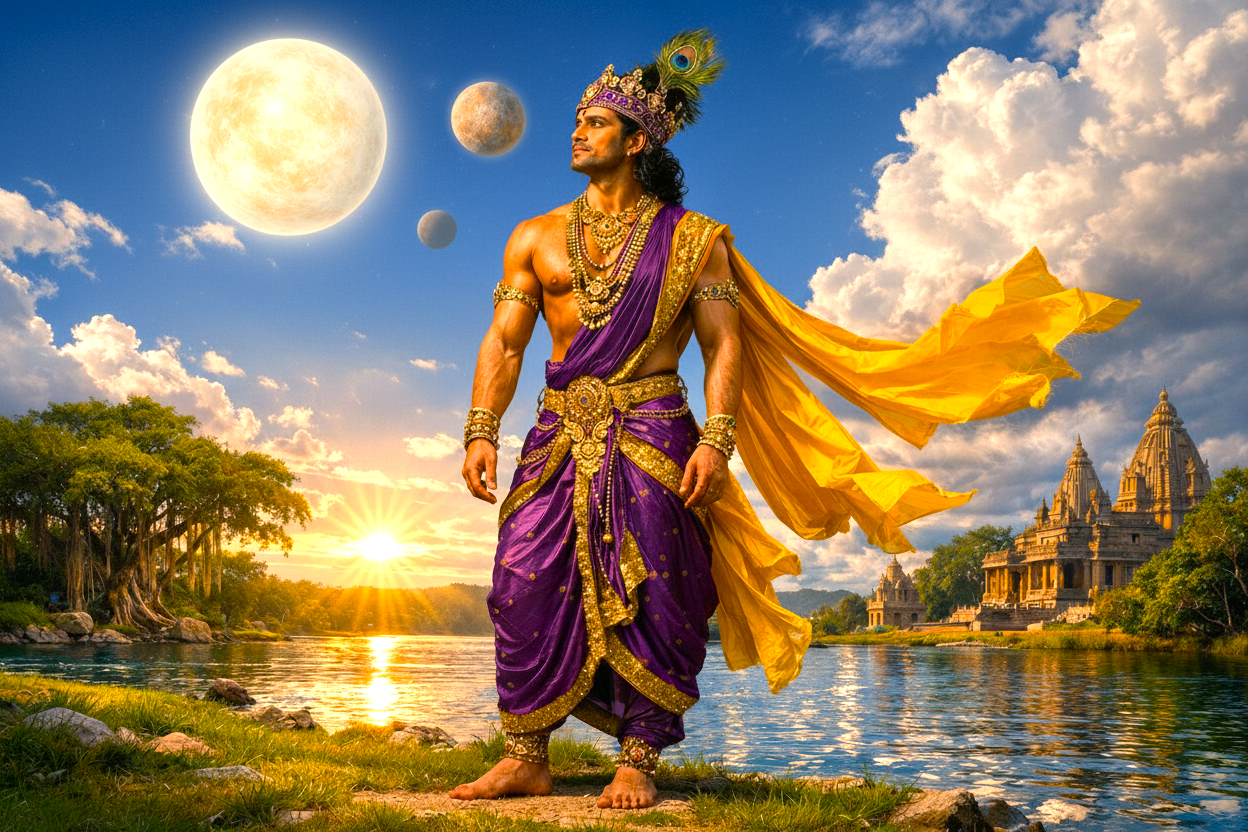
Krishna's charming, loving, and intelligent personality is reflected in the planets. The astrological planets associated with Krishna are Mercury and Venus. Mercury represents his youthful charm, quick wit, and mastery of communication. Venus represents his immense beauty, artistic nature, and his role as the god of divine love and romance. His sacred geometry is the six-pointed star, representing the Heart Chakra, and also the spiraling form of the conch shell, symbolizing the cosmic sound that calls all souls back to him. Black Krishna Mathura Uttar Pradesh
A Devotee's Vision of Blue Light
Even today, devotees experience his miraculous presence in personal and profound ways. A modern miracle of Krishna experienced by a devotee comes from a woman in Mayapur, West Bengal. She was going through a period of deep depression and felt completely alone. While praying at the temple, she tearfully looked at the deity and felt a wave of peace. That night, she had a vivid dream where a beautiful, dark-skinned boy with a peacock feather appeared, playing a flute. He didn't speak, but the music filled her with a joy she had never known. She woke up with her depression completely lifted, a healing she attributes to his divine grace.
The Annihilation of King Kamsa
Fulfilling the prophecy of his birth was Krishna's first great act as a young man. The story of Krishna killing his tyrannical uncle Kamsa was the liberation of Mathura. After years of Kamsa sending demons to kill him in Vrindavan, Krishna and Balarama finally traveled to Mathura. There, after breaking a mighty sacrificial bow and defeating the king's powerful wrestlers, Krishna confronted Kamsa. He dragged the tyrant from his throne and, with his divine strength, ended his reign of terror, freeing his parents and the entire kingdom.
The Rasa Lila: A Dance of Souls
The most esoteric and beautiful of Krishna's pastimes is his celestial dance with the gopis. The spiritual meaning of the Rasa Lila dance with the gopis is the ultimate expression of divine love. On a full moon night, he played his flute, and all the gopis of Vrindavan ran to join him. Using his mystic power, he multiplied himself so that each gopi felt she was dancing with Krishna alone. This dance represents the supreme union of the individual soul (the gopi) with the supreme soul (Krishna). It is the pinnacle of bhakti, a dance of pure, selfless, and ecstatic love. Black Krishna Mathura Uttar Pradesh
The Great King of Dwarka City
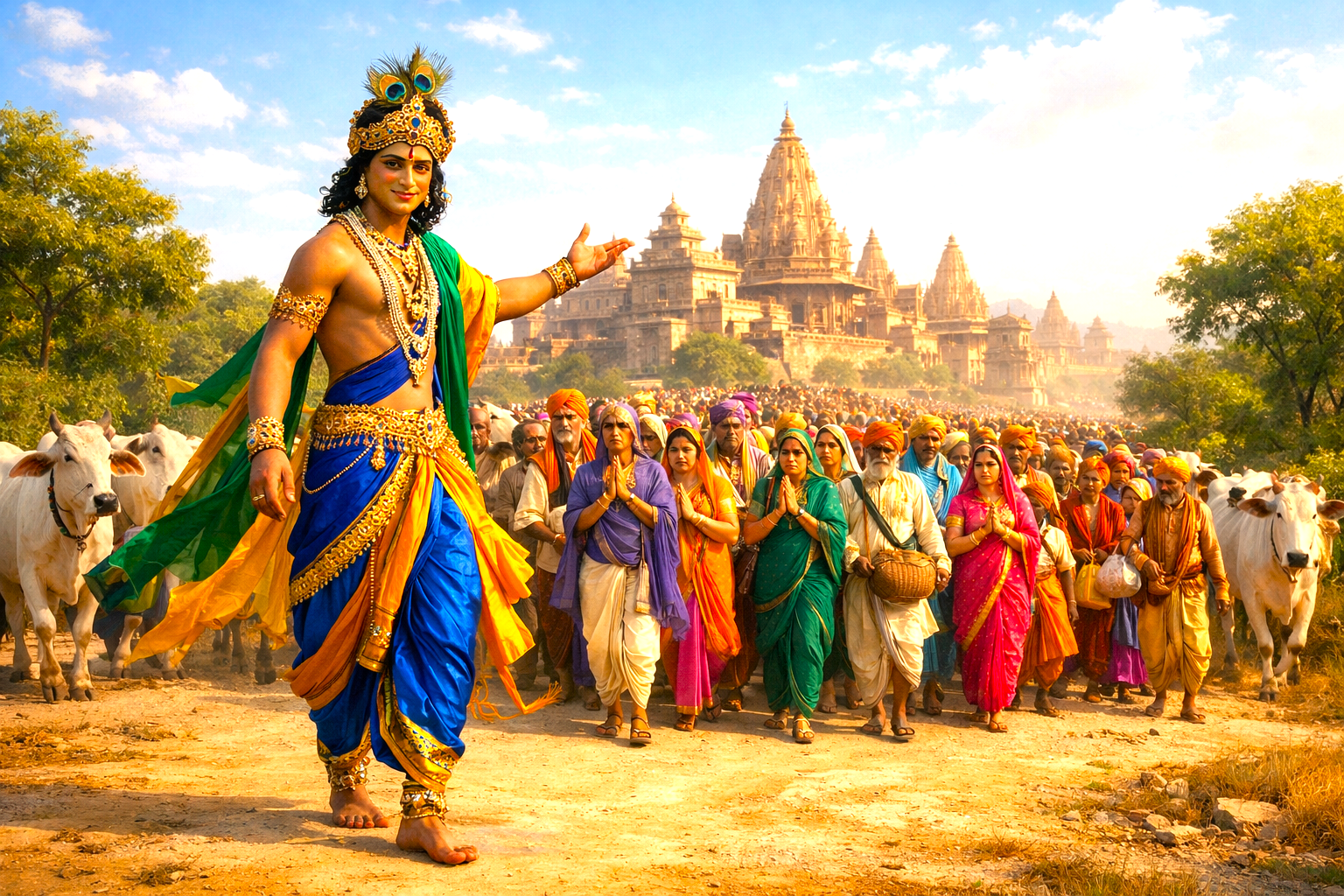
After departing Mathura, Krishna established a magnificent kingdom on the west coast. He constructed the legendary golden city of Dwarka amidst the sea, creating a paradise of immense wealth and harmony. Ruling with profound wisdom and righteousness, he married his chief queen, Rukmini, and raised a large family. This era highlights his evolution into a formidable king and master statesman. As a dedicated protector of dharma, he transitioned from a youth into a responsible leader, ensuring the safety of his people.
The Universal Form's Revelation
During his discourse on the battlefield, Krishna granted Arjuna a rare and terrifying vision. The vision of the Vishwarupa, Krishna's universal form, revealed his true cosmic nature. At Arjuna's request, Krishna displayed his form as the container of the entire universe. Arjuna saw infinite mouths, eyes, and arms, with all the gods, demons, and celestial beings residing within Krishna's body. He saw time, creation, and destruction happening simultaneously. This awesome and terrifying vision of God's absolute power and immensity filled Arjuna with awe and cemented his faith, showing him that Krishna was indeed the Supreme Personality of Godhead. Black Krishna Mathura Uttar Pradesh
A Departure from the Worldly Plane
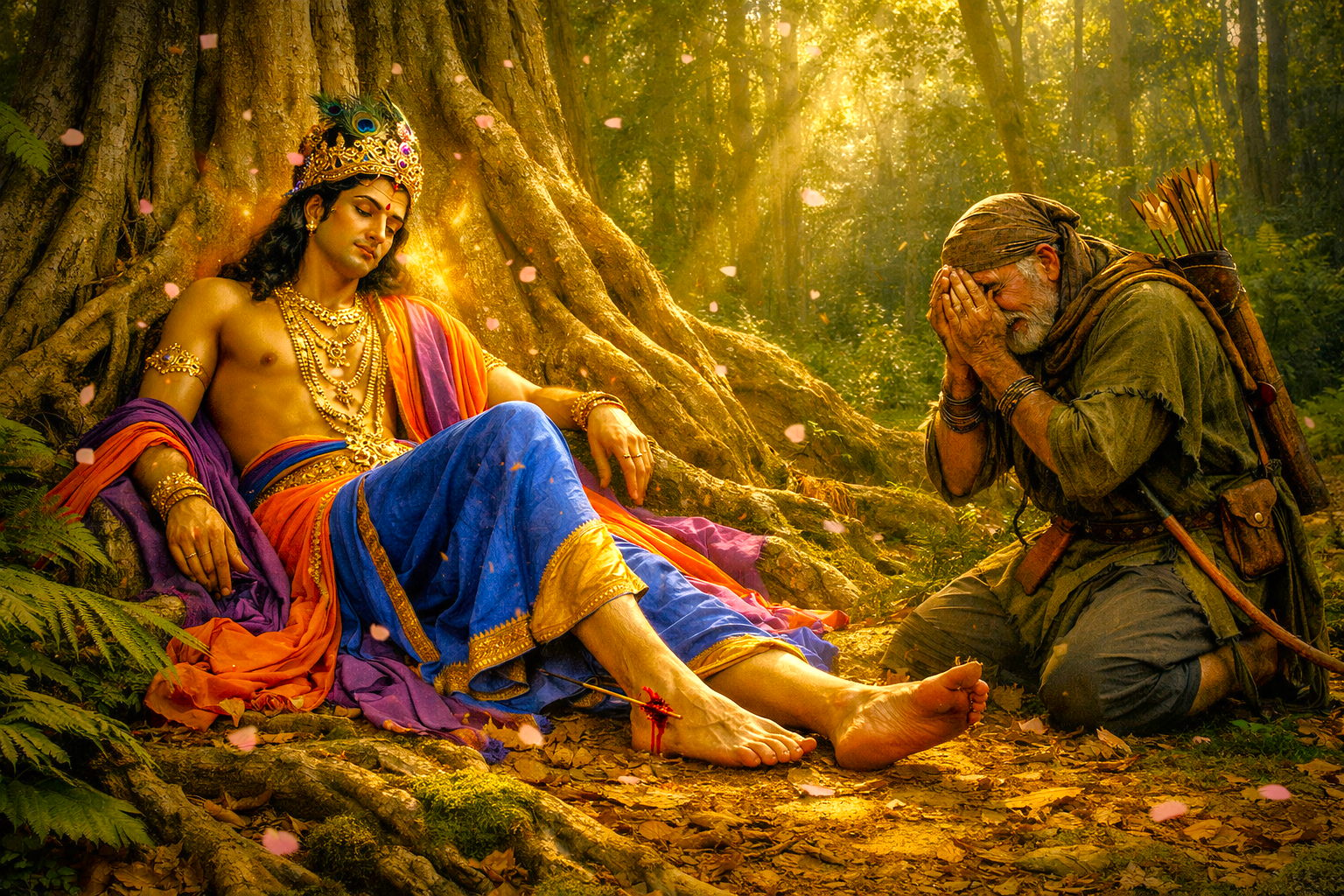
Following a long reign, Krishna concluded his earthly pastimes through a conscious divine choice. After the Yadava dynasty's conclusion, he retreated to the forest for meditation. There, a hunter named Jara accidentally struck Krishna’s heel with an arrow. Demonstrating infinite compassion, Krishna forgave the hunter and ascended to his eternal spiritual abode, Goloka Vrindavan, with a serene smile. This poignant departure marked the completion of his perfect lila. It serves as a powerful reminder of his divine nature, signaling the end of an era and his return to transcendence.
Step Inside The Story - View All Tour Itineraries & Details

We’re here to offer genuine, thoughtful guidance if your interested in travelling to India. As a small, dedicated team, we pay close attention to every detail so you can focus on enjoying the experience while we take care of the planning. We believe the best trips begin when someone truly listens to what you want and how you like to travel, so the journey feels right for you and contributes to a happy, positive group on tour. Our communication stays clear, straightforward, and respectful at every step, with the goal of helping you feel understood, supported, and confident from first contact to the end of your journey.
Click Catherine Frith - About The Founder
Click Discover Life Travel - All tours and more
Click Why We Are Different - Unique, Safe, Transparent