Unique Insights Into The Gods Of India
Balaram: Gentle Strength Thunder Grip
Discover Life Travel
The Serpent God Transferred Between Wombs
When Vishnu prepared to incarnate as Krishna, his eternal companion, the serpent Shesha, was to precede him. The divine origin story of Balarama is a tale of miraculous divine intervention. He was first conceived in the womb of Devaki, Krishna's mother, as her seventh child. To save him from the murderous King Kamsa, the supreme yogic power of Vishnu, known as Yogamaya, magically transferred the divine embryo from Devaki's womb to the womb of Rohini, Vasudeva's other wife, who was living safely in the pastoral village of Gokul. This divine transfer saved his life and earned him the name Sankarshana, "the one who was dragged away." Balaram Gentle Strength Thunder Grip
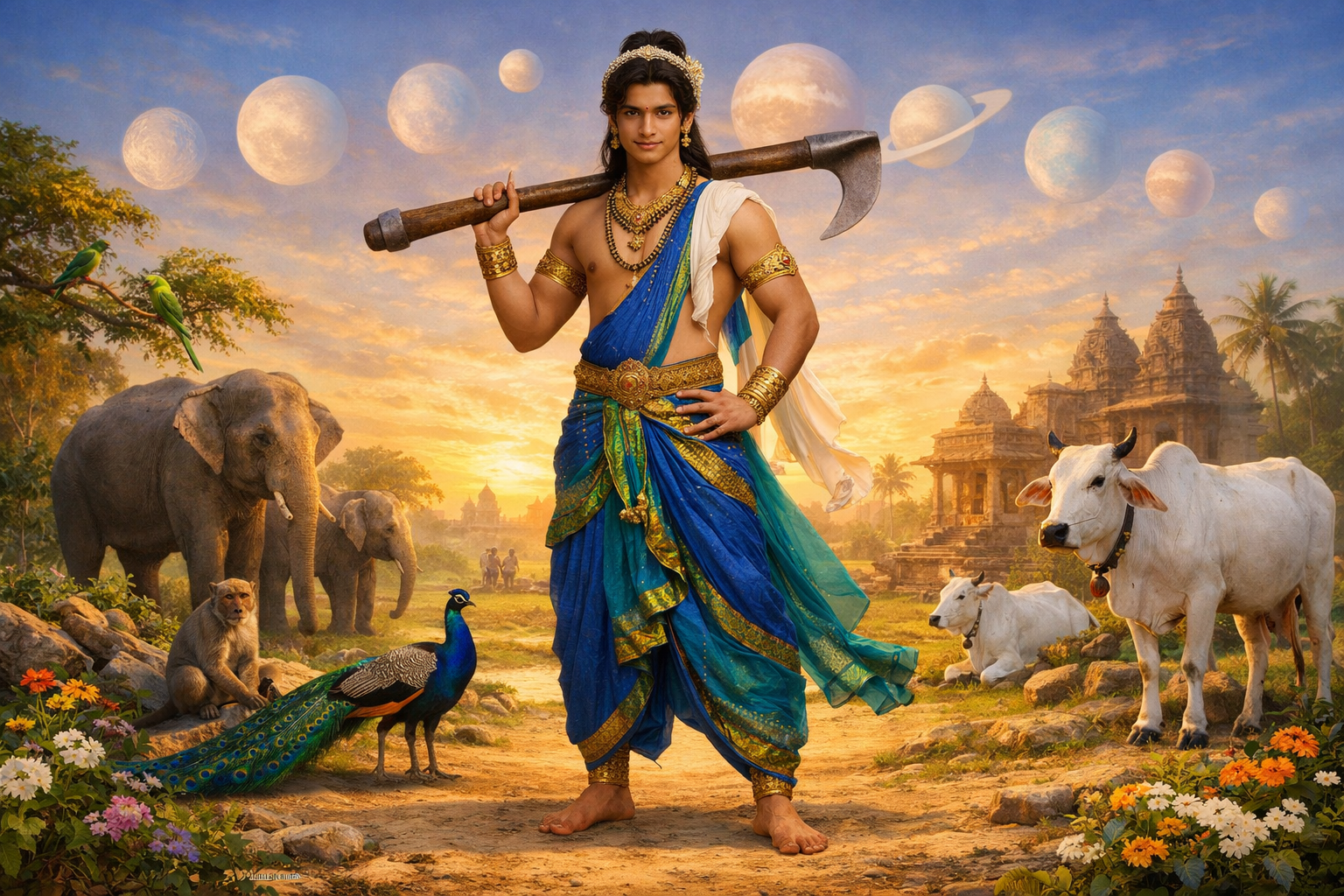
The Pastoral Paradise of Braj Bhumi: Balaram Gentle Strength Thunder Grip
Balarama’s story unfolds in the idyllic pastoral lands of Braj. The sacred geography of Balarama’s childhood in Vrindavan is the stage for his youthful pastimes alongside his younger brother, Krishna. From the village of Gokul to the forests of Vrindavan and the sacred Govardhan Hill, Balarama’s presence is everywhere. As an adult, he is associated with the great capital city of Dwarka, where he lived as a prince with Krishna. However, his spirit is forever tied to the rustic simplicity of Braj, the land he protected, the place where he played, and the river Yamuna, which he famously punished and redirected with his mighty plow.
The Divine Plow and the Serpent's Hood
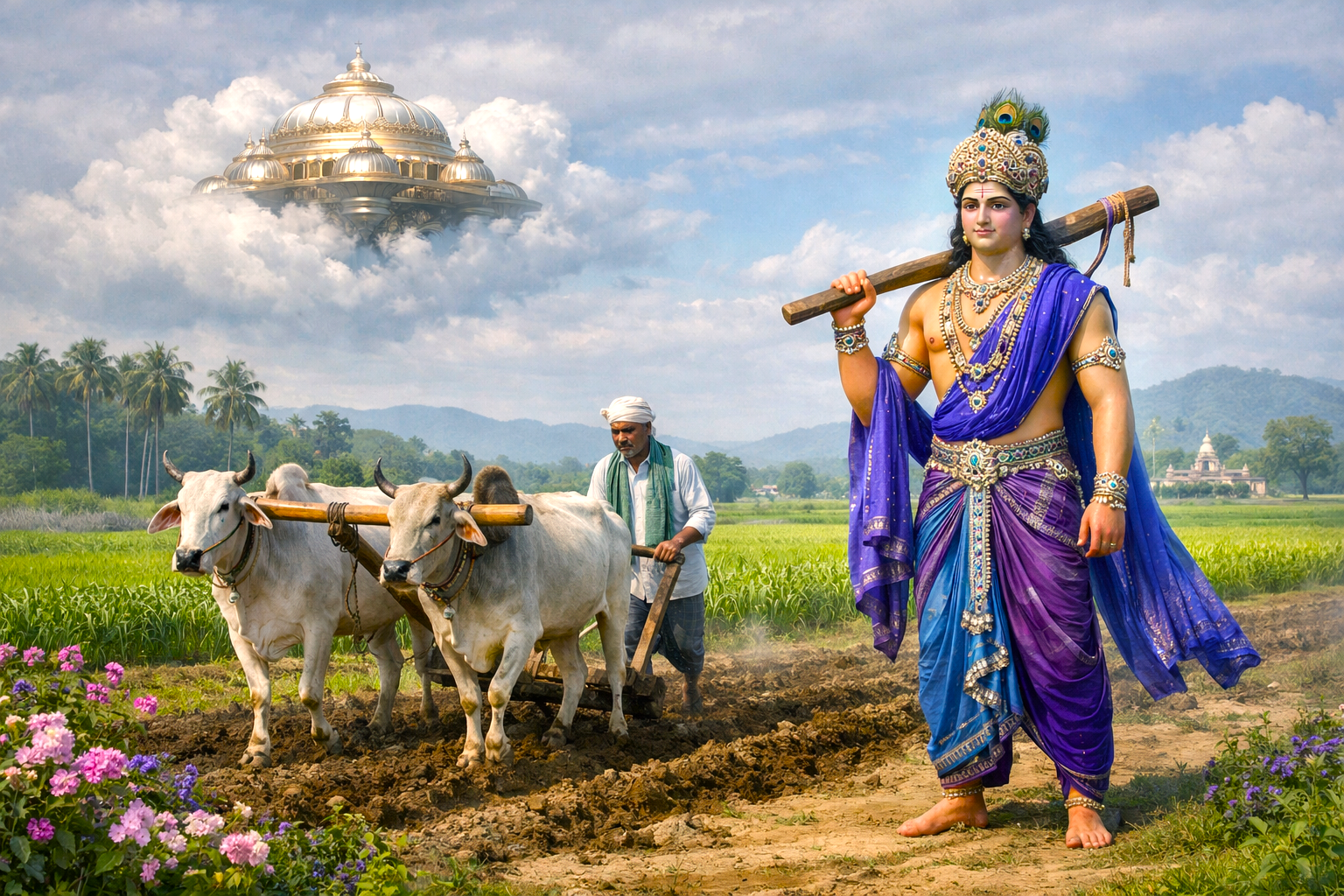
The symbols of Balarama are potent emblems of his dual nature as a god of agriculture and a divine serpent. His most famous symbol is his divine weapon, the Halayudha, or plow. This represents his connection to agriculture, fertility, and his immense strength to literally reshape the earth. His other weapon is the mighty mace, Saunanda. A key symbol of his true identity is the multi-headed cobra's hood that often shades his head, a direct representation of his true form as Shesha Naga, the cosmic serpent.
Touch the Tale: Where the Gods Walked
The Elder Brother of the Supreme
Balarama's family is at the very heart of the divine incarnation. He was the son of Vasudeva and Rohini (his surrogate mother). His most important and defining relationship was as the beloved elder brother of Lord Krishna. He was also the respected brother-in-law to Krishna's many queens. Later in his life, the story of Balarama's marriage to Revati, the daughter of King Kakudmi, is a tale of cosmic time dilation. Revati was from a much earlier age and was far taller than Balarama. With a touch of his plow, he miraculously resized her to be his perfect consort, with whom he had two sons, Nisatha and Ulmuka. Balaram Gentle Strength Thunder Grip
The Mighty Protector of a Divine Child
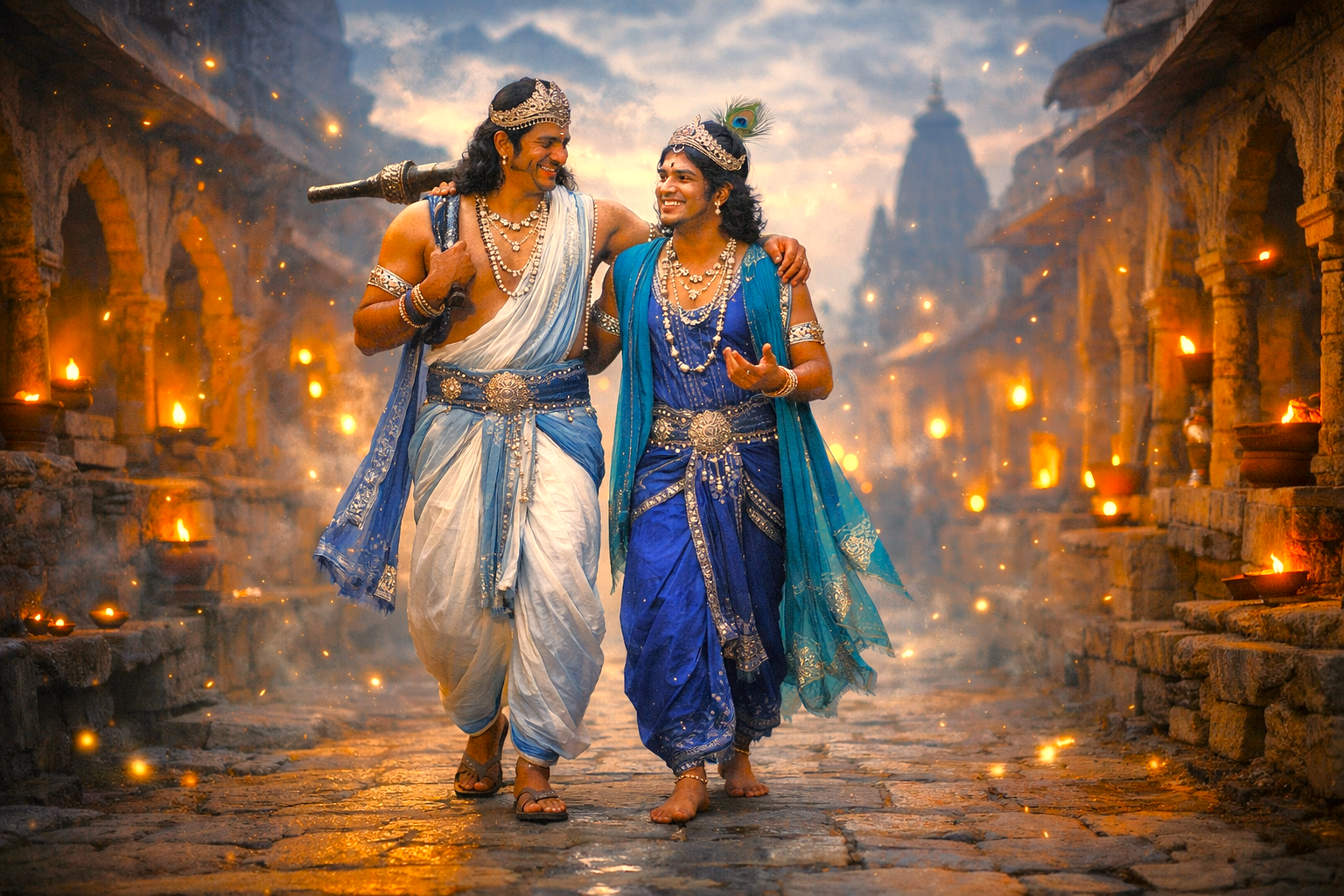
From the moment of their reunion in Gokul, Balarama’s life was dedicated to his younger brother. The childhood story of Balarama protecting Krishna in Vrindavan is a constant theme. While Krishna was the playful, mischievous one, Balarama was the ever-vigilant, powerful protector. He was the "Dau" (elder brother) who watched over Krishna, a constant companion in his divine games and a formidable bodyguard against the numerous demons sent by Kamsa to kill them. This protective bond, would define their relationship for their entire lives.
The Slaying of the Donkey Demon Dhenuka
Balarama’s immense strength was often displayed in his effortless slaying of powerful demons. The story of Balarama killing the demon Dhenukasura is a famous example. Dhenuka, a demon in the form of a ferocious donkey, guarded a beautiful palm-tree forest, preventing anyone from tasting its delicious fruits. When Krishna and Balarama's friends expressed their desire for the fruit, Balarama entered the forest without fear. He simply grabbed the attacking demon by his hind legs, whirled him around with incredible force, and smashed him against a treetop, instantly killing him and his entire demonic donkey clan, thus liberating the forest for the cowherds.
The Plow That Reshapes the Earth
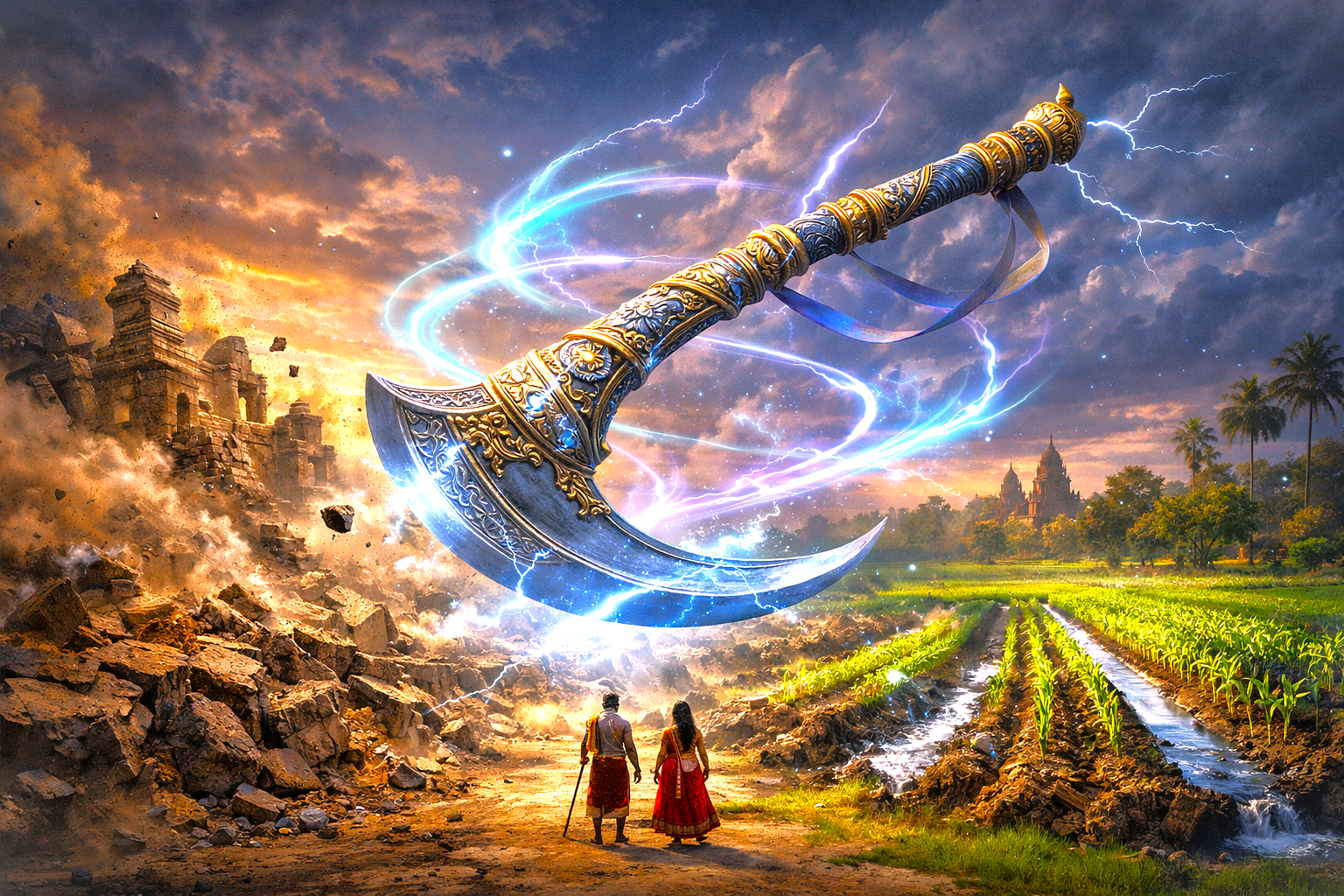
Balarama relied less on vehicles and more on his own immense strength, moving by will and endurance. His defining instrument was the plow, known as the Halayudha, and it carried meaning beyond combat. Tradition holds that its power could reshape the land itself. One account says he dragged the river Yamuna toward him when she refused his command. Another says he pulled at Hastinapura, threatening to drag the capital into the Ganges to punish the Kaurava princes for disrespect. The plow embodies both creation through agriculture and destruction through divine correction.
See the ancient narratives etched into the heart of the subcontinent
The Furious Teacher of the Mahabharata Heroes
Balarama was a master of mace-fighting, and his skill was sought by the greatest warriors of the age. The role of Balarama as the mace-fighting guru to both the Pandava Bhima and the Kaurava Duryodhana is a crucial part of his story. He taught both princes the art of the mace, but he always had a special affection for Duryodhana, admiring his dedication and skill. This role as a teacher to both sides of the great conflict is what ultimately led to his painful decision to remain neutral in the Kurukshetra War, as he loved both of his prized pupils and could not bear to fight against either one. Balaram Gentle Strength Thunder Grip
The Great Pilgrimage During a Fratricidal War
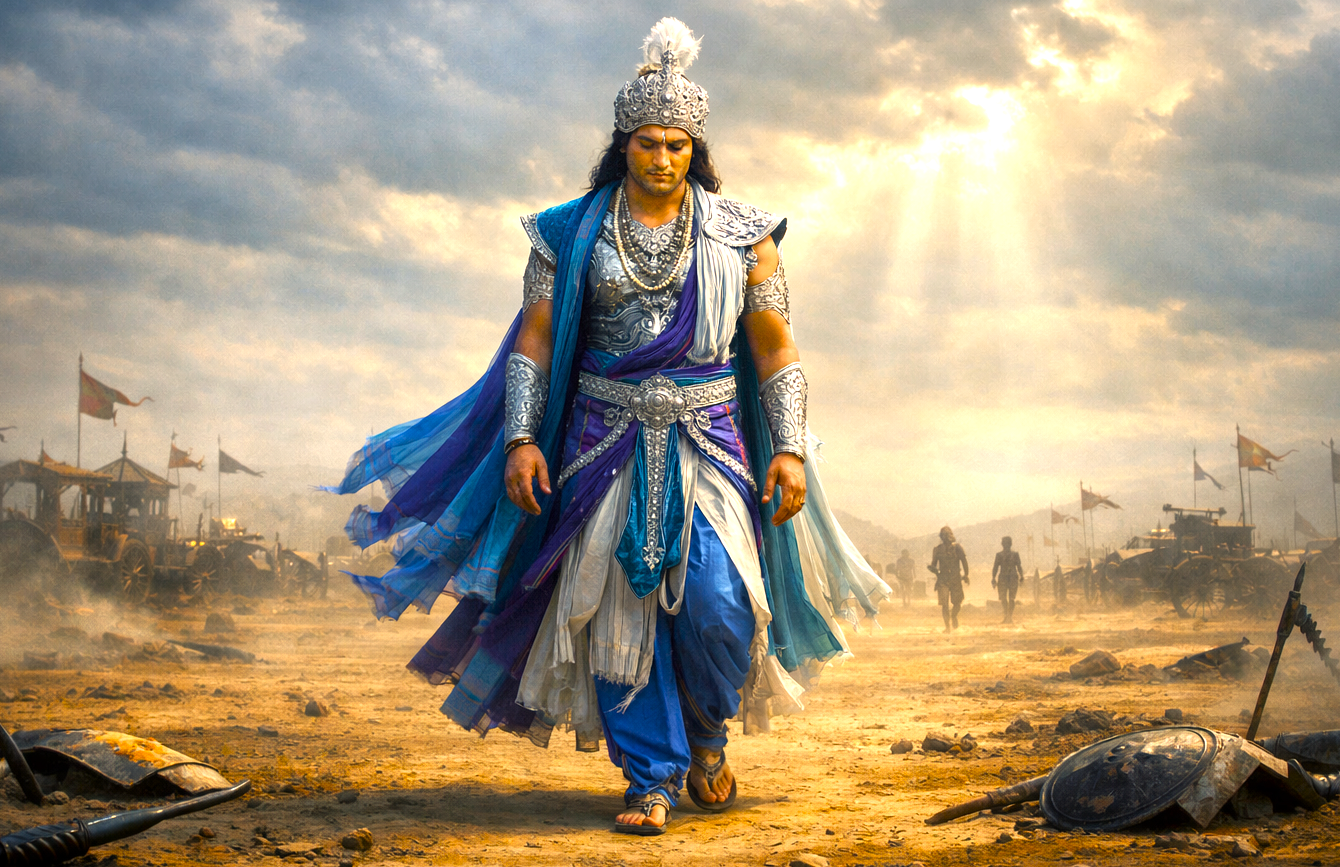
Torn by his love for both the Pandavas and the Kauravas, Balarama made a difficult choice.His pilgrimage during the Mahabharata war was his way of avoiding the conflict. He declared that he could not side with either of his beloved pupils and announced that he would instead go on a long pilgrimage to holy sites. This neutrality is a key part of his character, showing him as a being of immense personal integrity who refused to participate in a war he saw as a tragic, fratricidal conflict.
Echoes of the Ancients: Feel the energy of the sites that inspired a thousand legends
His Message: Strength Must Be Tempered with Duty
Balarama's life is a powerful lesson in strength, loyalty, and principled action. The empowering message from Balarama is that great power and strength come with great responsibility. As Krishna's elder brother, his primary dharma was protection, a duty he performed flawlessly. He also teaches that sometimes, the most powerful action is inaction. His neutrality in the war shows that when faced with an impossible moral choice between two beloved sides, withdrawing can be a valid and principled stand. He embodies the idea that strength must always be guided by one's own sense of duty and justice, even when it is a difficult and lonely path.
The Third Eye and a Crystalline White Ray of Power
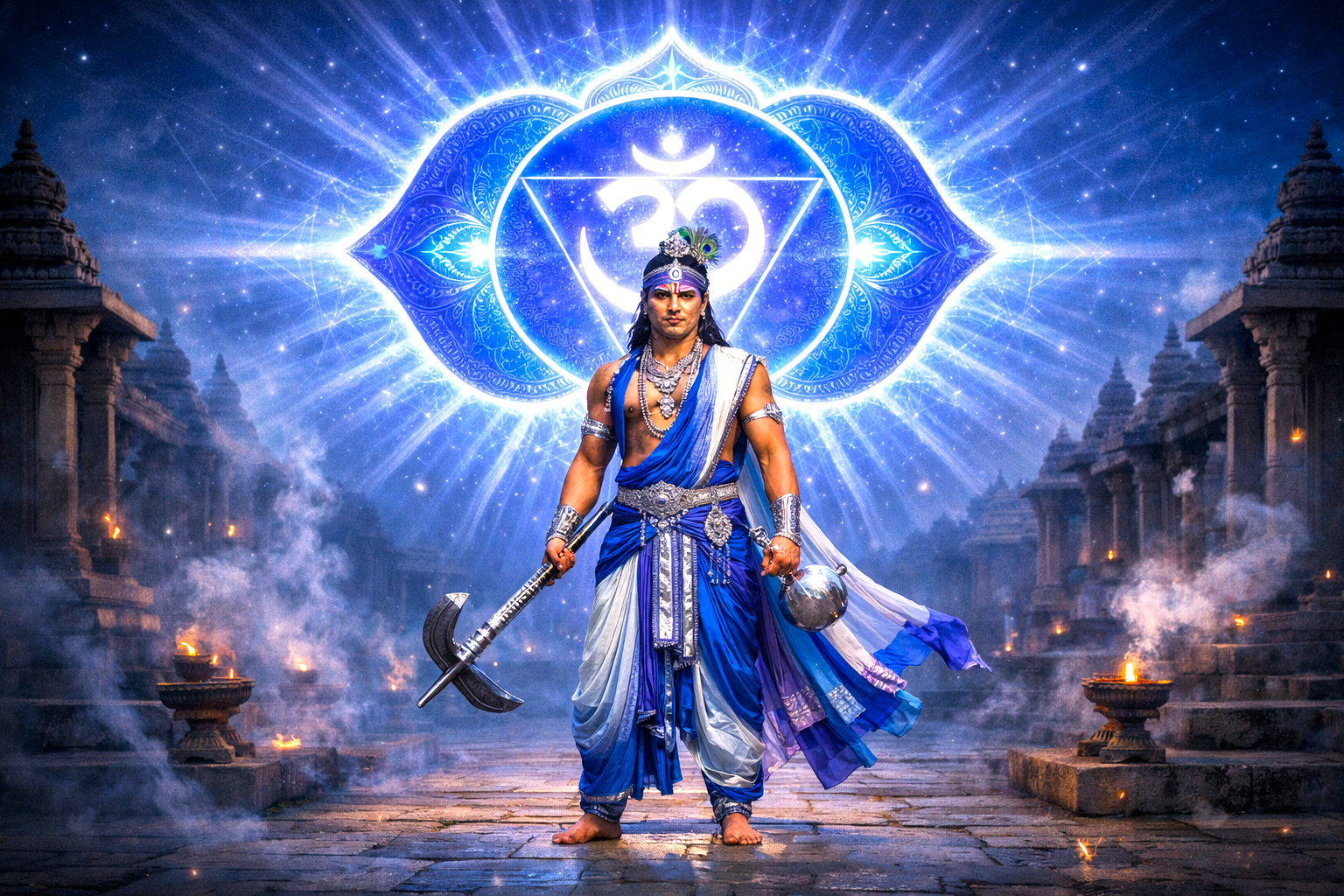
As the incarnation of the cosmic serpent Shesha, Balarama's energy is one of immense, primal power and yogic potential. He is strongly connected to the Ajna Chakra (Third Eye), the center of divine consciousness and yogic power. The key frequency that Balarama embodies is that of Sankarshana, the power of attraction and the force that holds the universe together. His auric field is a brilliant, powerful, crystalline white ray, reflecting his fair complexion and his connection to the pure consciousness of the cosmic serpent.
Discover the sacred geography where the great epics unfolded
The Earth-Shaking Power of the Divine Plow
Balarama’s plow, the Halayudha, is one of the most unique and powerful weapons in the Hindu pantheon. The supernatural power of Balarama's plow lies in its ability to control and reshape the earth. It was not just a weapon for bludgeoning foes, but a divine tool of geological force. When he dragged the Yamuna river, he was not just moving water; he was recarving the very landscape of Braj. When he threatened Hastinapura, he was prepared to move to a city. This weapon symbolizes that Balarama's power is not just personal; it is a primal, elemental force capable of altering the very ground upon which civilization stands. Balaram Gentle Strength Thunder Grip
The Martial Planets Mars and Saturn
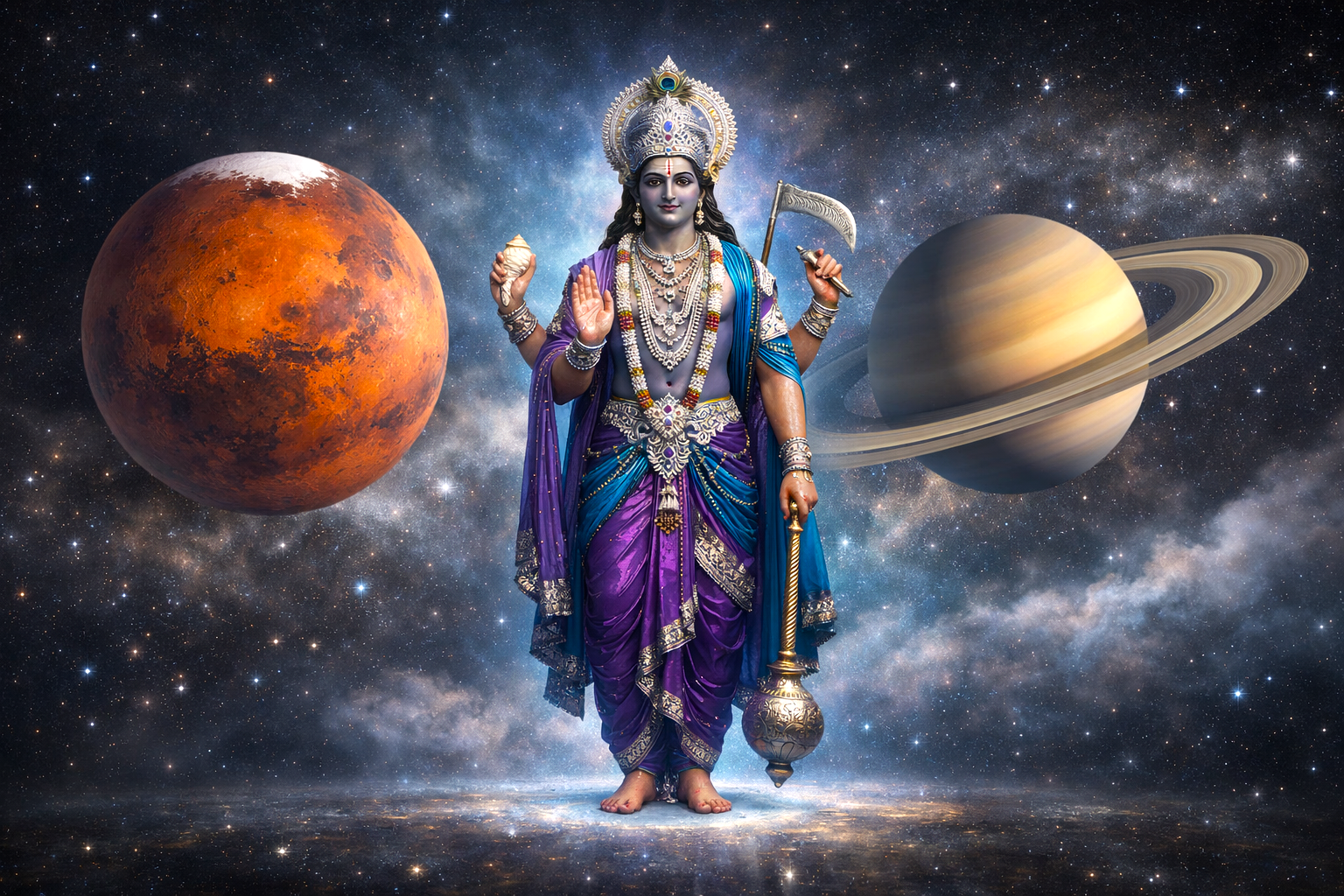
Balarama’s fierce strength, occasional rage, and role as a teacher of warriors connect him to the most powerful martial planets. He is strongly associated with the planet Mars - governing strength, energy, warfare, and brotherhood. His immense power and his sometimes-explosive temper are classic Martian traits. His role as an elder, a teacher, and his connection to agriculture also link him to the energy of the planet Saturn. Worshipping Balarama is believed to placate these powerful planets, granting physical strength and a disciplined mind.
A Modern Miracle of a Farmer's Field
Even today, farmers sometimes pray to Balarama as the lord of the plow. A modern miracle story attributed to Balarama's grace comes from a farmer whose land had become barren and dry after years of poor monsoons. Facing financial ruin, he performed a traditional puja to Balarama, offering prayers to a small idol placed on his finest plow. That night, a freak, localized storm system appeared directly over his farm, drenching his specific fields with a huge amount of rain while leaving neighboring farms dry. The next season, his harvest was the most bountiful in the entire village, a miracle he attributes to the Lord of Agriculture. Balaram Gentle Strength Thunder Grip
Follow the path of legends
The Final Departure of the Serpent Lord
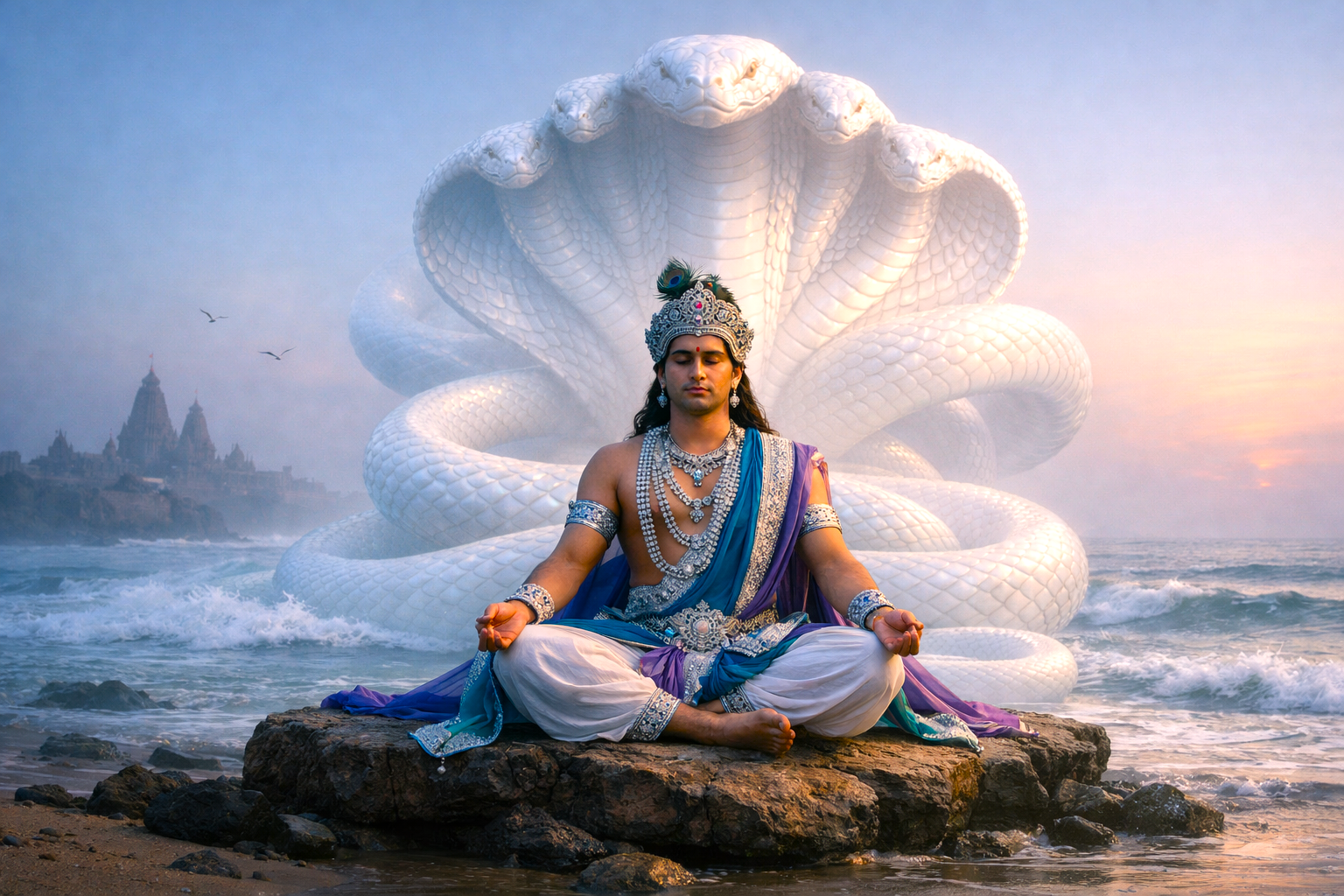
After the destruction of the Yadava Dynasty, Balarama's earthly lila came to a close. The story of Balarama's final departure from the world is a beautiful and mystical event. Having fulfilled his purpose on Earth, Balarama sat down in a meditative posture by the ocean near Dwarka. As he entered a deep trance, his life force did not simply leave his body. Instead, a massive white serpent - his true form as Shesha Naga - emerged from his mouth. This great divine serpent then glided away towards the ocean, returning to await Lord Vishnu.
The God Who Loved the Spirit of Wine
Balarama is unique among the avatars for his appreciation of wine. The stories of Balarama and his love for Varuni (wine) are a distinct part of his character. Varuni, the goddess of wine, is sometimes considered one of his consorts. He is often depicted as being in a cheerful, intoxicated state, which enhances his immense strength and playful mood. This is not seen as a moral failing, but as a part of his divine, carefree nature, a representation of the blissful, ecstatic state that is beyond conventional human morality. It highlights his connection to joy, celebration, and unrestrained divine power. Balaram Gentle Strength Thunder Grip
Step Inside The Story - View All Tour Itineraries & Details

We’re here to offer genuine, thoughtful guidance if your interested in travelling to India. As a small, dedicated team, we pay close attention to every detail so you can focus on enjoying the experience while we take care of the planning. We believe the best trips begin when someone truly listens to what you want and how you like to travel, so the journey feels right for you and contributes to a happy, positive group on tour. Our communication stays clear, straightforward, and respectful at every step, with the goal of helping you feel understood, supported, and confident from first contact to the end of your journey.
Click Catherine Frith - About The Founder
Click Discover Life Travel - All tours and more
Click Why We Are Different - Unique, Safe, Transparent