Unique Insights Into The Gods of India
Arjuna: Warrior Prince of Virtue
Discover Life Travel
The Celestial Son of a God
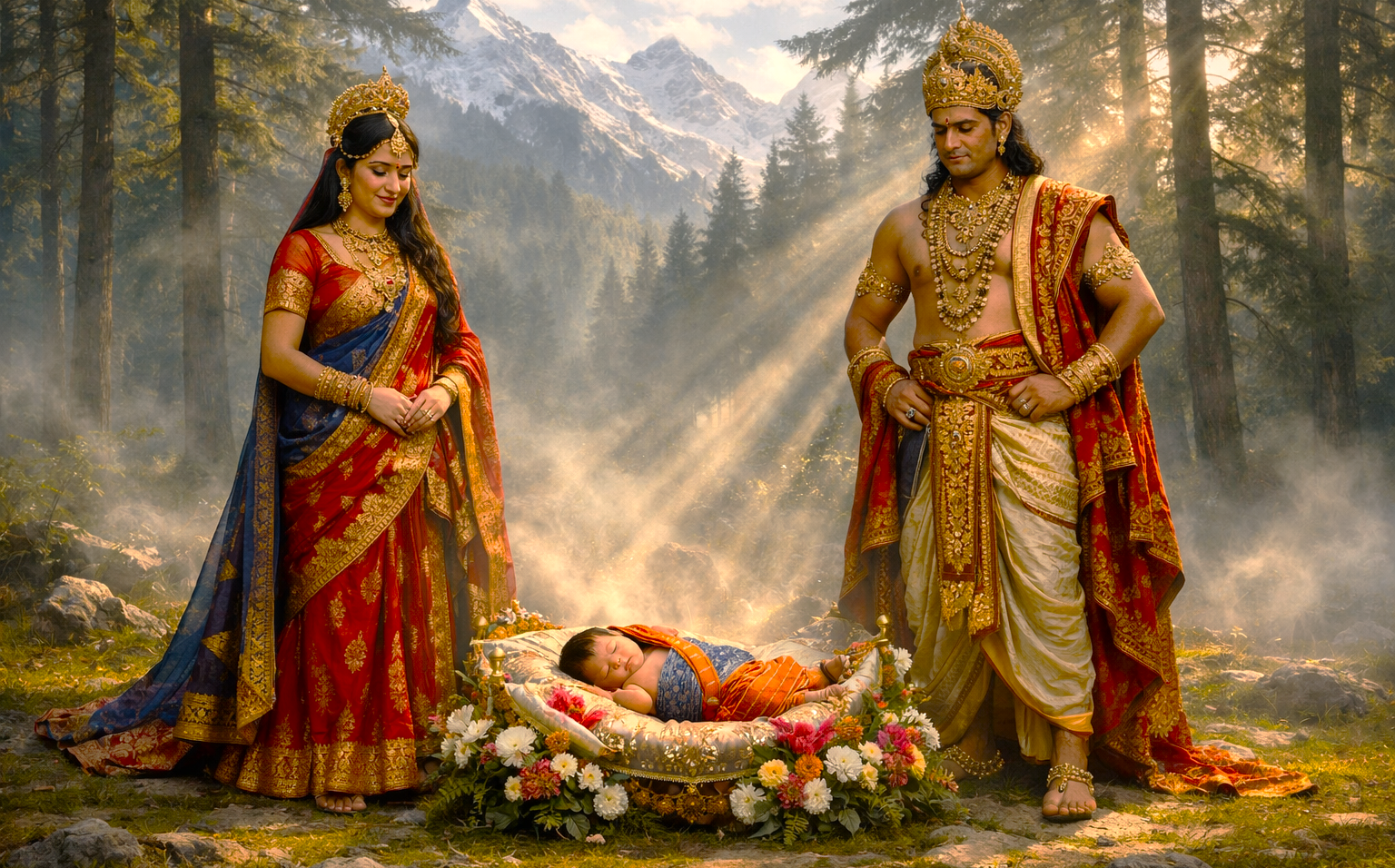
Arjuna's birth was a divine intervention to uphold righteousness. He was the third of the five Pandava brothers, born in the sacred Himalayan forests to Queen Kunti. As his father, King Pandu, was under a curse, Kunti used a divine boon to invoke the king of the gods. The story of Arjuna's divine birth from his father Indra resulted in a child born with celestial markings, destined for greatness. This divine parentage from the king of the heavens and god of thunder endowed Arjuna with immense valor, natural leadership, and an unparalleled aptitude for the science of celestial weaponry, setting him on a path to become the greatest warrior of his age. Arjuna Warrior Prince of Virtue
The Unwavering Archer's Eye: Arjuna Warrior Prince of Virtue
The symbols associated with Arjuna are those of focus, divine weaponry, and unwavering resolve. His primary symbol is the Gandiva, the celestial bow of Arjuna, gifted by the fire God Agni. This divine bow was indestructible and amplified the power of its wielder. The quiver of arrows strapped to his back, which never ran empty, symbolizes his endless resourcefulness and readiness. His most profound symbol is the focused eye of the archer, representing his one-pointed concentration (ekagrata). This was famously demonstrated when, as a student, he could see only the eye of a toy bird, proving that absolute focus is the key to mastering any skill.
Imagine being here - seeing where it happened!
The Heart of the Pandava Brotherhood
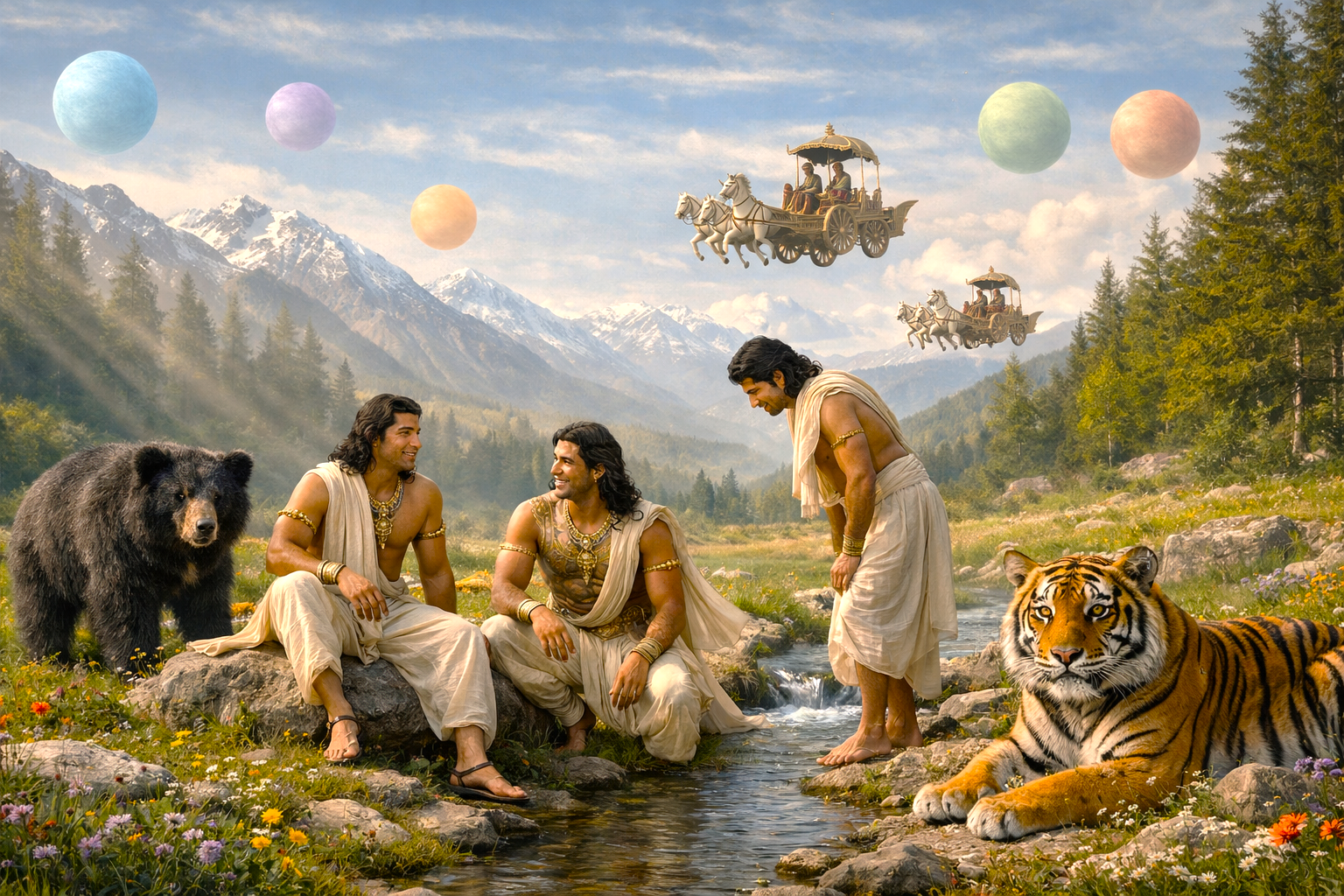
Arjuna was a pivotal member of one of the most famous families in epic literature - the Mahabharata As the third of the five Pandava brothers, he was the anchor of their martial strength. He shared a common wife, Draupadi, the princess of Panchala and wife of the Pandavas, and also had several other wives, including Subhadra, the sister of Krishna. His most famous son was the valiant young warrior Abhimanyu. His closest relationship was with his cousin and divine guide, Lord Krishna, who served as Arjuna's charioteer and guru. Arjuna Warrior Prince of Virtue
Step Into the Epic: Click - Discover Life Travel - Discover Us
The Star Pupil's Youthful Rivalry
From his earliest days, Arjuna's life was a testament to his incredible discipline and natural talent. The story of his training under the master Dronacharya shows him quickly surpassing all other students. He practiced archery relentlessly, even in the dark, mastering skills no one else could. His youth was defined by a fierce but respectful rivalry with his cousin, the Kaurava prince Duryodhana, and the low-born but prodigiously talented archer, Karna. This period of intense training, driven by his unwavering focus and Drona's expert tutelage, forged him into the most skilled and formidable warrior of his generation.
Winning Draupadi's Hand in Disguise
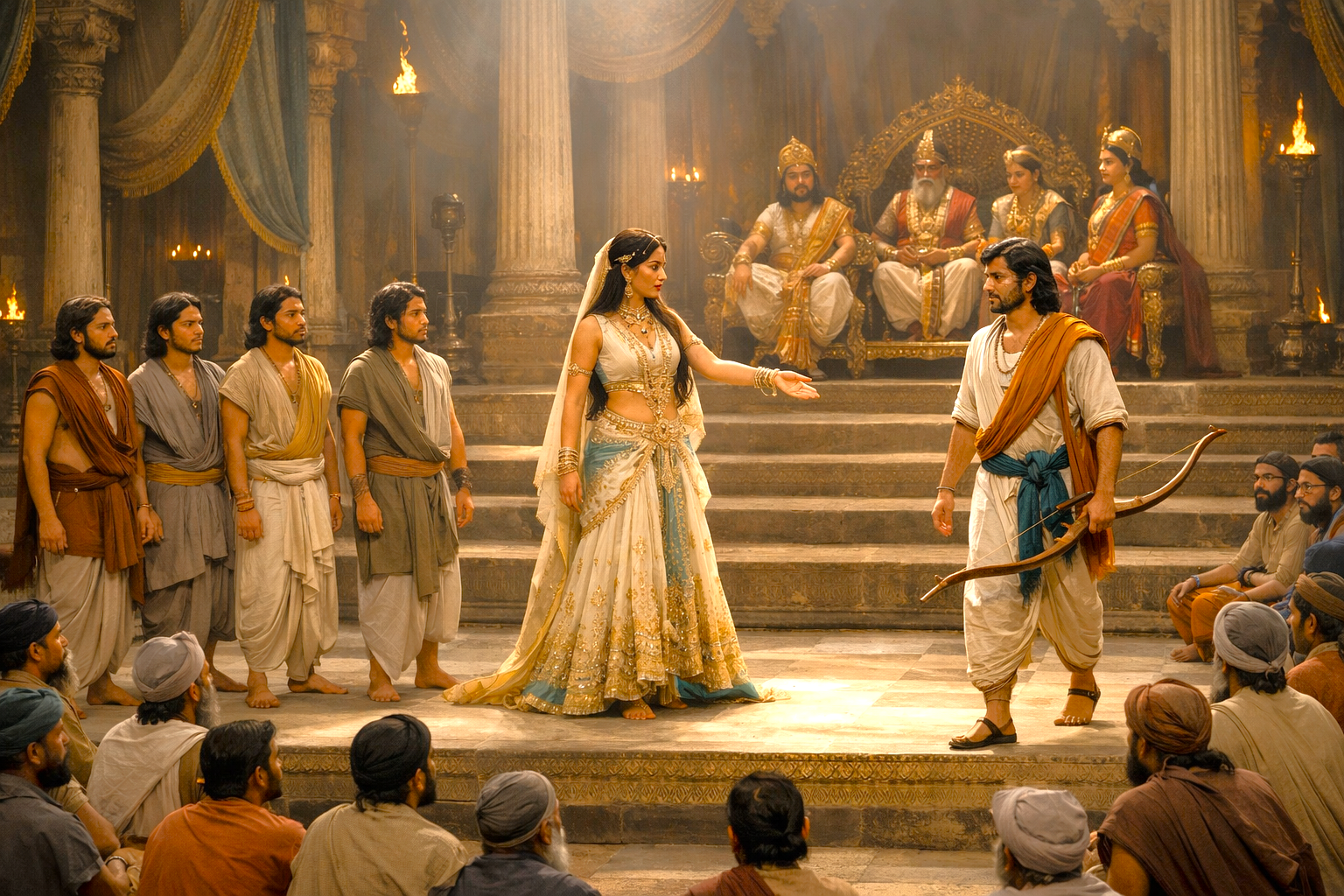
The story of Arjuna winning Draupadi's svayamvara in disguise is a legendary tale. The Pandavas, living in hiding and disguised as poor Brahmins, attended the ceremony. The challenge was to string a mighty celestial bow and shoot a revolving fish target by looking only at its reflection in a pool of oil. After all the great kings and princes failed, the disguised Arjuna stepped forward. With effortless grace, he strung the bow and pierced the target, winning Draupadi's hand and revealing the Pandavas' survival to the world.
Feel the energy of the sites that inspired a thousand legends
The Gandiva Bow and Divine Chariot
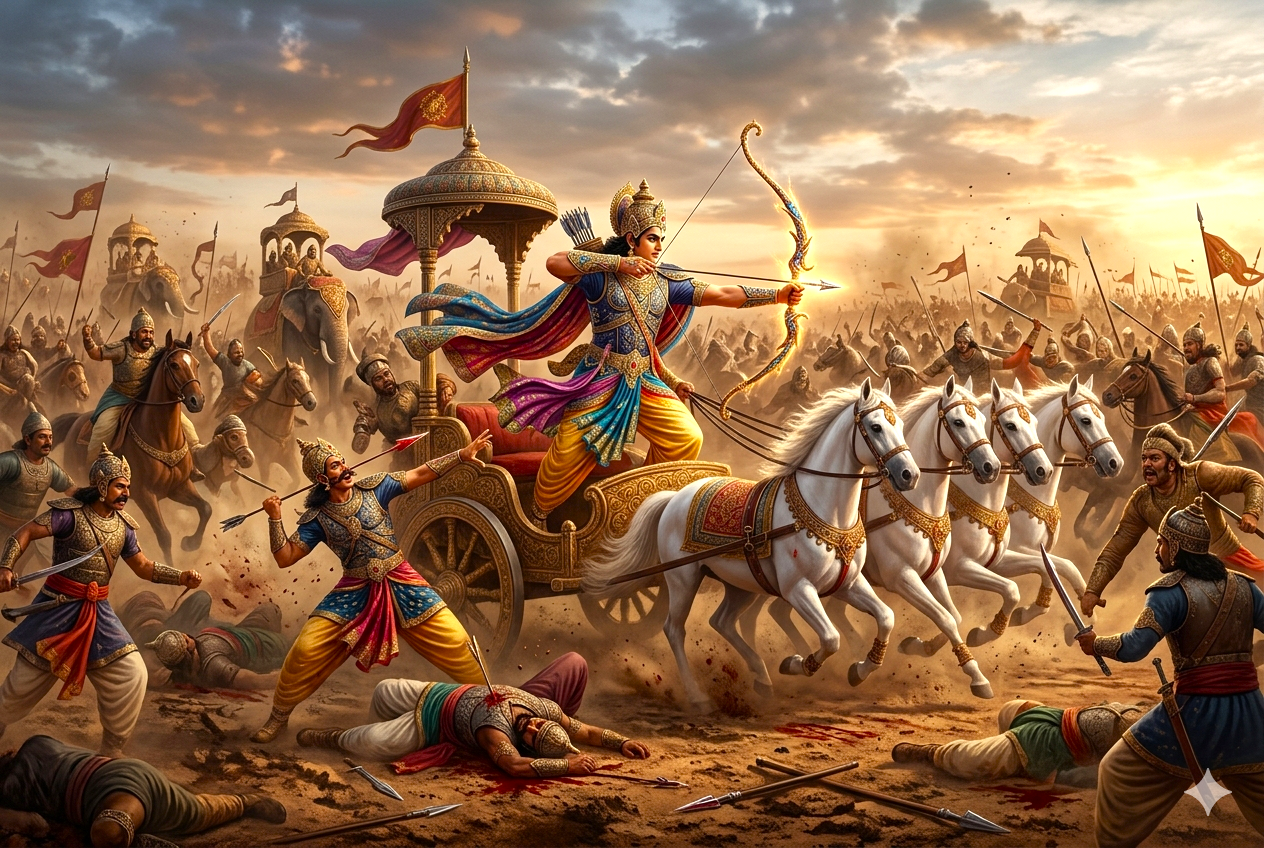
Arjuna's chariot was a divine gift, a war machine perfectly suited to the greatest archer. The white chariot gifted to Arjuna by the fire god Agni was drawn by four celestial white horses and never tired. The chariot was topped by a powerful banner featuring the insignia of the mighty ape-god Hanuman, whose presence on Arjuna's flag served as a protective emblem, instilling terror in the enemy ranks and ensuring victory. This combination of the Gandiva bow, the inexhaustible quivers, and the divine, swift chariot made Arjuna an unstoppable force.
The Great Kurukshetra War's Hero
Arjuna was the commander-in-chief and the central hero of the Pandava army in their righteous war against their cousins. The role of Arjuna as the lead warrior in the Kurukshetra War was pivotal. For eighteen days, he fought with unparalleled skill and courage, single-handedly defeating entire divisions of the Kaurava army. He was responsible for the defeat of the most powerful warriors on the opposing side, including the great grandsire Bhishma, his own teacher Drona, and his sworn arch-rival, Karna. His victories, guided by Krishna's strategy, were the deciding factor that secured the Pandavas' triumph against a much larger force. Arjuna Warrior Prince of Virtue
The Battlefield Revelation and Gita
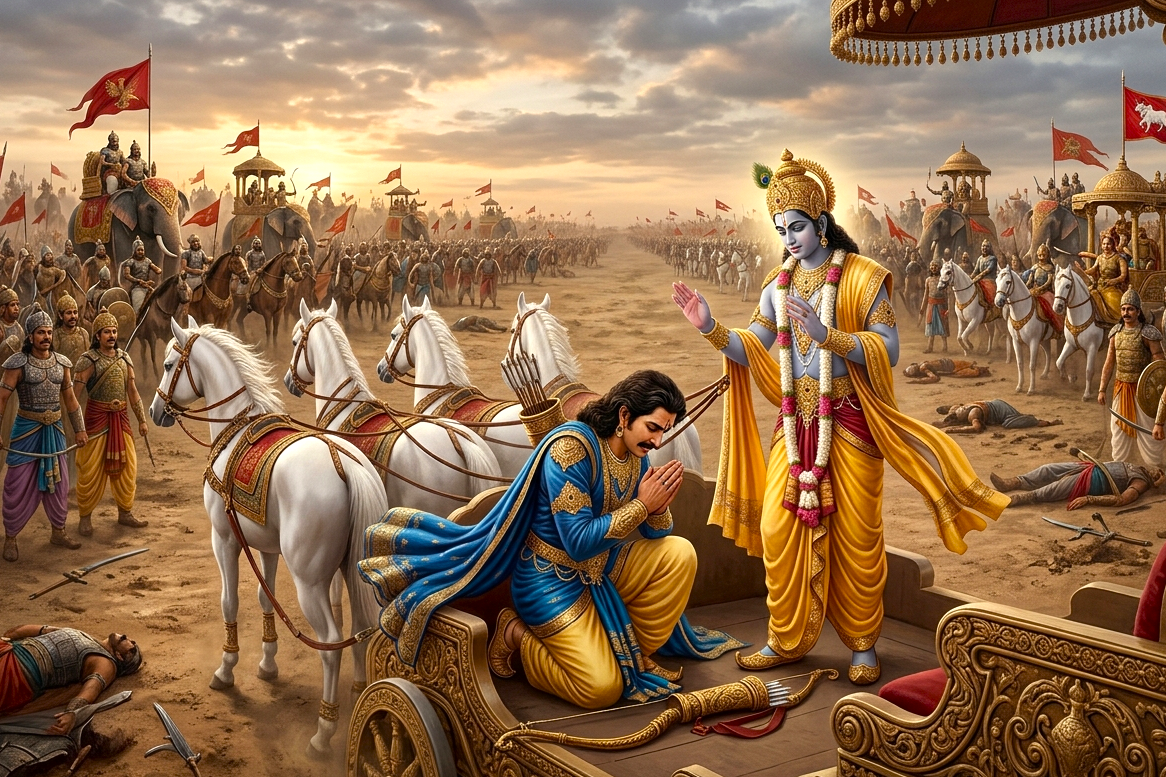
The most profound moment of Arjuna's life, and one of the most important moments in spiritual history, occurred just before the war began. The story of Arjuna's despair on the battlefield and the sermon of the Bhagavad Gita is a universal teaching. Seeing his beloved relatives, teachers, and friends in the opposing army, Arjuna was overcome with grief and doubt, and he refused to fight. It was then that his charioteer, Krishna, revealed his divine form and delivered the sacred teachings of the Bhagavad Gita.
Discover Life Travel: Small groups and private tour operators, relaxed pace travel - click here
A Message of Righteous, Focused Action
Arjuna's life is a powerful message about fulfilling one's duty with focus and entrusting the results to a higher power. The empowering message for humanity from Arjuna's life is that one must never abandon their righteous duty (dharma), no matter how difficult or emotionally painful it may be. He teaches that with unwavering focus, discipline, and faith in a divine guide, any obstacle can be overcome. His journey from doubt to determined action, as detailed in the Gita, serves as a timeless guide for anyone facing a moral crisis, encouraging them to act with skill, courage, and detachment.
The Heart Chakra and Path of Devotion
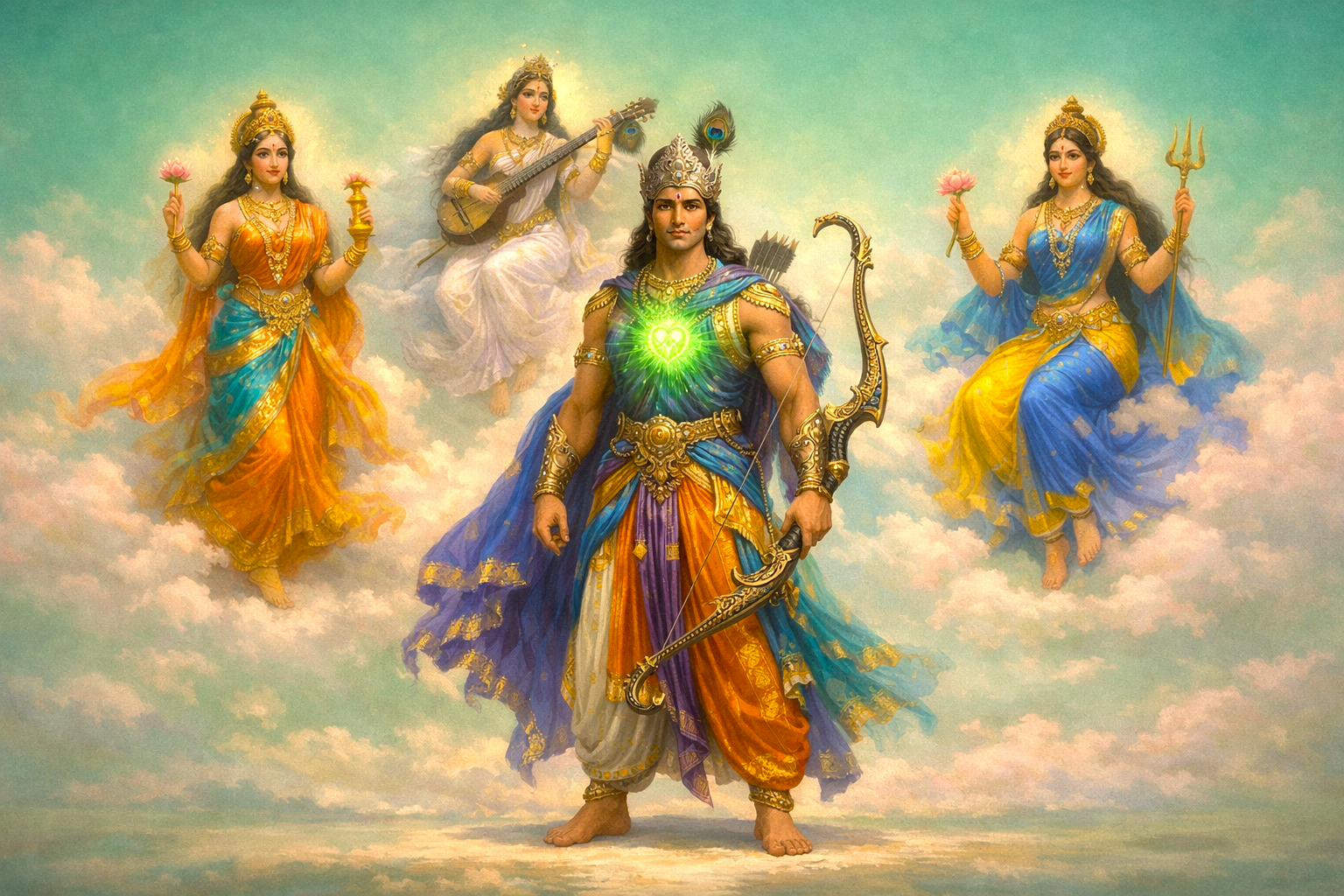
Arjuna's journey is one of emotional and spiritual transformation. His story is deeply connected to the Anahata (Heart) Chakra, the center of love, compassion, and devotion. His initial crisis was a conflict of the heart, which was resolved through the divine love and wisdom bestowed by Krishna. The key frequency that Arjuna embodies is that of Bhakti Yoga, the path of devotion. His aura would be a mix of the green ray of the heart and the blue ray of divine truth and expression. His life shows how a conflicted heart, when surrendered to the divine, can become a pure channel for righteous action.
Discover the sacred geography where the great epics unfolded
The God-Slaying Pashupatastra
During his exile, Arjuna performed intense penance to acquire an arsenal of celestial weapons for the inevitable war. The story of Arjuna acquiring the Pashupatastra from Shiva is a testament to his valor. Disguised as a hunter, Shiva tested Arjuna's courage in a fierce duel. Pleased with his strength and unwavering resolve, Shiva revealed his true form and bestowed upon him the Pashupatastra, his own personal and most devastating weapon. This, along with other divine weapons from Indra and other gods, made Arjuna's arsenal unmatched by any other mortal warrior. Arjuna Warrior Prince of Virtue
Why we are different: Click Here
Astrology, Friendship, and Divine Tests
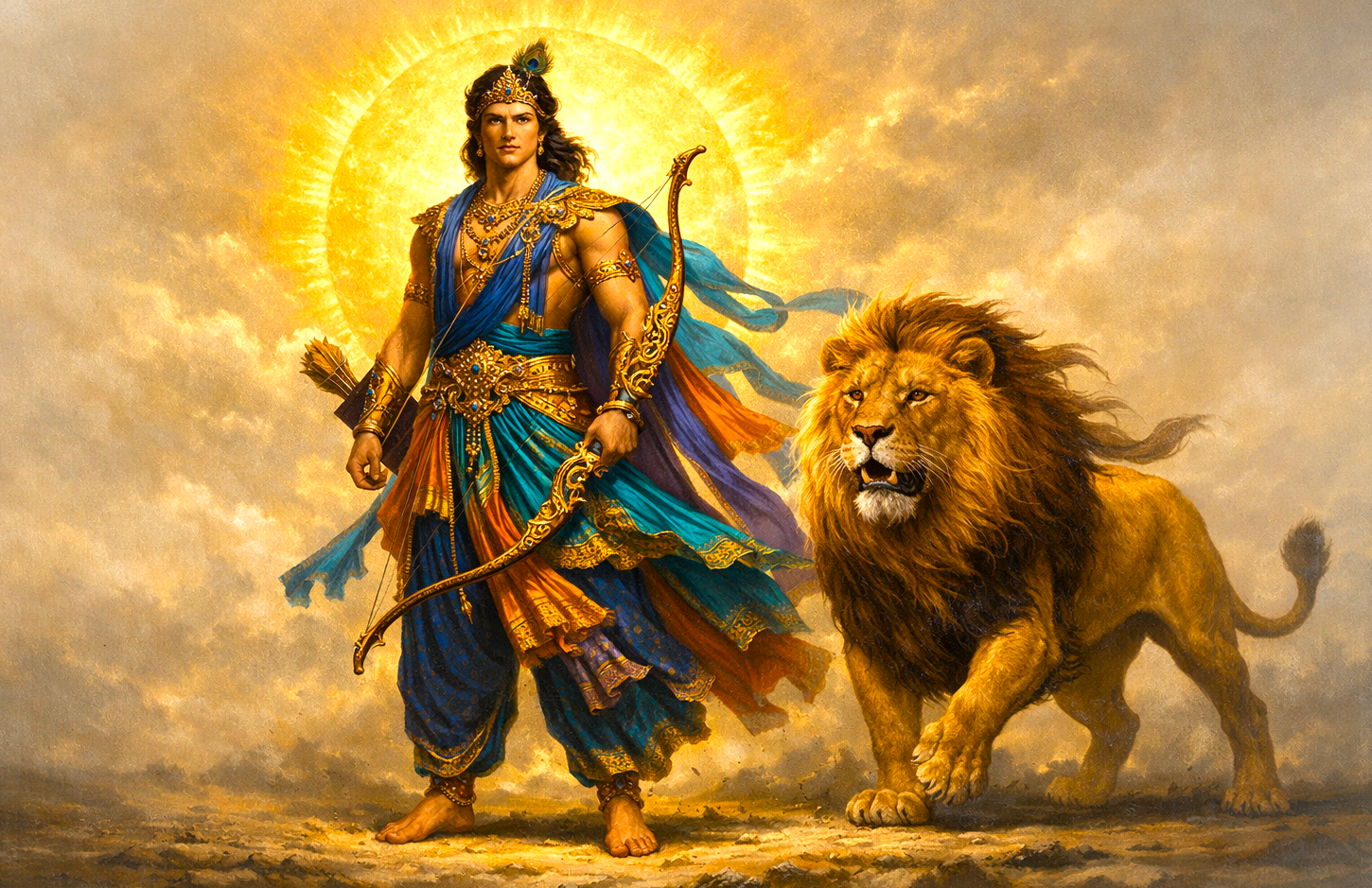
Arjuna's heroic and charismatic nature is reflected in the stars. The astrological profile of Arjuna is often linked to the Sun, for his leadership and royal bearing, and the sign of Leo, which represents courage, honor, and a heroic heart. His birth star (nakshatra) was Uttara Phalguni, symbolizing friendship and partnership, perfectly reflecting his relationship with Krishna. His sacred geometry is the arrow itself - a straight line of focused intention moving from the bow of the physical world to the target of the spiritual goal.
The Exile and Year in Disguise
After losing the fateful game of dice, Arjuna and his brothers were forced into a thirteen-year exile. The story of the Pandavas' exile and Arjuna's journey to the heavens was a period of intense preparation. During this time, Arjuna traveled to the celestial realm of his father, Indra, where he mastered the arts of music and dance and was gifted divine weapons. The final year required the Pandavas to live in disguise. Arjuna assumed the identity of Brihannala, a eunuch and dance teacher in the court of King Virata. This role was a great test of his humility and self-control, which he passed flawlessly.
A Hero's Relationship with Karna
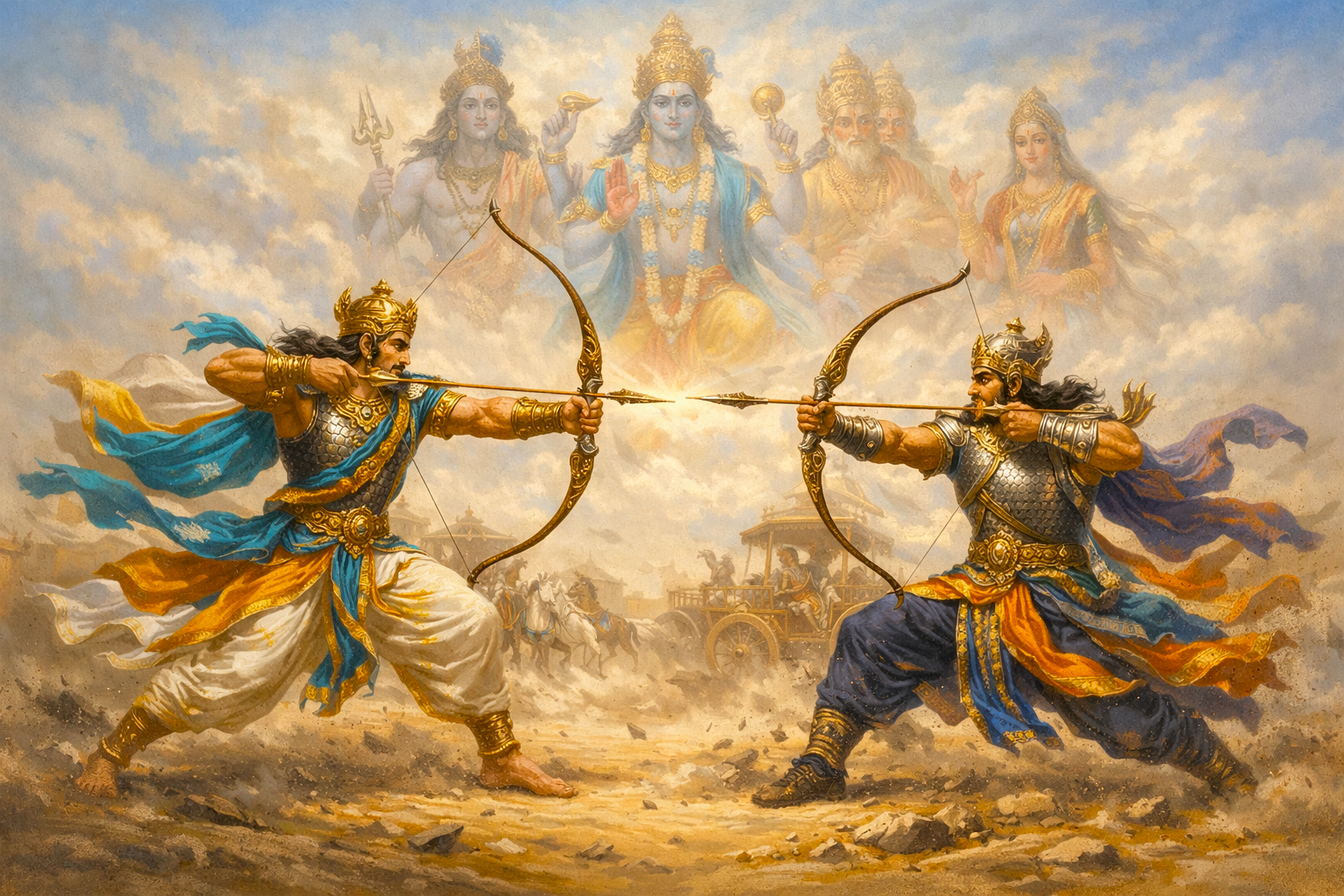
The most complex and tragic relationship in Arjuna's life was his rivalry with Karna. The story of the lifelong rivalry between Arjuna and Karna was one of destiny and misunderstanding. Karna, unknown to the Pandavas, was their elder half-brother. He was Arjuna's equal in archery and skill, and their rivalry simmered throughout their lives, culminating in a final, dramatic duel on the battlefield. Arjuna was only able to defeat Karna when Karna was unfairly handicapped by a series of curses. Arjuna Warrior Prince of Virtue
A Local Legend of Penance
See the ancient narratives etched into the heart of the subcontinent
Many places in India are associated with Arjuna's travels and penance. One famous site is in modern-day Mahabalipuram, Tamil Nadu. The massive rock carving known as Arjuna's Penance depicts the story of his austerities to obtain the Pashupatastra weapon. The intricate relief sculpture shows Arjuna standing on one leg in a yogic posture, surrounded by gods, sages, and celestial beings who have come to witness his incredible feat of devotion. This landmark serves as a powerful visual reminder of the immense effort and self-discipline required to earn divine grace and power.
The Burning of the Khandava Forest
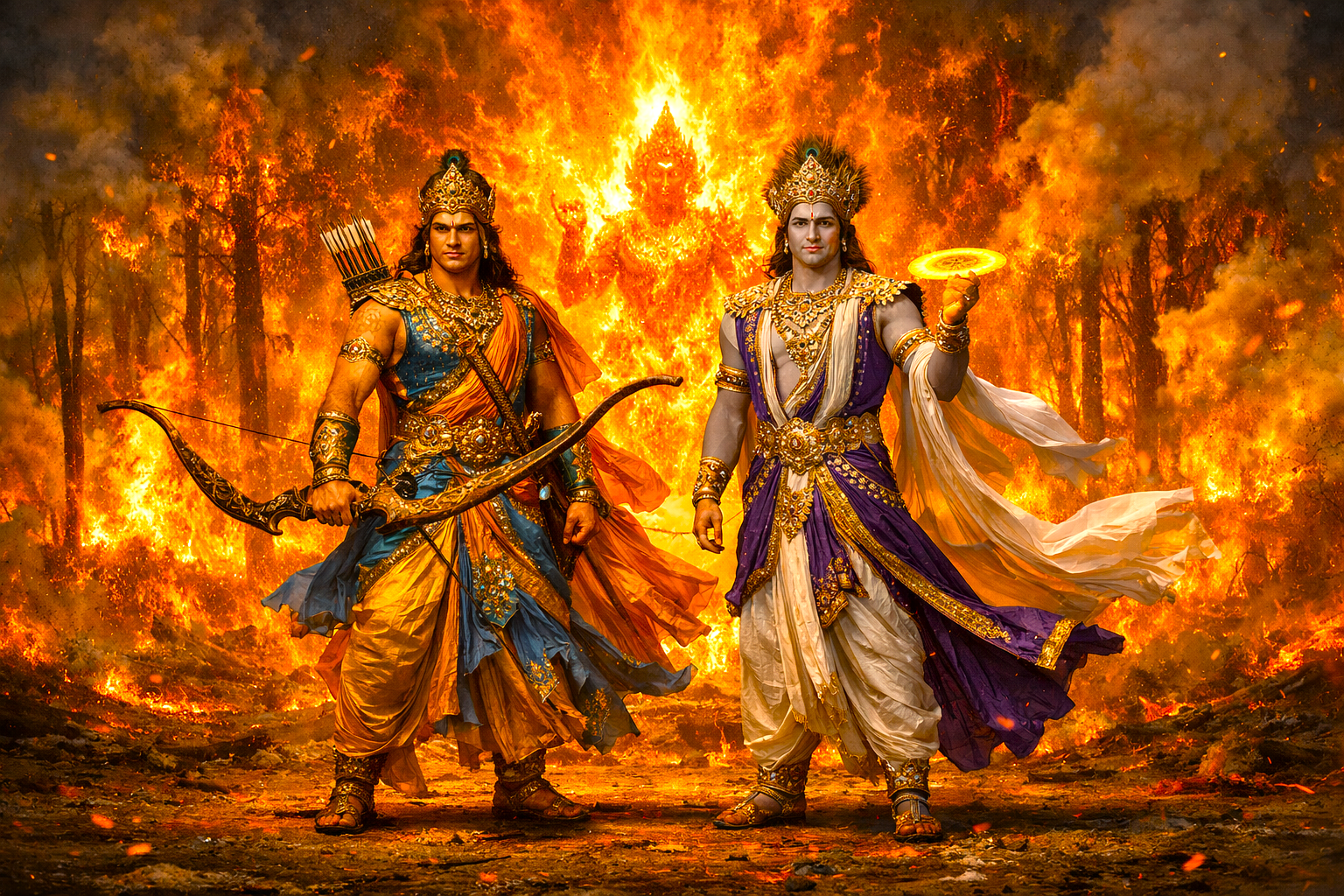
An early adventure reveals the combined power of Arjuna and Krishna. The story of Arjuna and Krishna burning the Khandava Forest was a favor to the fire god, Agni. Agni needed to consume the forest to regain his strength but was always stopped by Indra, who protected a serpent living there. With Krishna's help, Arjuna used his divine archery to create a canopy of arrows, preventing Indra's rains from dousing the flames. Pleased, Agni gifted Arjuna the Gandiva bow and his divine chariot. This event established the invincible partnership of Arjuna and Krishna.
A Hero's Tragic Loss
The Kurukshetra War, while a victory, came at a great personal cost for Arjuna. The story of the death of Arjuna's son Abhimanyu was the most heartbreaking moment of the war. The young and valiant Abhimanyu knew how to enter the formidable Chakravyuha military formation but not how to exit. He was trapped and, against all rules of war, was slain by the combined might of several great Kaurava warriors. Abhimanyu's death filled Arjuna with a terrible grief and a burning rage, leading him to vow and successfully carry out the slaying of Jayadratha, the warrior responsible for blocking the other Pandavas from saving his son. Arjuna Warrior Prince of Virtue
The Final Journey to Heaven
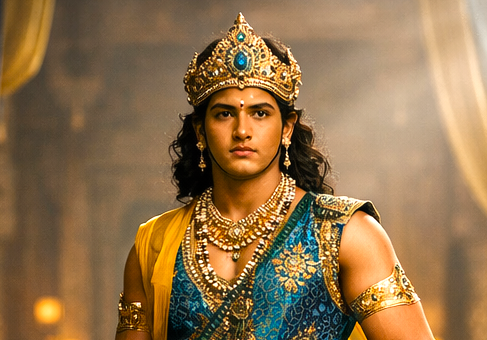
After a long and righteous reign, Arjuna and his brothers renounced their kingdom. The story of the Pandavas' final journey, the Mahaprasthana, is a solemn conclusion to their epic lives. As they walked towards the Himalayas, seeking to ascend to heaven in their mortal bodies, all but one fell. Arjuna, the great hero, also fell. Yudhishthira explained that Arjuna's fall was due to his pride - his boast that he could single-handedly vanquish all his enemies in a single day. This final lesson showed that even the greatest hero must overcome the subtle sin of pride to achieve final liberation.
The Ultimate Disciple of God
Arjuna's most important role is that of the perfect disciple. The relationship between Krishna and Arjuna as guru and shishya (master and disciple) is the core of the Bhagavad Gita. Arjuna represents the ideal seeker: he is courageous, skilled, and sincere, yet he is also filled with doubt and confusion when faced with a true moral crisis. His willingness to surrender his ego, admit his confusion, and humbly ask for guidance makes him the perfect recipient for Krishna's divine wisdom. Their relationship is the ultimate model for any spiritual seeker looking to navigate the battlefield of life with a divine guide. Arjuna Warrior Prince of Virtue
Step Inside The Story - View All Tour Itineraries & Details

We’re here to offer genuine, thoughtful guidance if your interested in travelling to India. As a small, dedicated team, we pay close attention to every detail so you can focus on enjoying the experience while we take care of the planning. We believe the best trips begin when someone truly listens to what you want and how you like to travel, so the journey feels right for you and contributes to a happy, positive group on tour. Our communication stays clear, straightforward, and respectful at every step, with the goal of helping you feel understood, supported, and confident from first contact to the end of your journey.
Click Catherine Frith - About The Founder
Click Discover Life Travel - All tours and more
Click Why We Are Different - Unique, Safe, Transparent