A Unique Look Into Indian History
Pallava Dynasty: Tamil Nadu - India
Discover Life Travel
Battles for Supremacy in the South
Before the Pallavas rose to imperial prominence, the Tamil country was just emerging from the enigmatic Kalabhra "interregnum," a period that had disrupted the old Sangam-era order of the Cholas, Pandyas, and Cheras. The land was politically fragmented. It was in this environment of renewed Brahmanical traditions and societal flux that a powerful new lineage, with its origins debated but its ambition clear, began to consolidate its power. The rise of the Pallava Dynasty from Kanchipuram marked a new, definitive chapter, bringing order, a powerful Sanskrit-based culture, and monumental art to the Tamil-speaking south. Pallava Dynasty Tamil Nadu India
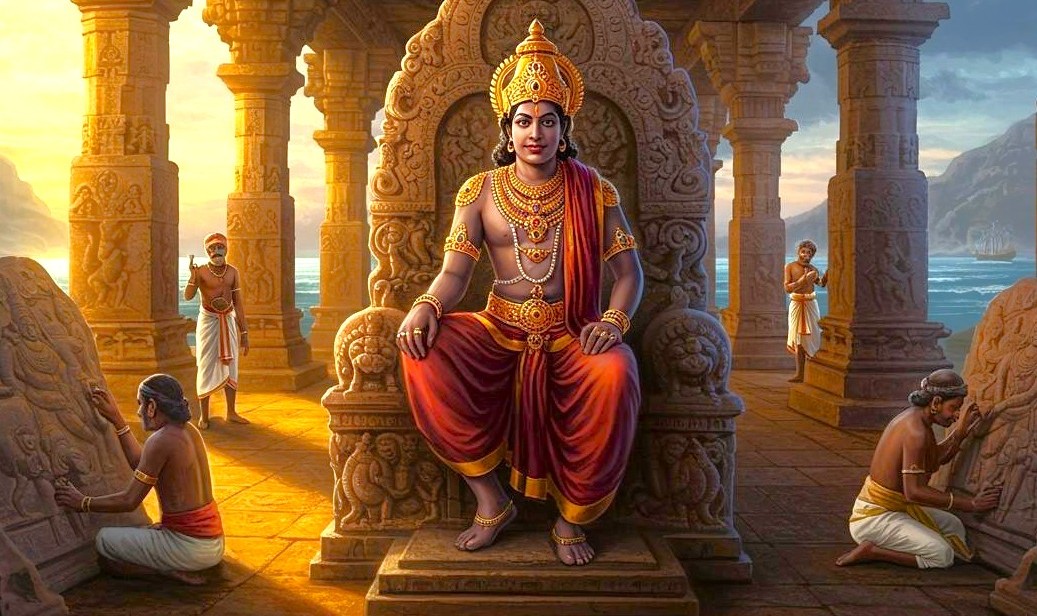
Pallava Dynasty - Tamil Nadu India: The Lion Lord's New Dawn
The imperial Pallava line was forged by Simhavishnu around the late 6th century CE. He was the "lion of the earth" who crushed the fading power of the Kalabhras and re-established a mighty kingdom with its capital at the great city of Kanchipuram. He and his successors, the brilliant Mahendravarman I and the mighty Narasimhavarman I, transformed their domain from a regional power into a dominant South Indian empire. The establishment of the imperial Pallava line by Simhavishnu heralded a golden age of art, religion, and epic conflict that would define the region for centuries.
A King's Life in the Scholar's City
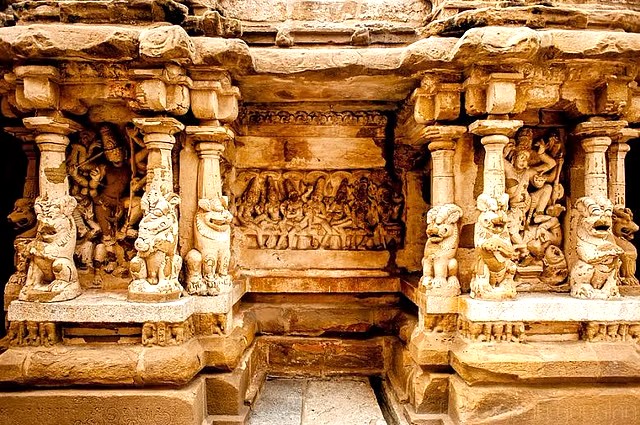
A day in the life of a Pallava king, one of India's seven sacred cities, was one of scholarship, piety, and military preparedness. Mornings were for religious observances and audiences in the royal court. As patrons of the famous "ghatika" (university) of Kanchi, a king might spend his afternoon in debate with the great scholars and philosophers of the age. Evenings were for the arts, listening to music and watching performances of Sanskrit plays, perhaps even one written by the polymath king Mahendravarman I himself, embodying the intellectual and cultural life of the capital Kanchipuram. Pallava Dynasty Tamil Nadu India
Life in the Shadow of the Chariot Temples
For the common person, life was structured around the temple and the "Brahmadeya" village - land grants gifted to Brahmin communities, which became centers of learning and agricultural administration. Society was prosperous, benefiting from the dynasty's extensive maritime trade. Guilds of merchants and artisans thrived in coastal towns like Mamallapuram (Mahabalipuram). The social structure of the Pallava kingdom was one of renewed Hindu orthodoxy, with a strong emphasis on caste and a flourishing, trade-fueled economy that funded the dynasty's legendary artistic ambitions.
Feasts of the Coromandel Coast
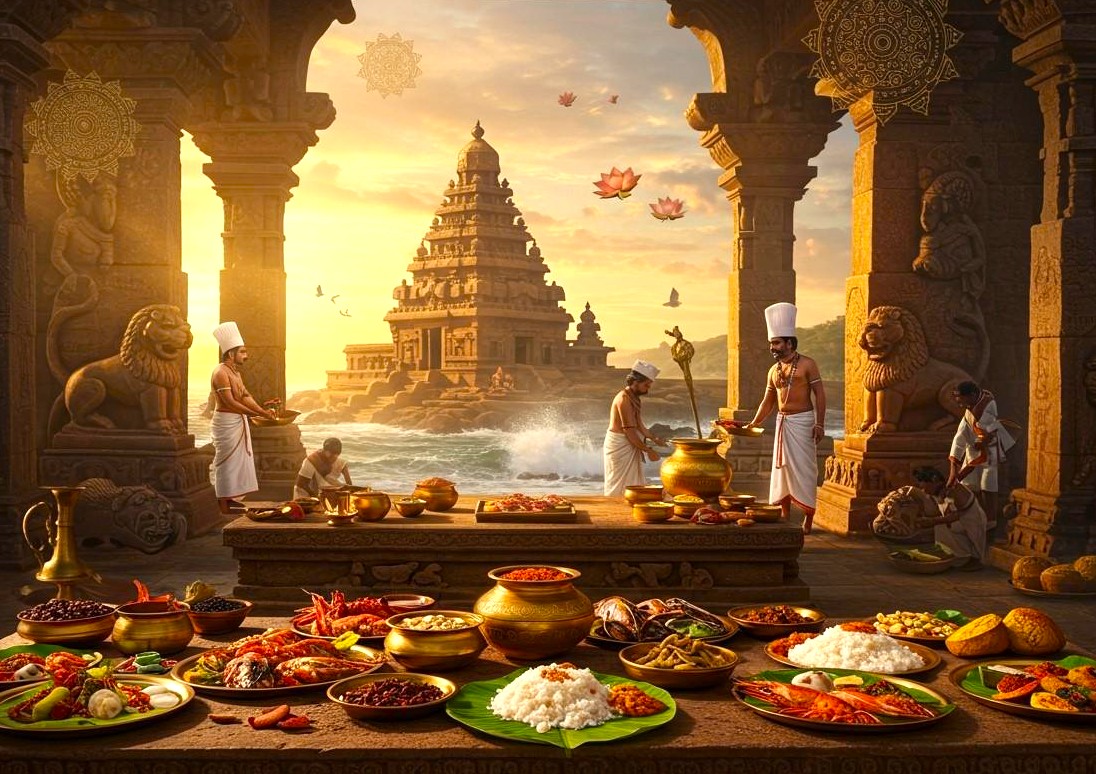
The royal kitchens of the Pallavas would have celebrated the bounty of the Coromandel Coast and its fertile hinterland. Rice was the staple, but as great maritime traders, their diet would have been cosmopolitan. Feasts would have featured fresh seafood from the coast, a rich variety of vegetables, and fruits. The influence of Southeast Asian trade on Pallava cuisine likely introduced new spices and ingredients. The food culture was a reflection of their identity: rooted in the Tamil land but open to the influences of the wider world they were connected to by sea. Pallava Dynasty Tamil Nadu India
The Law of the Sanskrit Charters
The legal system was based on the authority of the Dharmasastras, with the king as the supreme dispenser of justice. Their shift from early Prakrit charters to the sophisticated use of Sanskrit for their official copper-plate grants indicates a highly formalized legal and administrative system. These grants meticulously record land transactions, tax exemptions, and the duties of local assemblies. The use of Sanskrit copper-plate inscriptions for legal grants demonstrates a highly organized bureaucracy and the dynasty's role as upholders of a classical, Brahmanical legal order.
The Rise of the Devotional Saints
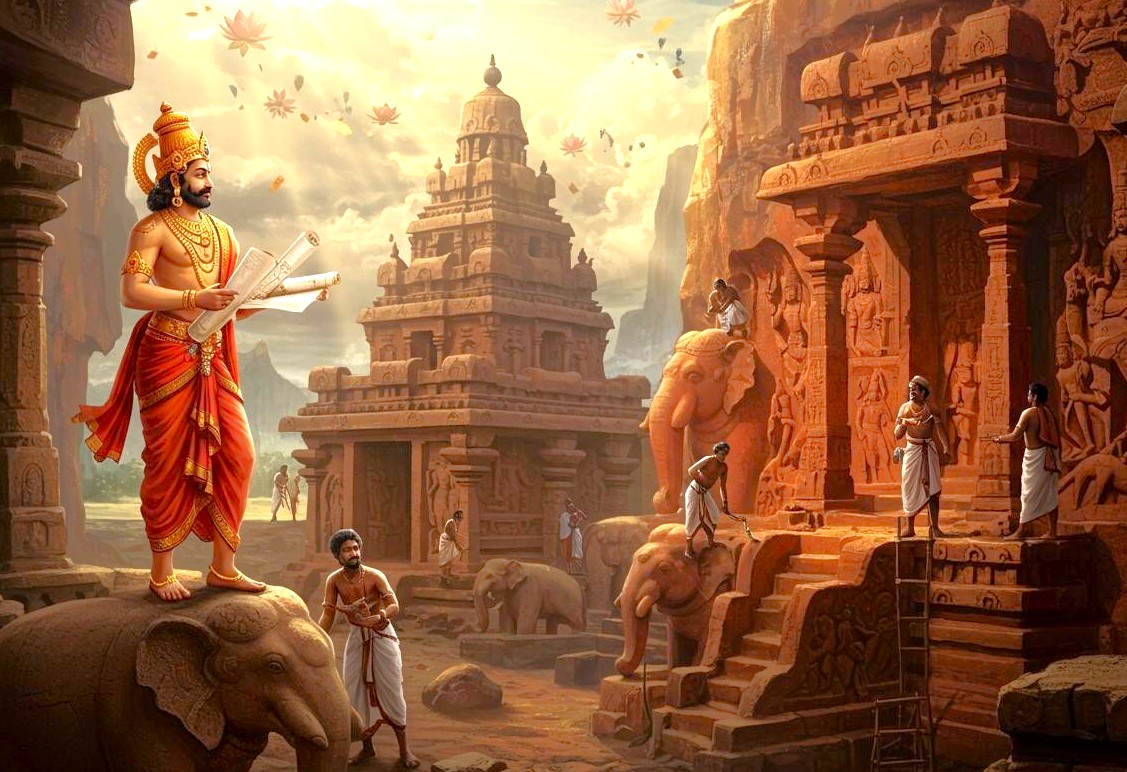
The Pallava era was the crucible of the Bhakti movement, a powerful wave of popular, emotional devotion that transformed Hinduism. The Tamil poet-saints, the Nayanars (devotees of Shiva) and the Alvars (devotees of Vishnu), wandered the land, singing passionate hymns in the local language and challenging religious orthodoxy. The flourishing of the Bhakti movement under Pallava rule created a spiritual revolution, bringing religion out of the temple sanctum and into the hearts and homes of the common people, a legacy that endures to this day. Pallava Dynasty Tamil Nadu India
Carving a God from a Living Mountain
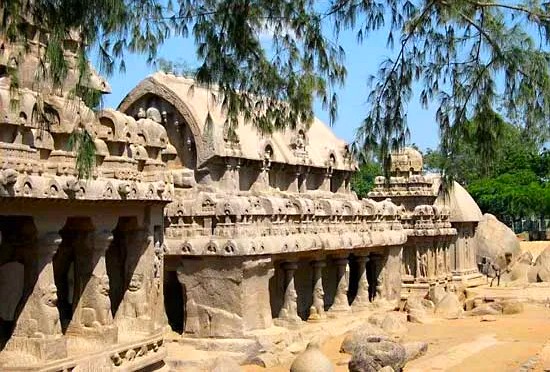
The "festivals" of the early Pallavas were acts of creation. Instead of temporary processions, King Mahendravarman I pioneered a new art form: excavating temples directly from the living rock of granite hillsides. These cave temples were a permanent celebration of the gods. His son, Narasimhavarman I, took this a step further, sculpting entire hills into monolithic temples shaped like chariots - rathas. The creation of the Mahabalipuram monolithic rathas was a festival in stone, a breathtaking display of royal piety and artistic genius that forever changed the face of Indian architecture.
Where Poets and Kings Were One
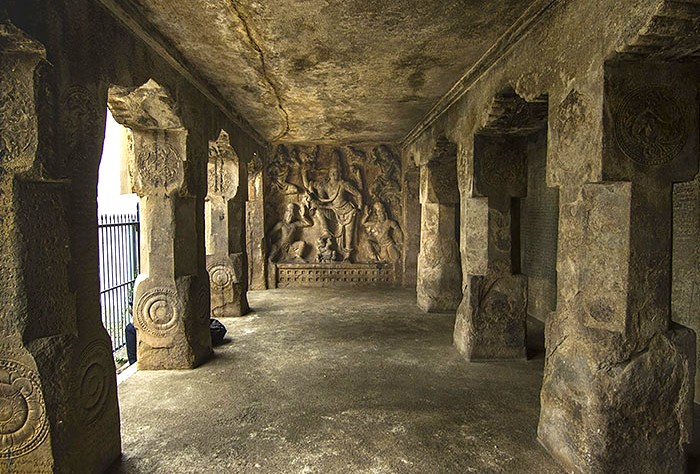
The court was a luminous center of Sanskrit learning. The polymath king Mahendravarman I was himself a celebrated playwright, composing the brilliant satirical plays Mattavilasa Prahasana and Bhagavadajjukam. The great poet Bharavi, author of the epic Kiratarjuniya, is associated with the court of Simhavishnu. This deep royal involvement in the arts created an environment where the patronage of Sanskrit literature and drama was not just a policy but a personal passion of the rulers themselves, making Kanchipuram a beacon of classical culture.
The Great Deccan Rivalry
The history is dominated by their epic, century-long struggle with the Chalukyas of Vatapi (Badami). This rivalry was fought with bitter intensity, with each side seeking to prove its supremacy. In a stunning military achievement, the Pallava king Narasimhavarman I, "the Great Wrestler" (Mamalla), defeated the Chalukyas, pursued their army, and sacked and conquered the Chalukyan capital of Vatapi in 642 CE. This victory earned him the title "Vatapikondan" (Taker of Vatapi) and marked the zenith of Pallava military power.
An Empire Reaching Across the Sea
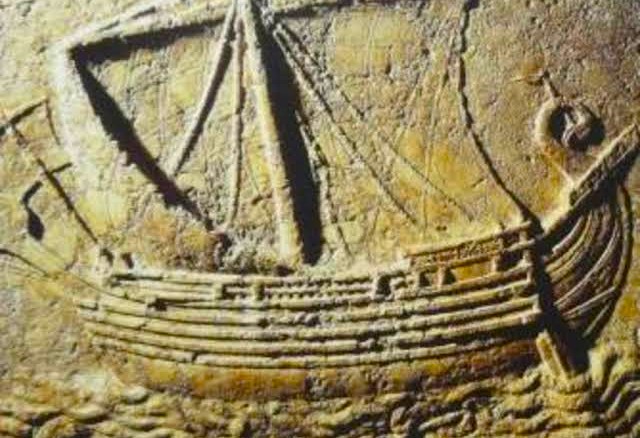
The Pallavas were a formidable maritime power. Their port city of Mamallapuram was a bustling hub of international trade, with ships sailing to Sri Lanka, Southeast Asia, and China. This was not just a commercial enterprise; it was a cultural one. Pallava scripts, architectural styles, and political ideas spread across the sea, profoundly influencing the emerging kingdoms of the region. The dynasty's maritime trade with Southeast Asia was a crucial factor in the "Indianization" of that region, a testament to their naval strength and cultural influence. Pallava Dynasty Tamil Nadu India
From Rock-Cut Caves to Stone-Built Temples
The Pallavas were the great innovators of South Indian temple architecture. Their legacy shows a clear, revolutionary evolution. It began with Mahendravarman's simple, rock-cut pillared halls. It evolved under Mamalla into the freestanding monolithic "rathas" and the magnificent open-air relief, the Descent of the Ganga. Finally, under Rajasimha, it culminated in the first great structural stone temples, like the majestic Kailasanathar temple at Kanchipuram and the Shore Temple at Mahabalipuram, which became the blueprint for all future Dravidian temples.
The Descent of a River from Heaven
The artistic masterpiece of the Pallava era is the colossal open-air rock relief at Mahabalipuram, known as Arjuna's Penance or the Descent of the Ganga. This gigantic carving, teeming with exquisitely detailed figures of gods, humans, and animals, uses a natural cleft in the rock to depict the sacred Ganga river flowing down from the heavens. The sculptural marvel of the Descent of the Ganga relief is a symphony in stone, a breathtaking narrative artwork on an epic scale that stands as a unique monument in world art.
The Final Sleep of Kings
The Pallavas did not build grand tombs for their dead. Their funeral rites would have followed Hindu cremation ceremonies. Their true memorials, their monuments to immortality, were the temples they built. They poured their wealth and their ambition into creating eternal homes for the gods, believing this to be the highest path to spiritual merit. The absence of royal tombs in the culture highlights a worldview where personal legacy was best secured not by a mausoleum, but by becoming a patron and builder for the divine. Pallava Dynasty Tamil Nadu India
The Lion Flag Falls to the Tiger
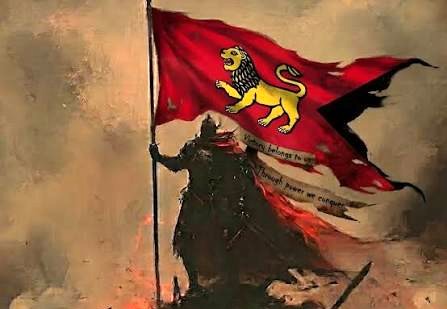
After centuries of glorious rule, the Pallava power began to wane due to internal conflicts and the resurgence of their old rivals, the Pandyas. The final, fatal blow came from a new, aggressive power: the Cholas. Around 897 CE, the ambitious Chola prince Aditya I attacked and killed the last great Pallava king, Aparajitavarman, in battle. The conquest of the Pallava kingdom by the Cholas under Aditya I brought an end to a magnificent dynasty, their territories absorbed into the nascent Chola empire, which would go on to inherit and expand upon the Pallavas' artistic and political legacy.
Step Inside The Story - View All Tour Itineraries & Details
We’re here to offer genuine, thoughtful guidance if your interested in travelling to India. As a small, dedicated team, we pay close attention to every detail so you can focus on enjoying the experience while we take care of the planning. We believe the best trips begin when someone truly listens to what you want and how you like to travel, so the journey feels right for you and contributes to a happy, positive group on tour. Our communication stays clear, straightforward, and respectful at every step, with the goal of helping you feel understood, supported, and confident from first contact to the end of your journey.
Click Catherine Frith - About The Founder
Click Discover Life Travel - All Tours and More
Click Why We Are Different - Unique, Safe, Transparent