
Spirit Of Southern India Tour
La Saleth Church Kodaikanal India
Mother Masala Tour
A French Mission’s Hilltop Shrine
La Saleth Church stands in Kodaikanal, in Tamil Nadu’s Dindigul district, among the Palani Hills. Its name refers to Our Lady of La Salette, a Marian title associated with an apparition reported in France in 1846. French Jesuit Louis Saint-Cyr laid the cornerstone in 1863, and the shrine was established in 1866. The church’s history connects missionary work with Kodaikanal’s colonial-era growth. Saint-Cyr and two fellow missionaries are buried beneath an extended part of the shrine, according to a local historical account. As you arrive, you’ll find a place shaped by worship, remembrance and continuing parish life. La Saleth Church Kodaikanal India
La Saleth Church Kodaikanal India: Sacred Spaces
La Saleth is a Catholic shrine dedicated to Our Lady of La Salette, rather than a museum collection. Its sanctuary centres worship on the altar and Marian devotion. A local historical account says founder Louis Saint-Cyr and two missionary colleagues are buried beneath an extended part of the shrine, linking the place to its founders. You’ll encounter a sacred space shaped by prayer, services and remembrance. As you enter, observe the sanctuary respectfully and follow parish guidance, especially during services. Its continuing religious purpose is central to understanding the church and its history.
Ancient Mosaics: Impeccable Craftsmanship
The documented story centres on the church’s founding and French missionary connection, rather than a named mosaic programme. Louis Saint-Cyr laid the cornerstone in 1863, and the shrine was established in 1866. Available accounts identify no mosaic makers, workshops or dated panels. As you look around, notice how the devotional arrangement directs attention toward Marian worship. Sources offer little detail about materials or later decorative work. The clearest confirmed artistry is the creation of a sacred space in Kodaikanal. La Saleth Church Kodaikanal India
The Pulse of the Local Community
The church serves Catholics in Kodaikanal, a hill town in Dindigul district. Parish life centres on worship, services and religious observances connected with its Marian dedication. Historical accounts focus on the French mission and founding dates; they offer little detail about parishioners’ routines or occupations. You’ll find a grounded sense of community in the church’s continuing use for prayer. Kodaikanal has varied livelihoods, though claims about distinct local customs need interviews or parish records. As you visit, remember this is an active religious place. A quiet, considerate approach gives parishioners space and lets you observe its history respectfully.
Capturing the Magic: A Photographic Haven
Distinctive photographic subjects include the hilltop setting, devotional interior and La Salette connection. You’ll be able to frame the exterior against Kodaikanal’s surroundings, then look toward the sanctuary and memorial details open to public view. The graves associated with Louis Saint-Cyr and two fellow missionaries add historical context; parish guidance determines access and photography. Choose a quiet moment and avoid close photographs of worshippers without consent. Soft daylight can show the building’s form and peaceful mood. During services, set your camera aside and give the congregation room. The scene’s strongest quality is the meeting of religious purpose and local history.
Festivals of Devotion: Honouring the Sacred and the Divine
The shrine’s dedication links its devotional calendar with Our Lady of La Salette. The reported apparition took place on 19 September 1846, in France; the Kodaikanal shrine was established in 1866. Sources consulted do not confirm local feast dates, service hours or procession details, so check parish announcements for current information. Catholic observances may include Mass and prayer, with clergy and parishioners taking part. You’ll understand the occasion through Marian devotion and the French mission’s history. The apparition is a religious account, while the church’s dates are documented history.
The Connection With the Gods
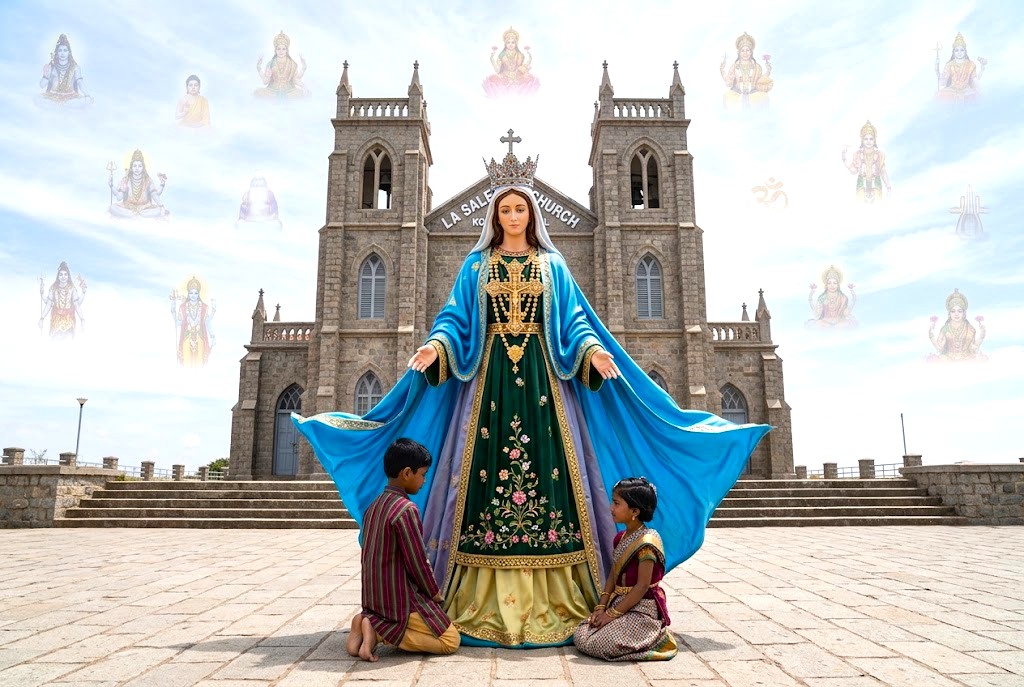
The church is dedicated to Mary under the Catholic title Our Lady of La Salette. The title recalls an apparition reported by young shepherds Maximin Giraud and Mélanie Calvat near La Salette, France, on 19 September 1846. Their account became the basis of a Marian devotion. French Jesuit Louis Saint-Cyr brought that dedication to Kodaikanal: he laid the cornerstone in 1863, and the shrine was established in 1866. You’ll encounter a Christian place of worship where Mary is venerated and Jesus is central to Catholic belief. The apparition story belongs to religious tradition, and its connection here is the shrine’s dedication.
Serendipitous Meetings: Beyond the Main Path
A walk around the church places you in Kodaikanal, where daily life extends beyond religious sites. Sources consulted document no specific workshops, mills or craft streets connected directly to the shrine. You’ll find current local businesses and crafts most reliably by exploring nearby streets and asking residents about their work. Inside the grounds, attention turns to the devotional setting and missionary history. If you meet a local maker or shopkeeper, ask about their work and its origins rather than assuming it represents the church. This leaves room for genuine local encounters.
Resilience and Renewal: Overcoming Adversity’s Challenges
The documented milestones begin with Louis Saint-Cyr laying the cornerstone in 1863, followed by the shrine’s establishment in 1866. A local historical account says Saint-Cyr and two missionary colleagues were buried beneath an extended part of the church. These records tell how a mission became a lasting place of worship. Sources consulted identify no specific fire, flood, battle or repair affecting the building. You’ll need parish archives to confirm any disaster or restoration dates. Its continuing religious use offers a clear account of endurance without attaching an undocumented event. During your visit, consider how its founding story remains part of Kodaikanal’s Catholic history.
Urban Legends: Strange Sightings, Myths and Mysteries
Sources consulted document the church’s founding and French missionary history, but give no verified local legend about strange sightings at the site. Its religious story connects to the apparition reported in France by Maximin Giraud and Mélanie Calvat in 1846. That account informs devotion to Our Lady of La Salette and is understood through faith. You’ll find it useful to distinguish religious tradition from documented details, such as the 1863 cornerstone and 1866 establishment. If parishioners share oral stories, ask how and when they began. Without a reliable local source, ghost stories, unexplained sounds or recurring sightings should not be attributed to this church. La Saleth Church Kodaikanal India
We Are Going, and You’re Invited
We"re going to La Saleth Church to trace its story from the 1863 cornerstone to its establishment in 1866. French Jesuit Louis Saint-Cyr is central to that history, and the dedication connects the site to Our Lady of La Salette. As you arrive, take time to observe the grounds, worship space and memorial associations respectfully. You’ll see how a French Catholic mission became part of Kodaikanal’s religious history. Check parish guidance before entering during services or taking photographs. Keep your visit focused on the church’s origins, devotional purpose and continuing parish use. Let its religious life set the pace for your visit.
Symphony of Generosity: Offerings from Wanderers to Residents
Your visit can support local livelihoods when you use nearby shops, transport and services. Parish offerings, when accepted through official channels, contribute to worship and upkeep. In return, the community’s care for its religious history gives you a chance to learn about the French mission and Marian devotion in Kodaikanal. A respectful exchange means paying fairly, following parish guidance and allowing worship to remain the church’s main purpose.
Step Inside The Story - View All Tour Itineraries & Details

We’re here to offer genuine, thoughtful guidance if your interested in travelling to India. As a small, dedicated team, we pay close attention to every detail so you can focus on enjoying the experience while we take care of the planning. We believe the best trips begin when someone truly listens to what you want and how you like to travel, so the journey feels right for you and contributes to a happy, positive group on tour. Our communication stays clear, straightforward, and respectful at every step, with the goal of helping you feel understood, supported, and confident from first contact to the end of your journey.
Click Catherine Frith - About The Founder
Click Discover Life Travel - All Tours and More
Click Why We Are Different - Unique, Safe, Transparent