Unique Insights Into The Deities Of India
Devas: Eternal Guardians of the Cosmos
Discover Life Travel
Divine Keepers of Order and Harmony
Devas Eternal Guardians of the Cosmos. The Devas, a Sanskrit word meaning "the shining ones" or "heavenly beings," are a pantheon of celestial gods in Hinduism who personify the forces of nature and uphold cosmic order, or Dharma. They are benevolent deities who reside in the celestial realm of Svarga Loka, a paradise of light and pleasure ruled by their king, Indra. As the maintainers of cosmic balance, they are in a perpetual state of conflict with their half-brothers, the Asuras (demons), who often represent chaos and disorder. The Devas are the recipients of offerings made during sacred fire rituals (yajnas), and in return, they bestow blessings like rain, health, and prosperity upon the world. While immensely powerful and long-lived, their position is often earned through great merit, and they are generally seen as celestial administrators who operate within a larger cosmic framework governed by the supreme trinity of Brahma, Vishnu, and Shiva. Devas Eternal Guardians of the Cosmos
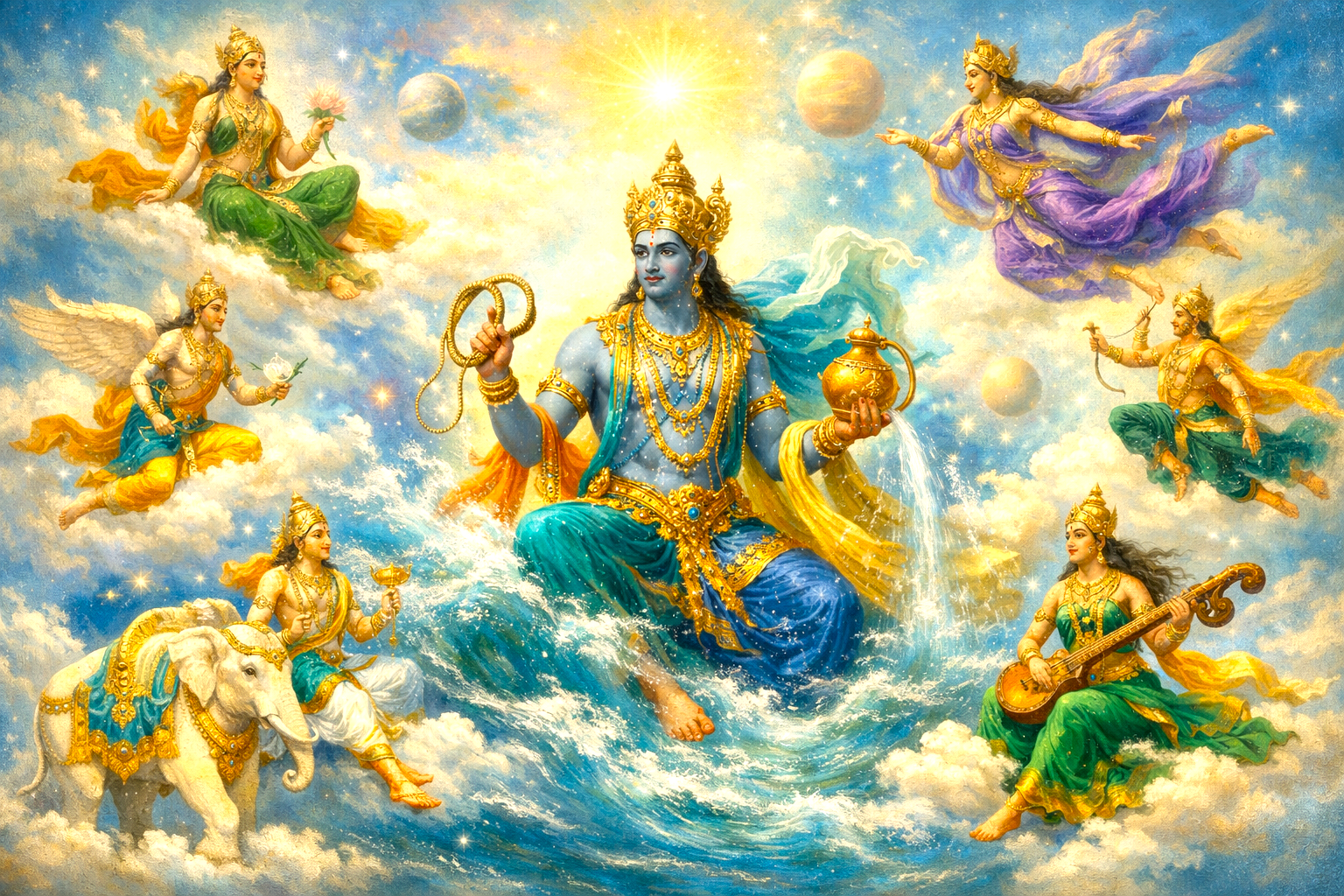
Devas Eternal Guardians of the Cosmos
The Devas, or "shining ones," are the celestial gods of light, order, and righteousness. The story of the Devas' origin as sons of Aditi marks them as the children of infinity. Their mother, Aditi, is the boundless, primordial consciousness, and their father is the great sage Kashyapa, a mind-born son of Brahma. This parentage makes them half-brothers to the Asuras (demons), born of the same father but a different mother. This shared lineage establishes the eternal cosmic dichotomy between the forces of light and darkness, a rivalry that defines the mythological landscape and the perpetual struggle to uphold cosmic law, or Dharma.
Indra's Celestial Court Atop Meru
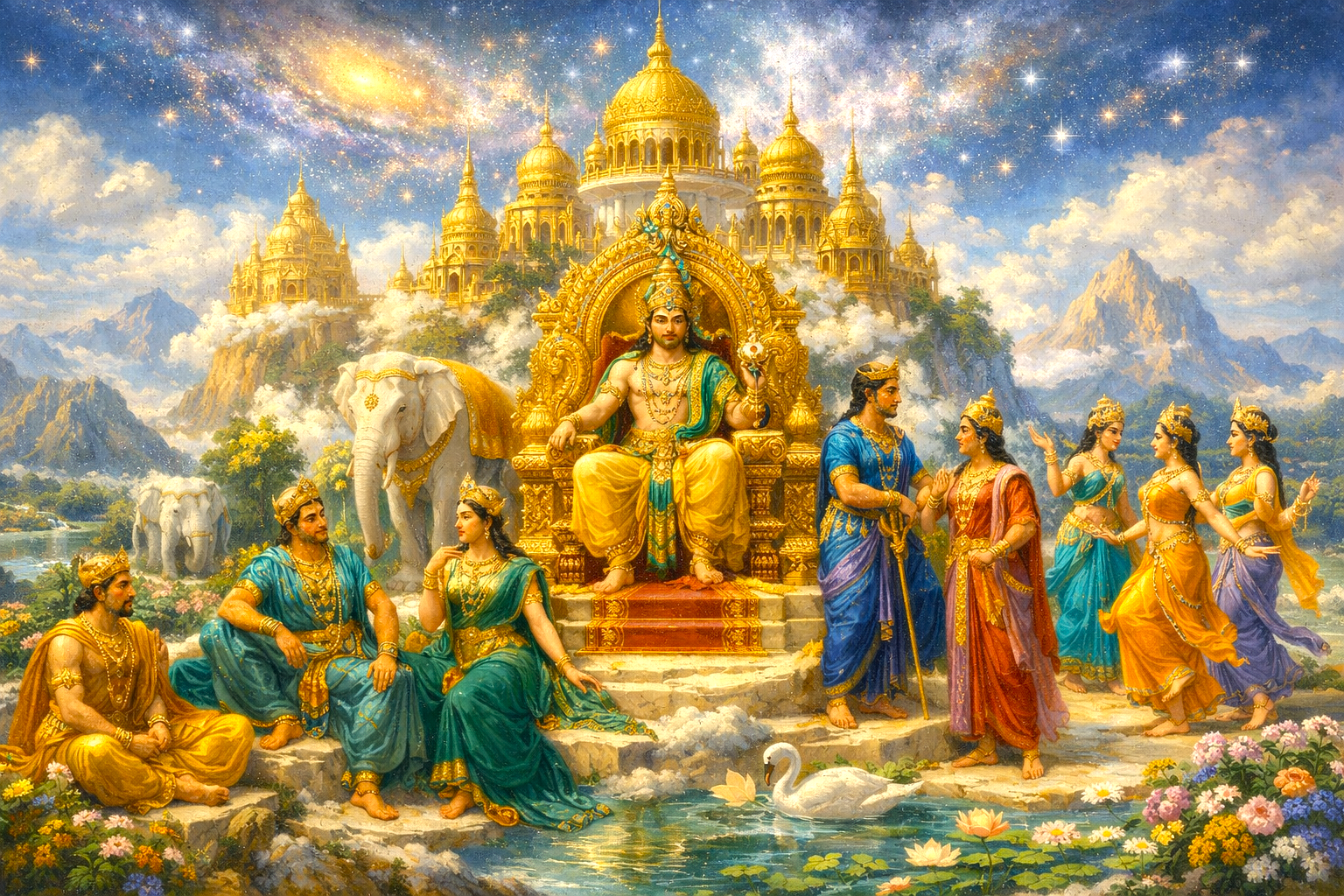
The magnificent abode of the Devas is Svarga Loka, the celestial heaven ruled by King Indra. This paradise is situated on the peaks of the cosmic Mount Meru, a mythical five-peaked mountain that is the axis of the universe. Svarga is a realm of unimaginable beauty and pleasure, free from disease, sorrow, and death. It contains the beautiful gardens of Nandana, wish-fulfilling Kalpavriksha trees, and the wish-bestowing cow Kamadhenu. It is from this golden city, Amaravati, that Indra and the Devas govern the cosmos. Devas Eternal Guardians of the Cosmos
Symbols of Divine Power and Light
The Devas are associated with symbols of sovereignty, light, and cosmic order. The primary symbol of their king, Indra, is the Vajra, the divine thunderbolt weapon, which represents irresistible force and the power to destroy evil. Other symbols include the white elephant Airavata, Indra's royal mount, representing divine majesty, and the conch shell, which announces victory and celestial presence. The light of the sun, the purity of fire, and the life-giving force of the wind are all manifestations of the Devas' power. Collectively, their symbols represent the benevolent, life-sustaining, and orderly forces of the universe. Devas Eternal Guardians of the Cosmos
The Divine Family of Gods
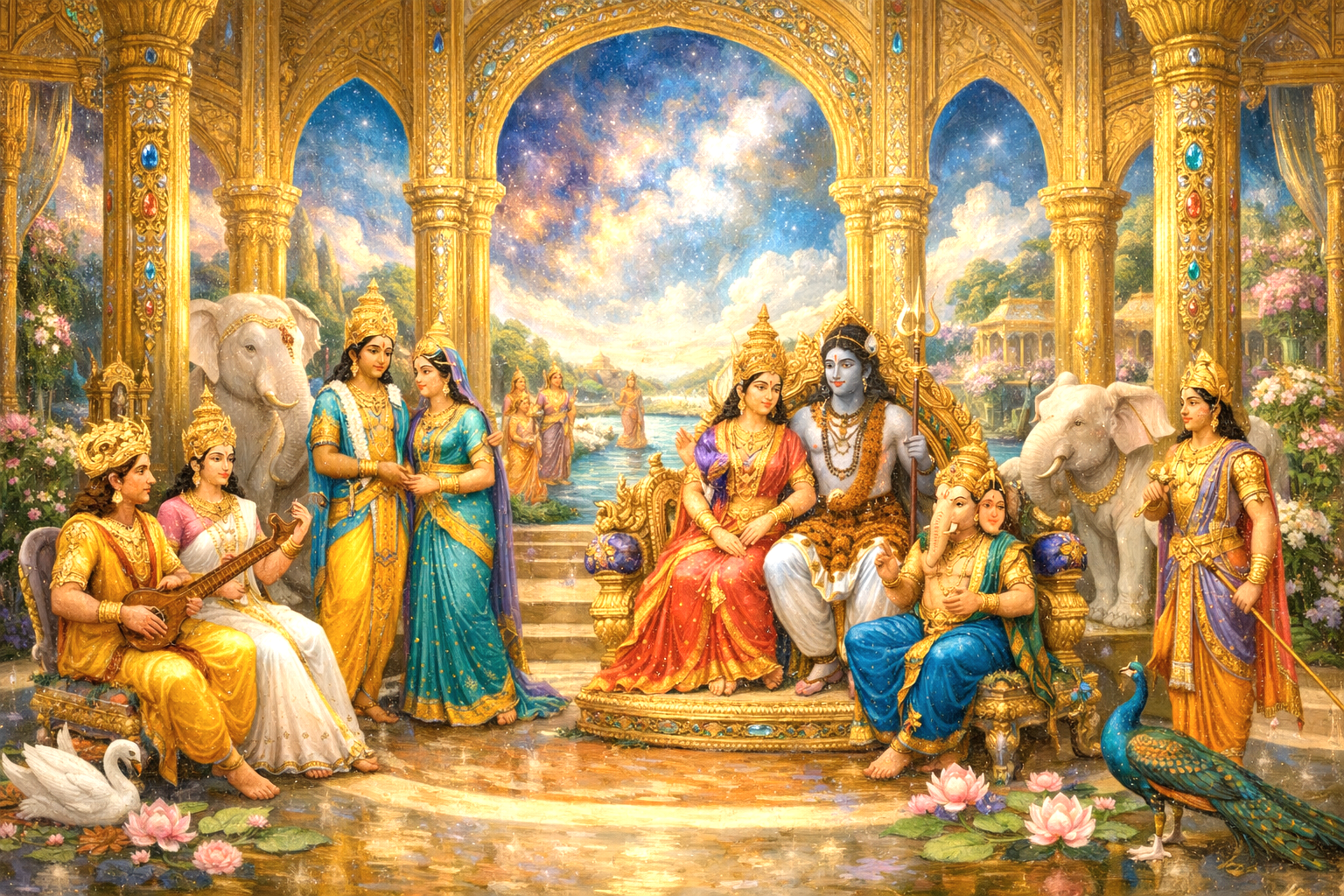
The Deva family is a vast and powerful pantheon, with each member governing a specific aspect of the cosmos. The family of the Devas includes the Adityas, the sons of Aditi, such as Surya (the Sun), Varuna (the Oceans), and Mitra (Oaths). Other prominent Devas include Agni (the Fire God), Vayu (the Wind God), Soma (the Moon God), and the Ashvins (the divine twin horsemen and physicians). They are led by their elected king, Indra. This extended family forms a celestial government that works to maintain the balance of the universe.
The Path to Becoming a God
Devas are not all born into their station; godhood can be achieved. While the primary Devas are born of Aditi, righteous mortals who perform immense spiritual austerities or great sacrifices can also be elevated to the status of a Deva in Svarga Loka. Their path is one of accumulating immense good karma (punya). This status, however, is temporary. Once their store of good karma is exhausted, they must be reborn on Earth to continue their spiritual journey. This concept shows that heaven is a blissful, yet not final, destination, and that the position of a god is a powerful and impermanent reward for a life of exceptional virtue. Devas Eternal Guardians of the Cosmos
Churning the Ocean for Divine Nectar
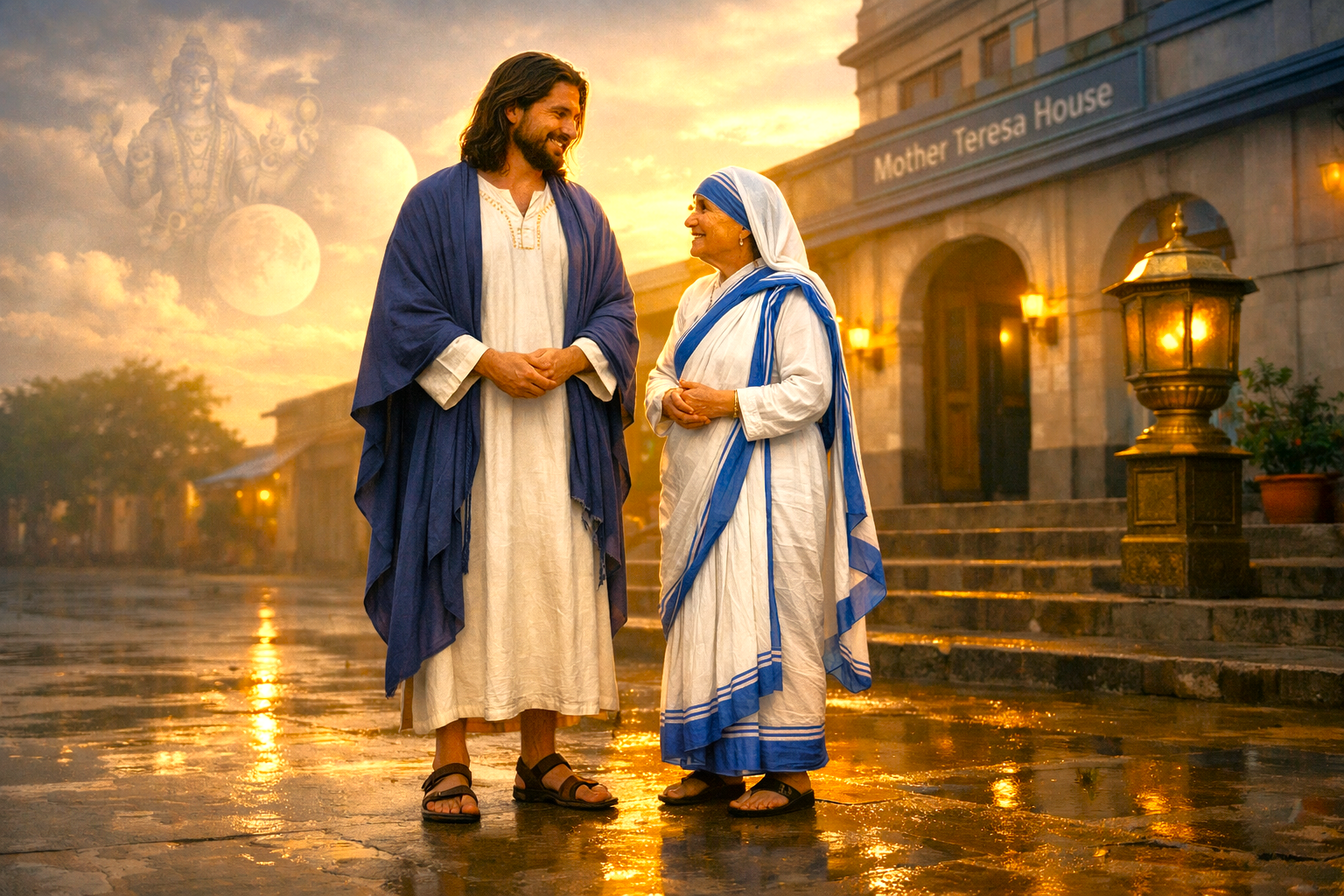
The most famous collective story of the Devas is their alliance with the Asuras for a singular purpose. The story of the Samudra Manthan, the churning of the cosmic ocean, was a monumental effort to obtain Amrita, the nectar of immortality. The Devas, having lost their power due to a sage's curse, were instructed by Vishnu to churn the ocean. Using the Naga king Vasuki as a rope and Mount Mandara as a churning rod, they worked for a millennium. This produced divine treasures before the nectar emerged, a testament to the Devas' perseverance.
The Celestial Mounts of Divine Beings
Each major Deva rides a magnificent divine vehicle, or vahana, that represents their specific power and domain. The divine mounts of the Deva gods are powerful beings in their own right. Indra rides the majestic four-tusked white elephant, Airavata, a symbol of royal power and rain-giving clouds. Agni, the fire god, rides a powerful ram, representing fiery energy. Vayu, the wind god, rides a swift antelope, symbolizing speed. Surya, the sun god, traverses the sky in a golden chariot pulled by seven horses, which represent the seven colors of the rainbow and the seven days of the week. Devas Eternal Guardians of the Cosmos
The Eternal Deva-Asura Celestial War
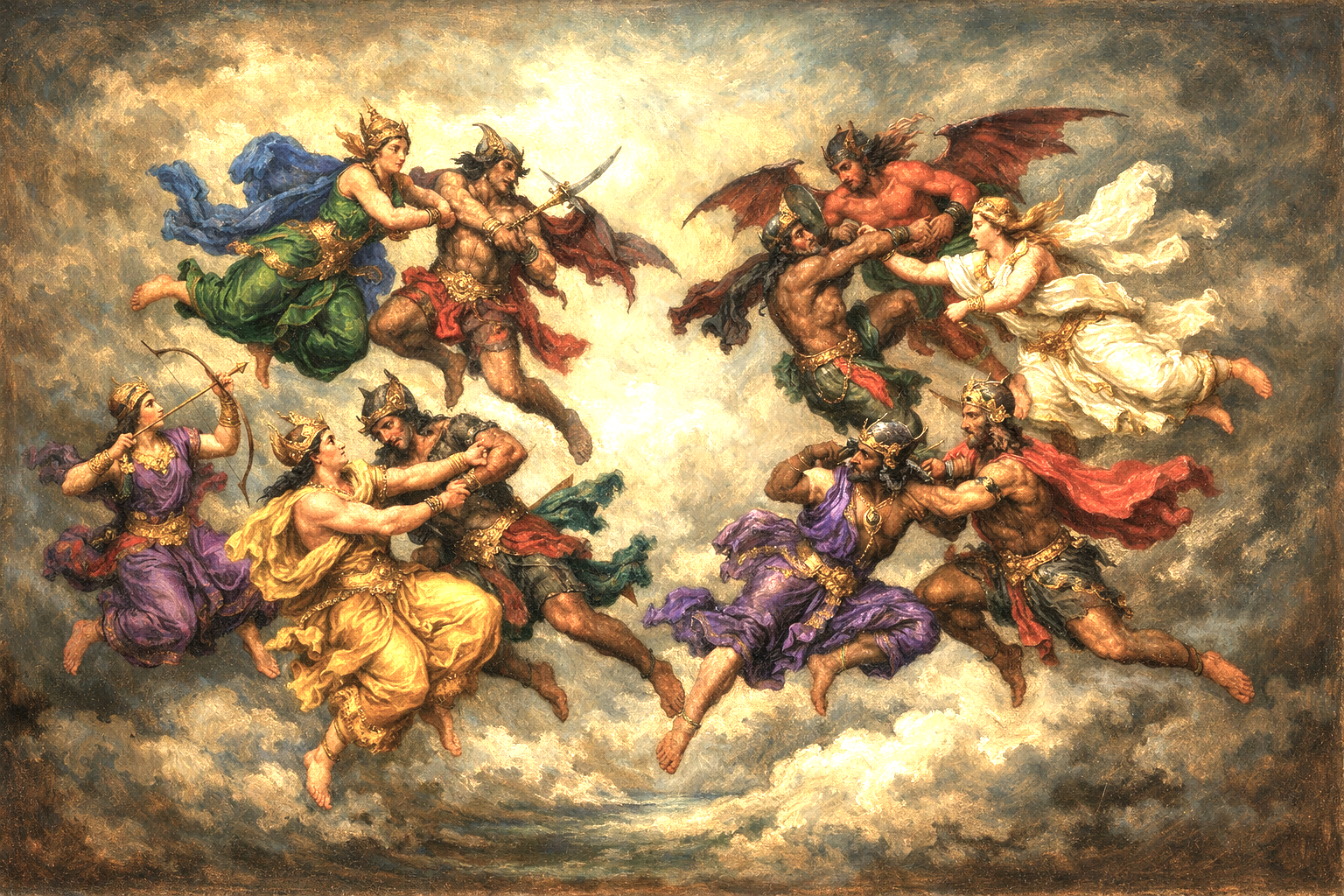
The central conflict in Hindu mythology is the perpetual war between the celestial gods and their half-brothers, the demons. The eternal war between the Devas and the Asuras is a cosmic struggle for the control of the three worlds. The Devas represent light, order, and sacrifice, while the Asuras often represent chaos and selfish ambition. This war, known as the Devāsura Yuddha, is fought with celestial weapons and divine strategies. The Devas, often led by Indra or Kartikeya, fight to protect Dharma and maintain cosmic balance.
The Quest for the Nectar of Immortality
The Devas, though powerful, are not inherently immortal. Their longevity and power depend on a divine elixir. The story of the Devas drinking the Amrita nectar is what grants them their immortality and strength. After the nectar emerged from the Churning of the Ocean, the Asuras seized it. Lord Vishnu then took the form of the beautiful enchantress, Mohini, to trick the Asuras. She served the nectar only to the Devas, restoring their power and ensuring their victory. This story highlights the Devas' reliance on this divine substance and the strategic celestial interventions required to maintain their supremacy.
A Message of Righteous Cosmic Order
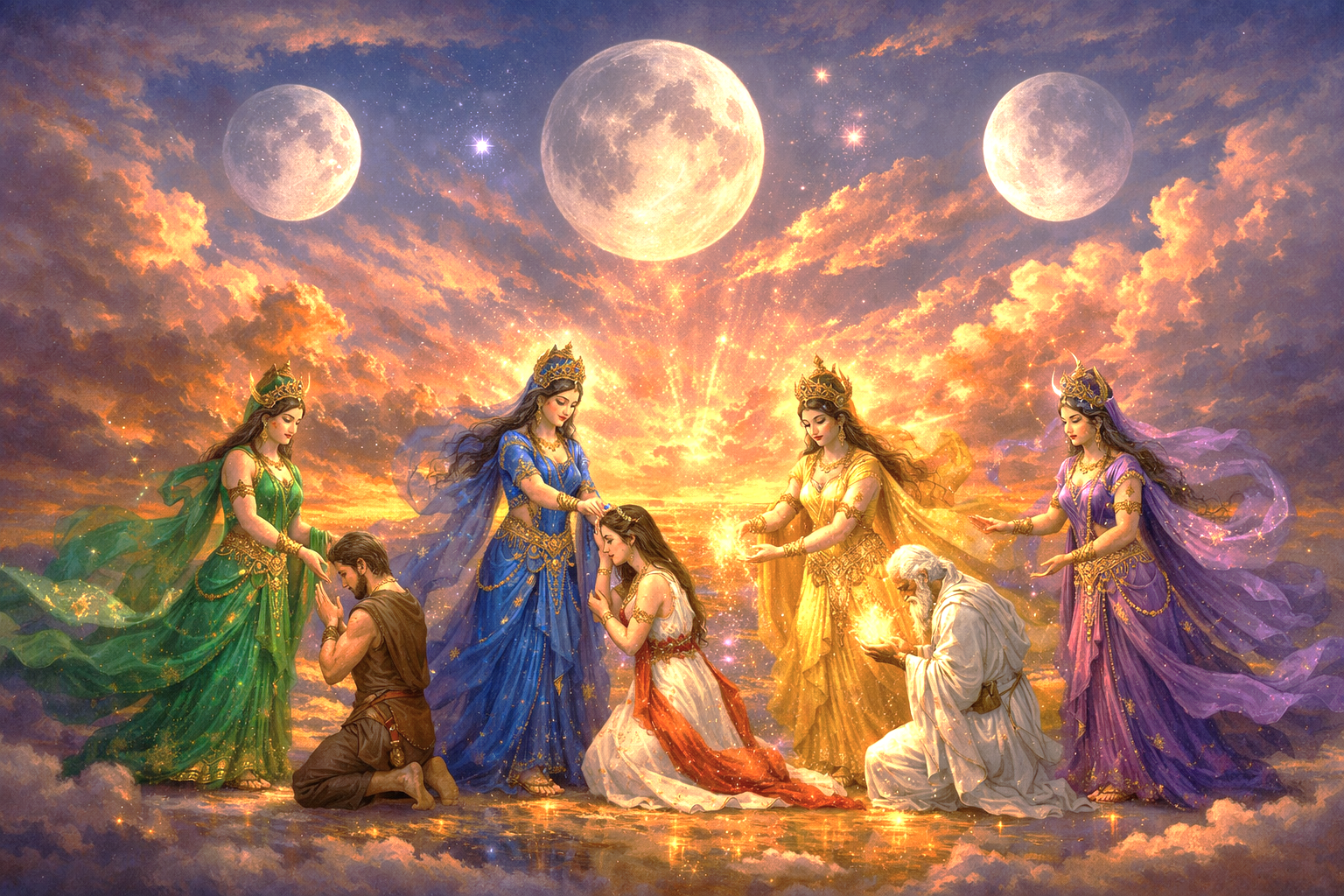
The Devas, as a collective, represent the importance of cosmic law and a structured, righteous society. The empowering message of the Devas for humanity is that adherence to Dharma, the performance of one's duties, and living a life of truth and sacrifice leads to prosperity and divine favor. They are the guardians of cosmic order and the bestowers of boons upon worthy mortals. Their existence teaches that there is a divine government and a moral structure to the universe. By aligning actions with this divine order, we can attract their blessings.
The Higher Chakras of Divine Consciousness
The Devas, as beings of light and higher consciousness, are connected to the upper energy centers of the spiritual body. They are associated with the higher chakras, from the heart to the crown. The Anahata (Heart Chakra) represents their capacity for divine love and blessings. The Vishuddha (Throat Chakra) represents their role in communicating divine truth. The Ajna (Third Eye Chakra) and the Sahasrara (Crown) Chakra are the realms of pure consciousness where the highest Devas reside. Meditating on them helps to elevate one's own consciousness, purify the upper chakras, and connect with the higher, more refined frequencies of existence. Devas Eternal Guardians of the Cosmos
The Divine Arsenal of Celestial Weapons
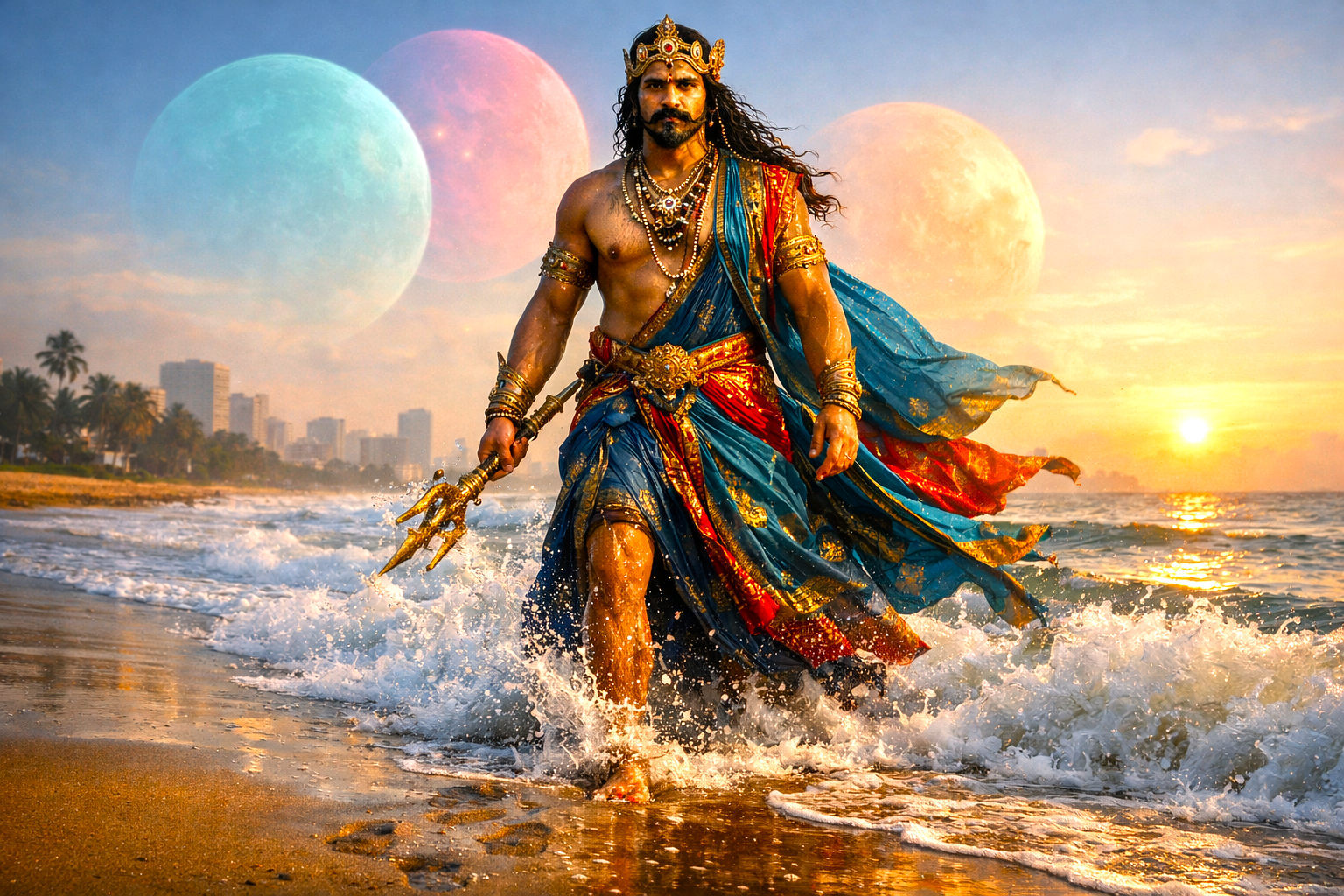
To wage their eternal war and protect Dharma, the Devas possess an arsenal of incredibly powerful weapons known as Divyastras. The celestial weapons of the Deva gods are missiles powered by divine mantras and elemental forces. These include Indra's Vajra (thunderbolt), Agni's Agneyastra (fire weapon), Varuna's Varunastra (water weapon), and Vayu's Vayuvastra (wind weapon). These weapons are often gifted to heroic mortals like Arjuna and Rama after they perform great penance, equipping them to fight otherwise unbeatable demonic forces.
Astrology and the Benefic Planetary Gods
Many of the Devas are personified as the great planets in Vedic astrology. The role of the Devas as the nine Navagraha planets is fundamental to Jyotisha. Surya (the Sun) is the king, Chandra (the Moon) is the queen, and Brihaspati (Jupiter) is the great guru and priest of the gods. These planets, known as benefic forces, are believed to bestow grace, wisdom, and good fortune. Worshipping these planetary Devas is a way to harmonize with their energies and mitigate challenges, showing their direct and ongoing influence over the destiny of every individual on Earth. Devas Eternal Guardians of the Cosmos
Blessings Bestowed Upon Mortals
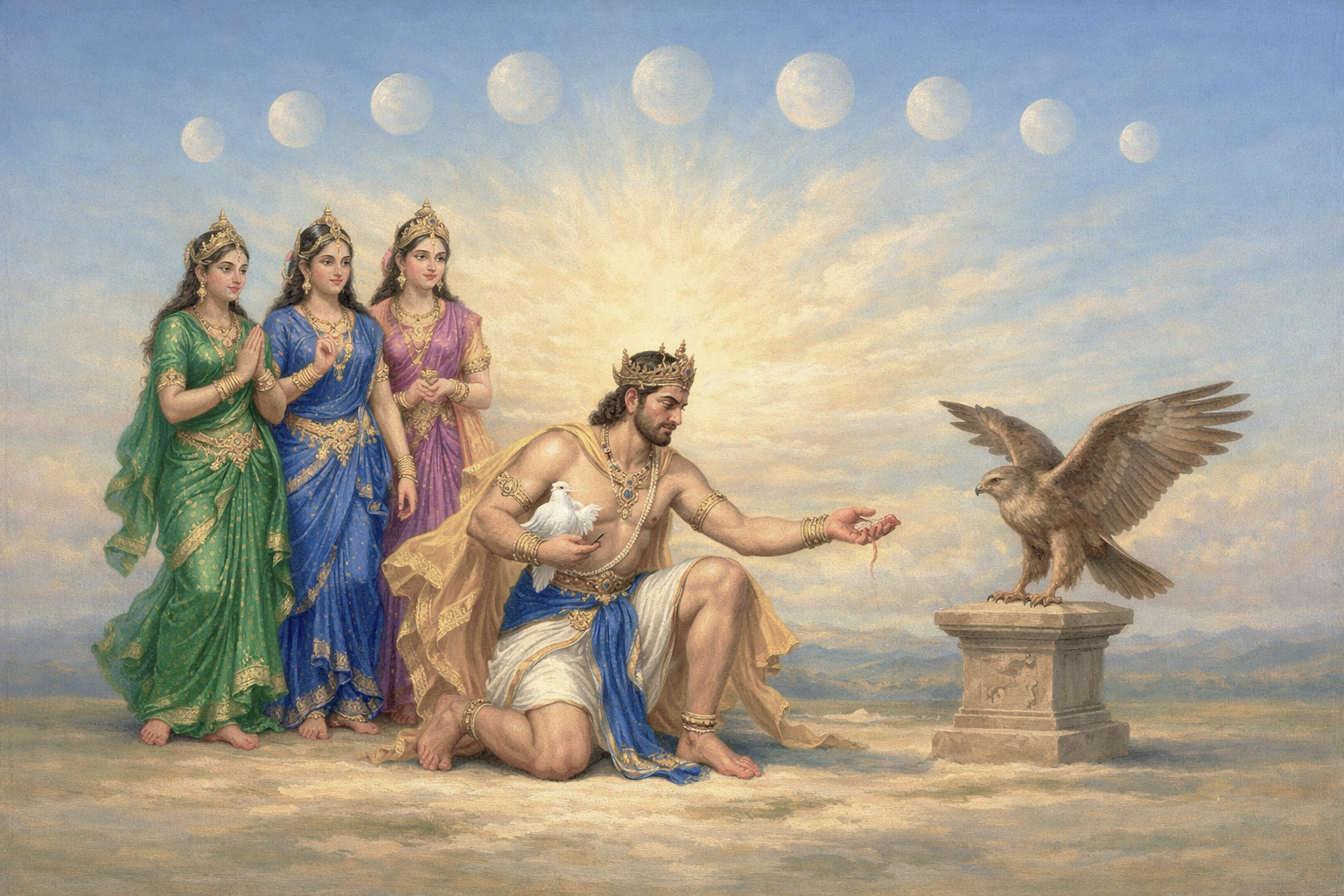
The Devas frequently interact with the mortal world, often to reward righteousness or to seek help. A famous story of a Deva blessing a human is that of Indra and King Shibi. To test King Shibi's righteousness, Agni took the form of a dove, and Indra took the form of a hawk. The dove sought refuge with the king, and the hawk demanded its prey. To save the dove without starving the hawk, Shibi offered his own flesh.This act of self-sacrifice pleased the Devas, who revealed their true forms and showered him with blessings.
A Devotee's Experience of Divine Aid
Experiences of the Devas' grace are often felt as sudden, inexplicable help in times of need. A modern story of Deva intervention is told by a mountaineer who was leading an expedition in the Himalayas. A member of his team fell gravely ill with altitude sickness, and a storm was making evacuation impossible. As a man of faith, he prayed intensely to Indra and Vayu to clear the storm. He reported that in the middle of the raging blizzard, a "window" of calm, clear weather opened up for just a couple of hours - long enough for a helicopter to land and rescue the sick man. He considers this a direct, miraculous intervention. Devas Eternal Guardians of the Cosmos
Guardians of the Cosmic Directions
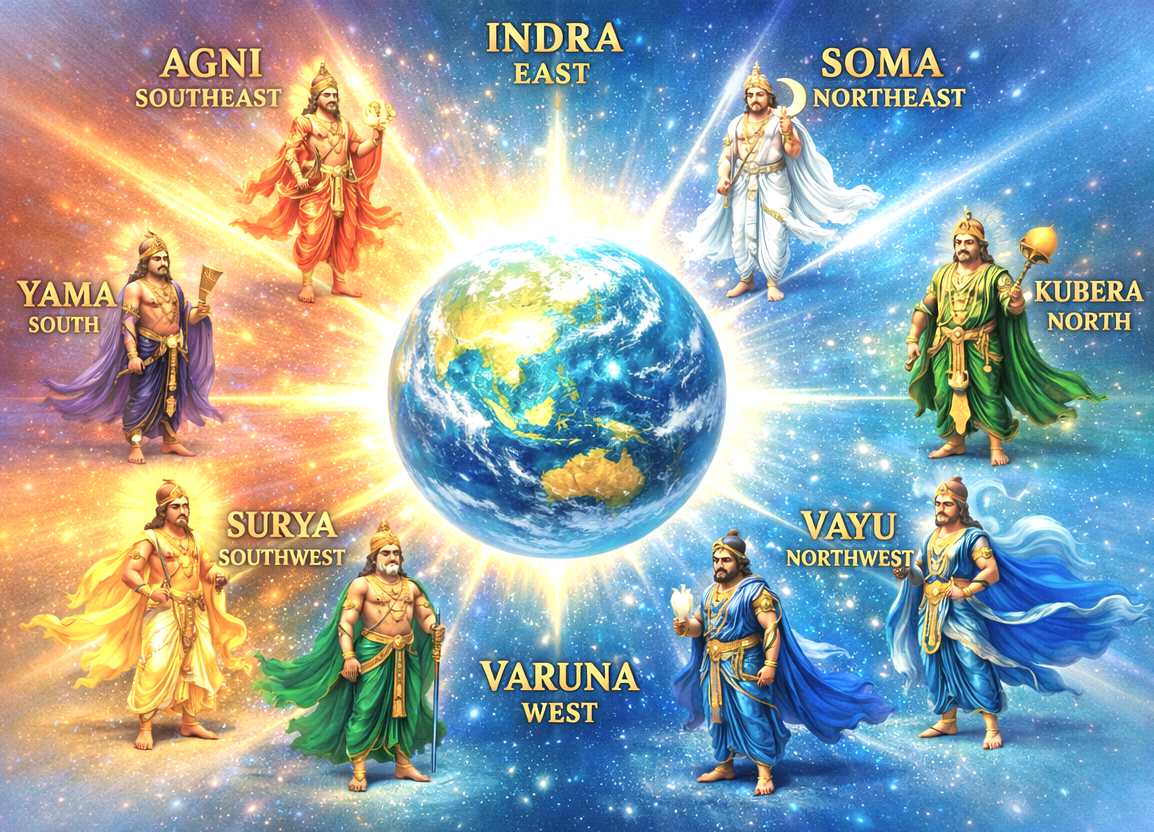
The structure of the universe is maintained by a group of Devas who guard the fabric of reality. The Ashta-Dikpalas, the eight Deva guardians of the directions, are responsible for maintaining the order and integrity of the cosmos. These include Indra (East), Agni (Southeast), Yama (South), Surya (Southwest), Varuna (West), Vayu (Northwest), Kubera (North, the treasurer of the gods), and Soma (Northeast). Each direction is imbued with the specific energy of its guardian. This concept shows a highly organized divine administration.
The Complex Gods of Heaven
An important aspect of the Devas is their complex and relatable nature. The stories of the Devas' qualities, such as pride and jealousy, serve as important moral lessons. Indra, in particular, is often depicted as being arrogant and insecure about his throne, frequently trying to disrupt the penance of sages who he fears might become powerful enough to usurp him. Their desire for Soma and other celestial pleasures can sometimes lead them astray. This teaches a profound lesson: that even celestial beings possess relatable emotions and are subject to ego, and that true liberation (moksha) is a state that transcends even the pleasures of heaven.
The Performers of Great Sacrifices
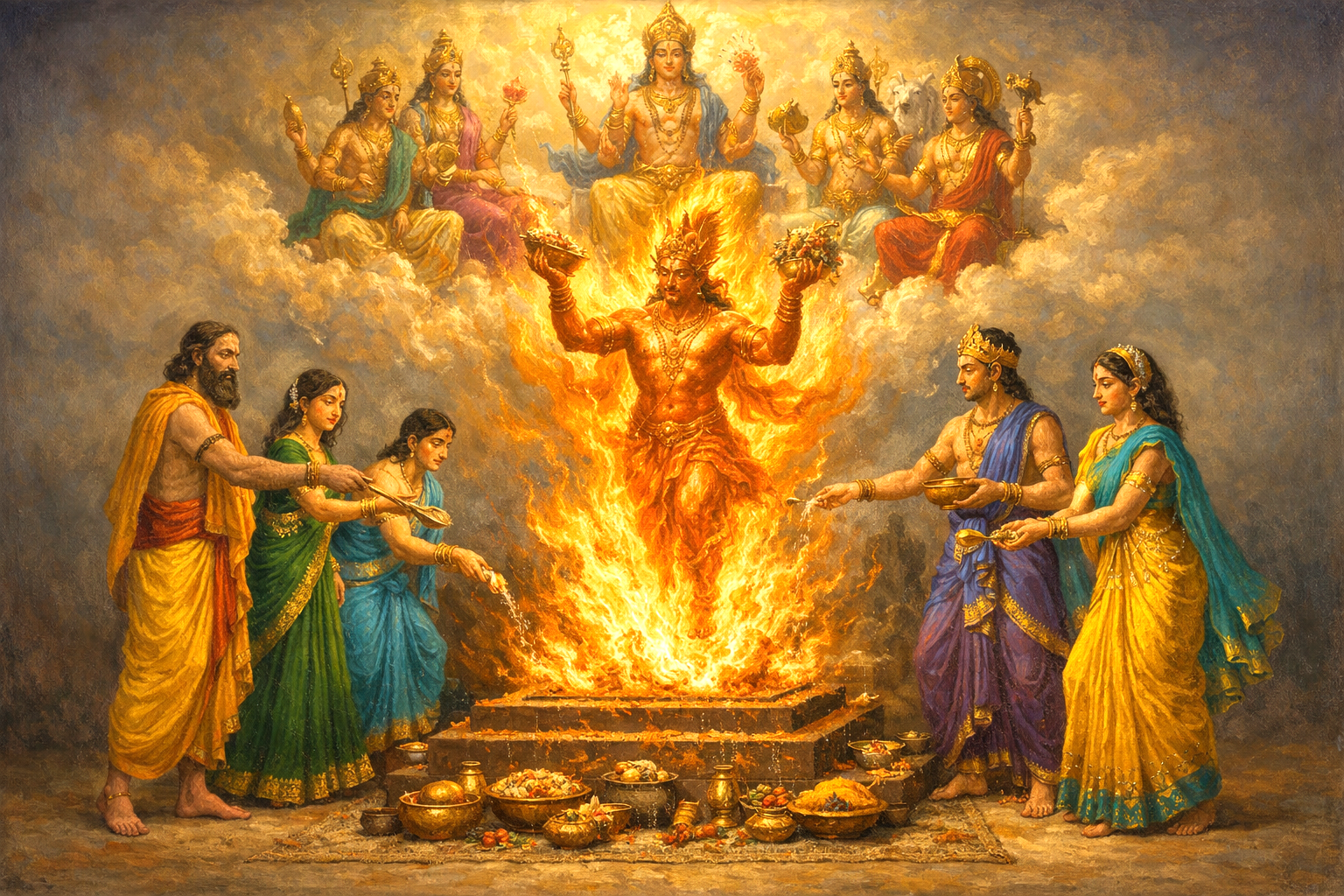
The power of the Devas is sustained by the performance of sacred rituals. The role of Yajna, or fire sacrifice, in empowering the Devas is a central tenet of Vedic belief. When humans perform a yajna on Earth, the offerings of ghee, grains, and herbs are carried to the heavens by Agni. This sacrificial essence is the food that nourishes and strengthens the Devas, giving them the power to maintain cosmic order and bestow boons like rain and prosperity. This creates a beautiful symbiotic relationship: humans feed the gods through sacrifice, and the gods feed humans through the bounty of nature.
Receivers of Prayer and Worship
The Devas are the primary recipients of much Hindu ritualistic worship. As the gods who govern the material and natural worlds, the worship of the Devas for worldly blessings is a common practice. Devotees pray to Indra for rain, to Surya for health and vitality, to the Ashvins for healing, and to the collective Devas for protection and prosperity. They are the celestial functionaries who can grant material and immediate boons. While the ultimate goal may be liberation through devotion to the Supreme Being, the Devas are honored and respected as the powerful and benevolent forces that manage the day-to-day operation of the cosmos.
Step Inside The Story - View All Tour Itineraries & Details

We’re here to offer genuine, thoughtful guidance if your interested in travelling to India. As a small, dedicated team, we pay close attention to every detail so you can focus on enjoying the experience while we take care of the planning. We believe the best trips begin when someone truly listens to what you want and how you like to travel, so the journey feels right for you and contributes to a happy, positive group on tour. Our communication stays clear, straightforward, and respectful at every step, with the goal of helping you feel understood, supported, and confident from first contact to the end of your journey.
Click Catherine Frith - About The Founder
Click Discover Life Travel - All Tours and More
Click Why We Are Different - Unique, Safe, Transparent