Arc of the east tour kashmir india
Handicrafts and Handloom Sikkim - India
Mother Masala Tours
Sikkim’s Living Threads: Handicrafts, Heritage and Everyday Life
Sikkim’s handicraft traditions reflect the history of the Lepcha, Bhutia and Nepali communities who have shaped life in this Himalayan state. Before Sikkim joined India in 1975, it was ruled by the Namgyal Dynasty, established in 1642 when Phuntsog Namgyal became its first Chogyal. We will explore traditional weaving, wood carving, carpet making and the skills passed between generations. At the Directorate of Handicrafts and Handloom in Gangtok, founded in 1957, you can learn about these crafts and the people who keep them going. The atmosphere offers a peaceful introduction to the materials, patterns and practical knowledge behind Sikkimese handmade goods. Handicrafts and Handloom Sikkim India
Handicrafts and Handloom Sikkim India: Timeless Artifacts:
The Directorate of Handicrafts and Handloom provides an introduction to traditional Sikkimese crafts, including handwoven carpets, wooden objects, painted designs and textile work. The centre was established in 1957 to help preserve local skills and train craftspeople. You"ll encounter patterns connected with Himalayan Buddhist traditions, alongside designs associated with Lepcha and other local communities. Carpet making uses wool and hand-operated looms, while wood carving requires careful cutting and finishing. These objects have practical uses as well as decorative value.
Ancient Mosaics: Impeccable Craftsmanship
Sikkimese craftwork relies on patient hand skills rather than mosaics alone. At the Gangtok handicrafts centre, carpet weaving, wood carving, thangka painting and textile work demonstrate different approaches to pattern and composition. Traditional carpets are produced by tying yarn knots onto a foundation, building up designs row by row. Thangka paintings use mineral and other pigments on prepared surfaces to depict Buddhist figures and teachings. Wooden objects may feature carved floral or religious motifs. The centre, established in 1957, supports training in these crafts, although the names and dates of individual makers are not consistently documented in public records. You can appreciate the time involved in each finished piece. Handicrafts and Handloom Sikkim India
The Pulse of the Local Community
Handicrafts remain connected to work, household needs and cultural identity across Sikkim. Lepcha, Bhutia and Nepali communities have distinct histories and craft practices, though techniques and designs can also overlap through trade and everyday contact. Weaving, sewing, embroidery and woodworking may take place at home, in workshops or through organised training. At the Gangtok centre, you"ll see how skills are taught and maintained rather than treated only as souvenirs. Buying directly from local producers can provide income and help sustain specialist work. The daily atmosphere around these activities is practical and focused: materials must be prepared, patterns planned and each item completed with care.
Capturing the Magic: A Photographic Haven
At the Gangtok handicrafts centre, close-up photographs can record the texture of wool carpets, the lines of carved wood and the colours used in traditional paintings. You can focus on a loom’s framework, hands working with yarn, or the composition of a finished textile. Ask permission before photographing craftspeople or their work in progress. The changing patterns of thread and light offer a meaningful record of skills that depend on patience, practice and precise hand movements. Handicrafts and Handloom Sikkim India
A Culinary Journey: Savor the Flavour
Sikkim’s food traditions reflect Himalayan ingredients and the habits of its different communities. While the handicrafts centre is not primarily a food destination, you can combine your visit with local dishes elsewhere in Gangtok. Gundruk is made by fermenting leafy greens, which are then dried and commonly cooked into soup with tomatoes, spices and sometimes potatoes. Kinema, fermented soybeans, is often prepared with vegetables and seasonings. Momo dumplings are filled with vegetables or meat and steamed; they are widely eaten across the region. These foods have practical roots in preserving ingredients and preparing filling meals in a cool mountain environment.
Festivals of Devotion: Honouring the Sacred and the Divine
Sikkim’s festivals reflect Buddhist, Hindu and community traditions, with different dates each year according to religious calendars. Losar, the Tibetan New Year celebrated by many Buddhist communities, usually falls between January and March. Pang Lhabsol honours Mount Khangchendzonga and is associated with Sikkim’s history and protection; it is commonly observed around August or September. Saga Dawa commemorates events in the life of Gautama Buddha and falls on the full moon of the fourth Tibetan lunar month. During these occasions, prayer flags, ceremonial clothing, ritual objects and handmade decorations may be seen in use. Check the annual calendar for exact dates and programme times before planning around a celebration.
The Connection With the Gods
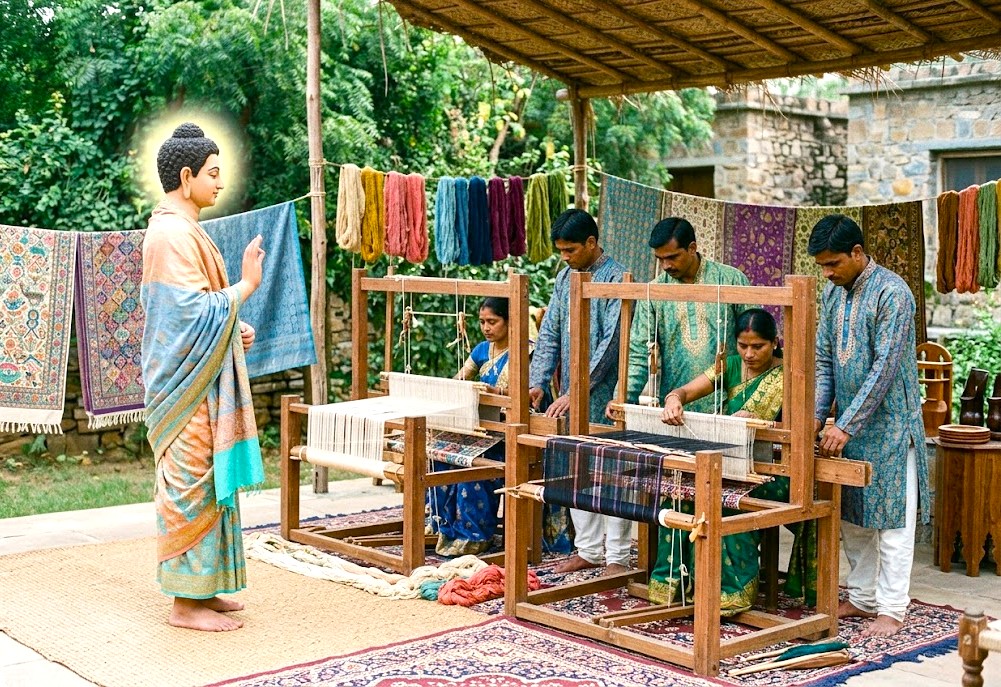
Craft traditions in Sikkim include objects associated with Tibetan Buddhist beliefs, including thangka paintings, prayer flags and ritual items. Thangkas may portray Gautama Buddha, Guru Padmasambhava - also known as Guru Rinpoche, credited with bringing Buddhism to Tibet and the Himalayan region - or Tara, a revered female bodhisattva. These images convey religious teachings and are used in devotional settings. Lepcha spiritual traditions also have their own relationships with mountains, forests and the natural world. The meanings of particular motifs depend on their tradition and context.
Ancient Technologies: Sacred Sound, Geometry & Astrological Influences.
Sikkimese handicrafts use geometry in woven patterns, repeated motifs and the measured layout of painted images. Carpet makers build designs from knots and rows, while thangka artists follow established proportions for religious figures. These methods require planning and precise construction, but there is no reliable evidence that the handicrafts centre’s designs generate specific healing frequencies. Solfeggio frequencies, including 528 Hz, are promoted in some contemporary wellness practices; claims that this frequency repairs DNA or that traditional Sikkimese crafts produce it are not established scientific facts. Wool, cotton, wood, natural and synthetic dyes, and prepared painting surfaces each have practical properties. Their physical qualities influence durability, colour and texture, while spiritual meanings come from cultural and religious traditions.Handicrafts and Handloom Sikkim India
Serendipitous Meetings: Beyond the Main Path
As you explore Gangtok, you can look beyond the handicrafts centre to small shops and local businesses selling woven goods, clothing, carved objects and household items. Some products are handmade locally, while others may come from elsewhere in the Himalayan region, so it is worth asking where an item was produced. You"ll find artisans discussing yarn, dye, design or finishing techniques, although demonstrations depend on who is working that day. A relaxed conversation can reveal how materials are sourced and how prices reflect time and skill. Look for clear information about the maker and origin when you want to support local production.
Resilience and Renewal: Overcoming Adversity’s: Challenges:
Sikkim’s traditional crafts have developed through changes in trade, political rule and livelihoods. The Namgyal Dynasty began in 1642 under Phuntsog Namgyal and ruled the kingdom until Sikkim became an Indian state in 1975. As education, tourism and new employment options expanded, some traditional skills faced pressure from changing demand and the availability of cheaper manufactured goods. The Directorate of Handicrafts and Handloom was established in Gangtok in 1957 to train craftspeople and support the continuation of local techniques. Publicly available records do not establish one single disaster as the turning point for all Sikkimese handicrafts. Their continued practice depends on training, opportunities to sell work and interest from younger generations.
Urban Legends: Strange Sightings, Myths and Mysteries
Sikkim’s folklore includes stories connected with sacred mountains, protective deities and Guru Padmasambhava. Mount Khangchendzonga holds an important place in regional belief and is associated with protection and the identity of the state. Lepcha traditions also include narratives about the origins of the people and their relationship with the land. These are distinct traditions rather than a single shared legend, and versions may differ between communities. Although such stories influence local art and religious imagery, there is no verified evidence that the Gangtok handicrafts centre has a specific haunting or unexplained-sighting tradition. Handicrafts and Handloom Sikkim India
Our Adventure Begins, and You’re Invited to Be Part of It
We are going to explore Sikkim through the handmade objects that carry its history into everyday life. At the Gangtok handicrafts centre, you"ll have an opportunity to examine carpets, painted images, textiles and carved pieces while learning how each is produced. We can then browse local shops and speak with sellers about the origin and purpose of their goods. The experience is best enjoyed at a relaxed pace, allowing time to notice the delicate patterns and the effort behind each piece. You may find a practical textile, a small carved object or a painting that connects your journey with the skills of Himalayan craftspeople.
Symphony of Generosity: Offerings from Wanderers to Residents
Purchasing locally made handicrafts can help support artisans, small businesses and training programmes. A carpet or textile takes time to produce, and a fair price helps pay for materials, labour and the knowledge involved. At the Gangtok handicrafts centre, you can learn about traditional methods and consider buying an item whose origin is clear. Asking questions respectfully can also create a meaningful exchange: the craftsperson shares information about their work, while your purchase provides income. Not every item sold in a tourist area is locally made, so checking its source matters. These small transactions can help keep specialist skills in use and give you a lasting connection to Sikkim’s craft traditions.
Step Inside The Story - View All Tour Itineraries & Details

We’re here to offer genuine, thoughtful guidance if your interested in travelling to India. As a small, dedicated team, we pay close attention to every detail so you can focus on enjoying the experience while we take care of the planning. We believe the best trips begin when someone truly listens to what you want and how you like to travel, so the journey feels right for you and contributes to a happy, positive group on tour. Our communication stays clear, straightforward, and respectful at every step, with the goal of helping you feel understood, supported, and confident from first contact to the end of your journey.
Click Catherine Frith - About The Founder
Click Discover Life Travel - All Tours and More
Click Why We Are Different - Unique, Safe, Transparent