Unique Insights Into The Deities Of India
Vasudev: Architect of Infinite Peace
Discover Life Travel
The Prince of a Divine Yadava Clan
Born into the powerful Yadava Dynasty, Vasudeva was a prince renowned for his righteousness, piety, and noble character. The divine origin story of Krishna's father Vasudeva marks him as the son of the Yadava king Shurasena and his wife Marisha. He was the brother of Pritha, who would later become Queen Kunti, the mother of the Pandavas. This lineage made Vasudeva a central figure in the web of royal alliances and divine destinies. He was not just a prince, but a reincarnation of the great sage Kashyapa, reborn on Earth to once again father the Supreme Lord in one of his most beloved incarnations. Vasudev Architect of Infinite Peace
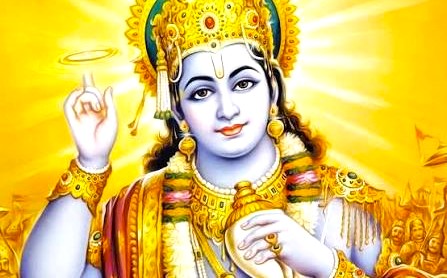
Vasudev Architect of Infinite Peace
Vasudeva’s life was starkly divided between unjust imprisonment and royal splendor. For many years, his world was a dark prison cell in the fortress of Mathura, the capital of his tyrannical brother-in-law, Kamsa. This chamber of suffering was the sacred, unlikely stage for the birth of the Supreme Lord. After Krishna killed Kamsa and liberated him, Vasudeva’s location shifted to the magnificent golden city of Dwarka, the island capital founded by Krishna. Here, he lived out his later years as a respected patriarch and royal elder, his life's geography mirroring his journey from profound suffering to divine liberation and honor.
The Chains of Suffering, The Son of Liberation
The most powerful symbol of Vasudeva is not an object he held, but the very chains that bound him. The symbolism of Vasudeva's chains in Kamsa's prison represents the bondage of the mortal soul under the tyranny of ego and adharma. His ultimate symbol, however, is the infant Krishna whom he carried in a basket, representing his role as the protector and transporter of divinity itself. This basket symbolizes the human heart, which, through devotion and courage, can carry God safely through the storms of the material world. Vasudeva is the ultimate symbol of a father whose suffering becomes the vessel for the world's salvation. Vasudev Architect of Infinite Peace
A Family of Divine Children and Separated Wives
Vasudeva’s family was at the very epicenter of a divine incarnation. He was the noble husband to two principal wives: Devaki, the sister of the tyrant Kamsa, and Rohini, who lived in exile. He was the grief-stricken father of six unnamed sons murdered by Kamsa. His most famous children were the divine brothers Lord Balarama, born to Rohini after a mystical transfer from Devaki's womb, and the Supreme Lord Krishna, his eighth son born to Devaki. He was also the father of the goddess Subhadra. Through his sister Kunti, he was the uncle of the five Pandava princes, linking the two central families of the epic.
A Royal Wedding and a Prophecy of Doom
The story of Vasudeva's suffering began on his happiest day. The story of Vasudeva and Devaki’s wedding was a grand royal affair. As he was driving the chariot carrying his beautiful new bride, Devaki, her brother Kamsa lovingly took the reins as a sign of affection. Suddenly, a celestial voice, an Akashvani, boomed from the heavens, declaring to Kamsa that the eighth son born to his sister Devaki would be his killer. This terrifying prophecy instantly transformed Kamsa's love into murderous fear, setting in motion a tragic chain of events that would define Vasudeva’s life for decades.
The Father Who Witnessed His Children's Slaughter
Immediately following the prophecy, the terrified Kamsa moved to kill Devaki. To save his wife, Vasudeva made a desperate bargain. The story of Vasudeva’s promise to deliver his sons to Kamsa was a heart-wrenching compromise. He swore he would personally hand over every child born to them. True to his word, but with unimaginable grief, Vasudeva delivered his first six newborn sons into Kamsa’s hands, only to watch the tyrant mercilessly smash each infant against the prison stones. This horrific ordeal was a testament to Vasudeva’s unwavering commitment to truth and the profound suffering he endured for the sake of his wife and dharma. Vasudev Architect of Infinite Peace
The Miraculous Night and the Divine Exchange
On the eighth night of the waning moon in the month of Shravana, Devaki gave birth to her eighth son. The story of Krishna’s miraculous birth in Vasudeva's prison cell was a divine spectacle. The Lord first appeared in his four-armed Narayana form, before transforming into a normal human baby. At that moment, all the prison guards fell into a deep sleep, and Vasudeva's chains miraculously fell away. Following divine instructions, Vasudeva placed the infant in a basket and walked out of the fortress, his path cleared by a supernatural force, to begin the most important journey of his life.
The Stormy River That Parted for a Father's Love
Vasudeva’s mission was to cross the Yamuna river and exchange his son with the newborn daughter of Nanda and Yashoda in the village of Gokul. The story of Vasudeva crossing the flooded Yamuna river is a beautiful symbol of faith. As he entered the raging, storm-swollen river, the waters rose dangerously. But as the river's waves touched the feet of the divine child in the basket, the waters magically parted, allowing him a safe passage. The great serpent Shesha, who had incarnated as Balarama, appeared and spread his hoods to shield the infant Krishna from the torrential rain, a divine escort for a father on a divine mission. Vasudev Architect of Infinite Peace
The Final Years and the Great Yadava Fire
After many long years of separation, Vasudeva was finally reunited with his sons after Krishna killed Kamsa. He lived out his remaining years with honor in Dwarka. The story of Vasudeva’s death after Krishna's departure was a peaceful end to a life of turmoil. After hearing of the self-annihilation of the Yadava clan in a drunken brawl and Krishna's subsequent departure from the world, the grief-stricken Vasudeva sat down in meditation. No longer wishing to live in a world without his divine son, he peacefully gave up his life force. His devoted wives, Devaki and Rohini, immolated themselves on his funeral pyre, joining him in his final journey.
A Message: Faith Protects Even in the Darkest Prison
Vasudeva’s life of quiet strength and profound suffering offers a powerful message of hope and resilience. The empowering message from Vasudeva's noble life is that even in the darkest prison, bound by chains of suffering, faith in the divine can provide the strength to endure the unimaginable. He teaches that upholding Dharma and truth, even at a terrible personal cost, is the highest duty. His life is a testament to the power of a father's protective love and a demonstration that one who has the sacred task of protecting and serving God will, in turn, be protected by God through every storm.
The Root Chakra and a Ray of Enduring Earth
As a patriarch, a figure of immense stability, and a soul who endured profound earthly suffering, Vasudeva's energy is centered at the base of the spine. He is a powerful embodiment of the Muladhara (Root) Chakra, the center of stability, security, and the will to survive. The key frequency that Vasudeva embodies is that of unwavering, patient endurance. His auric field is not fiery or brilliant, but a deep, solid, and steady earthen-brown ray, the color of the patient earth itself, representing his grounded nature, his steadfast commitment to truth, and his unshakeable, foundational role in the divine play.
The Basket of God as His Divine 'Weapon'
Vasudeva was a noble prince but not a great warrior; his power was not martial. His greatest "weapon" was his own courage and the humble vessel he used on that miraculous night. The symbolic power of the basket carrying infant Krishna was Vasudeva’s tool for saving the world. It was a weapon of concealment, of protection, and of transport. This simple basket, guided by a father's love, defeated an entire fortress's security, tamed a raging river, and outwitted a tyrannical king. It symbolizes that the greatest acts are often accomplished not with force, but with simple, courageous acts of loving service. Vasudev Architect of Infinite Peace
The Astrological Sun and Saturn in Noble Union
Vasudeva's character is a perfect astrological representation of the highest qualities of kingship and endurance. As a righteous and noble prince, he embodies the principles of a dignified Sun, the planet of royalty, honor, and dharma. However, his life of imprisonment, suffering, separation, and profound patience is a classic manifestation of the influence of the planet Saturn, which governs duty, responsibility, and long-suffering. Vasudeva represents a rare and noble combination where the kingly duty of the Sun willingly accepts the immense suffering of Saturn for the sake of a higher, divine purpose.
A Modern Tale of a Whistleblower's Sacrifice
A modern parallel to Vasudeva's story can be seen in a corporate whistleblower. A high-ranking, honest executive (Vasudeva) discovers that his corrupt CEO (Kamsa) is planning to release a dangerous, flawed product that will harm people. The CEO threatens him and his family, effectively imprisoning him within the company. For years, the executive is forced to watch as smaller, harmful decisions are made (the death of the six sons). Finally, he gathers the ultimate proof of the CEO's wrongdoing (the birth of Krishna), and at great personal risk, smuggles it out of the company (crossing the Yamuna) to a journalist who can expose the truth, sacrificing his career to save the public. Vasudev Architect of Infinite Peace
Step Inside The Story - View All Tour Itineraries & Details
We’re here to offer genuine, thoughtful guidance if your interested in travelling to India. As a small, dedicated team, we pay close attention to every detail so you can focus on enjoying the experience while we take care of the planning. We believe the best trips begin when someone truly listens to what you want and how you like to travel, so the journey feels right for you and contributes to a happy, positive group on tour. Our communication stays clear, straightforward, and respectful at every step, with the goal of helping you feel understood, supported, and confident from first contact to the end of your journey.
Click Catherine Frith - About The Founder
Click Discover Life Travel - All Tours and More
Click Why We Are Different - Unique, Safe, Transparent