A Unique Look Into Indian History
Tamilakam: Ancient India
Discover Life Travel
Hidden from History: Tamilakam
Before the celebrated Sangam Age dynasties, the land of Tamilakam was home to a vibrant Megalithic culture. The pre-dynastic megalithic culture of ancient Tamilakam is evidenced by thousands of archaeological sites featuring dolmens, cists, and extensive urn burials. These ancient people, who lived during the Iron Age, were organized into tribal clans. They possessed sophisticated knowledge of metallurgy, pottery (like the distinctive Black and Red Ware), and agriculture. Artifacts such as iron tools, weapons, and beads made of carnelian and agate reveal a society with established trade links and complex social structures, laying the groundwork for the rise of the great Tamil kingdoms. Tamilakam Ancient India
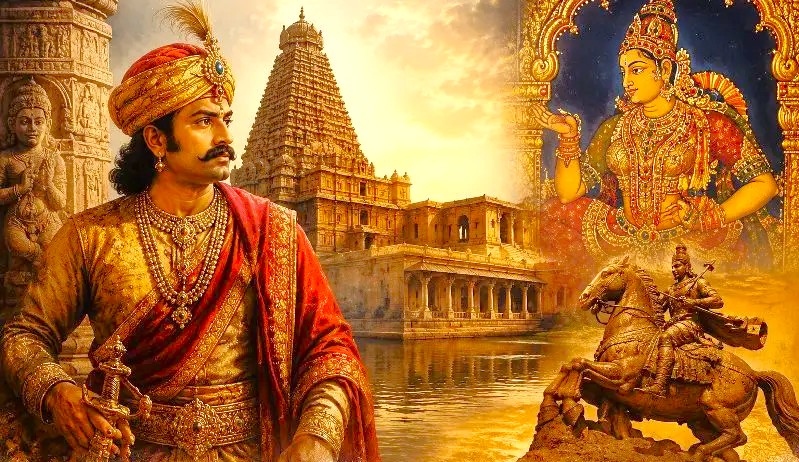
Tamilakam - Ancient India: The Arrival of the Three Crowned Kings
The dawn of the historical period in Tamilakam is marked by the rise of the Muvendar, or the Three Crowned Kings: the Cheras, the Cholas, and the Pandyas. The history of the kings is the history of Tamilakam itself. The Cheras ruled from Vanchi in the west, controlling the lucrative spice trade. The Cholas dominated the fertile Kaveri delta from their capitals at Uraiyur and Puhar. The Pandyas, famed for their patronage of Tamil literature, ruled from the legendary city of Madurai. Their intertwined reigns during the Sangam period established a powerful political and cultural legacy.
Daily Life of the Tamil Monarchs
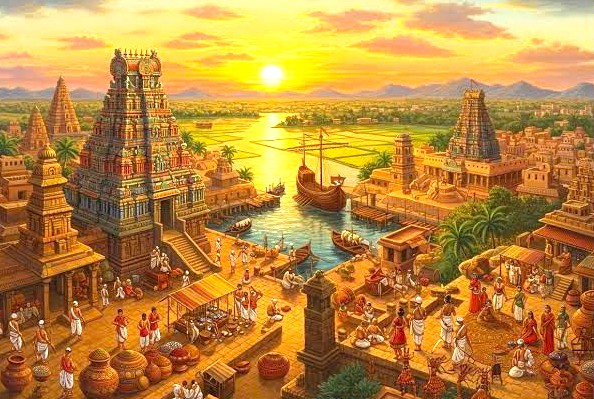
The daily life of a Tamil king was a blend of administrative duty, judicial responsibility, and cultural patronage. A king's day began with rituals, followed by holding court (avai) where he would listen to petitions and dispense justice. They personally led their armies in battle, a key aspect of the daily routine of a Sangam era Tamil king. Queens held significant influence, often acting as advisors and patrons of the arts. The children received extensive training in warfare, governance, and the Tamil literary arts, preparing them to continue the dynasty's rule and uphold the principles of aram (righteousness). Tamilakam Ancient India
Local Society and the Five Landscapes
Ancient Tamil society was uniquely organized around the concept of Thinai, or the five geographical landscapes. The social structure based on the five thinais of Tamilakam dictated the occupation and lifestyle of the people. The Kurinji (hills) were home to hunters, the Mullai (forests) to pastoralists, the Marutam (farmlands) to farmers, the Neithal (coast) to fishermen and traders, and the arid Palai (wasteland) to warriors and raiders. This system created a diverse and interdependent society where culture and economy were deeply connected to the natural environment, a concept immortalized in Sangam poetry.
Royal Kitchens and Sangam-Era Foods
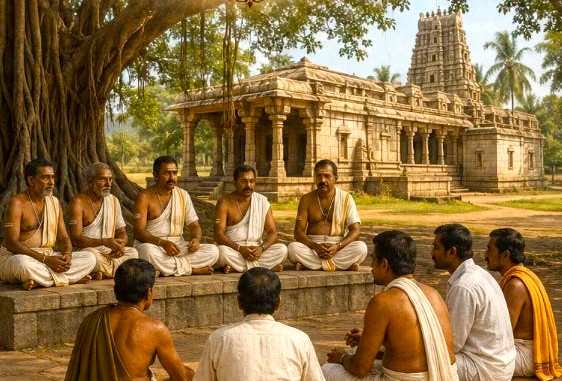
The royal kitchens were centers of culinary excellence, reflecting the agricultural bounty and extensive trade of the era. The recipes and foods of ancient Tamil royal kitchens featured a rich variety of rice, meats, and seafood, generously flavored with black pepper, cardamom, and turmeric from the Western Ghats. Feasts were an integral part of royal life, used to honor poets, reward soldiers, and celebrate victories. Large-scale food preparation was essential to feed the vast royal household, the army, and the numerous bards and supplicants who thronged the king's court daily. Tamilakam Ancient India
Laws and Punishments in Ancient Tamilakam
Justice in the age of the Three Crowned Kings was swift and decisive, centered on the king's authority. The laws and punishments of the ancient Tamil kingdoms were based on custom and the concept of aram (virtue). The king was the ultimate judge, and his court (avai) was the highest legal body. Theft was punished severely, often with corporal punishment, while more serious crimes like treason resulted in death. A unique aspect was the trial by ordeal, such as plunging a hand into a pot with a cobra to prove innocence. Justice was personal, and a king's reputation depended on his impartiality.
Deities and Worship in the Sangam Age
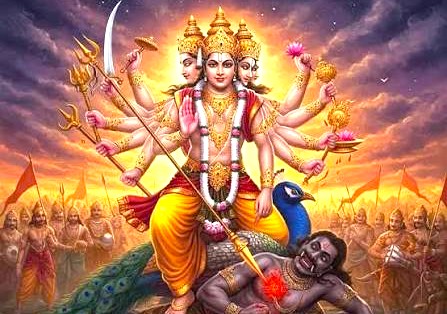
The religious landscape was a synthesis of indigenous Dravidian beliefs and early Vedic influences. The primary deities worshipped were tied to the five landscapes. The chief god was Seyon (later identified with Murugan), the red god of the hills, worshipped with ecstatic dances. Other important deities included Mayon (the dark-skinned god of the forests, identified with Vishnu), Vendan (god of the farmlands, identified with Indra), and Korravai, the fearsome goddess of victory and the desert. This vibrant and diverse pantheon reflected the deep spiritual life of the ancient Tamils.
Festivals and Grand Processions
Festivals in the Tamil kingdoms were vibrant, community-wide celebrations filled with energy and color. The major festivals and public processions were central to social life. The harvest festival, Pongal, was a time of great rejoicing for farmers. The festival of Indra (Indra Vizha) in the Chola capital of Puhar was a grand, multi-day affair with music, dancing, and theatrical performances. Royal processions, featuring the king on an elephant surrounded by his army and court, were common spectacles that reinforced the monarch's power and connection to his people.
Royal Courts and Bardic Entertainments
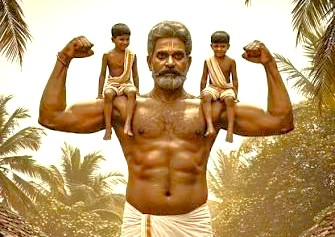
The courts of the Chera, Chola, and Pandya kings were the epicenter of Tamil culture and learning. The entertainment in ancient Tamil royal courts revolved around the bards and poets (Pulavar) who composed and performed masterful works of poetry. These poets were highly esteemed, acting as counselors, emissaries, and companions to the kings. In return for their art, they were lavished with gold, land, and royal patronage. Music, played on instruments like the yazh (a type of harp), and dramatic performances were also key forms of entertainment, making the royal courts bustling centers of artistic excellence.
Heroic Battles and Unyielding Resilience
The history of the Three Crowned Kings is a saga of constant warfare and remarkable resilience. The epic battles and military strategies of Tamil kings are a central theme of Sangam literature, particularly in the "Purananuru" collection, which celebrates the valor of kings and warriors. Battles were fought for territory, resources, and, most importantly, honor. Kings led from the front, and dying in battle was considered the most glorious end for a warrior. Despite near-constant conflict among themselves and with outside invaders, these dynasties showed incredible resilience, often re-establishing their power after periods of decline. Tamilakam Ancient India
Royal Marriages and the Role of Women
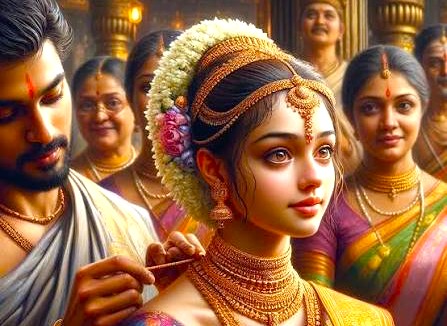
Marriage within the royal families was a tool of diplomacy and alliance-building. The strategic royal marriage alliances of the Muvendar were crucial for maintaining a balance of power. While the society was patriarchal, high-born women held a position of considerable respect. The status and rights of women in society allowed them to be educated, own property, and even become renowned poets, with figures like Avvaiyar being among the most celebrated literary voices of the era. The queen consort was a figure of authority within the palace and a patron of religion and art.
Magic, Artistry, and Sangam Poets
Artistry reached phenomenal heights, especially in the realm of poetry. The role of poets and artistry in the Sangam period cannot be overstated; they were the chroniclers, entertainers, and moral guides of their time. Their poetry, rich with vivid imagery of love (akam) and war (puram), provides a window into the soul of ancient Tamil society. Belief in spirits, omens, and ritualistic magic was also woven into daily life and artistic expression. Sculptural and architectural arts, though less preserved than literature, showed a sophisticated aesthetic sense in the construction of early brick temples and palaces.
Burial Ceremonies and Hero Stones
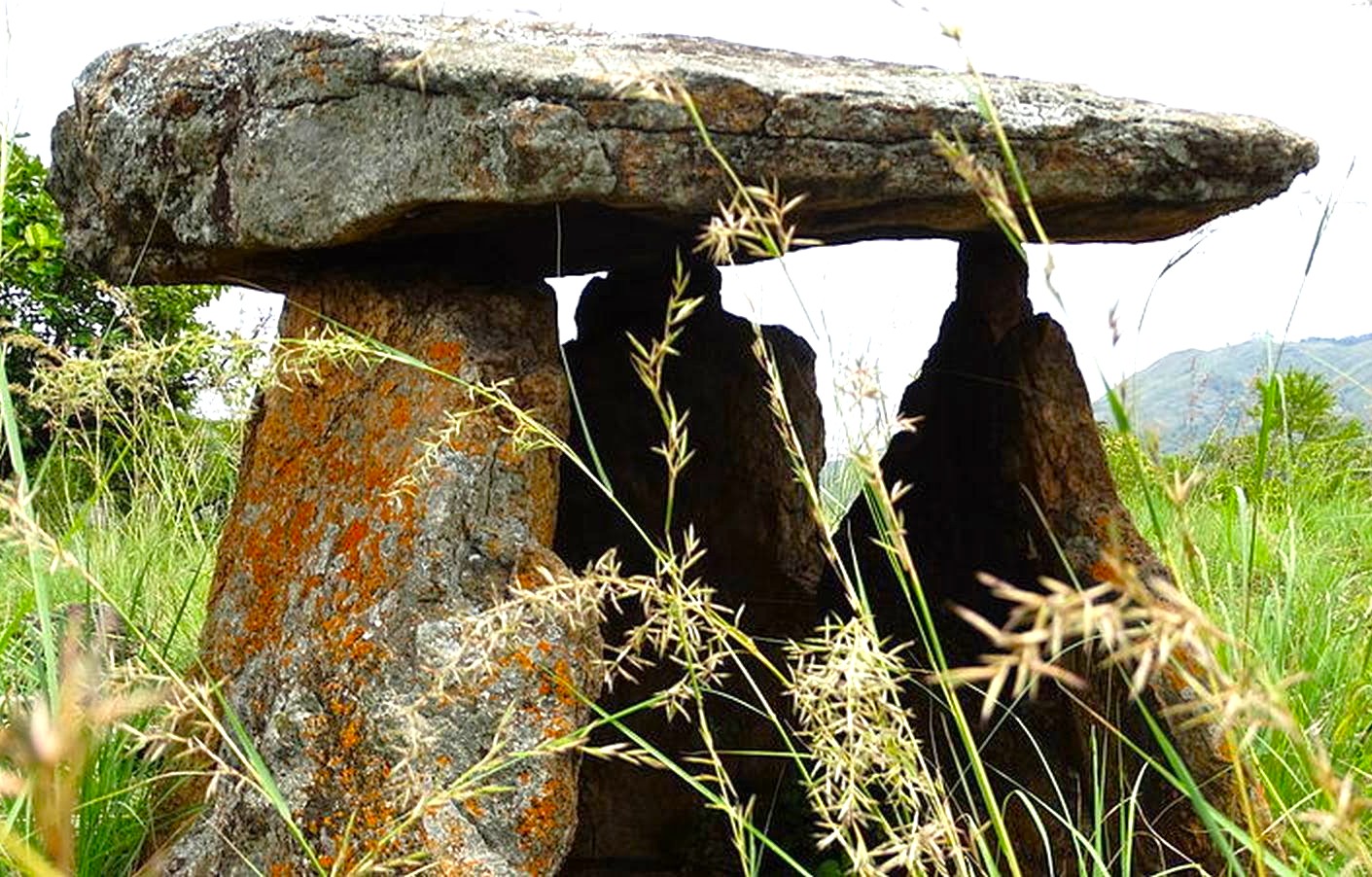
Death rituals in ancient Tamilakam varied by region and social status. The most prominent among these were the urn burial customs of the Tamil Iron Age. People were often interred in large pottery urns along with personal belongings for the afterlife. A unique and powerful tradition was the erection of Hero Stones (Nadukal). These carved stones were raised to commemorate warriors who died heroically in battle. The significance of Hero Stones in ancient Tamil culture was immense, as they were worshipped as local deities, transforming fallen soldiers into objects of reverence and immortalizing their valor for future generations. Tamilakam Ancient India
Physicians and the Siddha System of Health
Health and healing in ancient Tamilakam were governed by the principles of the Siddha system of medicine. The traditional Siddha medicine and physicians of Tamilakam believed that a healthy body was essential for spiritual enlightenment. These physicians, or Siddhars, were revered sages who developed a holistic medical system using herbs, minerals, and metals. They possessed a profound understanding of anatomy, pharmacology, and toxicology. This ancient system focused on maintaining the equilibrium of the three humors and remains a living tradition of healing in South India today.
Water Management and Engineering Feats
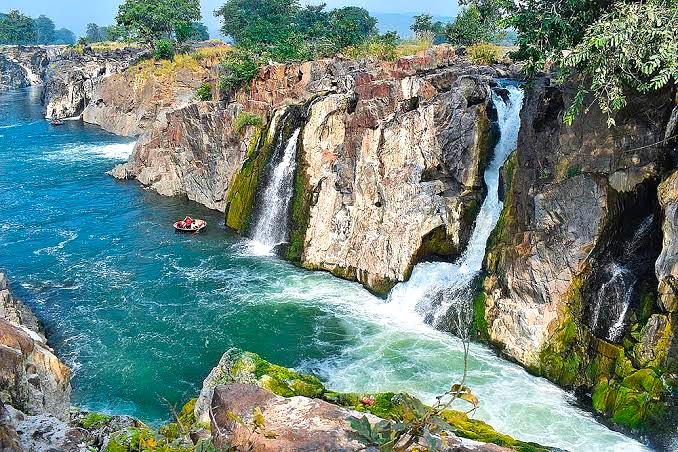
The Chola and Pandya kingdoms, in particular, were masters of hydraulic engineering. The ancient Tamil water management and irrigation systems were vital to the agrarian economy. The Cholas constructed intricate networks of canals, weirs, and sluices to tame the Kaveri River, turning its delta into a rice bowl. The most famous example is the Kallanai (Grand Anicut), a massive stone dam built in the 2nd century AD that is still in use today. These feats of engineering demonstrate a sophisticated understanding of hydrology and a long-term vision for resource management.
The Kalabhra Interregnum Emerges
The vibrant Sangam Age, dominated by the Cheras, Cholas, and Pandyas, came to an enigmatic end with the rise of a new power. The emergence of the Kalabhra Dynasty in Tamilakam around the 3rd century CE is often called a "dark age" because of the scarcity of sources. The Kalabhras overthrew the Three Crowned Kings and ruled for several centuries. The impact of the Kalabhra interregnum on Tamil society is debated; while orthodox sources decry them as disruptive outsiders, they were also patrons of Jainism and Buddhism, contributing to the religious and cultural evolution of the Tamil country before being overthrown by the resurgent Pandyas and Pallavas. Tamilakam Ancient India
Step Inside The Story - View All Tour Itineraries & Details

We’re here to offer genuine, thoughtful guidance if your interested in travelling to India. As a small, dedicated team, we pay close attention to every detail so you can focus on enjoying the experience while we take care of the planning. We believe the best trips begin when someone truly listens to what you want and how you like to travel, so the journey feels right for you and contributes to a happy, positive group on tour. Our communication stays clear, straightforward, and respectful at every step, with the goal of helping you feel understood, supported, and confident from first contact to the end of your journey.
Click Catherine Frith - About The Founder
Click Discover Life Travel - All Tours and More
Click Why We Are Different - Unique, Safe, Transparent