Unique Insights Into The Gods Of India
Dasharatha: King of Ancient Ayodhya
Discover Life Travel
Master of Ten Chariots
Born into the glorious Ikshvaku Dynasty, the great Solar lineage of kings, Dasharatha was the son of King Aja and Queen Indumati of Kosala. The royal origin story of King Dasharatha of Ayodhya marked him as a righteous and powerful ruler, renowned throughout the world for his valor, his adherence to Dharma, and his skill as a mighty warrior. His name, Dasharatha, means "He of the Ten Chariots," signifying his incredible ability to fight in all ten directions simultaneously, a testament to his supreme command over the art of warfare. He was the perfect embodiment of a Suryavanshi (Solar Dynasty) king, destined to rule a prosperous kingdom. Dasharatha King of Ancient Ayodhya
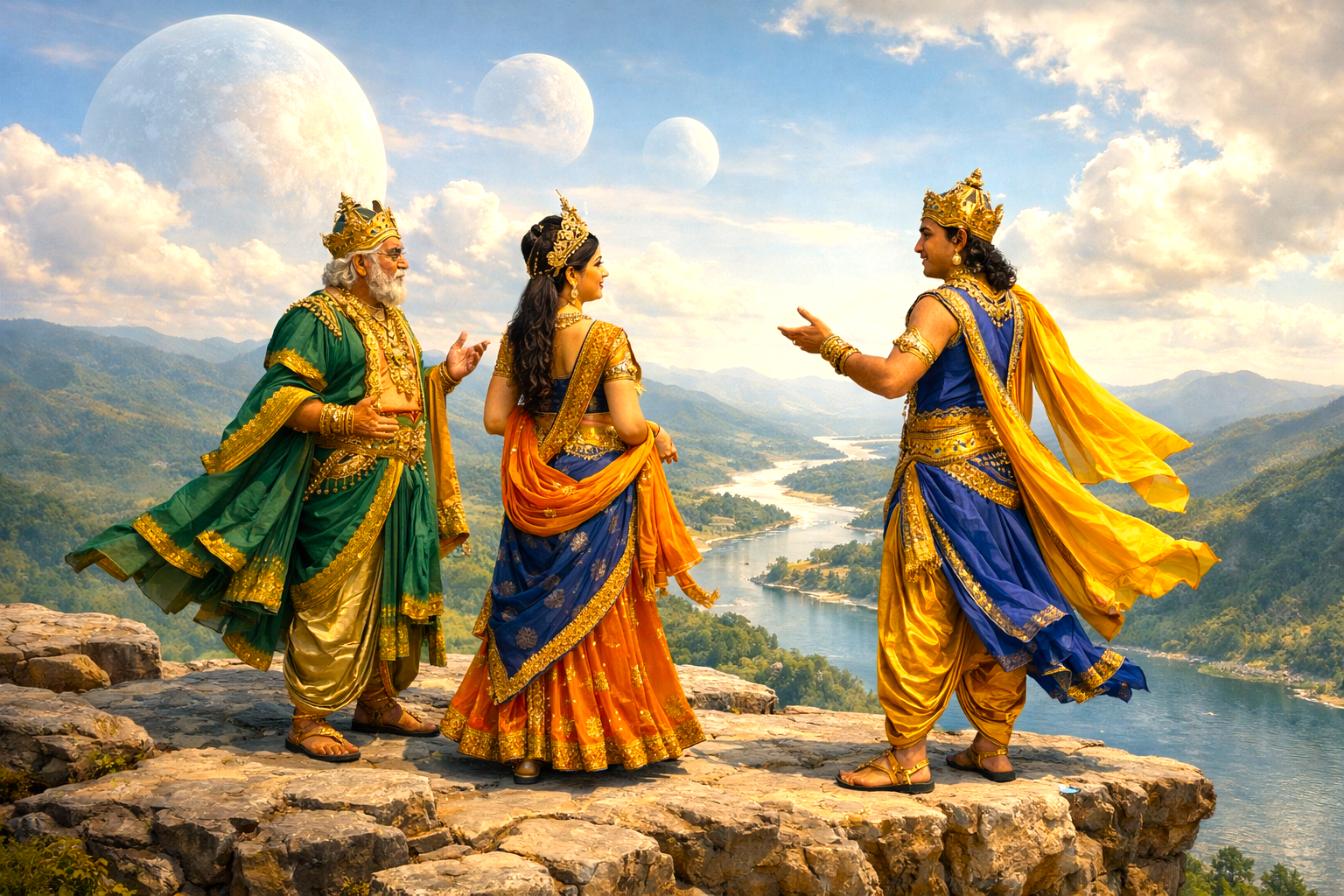
The Golden Capital City of Ayodhya: Dasharatha King of Ancient Ayodhya
Dasharatha’s entire life and reign were centered on one of the most sacred and glorious cities in Hindu lore. The sacred geography of the city of Ayodhya, located on the banks of the Sarayu River in modern-day Uttar Pradesh, was his kingdom and his world. Under his rule, Ayodhya was a paradise on earth, a city of immense wealth, perfect justice, and happy citizens. The grand palace of Ayodhya was the seat of Dasharatha's power, a place of royal splendor from which he administered his kingdom, but which would later become the stage for his deepest emotional turmoil and tragic downfall.
The Ten Chariots and the Empty Cradle
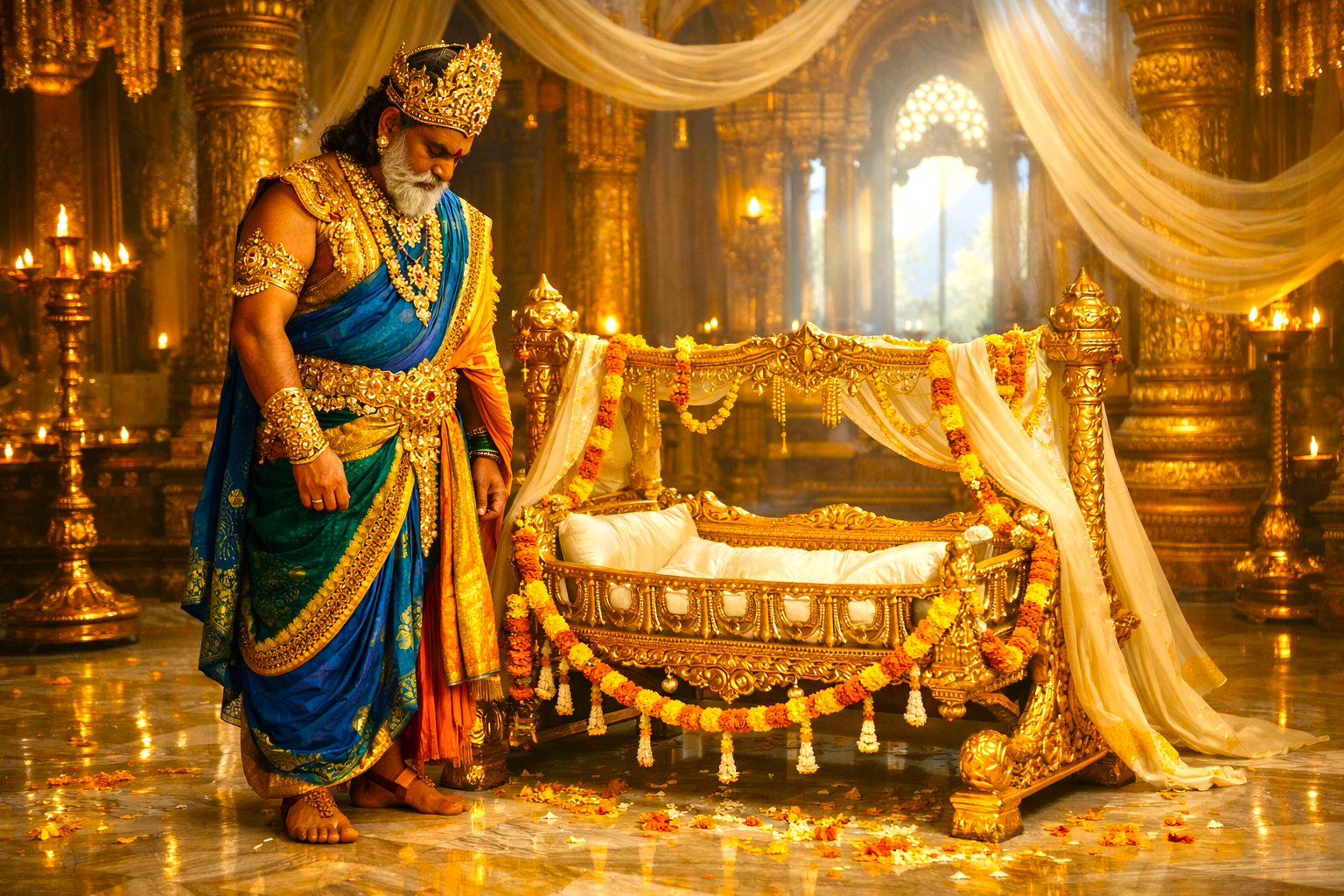
The symbol of Dasharatha in his prime was the divine power of his ten chariots, representing his complete mastery over the material world. However, the tragic symbol of his life is the empty royal cradle, representing his long, agonizing years of childlessness. This sorrow for want of an heir became the defining characteristic of the first half of his reign. Later, this is replaced by the symbol of his unbreakable adherence to his spoken word, a commitment to truth that, ironically, became the very instrument of his demise.
A King of Three Queens, a Father of Four Sons
Dasharatha’s family was the heart of the Ramayana and the source of his greatest joy and sorrow. He was the husband of three principal queens: Kausalya, the noble queen of Kosala; Sumitra, the wise queen of Kashi; and his youngest, favorite wife, Kaikeyi, the beautiful princess of Kekeya. For years, he was a childless king. Only after performing a great sacrifice did he become the loving father of four divine sons: Rama, born to Kausalya; Bharata, born to Kaikeyi; and the twins Lakshmana and Shatrughna, born to Sumitra. This family, a picture of perfect harmony, held the seeds of a future, tragic disintegration. Dasharatha King of Ancient Ayodhya
The Curse from a Grieving, Blind Father
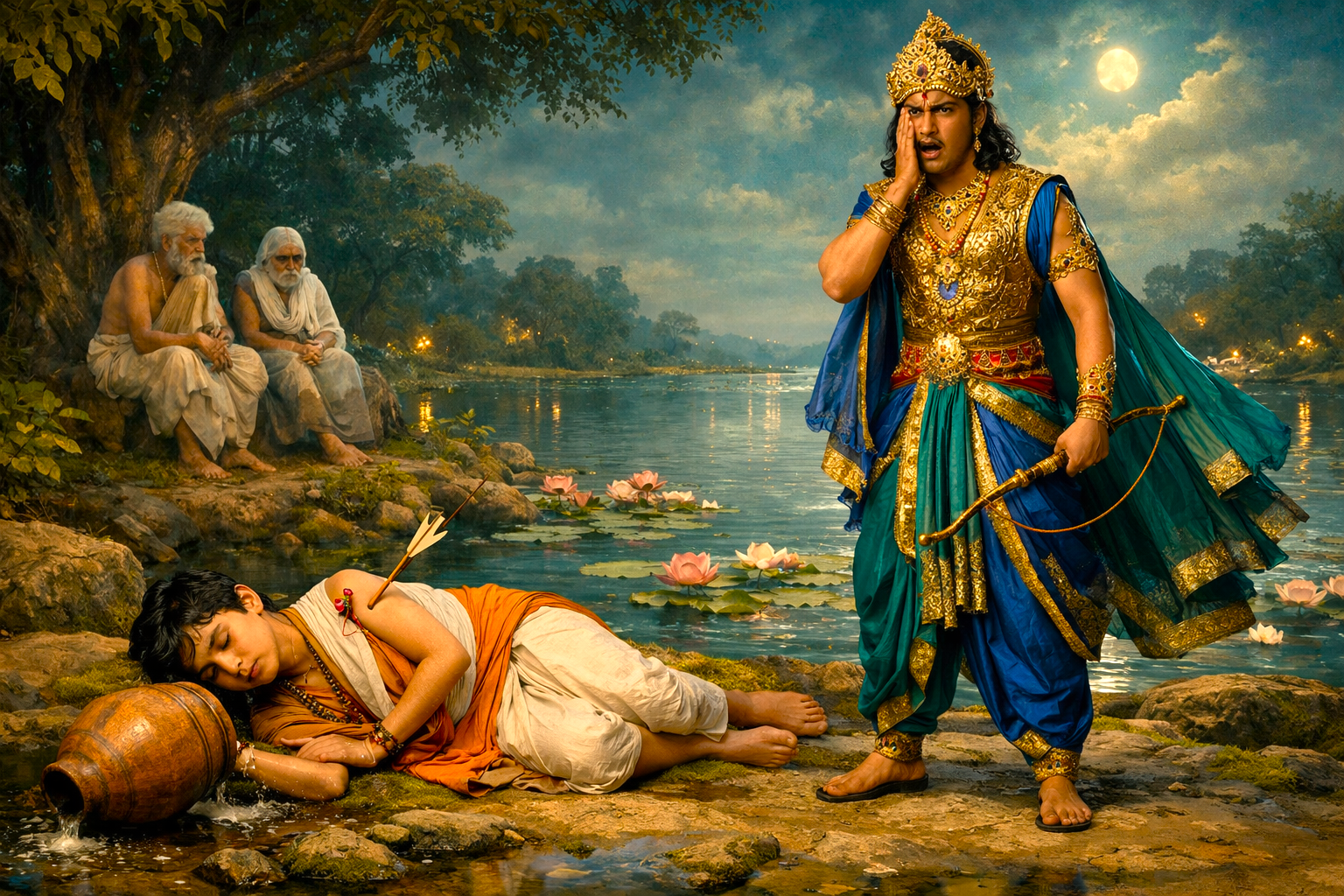
The story of him accidentally killing the boy Shravan Kumar was the defining and tragic mistake of his youth. Hearing a gurgling sound by a river at night, he mistook it for an elephant drinking and fired an arrow. To his horror, he had shot a young ascetic boy, Shravan Kumar, who was collecting water for his blind, elderly parents. The dying boy made Dasharatha take the water to his parents, who, upon hearing of their son's death, cursed the king that he too would die from the grief of separation from his most beloved son.
The Great Sacrifice for a Divine Heir
Decades into his reign, the great King Dasharatha was consumed by one deep sorrow: he had no son to continue his lineage. The story of Dasharatha performing the Putrakameshti Yajna was his desperate attempt to solve this problem. On the advice of his sages, he performed the great fire sacrifice for the purpose of obtaining sons. At the climax of the ritual, a divine being emerged from the sacrificial flames, carrying a golden pot of divine kheer (sweet rice pudding). Dasharatha distributed this sacred pudding among his three queens, and in due course, they gave birth to the four divine princes who would bring him both immeasurable joy and unbearable sorrow. Dasharatha King of Ancient Ayodhya
The King Who Promised Two Fatal Boons
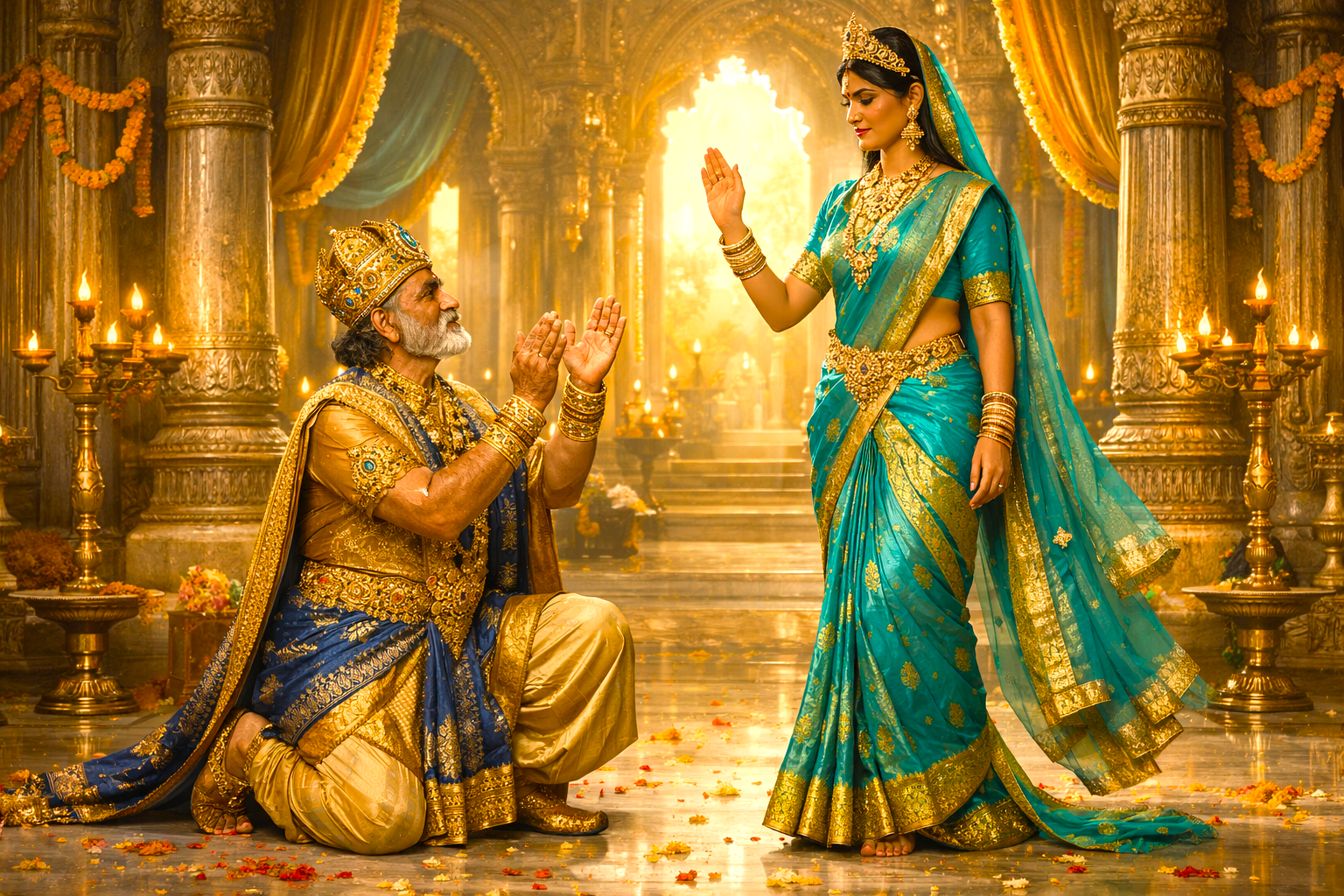
Before his sons' birth, King Dasharatha joined the gods in battle. When his chariot’s axle broke, his youngest wife, Kaikeyi, courageously used her finger to stabilize the wheel, saving his life. Grateful and overjoyed, Dasharatha granted her two boons. The wise queen chose to save these rewards for a future date. This noble promise, born of deep gratitude, became a dormant debt - a ticking time bomb that would later be reclaimed with catastrophic consequences, altering the course of the kingdom and the lives of those he loved forever.
A Modern Tale of a Promise to a Partner
A modern parallel to Dasharatha's tragic promise can be seen in the corporate world. A powerful CEO, early in his career, is saved from a corporate disaster by his junior partner (Kaikeyi). In a moment of gratitude, he signs a legal document giving her the right to claim two future "favors." Years later, on the eve of promoting his talented, ethical son (Rama) to be his successor, the junior partner, now bitter and manipulative, presents the document. She demands that her own less-competent son (Bharata) be made CEO, and that the CEO's son be fired and sent to a remote, undesirable branch for years, forcing the CEO to destroy his own family and legacy to honor his past, foolishly made promise.
The Heartbreak of an Exiled Son, A Promise Kept
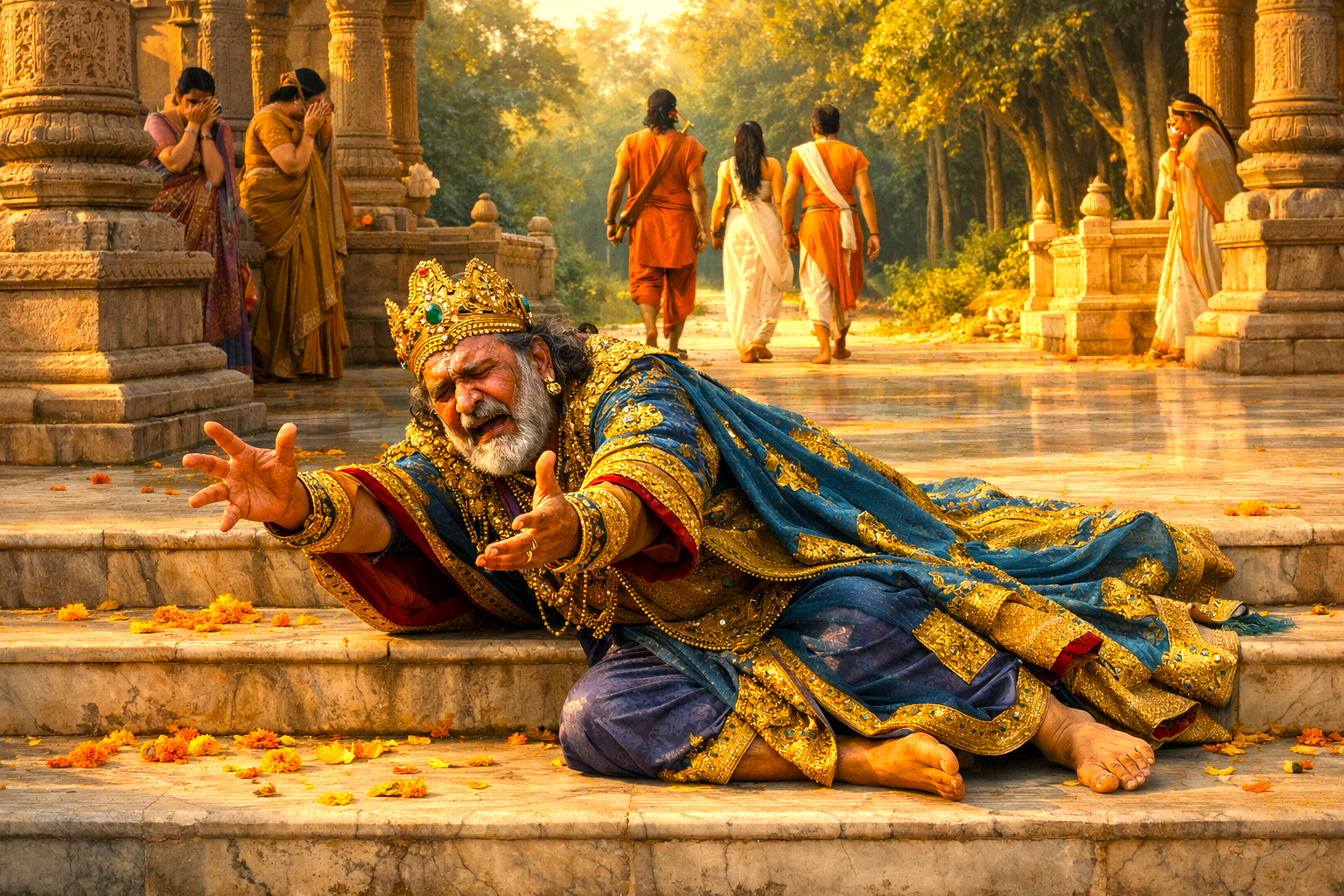
On the eve of Rama’s coronation, Dasharatha’s world shattered. Influenced by her maidservant, Queen Kaikeyi reclaimed her two ancient boons, demanding her son Bharata be crowned and Rama exiled for fourteen years. Bound by his sacred oath, the heartbroken King had no choice but to comply. This fulfillment of a past curse forced a devastating separation. The sheer agony of banishing his beloved son proved a burden too heavy to carry; the resulting grief was so profound that it eventually claimed the King’s life.
A Death of Grief, A Son's Name on His Lips
In the days following Rama's departure into the forest, King Dasharatha was consumed by inconsolable grief. The story of King Dasharatha’s death from a broken heart was the tragic climax of his life. Lying in his chambers, he refused all food and comfort, his mind replaying the moment his son walked away. He remembered the curse of Shravan Kumar's parents from so long ago and knew his end was near. With his final breaths, he cried out his beloved son's name, "O Rama, O Rama," his life force finally giving way to the unbearable pain of separation. He died not from battle or old age, he died from pure, heart-rending grief. Dasharatha King of Ancient Ayodhya
A Message: The Word of a King Is His Life
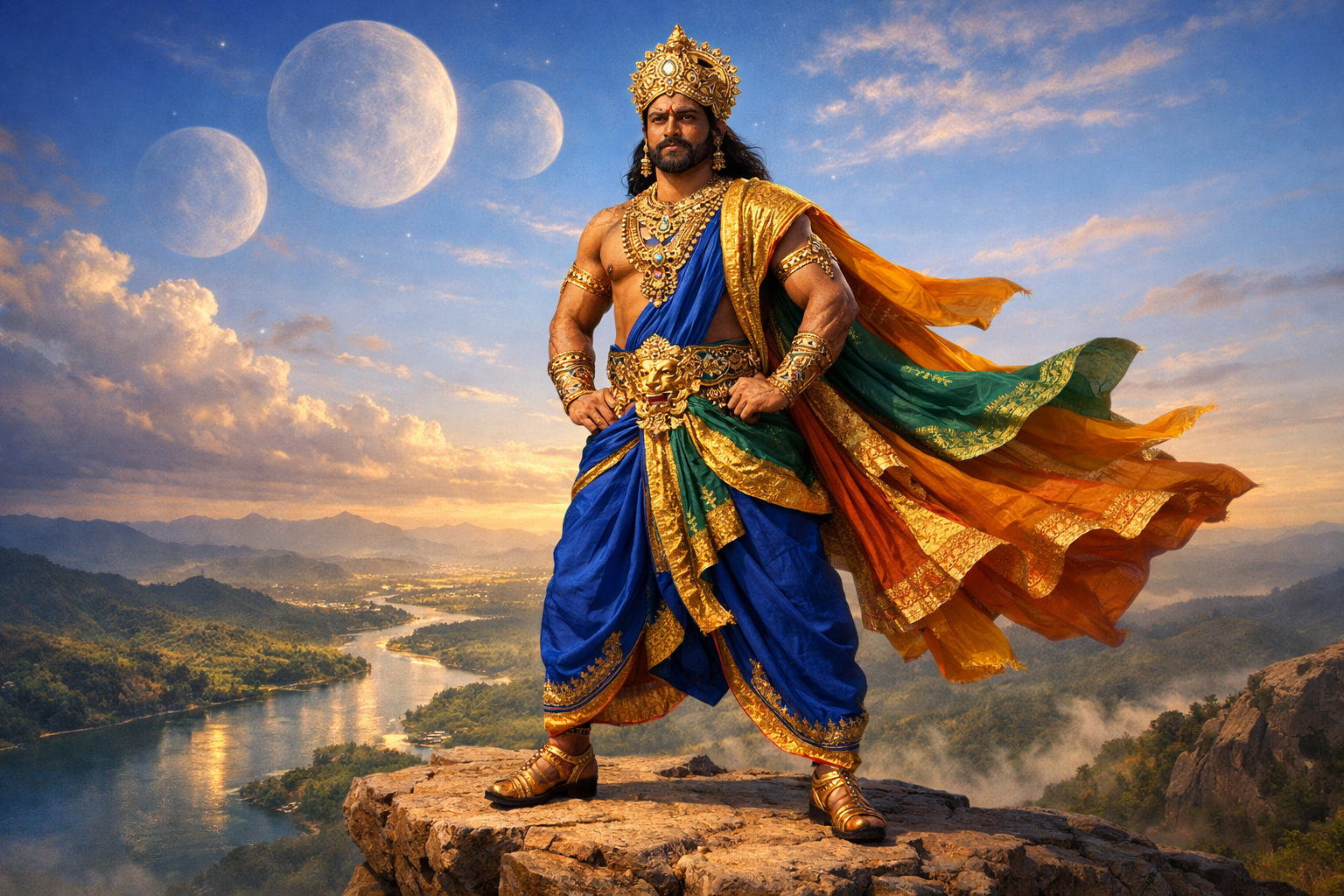
His life is a profound and tragic lesson on the sanctity of one's word. The message from Dasharatha’s life is that for a righteous person, and especially a king, a promise is an unbreakable bond. His adherence to his oath, even when it destroyed him, is held up as the ultimate example of commitment to truth. His story is also a cautionary tale about making rash promises and the devastating consequences of being bound by past words. He teaches that while one's word is life, the grief of attachment can be a fatal poison.
The Heart Chakra and a Fading Golden Ray
As a great king of the Solar Dynasty, Dasharatha's energy was centered in his heart and his royal authority. He embodies the Anahata (Heart) Chakra, the center of love and, in his case, profound emotional attachment and grief. The key frequency that Dasharatha embodies is that of paternal love and sorrowful duty. In his prime, his auric field would have been a brilliant, kingly golden ray, representing the Solar Dynasty. In his final days, this would have become a fading, grief-stricken, and pale golden light, dimmed by sorrow and the pain of separation. Dasharatha King of Ancient Ayodhya
The Arrow of Sound, A Weapon of Regret
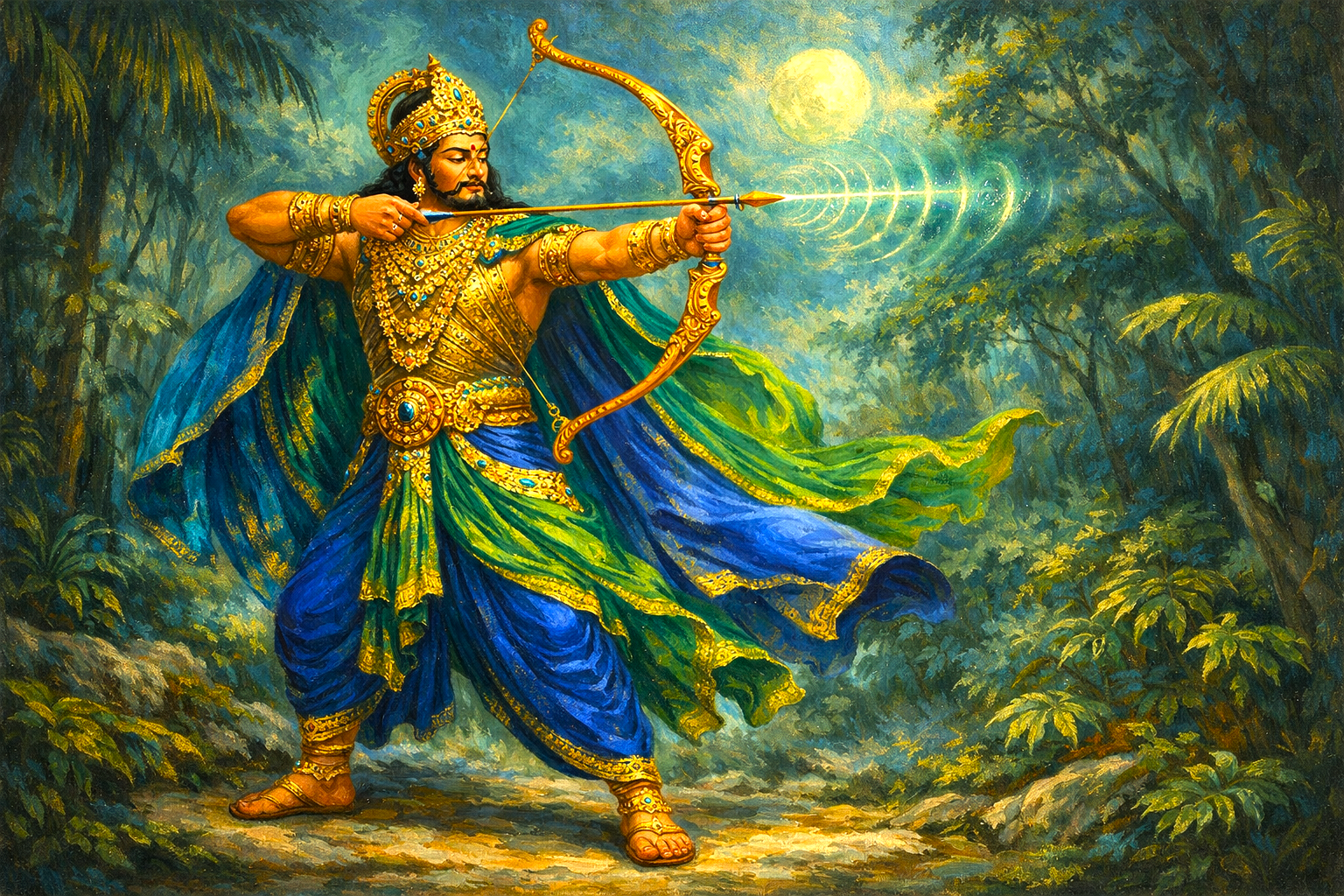
Dasharatha’s most unique and formidable weapon was his skill of shabdabhedi, the ability to shoot an arrow based on sound alone. The power of shabdabhedi archery made him a feared hunter and warrior, able to strike unseen targets in complete darkness. However, this celestial weapon is forever linked not to a great victory, but to his greatest regret. It was the very weapon he used to accidentally kill Shravan Kumar, the act that brought the curse of parental grief upon him. His greatest weapon became the source of his greatest sorrow.
The Sun and an Afflicted Moon: A King's Grief
Dasharatha's royal character is a perfect astrological representation of the Sun, but his tragedy is explained by the Moon. As the righteous king of the Solar Dynasty, he embodies the dignity and authority of a powerful Sun. However, his life's great tragedy - his death caused by overwhelming emotional grief and attachment to his son - is a classic manifestation of a severely afflicted and weakened Moon. The Moon governs our emotions and attachments, and Dasharatha's story is a powerful example of how even a great Sun (a king) can be completely destroyed by an overwhelming and sorrowful Moon (emotional grief). Dasharatha King of Ancient Ayodhya
Step Inside The Story - View All Tour Itineraries & Details
We’re here to offer genuine, thoughtful guidance if your interested in travelling to India. As a small, dedicated team, we pay close attention to every detail so you can focus on enjoying the experience while we take care of the planning. We believe the best trips begin when someone truly listens to what you want and how you like to travel, so the journey feels right for you and contributes to a happy, positive group on tour. Our communication stays clear, straightforward, and respectful at every step, with the goal of helping you feel understood, supported, and confident from first contact to the end of your journey.
Click Catherine Frith - About The Founder
Click Discover Life Travel - All Tours and More
Click Why We Are Different - Unique, Safe, Transparent