A Unique Look Into Indian History
Mughal Empire: India
Discover Life Travel
The Rise and Legacy of the Mughal Empire in India
Before the Mughals arrived, North India was a fractured and volatile region under the rule of the Lodi Sultanate of Delhi. The Sultan, Ibrahim Lodi, was unpopular and his authority was challenged by ambitious Afghan nobles and powerful Rajput confederacies, most notably the kingdom of Mewar under Rana Sanga. In Central Asia, a young Timurid prince named Babur had lost his ancestral kingdoms of Samarkand and Fergana. The political instability of the Lodi Sultanate created the perfect opportunity for this determined, landless prince to seek his fortune in the fabled, wealthy lands of Hindustan. Mughal Empire India
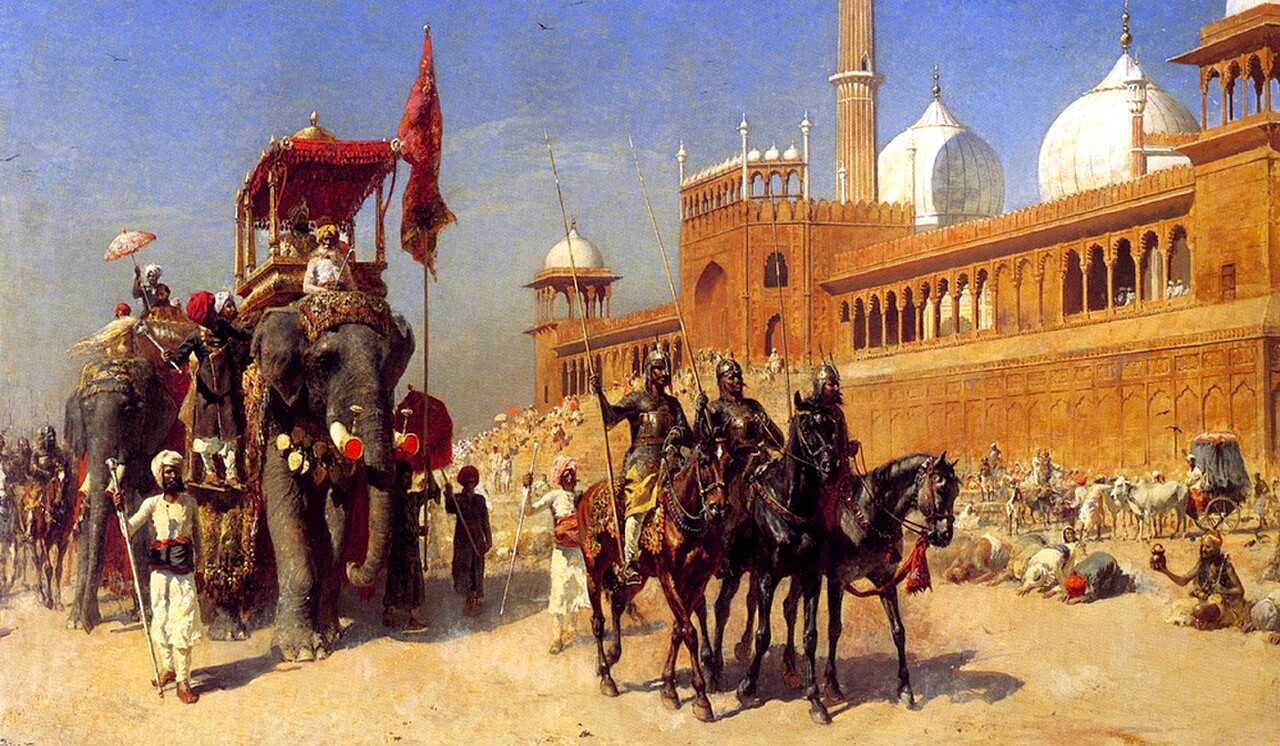
Mughal Empire India: The Cannon's Roar at Panipat
The Mughal dynasty "arrived" with a thunderous roar. In 1526, Babur, with a small but highly disciplined army equipped with gunpowder artillery and cannons - a revolutionary military technology for India - met the massive forces of Ibrahim Lodi on the dusty plains of Panipat. The First Battle of Panipat was a tactical masterpiece. Babur's superior strategy and firepower decimated the Lodi army, killing the Sultan. This single, decisive victory shattered the Delhi Sultanate and placed the throne of Hindustan into Babur's hands, marking the founding of the Mughal Empire in India.
A Day in the Red Fort
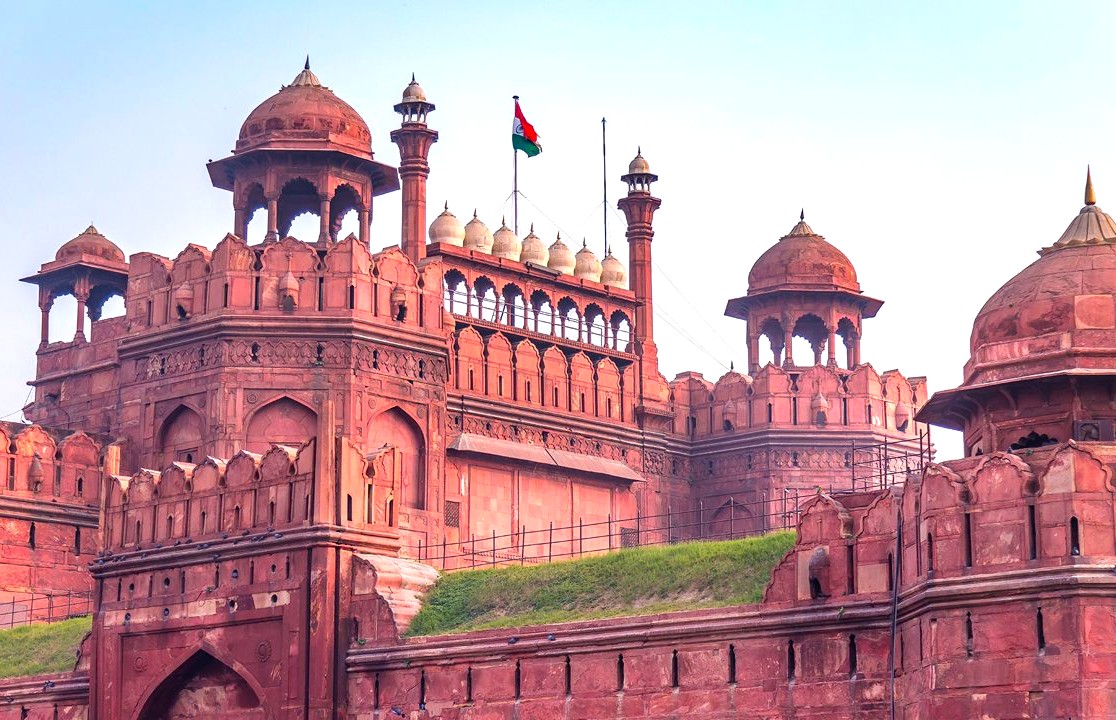
A day in the life of a great Mughal emperor like Akbar or Shah Jahan at his capital in Agra or Delhi was a spectacle of immense power and meticulous routine. Mornings began with the "Jharokha Darshan," a public appearance at a balcony to his subjects. This was followed by the "Diwan-i-Am" (Hall of Public Audience) for general administration, and later the "Diwan-i-Khas" (Hall of Private Audience) for high-level statecraft. The daily routine of a Mughal emperor was a highly ritualized performance, designed to project an aura of absolute authority, accessibility, and divine majesty. Mughal Empire India
Life Under the Padishah
For the common person, life in the Mughal Empire was a mix of opportunity and obligation. The empire's vast, unified territory provided unprecedented security for trade and travel. A sophisticated administrative system, the Mansabdari system, organized the nobility and the army. While the majority of the population was Hindu, ruled by a Muslim elite, Akbar's policies of religious tolerance created a syncretic culture. The Mughal land revenue system, while efficient, was demanding, and the life of a peasant was one of hard work to support the immense luxury of the imperial court.
A Cuisine of Pearls and Roses
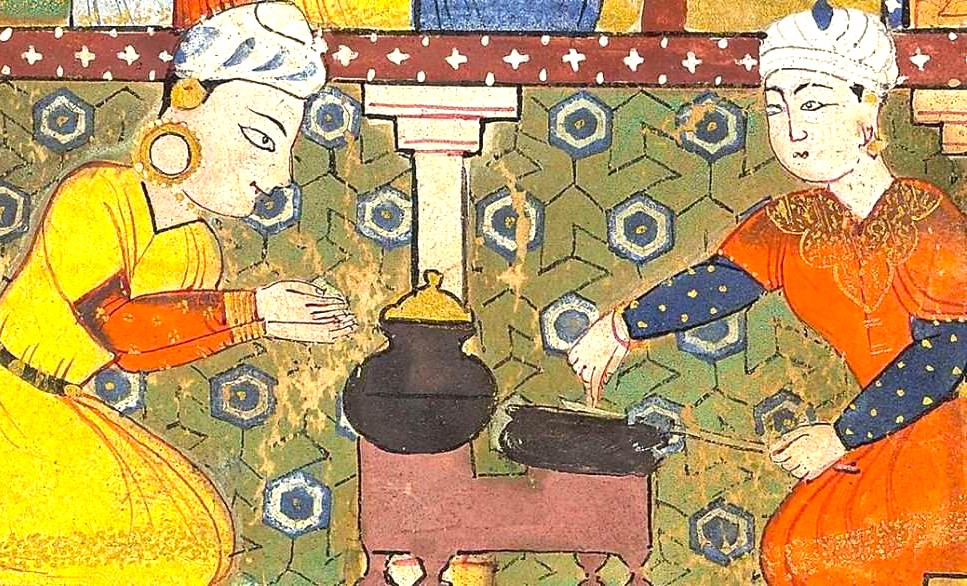
The royal kitchens of the Mughals created one of the world's most luxurious and refined cuisines. It was a sublime fusion of Central Asian and Persian traditions with rich Indian spices and ingredients. The use of nuts, dried fruits, cream, and fragrant spices like saffron and rosewater was characteristic. Dishes like biryani, korma, and kebabs were perfected. The development of Mughlai cuisine under imperial patronage was a major cultural achievement, a gastronomy designed to delight the senses and display the empire's immense wealth and sophisticated taste. Mughal Empire India
Law of the Emperor and the Qazi
The legal system was based on Islamic Sharia law, administered by a network of judges ("Qazis"). However, for the empire's vast non-Muslim population, traditional Hindu and local customary laws were generally allowed to function at the village level, especially for civil matters. The Emperor himself was the highest court of appeal. Under Akbar, there was a move towards a more universal, tolerant legal framework, but under Aurangzeb, a stricter interpretation of Islamic law was enforced. The dual legal system in the Mughal Empire was a pragmatic solution to governing a multi-religious populace.
A New Faith for a New Empire
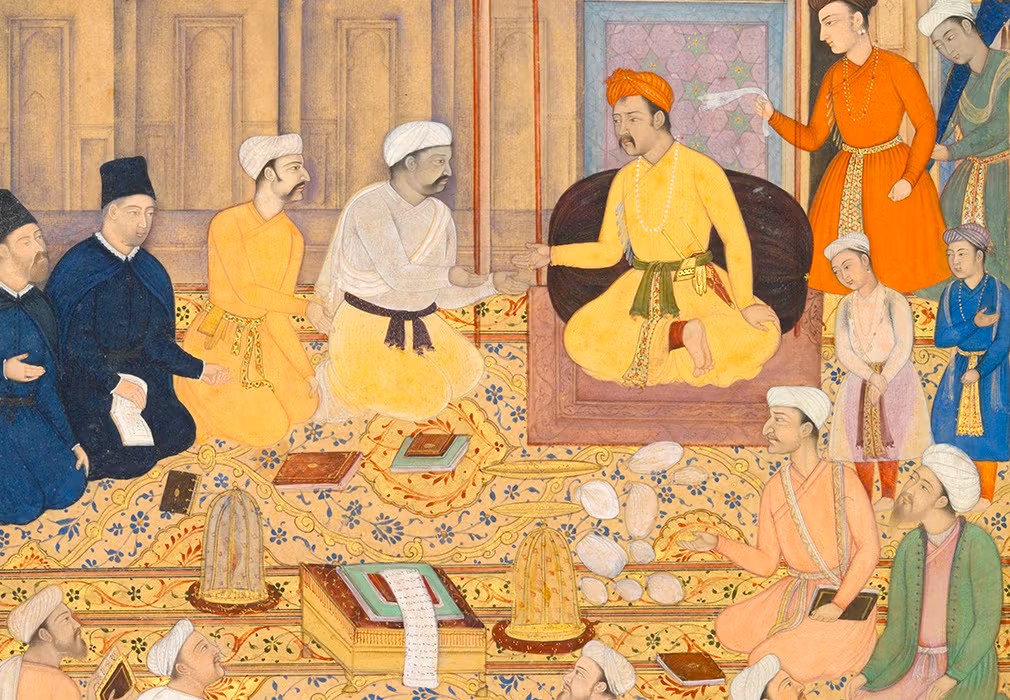
While the Mughals were Muslims, their religious policy varied dramatically. Akbar, the most radical, was deeply interested in comparative religion. He hosted debates between scholars of all faiths in his "Ibadat Khana" (House of Worship) and eventually promulgated his own syncretic creed, the "Din-i-Ilahi" (Divine Faith), which combined elements of Islam, Hinduism, and Zoroastrianism. Though it never gained mass following, Akbar's promotion of religious tolerance and debate was a revolutionary experiment in creating a unifying ideology for his diverse empire.
The Emperor's Weighing Ceremony
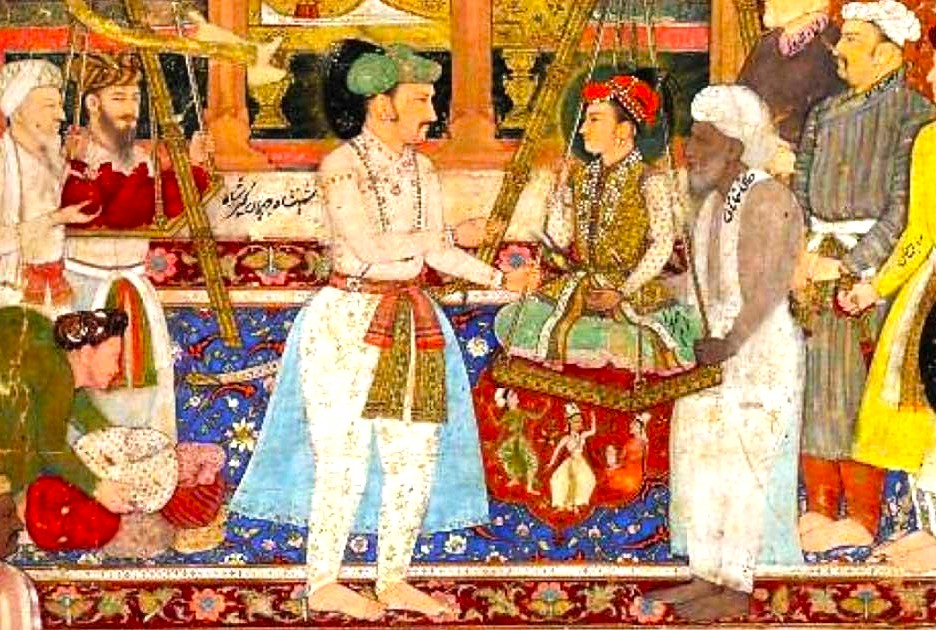
A uniquely Mughal festival was the emperor's birthday celebration, which included the ceremony of "Tola-Dan" or "Tula-Dana" (weighing ceremony). The emperor would be seated on a large scale and weighed against gold, silver, precious gems, and grains. The accumulated wealth was then distributed to the poor and religious institutions. This ceremony of weighing the Mughal emperor against gold was a spectacular display of imperial wealth and a public act of royal charity, reinforcing the emperor's role as a benevolent and divinely blessed provider for his people. Mughal Empire India
A Universe Painted in Miniature
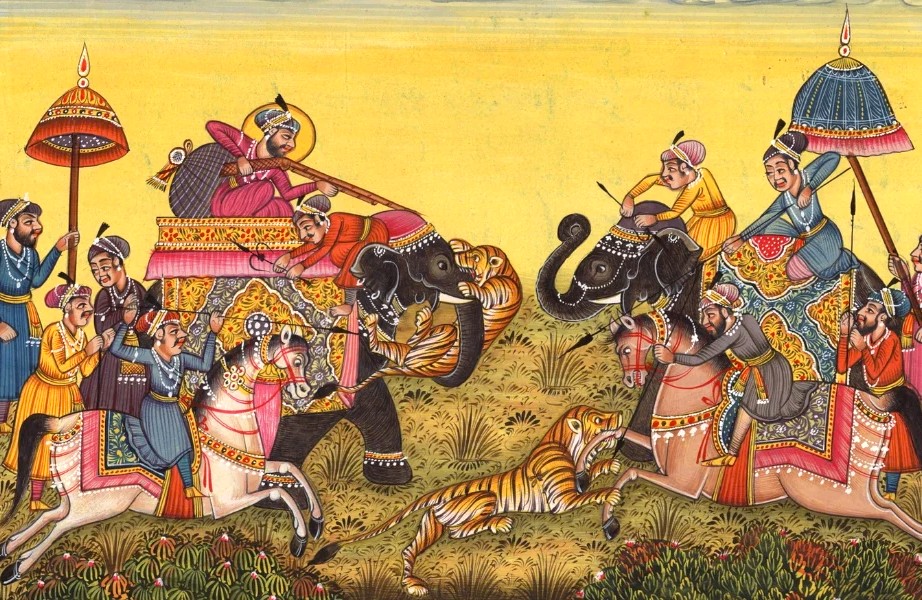
The Mughal court was a vibrant center for the arts, but its most unique and influential creation was the art of miniature painting. Combining Persian stylistic grace with Indian realism and vibrant color, artists created breathtakingly detailed paintings depicting court life, historical events, hunting scenes, and portraits. The development of the Mughal miniature painting school under emperors like Akbar, Jahangir, and Shah Jahan created a priceless visual record of the dynasty's glory and set a new standard for artistic excellence in India.
The Rajput Problem and the Mansabdars
The Mughals' resilience lay in their ability to co-opt their fiercest enemies. Akbar understood that to rule India, he needed the support of the powerful Rajput warrior clans. He forged a brilliant policy of strategic alliances, offering Rajputs high positions in his army and administration as "Mansabdars" (imperial rank-holders) in exchange for their loyalty. The policy of Rajput alliances through marriage and military service was a masterstroke, turning potential adversaries into the most loyal pillars of the imperial throne and stabilizing the empire for over a century. Mughal Empire India
A Palace Built for a Beloved Queen
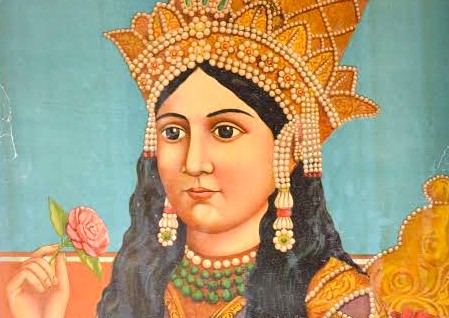
The ultimate symbol of this Dynasty is the Taj Mahal. It is not a fortress or a mosque, but a mausoleum. Emperor Shah Jahan, heartbroken by the death of his beloved wife Mumtaz Mahal during childbirth, commissioned this architectural masterpiece as her final resting place. Built of shimmering white marble and inlaid with precious stones, it took over two decades to complete. The construction of the Taj Mahal as a monument to love transcended its function as a tomb, becoming an immortal symbol of devotion and the zenith of architectural genius.
An Emperor's Love for Flora and Fauna
The Emperor Jahangir was a man of refined artistic taste and a passionate naturalist. He commissioned his master painter, Ustad Mansur, to create extraordinarily detailed and realistic paintings of rare birds, animals, and flowers that he encountered. This keen scientific observation, combined with artistic genius, created a unique body of work. The natural history paintings commissioned by Emperor Jahangir were far ahead of their time, a beautiful and precise documentation of the natural world, reflecting the emperor's personal curiosity and intellectual depth. Mughal Empire India
The Garden of the Final Sleep
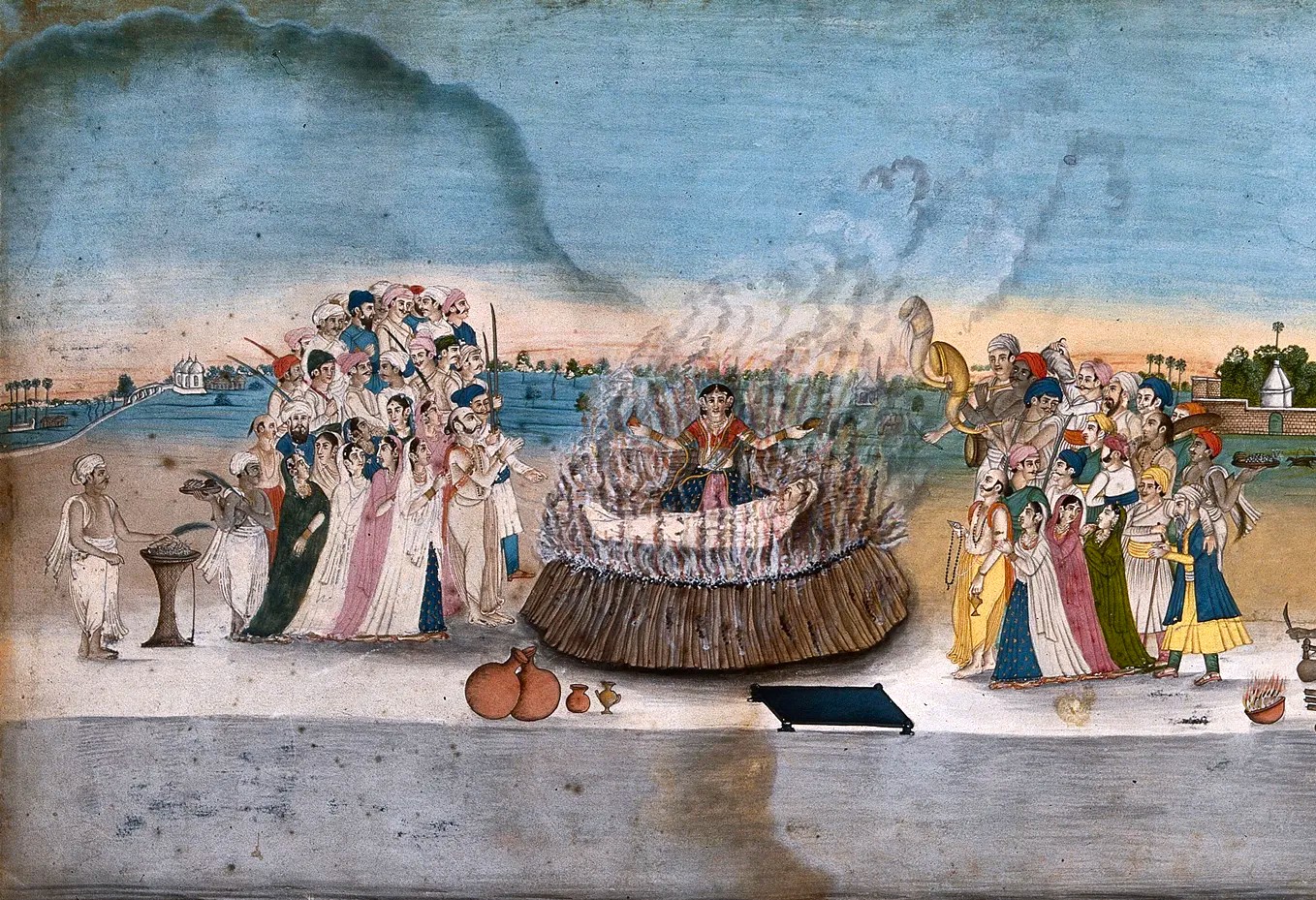
Funeral rites involved burial according to Islamic custom. However, for the emperors and their families, the tomb was transformed into a paradise on earth. They perfected the "Charbagh" (four-part garden) design, a four-quadrant garden divided by flowing water channels, meant to represent the gardens of heaven described in the Quran. Mughal garden tombs like Humayun's Tomb and the Taj Mahal are architectural masterpieces where the mausoleum sits at the heart of a perfectly symmetrical, beautiful garden, creating a serene and sublime final resting place. Mughal Empire India
The Unani Healers of the Court
The Mughals were great patrons of the Unani system of medicine, which was based on the teachings of Greek physicians like Hippocrates and Galen, and had been refined in the medieval Islamic world. "Hakims," or Unani physicians, were highly respected figures at court. They maintained royal hospitals, wrote detailed medical encyclopedias, and their remedies, based on balancing the body's "humors," were highly sought after. The patronage of Unani medicine by the Mughal emperors made it the dominant medical system in North India for centuries.
The Empire Crumbles from Within
The decline of the Empire began with the disastrous reign of Aurangzeb. His religious intolerance alienated his Rajput allies, and his costly, decades-long war in the Deccan drained the imperial treasury. After his death, a series of weak rulers and wars of succession fatally weakened the central authority. Ambitious provincial governors and the rising power of the Marathas carved out their own domains. The over-expansion and religious policies of Aurangzeb were the primary internal causes of the empire's decay, leaving it a hollow shell, vulnerable to the final blow delivered by European colonial powers. Mughal Empire India
Architects of a Golden Age
- Akbar (1542–1605)
Born in Umarkot during his father Humayun's exile, Akbar inherited the throne at thirteen and spent the following decades transforming a fragile kingdom into a vast, consolidated empire. Military conquest expanded Mughal territory across most of the subcontinent, while administrative reforms, including a revenue system and a policy of religious tolerance, gave that territory lasting coherence. His court at Fatehpur Sikri drew scholars, artists, and theologians from across faiths, reflecting his personal curiosity about religion and philosophy. Illiterate himself, he nonetheless presided over a golden age of Persian literature, painting, and architecture. He died in Agra in 1605, leaving an empire at its zenith.
- Aurangzeb (1618–1707)
Aurangzeb seized the throne in 1658 after a bitter war of succession against his brothers, imprisoning his own father, Shah Jahan, for the remainder of his life. His near fifty-year reign pushed Mughal borders to their greatest extent, through relentless campaigns in the Deccan. Personal austerity marked his character, alongside a stricter religious orthodoxy that reversed many of Akbar's tolerant policies, including the reimposition of the jizya tax on non-Muslims. Decades of Deccan warfare drained the treasury and stretched the empire's administration to its limits. He died in 1707 near Ahmednagar, and the fractures exposed during his reign accelerated the empire's decline soon after.
- Ahmad Shah Bahadur (1725–1775)
Ahmad Shah Bahadur ascended the throne in 1748 as the empire around him contracted sharply, pressed by Maratha expansion and repeated Afghan invasions under Ahmad Shah Durrani. Delhi itself came under siege more than once during his reign, and the treasury emptied under the weight of tribute and war. Court factions, particularly the wazir Imad-ul-Mulk, held real authority while the emperor's own influence thinned. Deposed and blinded in 1754, he lived out his remaining decades removed from power entirely, a symbol of how far Mughal sovereignty had receded. He died in 1775, largely forgotten by the empire he once nominally ruled.
- Alamgir II (1699–1759)
Installed by the same wazir who had blinded his predecessor, Alamgir II held the throne as a figurehead through one of the empire's most turbulent decades. Afghan raids, Maratha incursions, and factional violence defined a reign in which the emperor exercised little genuine command. Delhi's markets and treasuries suffered repeated plunder, and court politics grew murderous. In 1759, the same minister who had elevated him orchestrated his assassination, a fate mirroring the fragility of his rule from the start. His death marked a low ebb for Mughal authority, with the empire's real power scattered among competing regional forces.
- Bahadur Shah II, "Zafar" (1775–1862)
Zafar came to the throne in 1837 as emperor in name over a realm the British East India Company effectively controlled. A gifted poet writing in Urdu, he presided over a court still rich in literary and artistic life, even as political power had long since slipped away. The 1857 uprising drew him, reluctantly, into its symbolic leadership, and its failure sealed his fate. Tried by the British, he was exiled to Rangoon, where he spent his final years in confinement, composing verses of loss and longing. He died there in 1862, the last Mughal emperor, buried far from the Delhi he once ruled in name alone.
- Babur (1483–1530)
Born in the Fergana Valley, in present-day Uzbekistan, Babur traced his lineage to Timur on one side and Genghis Khan on the other. Early ambitions in Central Asia gave way to a southward march through Kabul and into Hindustan. At Panipat in 1526, his forces overcame the vastly larger army of the Delhi Sultanate, establishing Mughal rule on the subcontinent. A poet and diarist as much as a conqueror, he left behind the Baburnama, a vivid memoir recording gardens, battles, and the strangeness of India through Central Asian eyes. He died in Agra in 1530, transferring a fragile new empire to his son Humayun. Mughal Empire India
- Bahadur Shah I (1643–1712)
Known also as Shah Alam I, Bahadur Shah I came to power at sixty-three, following Aurangzeb's death and the succession struggles among his sons. His brief five-year reign attempted a course correction from his father's rigidity, easing religious tensions and seeking accommodation with the Rajputs, Sikhs, and Marathas. Diplomacy and conciliation defined his approach, though the empire's underlying financial and military strains persisted beneath the surface. Age limited how much he could reshape entrenched problems in the time available to him. He died in Lahore in 1712, and the succession crisis that followed his death set a pattern of instability that would define much of the following century. Mughal Empire India
- Farrukhsiyar (1685–1719)
Farrukhsiyar rose to power with the backing of the Sayyid Brothers, powerful kingmakers whose support proved as dangerous as it was essential. His reign is remembered chiefly for a 1717 farman granting the East India Company duty-free trading rights in Bengal, a decision whose consequences would echo through the following century. Indecisive and increasingly at odds with the same brothers who had installed him, he found himself outmaneuvered at court. In 1719, the Sayyids had him deposed, blinded, and later killed, a brutal end that underscored how thoroughly real power had shifted from the emperor to his ministers.
- Humayun (1508–1556)
Humayun inherited an empire still finding its footing and spent much of his reign proving its durability. Defeat at the hands of Sher Shah Suri sent him into exile across Persia, where he found refuge at the Safavid court and gathered the resources for a return. Fifteen years later, he reclaimed Delhi, restoring Mughal authority to northern India. His reign closed with a moment of striking irony: descending the library stairs of his fortress at Purana Qila, he stumbled and fell to his death in 1556. The library itself, known as Sher Mandal, still stands in Delhi, a quiet marker of that final accident.
- Muhammad Shah (1702–1748)
Muhammad Shah, sometimes called "Rangeela" for his devotion to music, poetry, and pleasure, ruled through nearly three decades of steady imperial decline. His reign witnessed the catastrophic 1739 invasion of Nadir Shah, whose sack of Delhi and removal of the Peacock Throne stripped the empire of both treasure and prestige. Real governance increasingly rested with powerful nobles and regional governors, as Mughal central authority weakened across the provinces. Despite the surrounding turmoil, his court remained a center of Hindustani classical music and Urdu poetry, cultivating an artistic legacy that outlasted his political one. He died in Delhi in 1748, the empire around him diminished but the culture he patronized enduring.
- Jahangir (1569–1627)Son of Akbar, Jahangir came to the throne already steeped in the empire's administrative machinery, and turned much of his own attention toward art, nature, and justice. His memoirs, the Jahangirnama, record close observations of animals, flowers, and court life with a naturalist's eye. His marriage to Nur Jahan placed a formidable political partner beside him, and her influence shaped much of the era's governance. Opium and wine occupied his later years alongside genuine intellectual curiosity. He died in 1627 near Rajouri, in Kashmir, a region he had come to love deeply, and was buried in Lahore, in a tomb set among gardens he might have admired.
- Jahandar Shah (1661–1713)Jahandar Shah's reign lasted less than a year, a brief and troubled interlude following the succession struggles that erupted after Bahadur Shah I's death. Power rested largely with his patron, the nobleman Zulfiqar Khan, while court life grew consumed by intrigue and excess. His devotion to a courtesan named Lal Kunwar became a source of scandal, drawing criticism from nobles who viewed his rule as weak and self-indulgent. Defeated in battle by his nephew Farrukhsiyar in 1713, he was captured, imprisoned, and executed the same year in Delhi. His short tenure remains a marker of how quickly Mughal authority had begun to fracture.
- Sher Shah Suri (1486–1545)
Worth noting first: Sher Shah Suri stood outside the Mughal line entirely, ruling instead as founder of the rival Sur Empire. Born in Bihar to Afghan nobility, he rose through military skill to defeat Humayun in 1540, driving the Mughals from India for fifteen years. His brief rule proved remarkably effective, introducing administrative and currency reforms, a postal system, and the Grand Trunk Road linking Bengal to the Indus. Many of these innovations were later absorbed and refined by Akbar's own administration. He died in 1545 at the siege of Kalinjar, killed by an accidental gunpowder explosion, his reforms outliving his short but consequential reign. Mughal Empire India
- Shah Alam II (1728–1806)
Shah Alam II's reign spanned nearly half a century of near-total loss of real power, even as he retained the Mughal title. Early years found him a wandering claimant, dependent on shifting alliances among Marathas, Rohillas, and the British. His authority over Delhi itself was interrupted in 1788 when the Rohilla chief Ghulam Qadir seized the city and had him blinded, an act of extraordinary brutality against a reigning emperor. Restored afterward under Maratha protection, he lived out his remaining years as a pensioner of the East India Company, emperor in name over a capital he no longer controlled. He died in Delhi in 1806.
- Shah Jahan (1592–1666)
Shah Jahan's reign is remembered above all for the Taj Mahal, built in Agra as a mausoleum for his wife Mumtaz Mahal, who died in 1631. Architecture defined much of his rule, from the Red Fort to the Jama Masjid, expressions of Mughal power at its most refined and confident. Military campaigns extended into the Deccan and toward Central Asia, though with mixed and often costly results. His final years turned tragic: deposed by his son Aurangzeb in 1658, he spent the remainder of his life imprisoned in Agra Fort, reportedly gazing toward the Taj Mahal from a window. He died there in 1666, beside the monument that defines his legacy.
Step Inside The Story - View All Tour Itineraries & Details

We’re here to offer genuine, thoughtful guidance if your interested in travelling to India. As a small, dedicated team, we pay close attention to every detail so you can focus on enjoying the experience while we take care of the planning. We believe the best trips begin when someone truly listens to what you want and how you like to travel, so the journey feels right for you and contributes to a happy, positive group on tour. Our communication stays clear, straightforward, and respectful at every step, with the goal of helping you feel understood, supported, and confident from first contact to the end of your journey.
Click Catherine Frith - About The Founder
Click Discover Life Travel - All Tours and More
Click Why We Are Different - Unique, Safe, Transparent