Unique Insights Into The Deities Of India
Kaveramma: Goddess of Sacred Currents
Discover Life Travel
The Daughter of the Creator, Born for Earth
In a time of cosmic creation, the great god Brahma had a divine daughter, Lopamudra. Witnessing the suffering of humanity on Earth due to a lack of water, the compassionate King Kavera performed intense austerities, praying to Brahma for a child who could save his people. Pleased, Brahma gave his own divine daughter, Lopamudra, to be born as the daughter of the king. The divine origin story of the River Cauvery is thus one of celestial compassion and royal devotion. She was born on Earth as a pious and beautiful princess named Kaveri, destined to become the life-giving force for the southern lands. Kaveramma Goddess of Sacred Currents
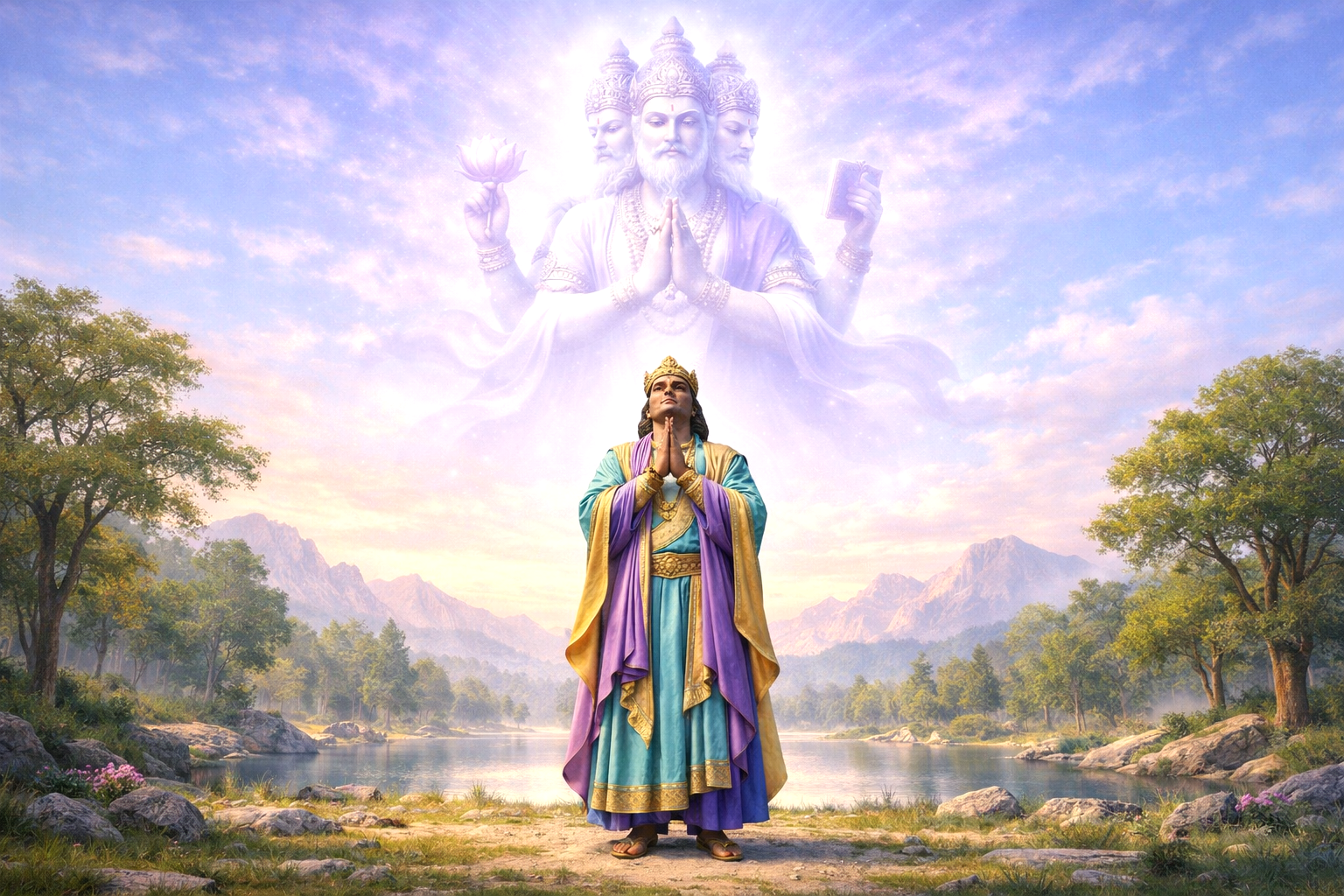
Kaveramma Goddess of Sacred Currents: The Sacred Spring of Talakaveri
The earthly source of the great river is a sacred and revered spot nestled in the lush green hills of southern India. The holy site of Talakaveri in the Brahmagiri Hills of Kodagu (Coorg) is considered the river's fountainhead. Here, the mighty river does not emerge as a great torrent, but as a small, perennial spring in a sacred tank called a kundike. Devotees believe that on a specific day each year, Tula Sankramana, the goddess makes her presence known, causing the water in the tank to bubble and rise. This sacred spot is the river's earthly abode, the point from which her life-giving journey to the sea begins.
The Flowing Stream of Nurturing Grace
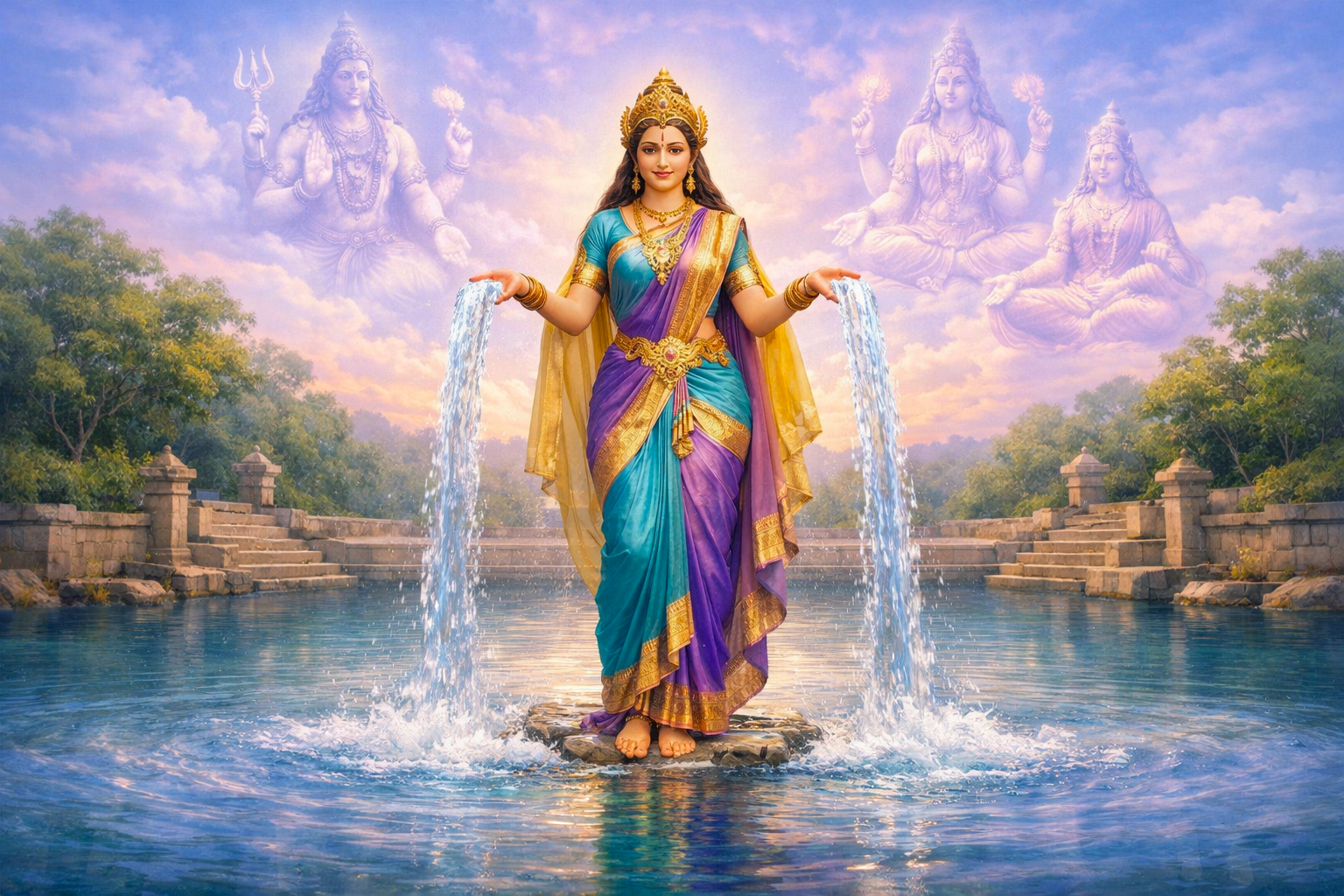
Kaveri is the very embodiment of a nurturing, life-sustaining mother. Her primary symbol is her sacred water, known as Kaveri Theertha, which is believed to wash away sins and grant blessings of prosperity. Her form as a beautiful goddess holding a water pot represents her role as a giver of life and abundance. The continuous, flowing nature of her stream symbolizes the unceasing grace of the divine mother, who tirelessly nurtures civilizations, quenches thirst, and makes the land fertile. She is the liquid form of love and prosperity. Kaveramma Goddess of Sacred Currents
The Adopted Daughter and the Sage's Wife
Kaveri's family story is one of divine adoption and a sacred marriage. Born of Brahma's grace, her earthly father was the pious King Kavera, who gave her the name Kaveri. Her life took a pivotal turn with the arrival of a great sage. Her marriage to the great sage Agastya Muni is a central part of her legend. Agastya, one of the most powerful and respected sages, sought her hand in marriage. She agreed, but on a condition that would test their bond and ultimately lead to her liberation as a great river for the benefit of all humanity.
The Conditional Vow of a Pious Princess
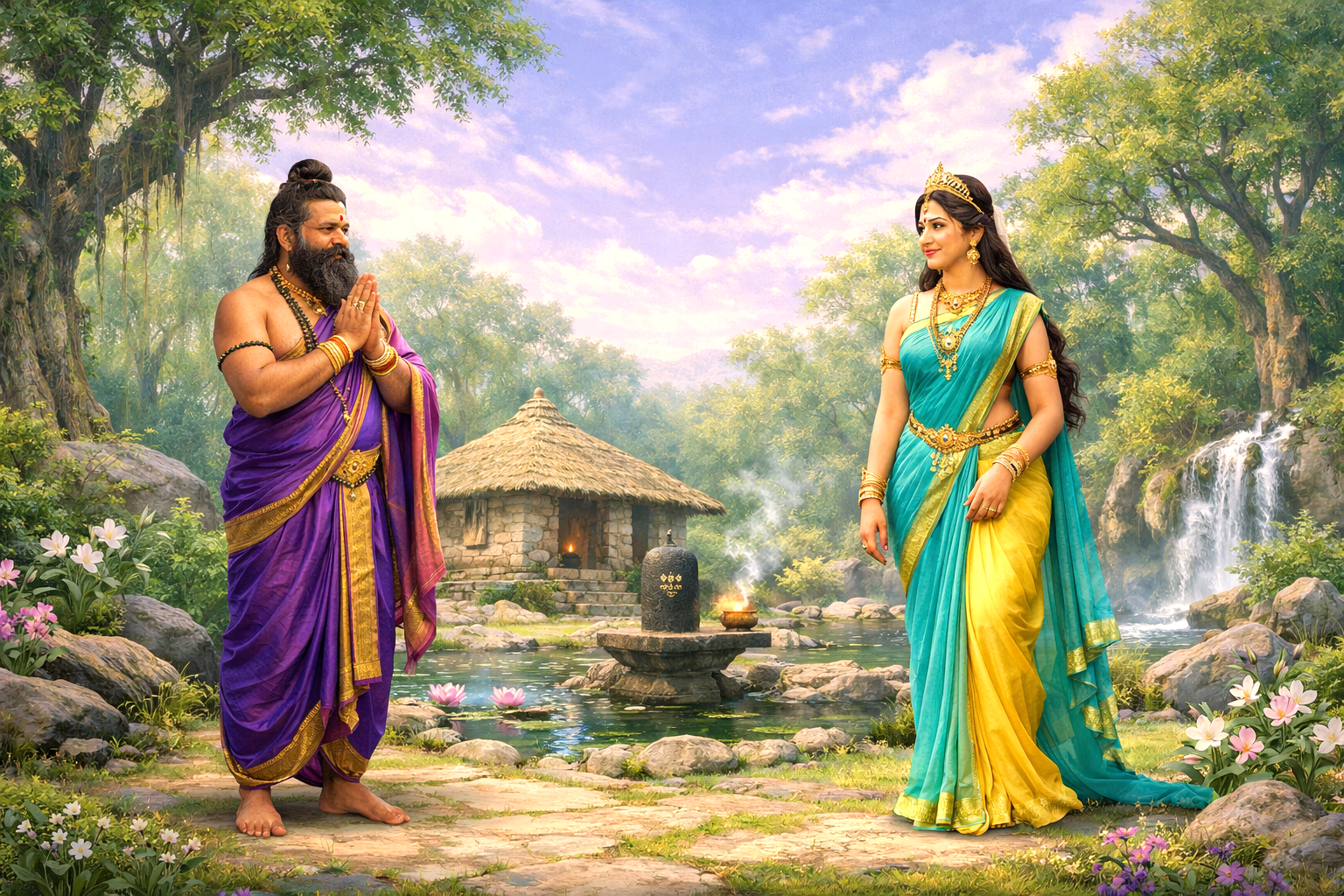
As the princess Kaveri, her early life was one of piety and devotion in her father's kingdom. The story of Kaveri's life before becoming a river was that of a devoted daughter. When the sage Agastya asked for her hand, she consented on one crucial condition: he must never leave her alone for too long. If he ever did, she would be free from her marital vow and would leave him to fulfill her destiny. Agastya, deeply in love, readily agreed to this promise, setting the stage for a divine drama that would transform the princess into the sacred river of the south. Kaveramma Goddess of Sacred Currents
The Sage's Pot and the Imprisoned River
One day, while traveling south, the sage Agastya needed to perform his rituals. The legend of Sage Agastya trapping Kaveri in his kamandalu (water pot) is a famous tale. Not wanting to leave his wife alone but needing to attend to his duties, he used his immense yogic powers to transform her into water and stored her in his sacred water pot. He then placed the pot down and became deeply engrossed in his meditation, forgetting the passage of time and the promise he had made to his divine wife. Kaveri was now trapped, waiting for a divine intervention to release her.
The Mythical Makara of the Southern River
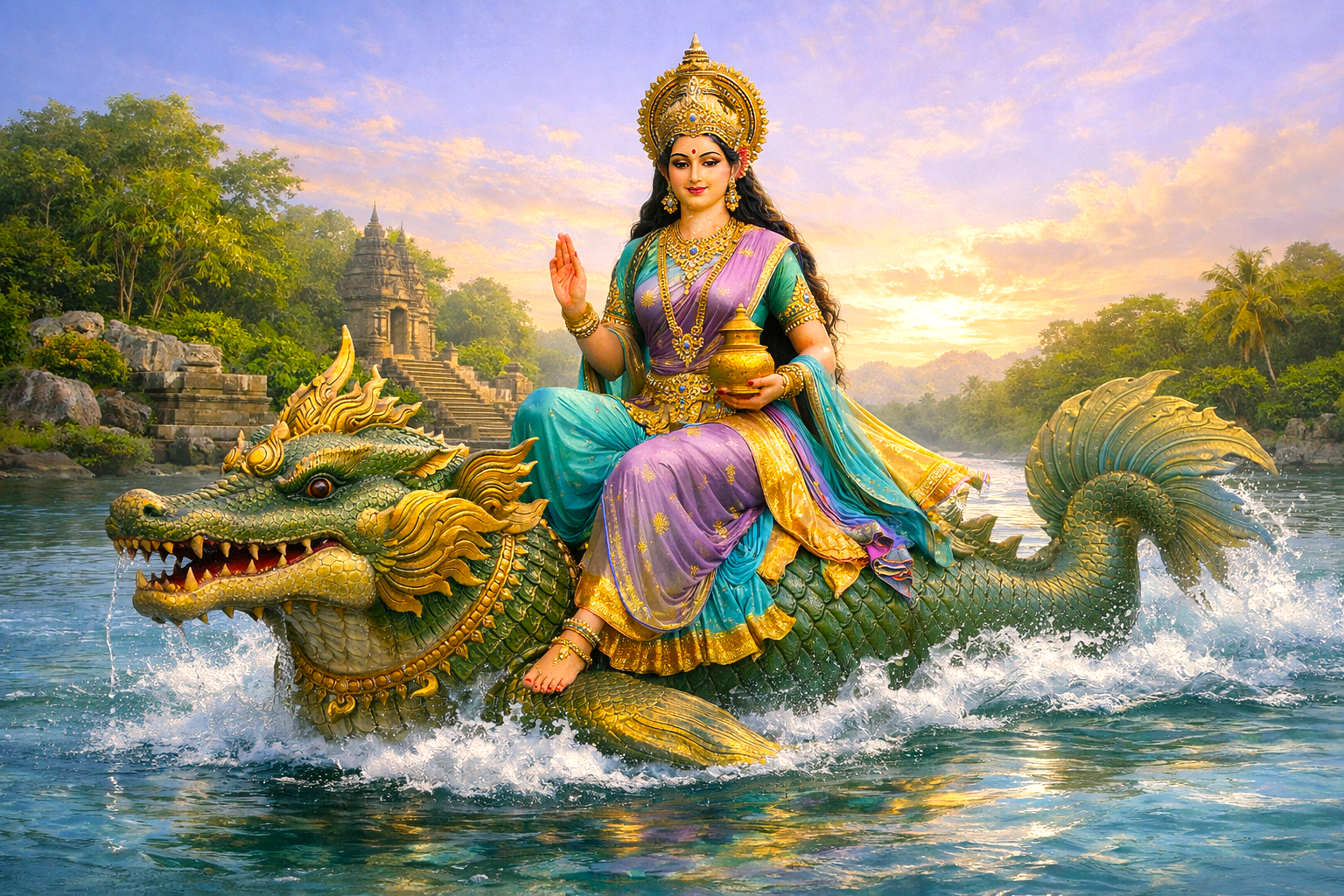
Like other great river goddesses, Kaveramma is depicted riding a powerful mythical creature that symbolizes her dominion over the waters. The symbolism of the Makara as Goddess Kaveri's divine vehicle connects her to the primal and powerful life forces that dwell within her streams. The Makara, a composite creature often with the head of a crocodile and the tail of a fish, represents the untamed power of the river. By riding it, Kaveri demonstrates her complete and graceful control over her own immense energy, guiding her powerful flow to nurture the land rather than destroy it. Kaveramma Goddess of Sacred Currents
The Divine Crow and a Tipped Water Pot
The liberation of the river came from an unexpected, divine source. The role of Ganesha in releasing the Cauvery river is a beloved story. Seeing the plight of the people in the south who were suffering from drought, the gods prayed to Ganesha for help. The wise elephant-headed god took the form of a simple crow and flew to the spot where Agastya had left his water pot. As the sage was lost in meditation, the crow perched on the edge of the pot and deliberately tipped it over. The water, which was the divine Kaveri, spilled out and began to flow, finally free to begin her journey across the land as a great river.
The Furious Sage and the Forgiving River
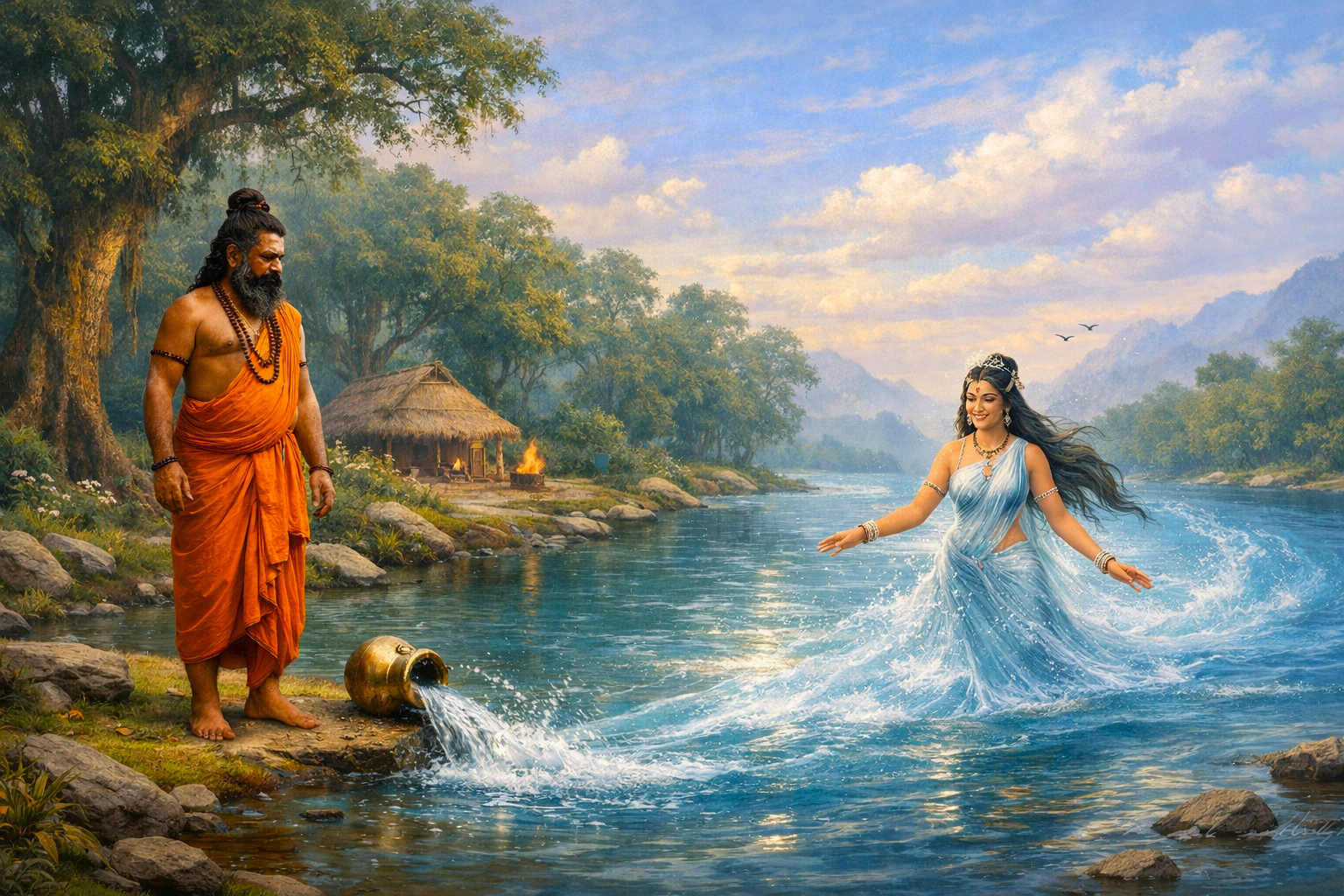
When Agastya came out of his meditation and saw his pot overturned and his wife flowing away as a river, he was initially filled with rage. The story of Agastya's anger and Kaveri's compassion reveals her benevolent nature. He ran after her, trying to stop her, but she was now a powerful, flowing river. Seeing his grief, Kaveri slowed her course and appeared before him as a goddess. She consoled him, explaining that her destiny was to serve humanity as a sacred river. She promised that she would forever be considered his wife, and that bathing in her waters would be as meritorious as having the darshan of the sage himself.
A Message of Selfless Service to Humanity
Kaveri's entire life story is a profound message about sacrifice and the greater good. The empowering message from Kaveri's life of selfless giving is that one's ultimate purpose is to serve humanity, even if it requires great personal sacrifice. She willingly gave up her form as a princess and her life as a wife to become a river that nurtures millions. She teaches that true divinity lies in constant, selfless service. Her flow is a perpetual act of giving, nourishing the land and its people without asking for anything in return, embodying the highest ideal of nishkama karma (selfless action).
The Sacral Chakra and the Ray of Fluid Abundance
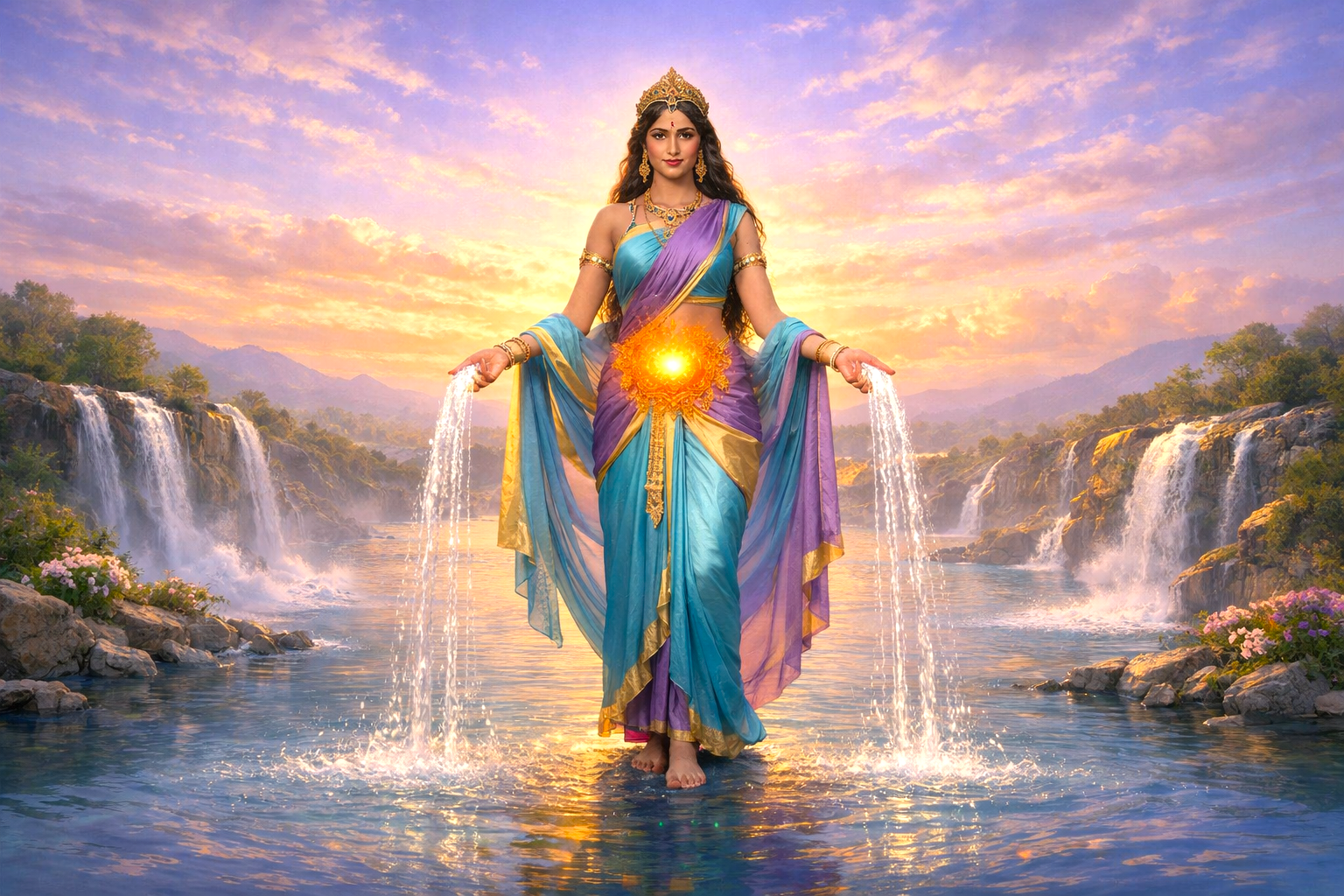
As a great river goddess, Kaveri's energy is deeply connected to the body's centers of fluidity, creativity, and life force. She is a powerful deity of the Svadhisthana (Sacral) Chakra, the center of the water element, emotions, and creative flow. The key frequency that Kaveramma embodies is that of nurturing abundance and flowing prosperity. Her aura is a gentle, life-affirming light green and silver ray, representing fertility, healing, and purity. Meditating on her flow is believed to release emotional blockages, promote creativity, and attract prosperity and well-being. Kaveramma Goddess of Sacred Currents
The Life-Giving Waters of the South
Kaveri's divine "weapon" is the very essence of her being - her water. The purifying and life-giving power of the Kaveri Theertha is her greatest boon to the world. It is a force that battles drought, famine, and spiritual impurity. A dip in her holy waters is believed to wash away negative karma and cure physical ailments. For farmers, her waters are a weapon against barrenness, transforming dry land into lush, fertile fields. Her power lies not in destruction, but in creation, nurturing, and the gentle, persistent act of giving life.
The Sun, the Moon, and the Sacred Flow
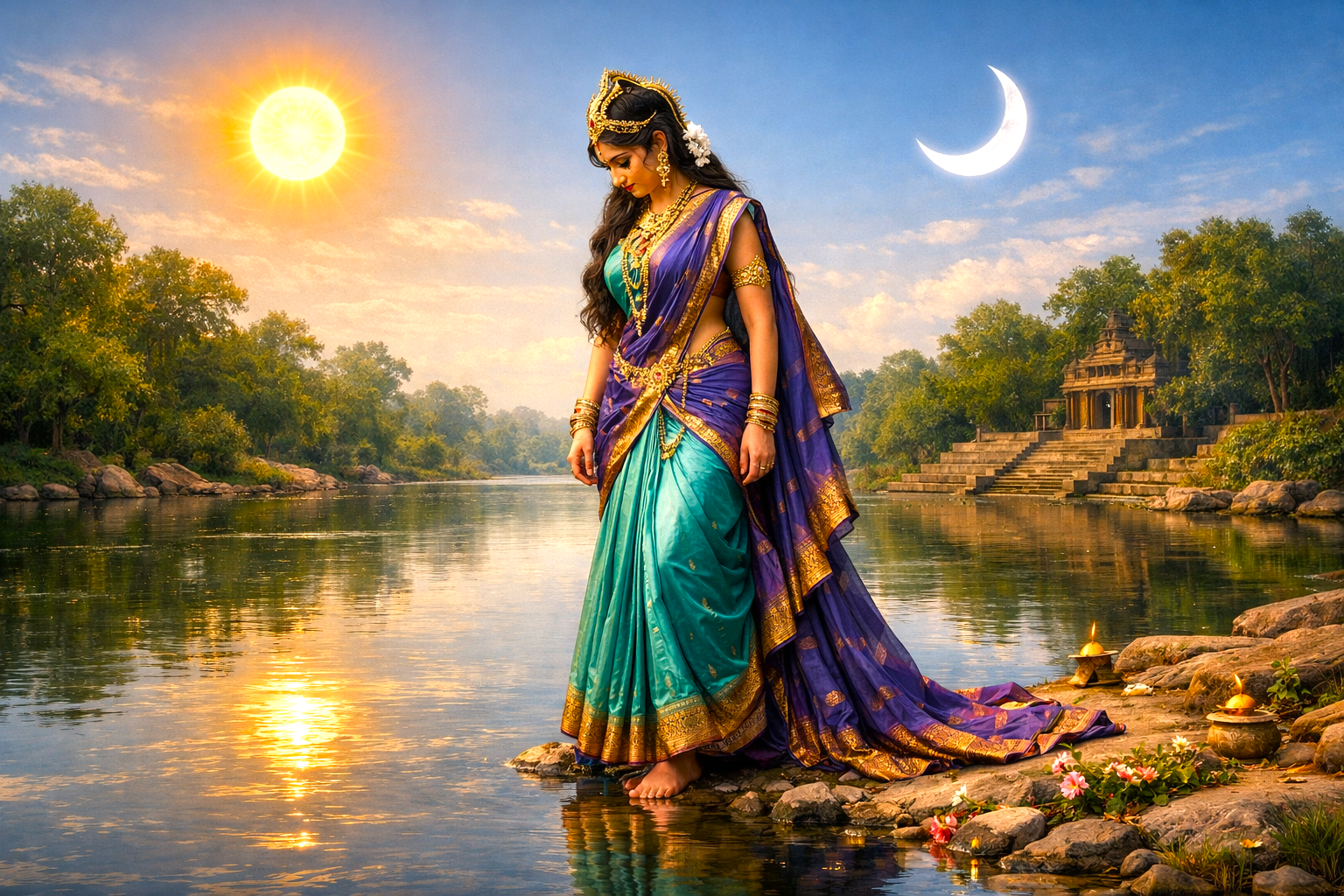
Kaveri's essence is tied to the celestial bodies that govern life and water. The astrological connections of the River Kaveri link her to both the Sun and the Moon. Her father, King Kavera, was a devotee of the Sun, linking her to solar energy and life force. As a water deity, she is naturally governed by the Moon, which controls the tides, emotions, and the mind. The most sacred time to worship her is during Tula Sankramana, when the Sun enters the sign of Libra, a celestial alignment that marks a special surge of her divine energy at her source in Talakaveri. Kaveramma Goddess of Sacred Currents
The Holy Dip of the Tula Sankramana
The most important festival celebrating the goddess is tied to a specific solar transit. The significance of the Tula Sankramana festival at Talakaveri is a major event for devotees. On the first day of the Tula month (mid-October) in the Hindu calendar, thousands gather at her source. At a specific, astrologically predicted moment, the spring is said to surge, and the water in the holy tank bubbles up. This event, known as the Theerthodbhava, is believed to be the goddess renewing her presence. Devotees take a holy dip in this water, believing it to be a moment of immense purifying power and divine grace.
The Lifeline of Two Great States
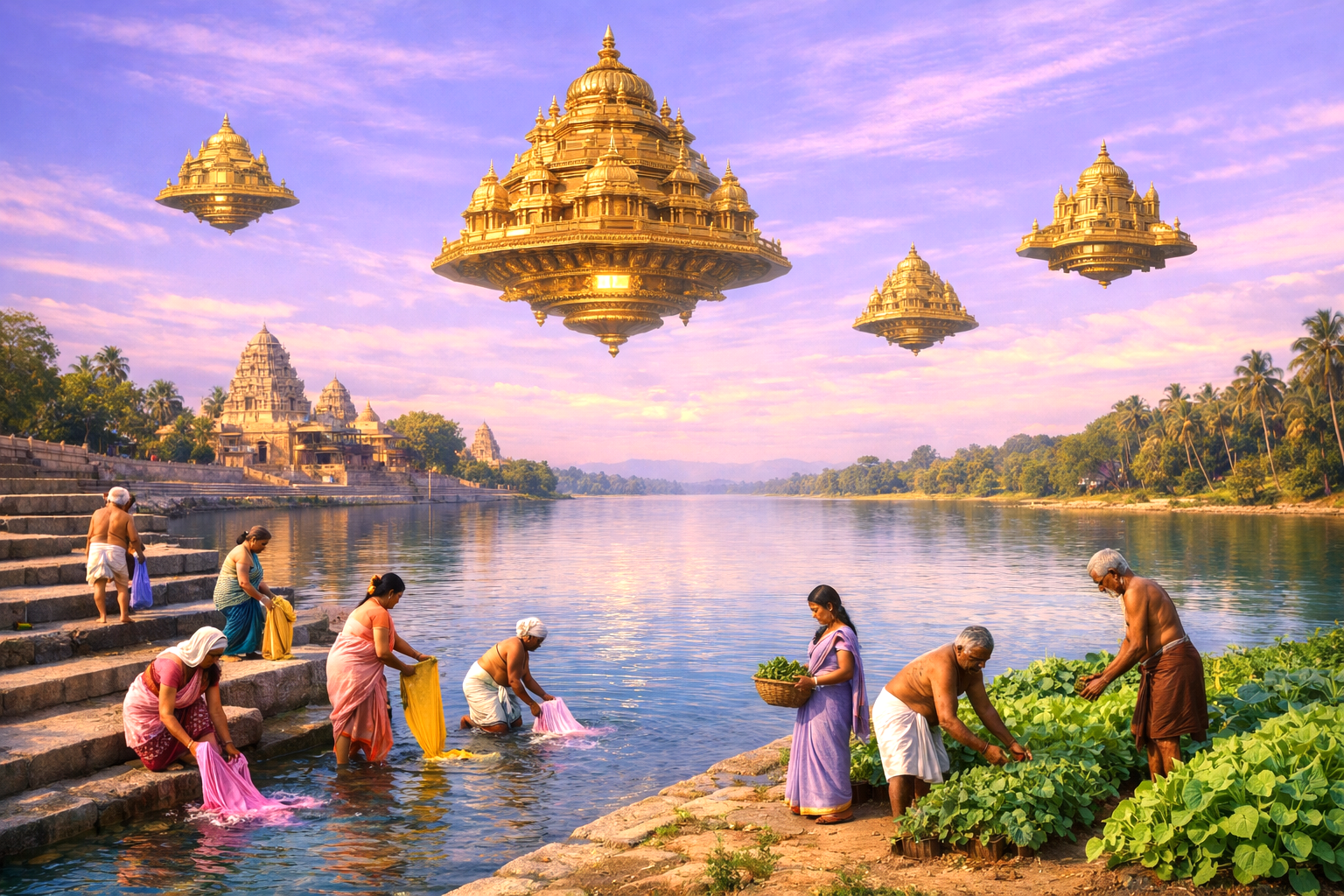
Kaveri's importance transcends mythology; she is the undeniable lifeline for millions. The role of the Cauvery river in the agriculture of Karnataka and Tamil Nadu is fundamental to the region's economy. Her waters have turned vast, dry plains into one of the most fertile rice bowls in India. She provides drinking water to major cities like Bengaluru and supports countless industries. This immense material importance is inseparable from her spiritual status. For the people who live on her banks, she is quite literally "Annai Kaveri" (Mother Kaveri), the one who provides their daily bread.
A Source of Both Harmony and Conflict
In the modern era, the river that is meant to unite has also become a source of contention. The modern Cauvery river water dispute between states is a painful reality. The states of Karnataka and Tamil Nadu have been engaged in a long and often bitter dispute over the sharing of her precious waters, especially during years of poor rainfall. For devotees, this conflict is seen as a tragic family feud, where two sons are fighting over the grace of their mother. It adds a layer of modern complexity to the river's story, highlighting the immense value of the resource she provides. Kaveramma Goddess of Sacred Currents
The Nurturing Mother of South India
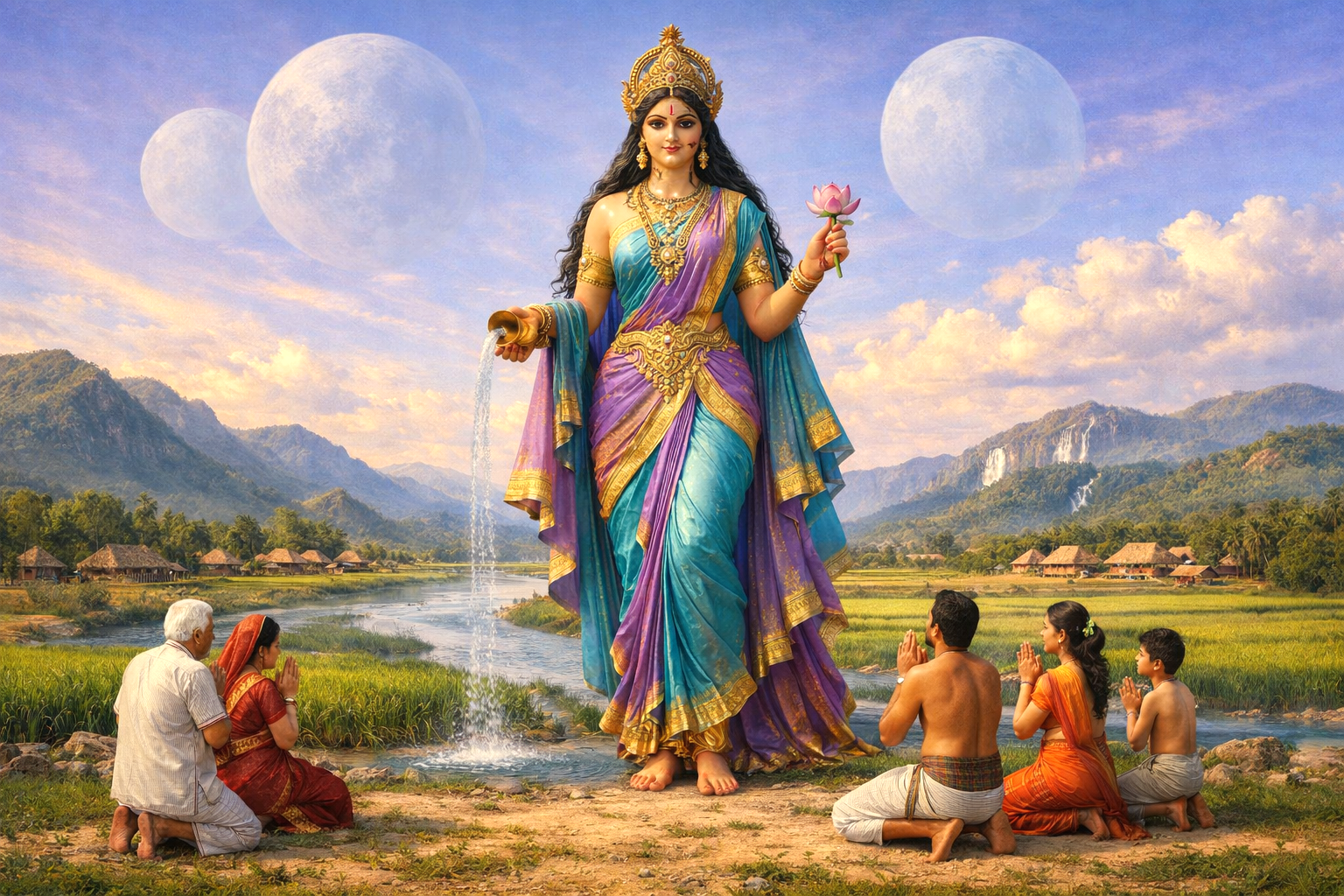
Ultimately, Kaveri is revered as the supreme mother of the southern lands. The worship of Kaveramma as the divine mother is the essence of her cult. She is Annai, Amma, Maa - the mother who nurtures, forgives, cleanses, and provides unconditionally. Her journey from a reluctant princess trapped in a pot to a mighty, life-giving river is the story of a divine being embracing her destiny of selfless service. To her millions of devotees, she is a living, breathing, compassionate mother whose flowing grace sustains their bodies, their land, and their souls. Kaveramma Goddess of Sacred Currents
Step Inside The Story - View All Tour Itineraries & Details
We’re here to offer genuine, thoughtful guidance if your interested in travelling to India. As a small, dedicated team, we pay close attention to every detail so you can focus on enjoying the experience while we take care of the planning. We believe the best trips begin when someone truly listens to what you want and how you like to travel, so the journey feels right for you and contributes to a happy, positive group on tour. Our communication stays clear, straightforward, and respectful at every step, with the goal of helping you feel understood, supported, and confident from first contact to the end of your journey.
Click Catherine Frith - About The Founder
Click Discover Life Travel - All Tours and More
Click Why We Are Different - Unique, Safe, Transparent