Unique Insights Into The Deities Of India
Ganga: Divine Flowing Grace
Discover Life Travel
The Celestial River's Divine Origin
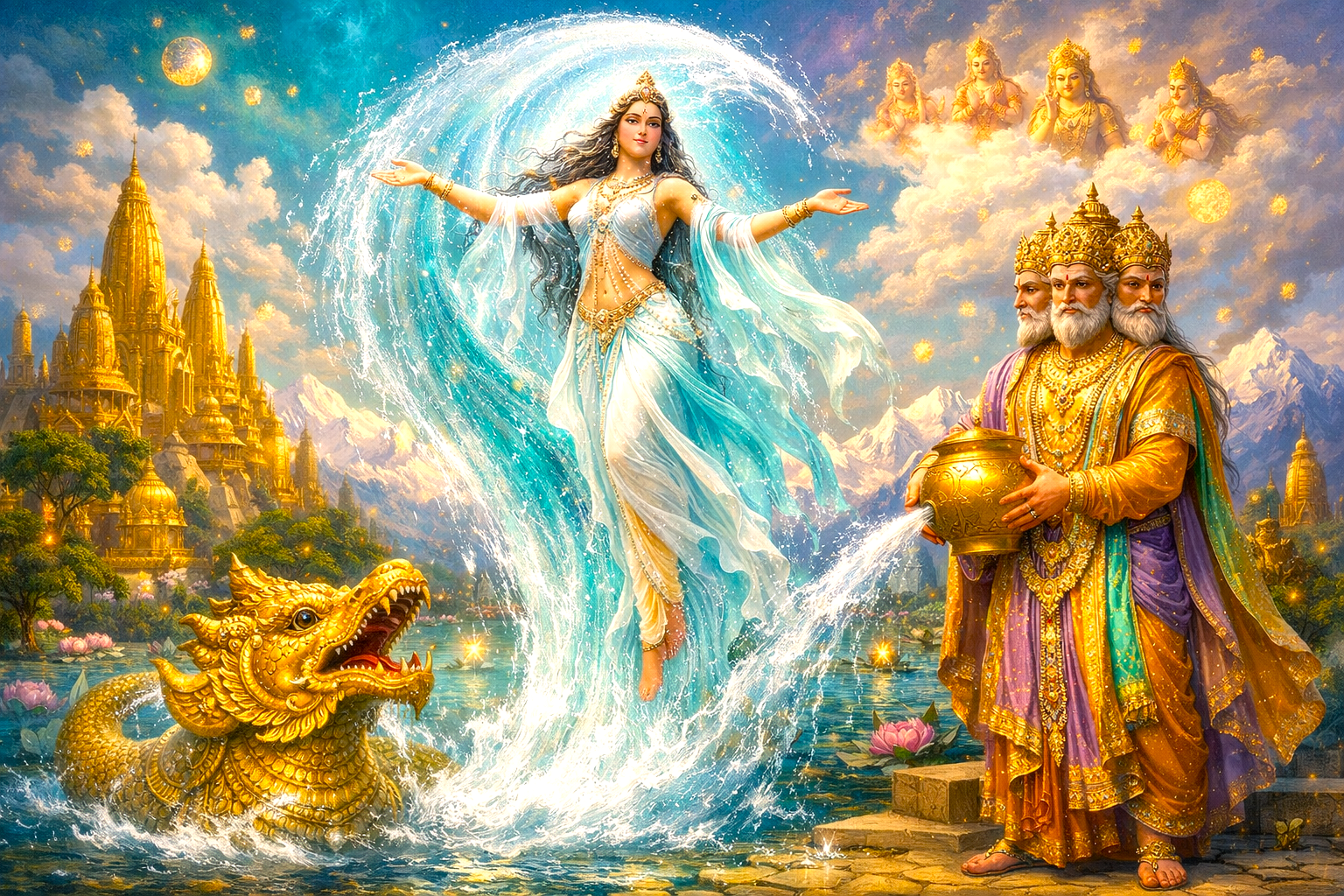
Born in the highest celestial realms, Ganga's story begins in the heavens. The divine origin story of the River Ganga has several beautiful versions. In one, she was created from the water in Brahma's sacred kamandalu (water pot), which he used to wash the foot of Vishnu. In another, she is the daughter of Himavat, the king of the Himalayas. Initially, she flowed only in Svarga Loka (heaven), a celestial river known as Mandakini, purifying the gods with her sacred touch. Her existence as a radiant, powerful river in the celestial plane established her status as a goddess long before she ever descended to the earthly realm. Ganga Divine Flowing Grace
Ganga Divine Flowing Grace
The story of her arrival on Earth is a testament to incredible human determination and divine compassion. The great story of King Bhagirath's penance to bring Ganga to Earth is a cornerstone of her mythology. To liberate the souls of his 60,000 ancestors, who were cursed to roam as ashes, King Bhagirath performed severe austerities for thousands of years. Pleased by his devotion, Ganga agreed to descend. Her earthly source is the Gangotri Glacier in the Himalayas, the starting point of the holy river, but her true origin is this act of divine compassion, answering a devotee's impossible prayer to bring salvation to the world of mortals.
Symbols of Purity and Unceasing Flow
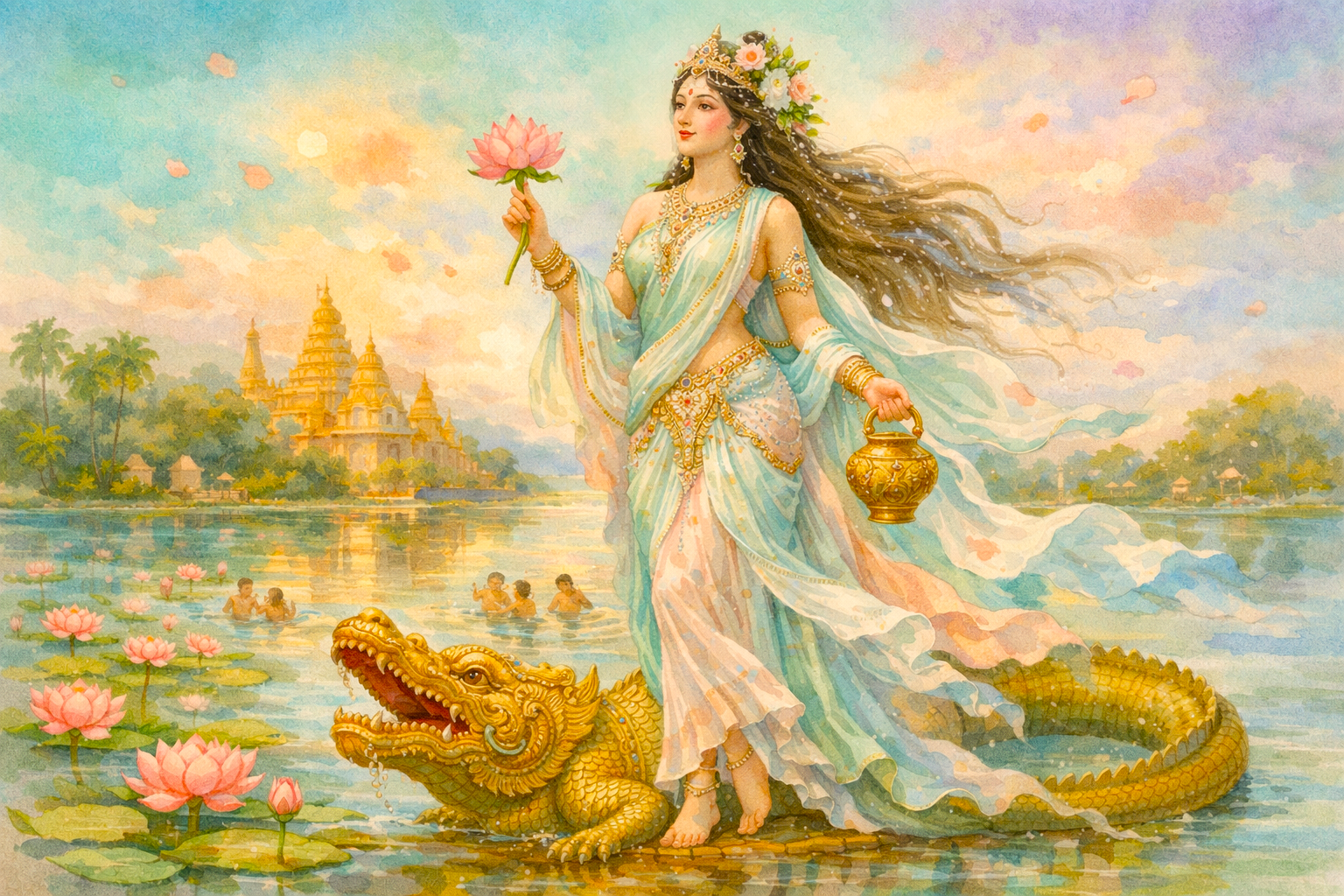
Every aspect of Ganga embodies life, purity and spiritual liberation. Her sacred water, Gangajal, carries the power to cleanse the soul and dissolve karmic burdens. Depicted as a radiant goddess holding a lotus and water pot, she represents beauty, abundance and divine potential. Her ever-moving current mirrors the flow of time, urging forward movement along the spiritual path with full presence and surrender. Her nurturing of ancient civilisations along her banks affirms her highest role - Maa Ganga, the eternal mother of India. Ganga Divine Flowing Grace
The Celestial Family of the River Goddess
Ganga's family relationships connect her to the highest gods and the greatest epic heroes. She is the daughter of Himavat, the personification of the Himalayas, and his wife Menavati, making her the sister of the great goddess Parvati. Her most famous earthly relationship was her marriage to King Shantanu of the Kuru Dynasty. From this union, she became the divine mother of the great warrior Bhishma of the Mahabharata. This lineage ties her directly to the great epic, making her not just a force of nature, but a matriarchal figure in the history of the legendary Bharata Dynasty. Ganga Divine Flowing Grace
A River Nurtured in the Heavens
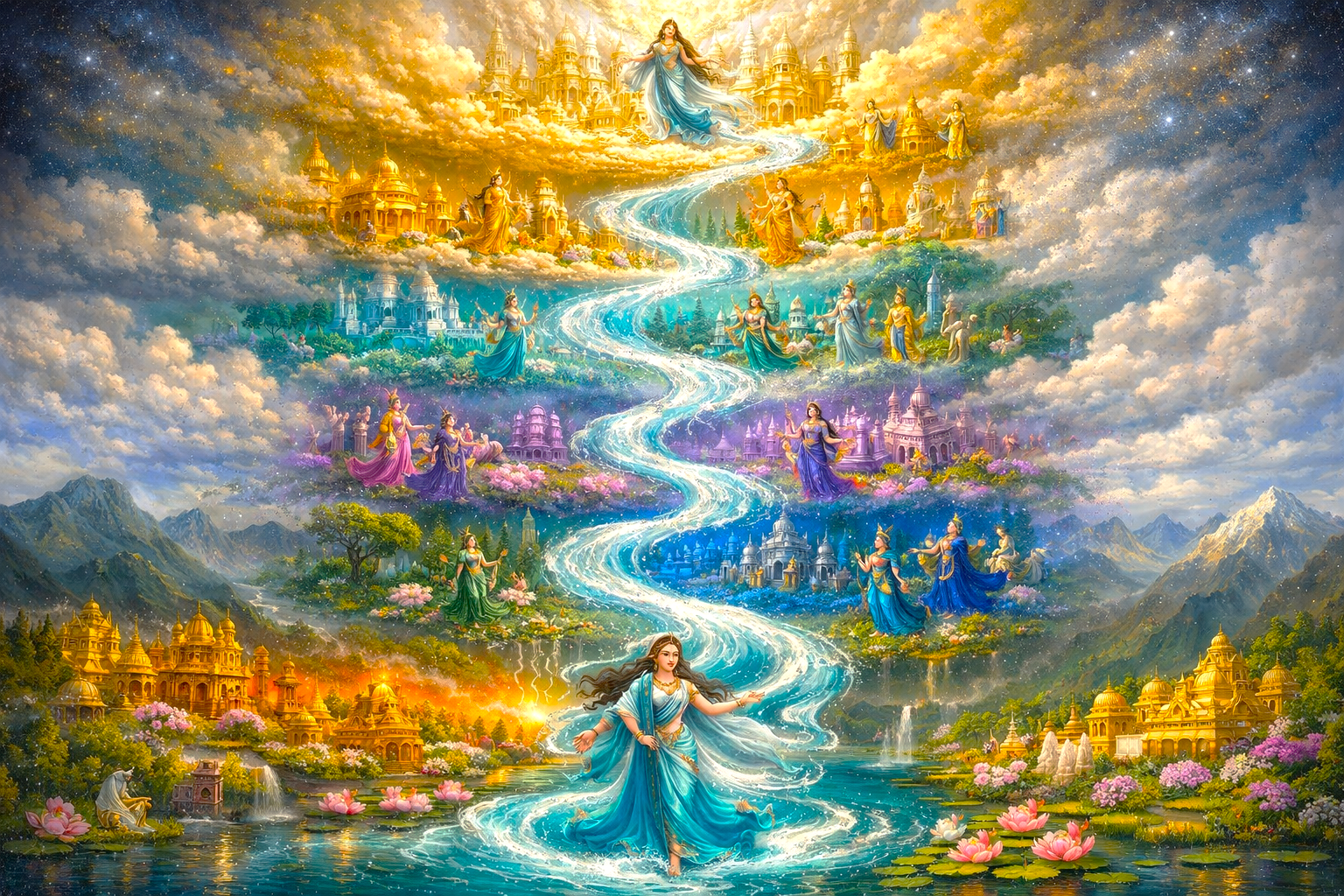
Ganga's celestial existence as Mandakini was one of pure, untamed power. She flowed freely through the heavens, a playful yet formidable goddess whose sacred waters brought joy to the Devas. Her energy was immense - wild, gathering, building. This heavenly period represents her in her most elemental form, a force so potent that the Earth required preparation before receiving her. A sacred accumulation of divine power, held in reserve until the moment humanity called upon her greatest gift - the salvation of mortal souls.
Salvation for Sixty Thousand Cursed Sons
The very purpose of Ganga's descent was to perform an act of mass liberation. The story of the salvation of King Sagara's 60,000 sons is her primary earthly mission. These princes, in their arrogance, had disturbed the sage Kapila in his meditation. The sage, opening his fiery eyes, instantly burned them to ashes, cursing them to remain in limbo until their ashes were purified by the waters of the celestial Ganga. It was for this specific purpose that their descendant, Bhagirath, performed his epic penance. As her waters flowed over their ashes, the 60,000 souls were instantly liberated, achieving moksha and ascending to heaven. Ganga Divine Flowing Grace
The Mystical Makara, Her Powerful Vehicle
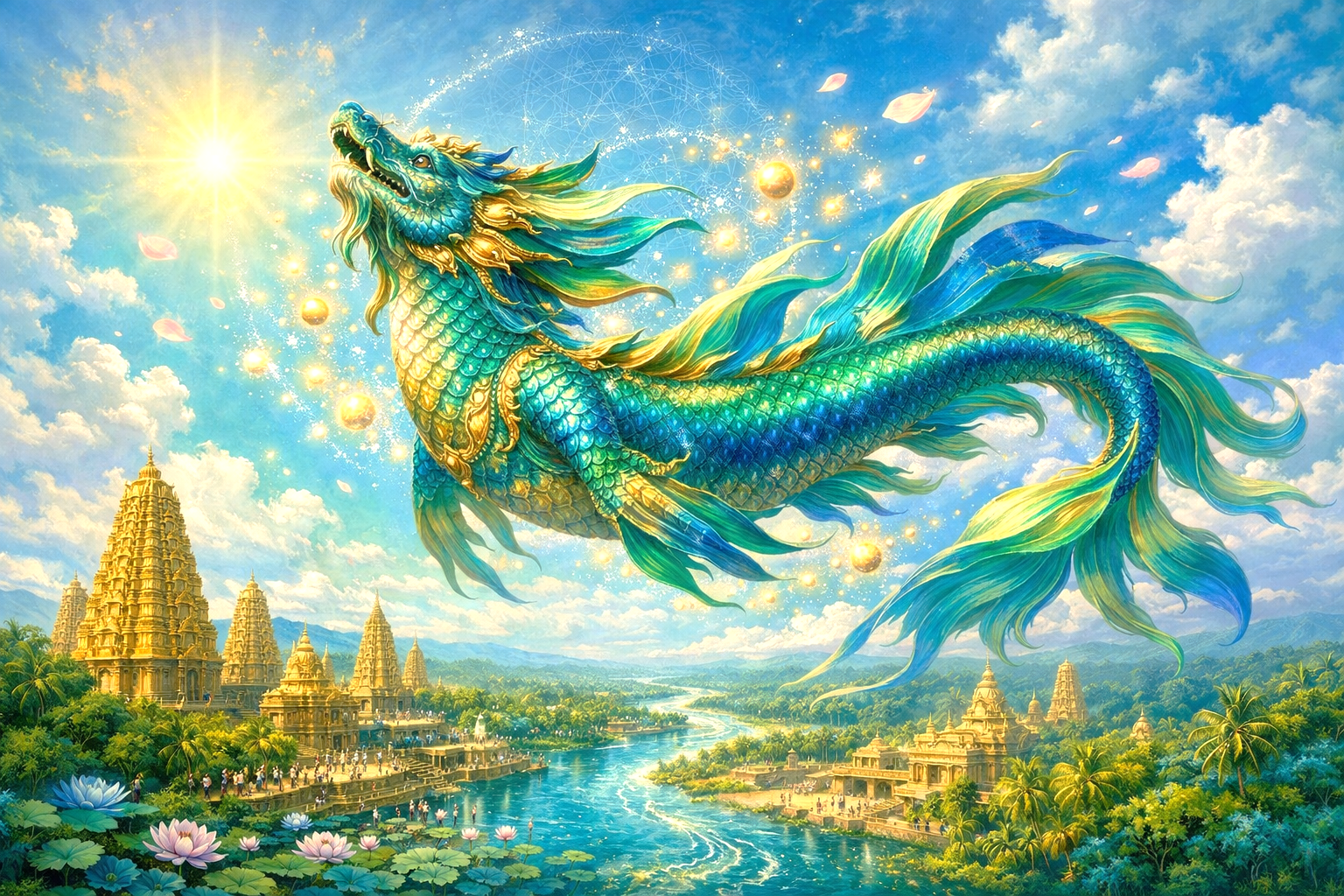
The Makara, Ganga's divine vahana, is a creature of immense power and mystique. This mythological sea creature, depicted with the head of a crocodile or elephant and the body of a fish, carries deep symbolic significance. It represents her mastery over the waters and the powerful, untamed life forces that reside within them. By riding this creature, she demonstrates her control over the mighty currents of her own being and the teeming life she supports. The Makara is not merely a mount - it is a declaration of sovereignty.
The Lord of Dance Who Tamed Her Fury
The force of Ganga's descent from heaven was so immense that it threatened to shatter the Earth. The story of how Shiva caught Ganga in his matted hair is a tale of divine intervention. As Ganga cascaded down with unimaginable power, Shiva stood calmly and intercepted her mighty torrent in the locks of his hair. He trapped her there, allowing her to wind her way through his matted locks, which tamed her fury and broke her single, powerful stream into many smaller, gentler rivers. This act not only saved the Earth but also made Ganga eternally sacred to Shiva, earning her the name Gangadhara, "the one who holds Ganga." Ganga Divine Flowing Grace
Marriage, Motherhood, and Merging with the Sea
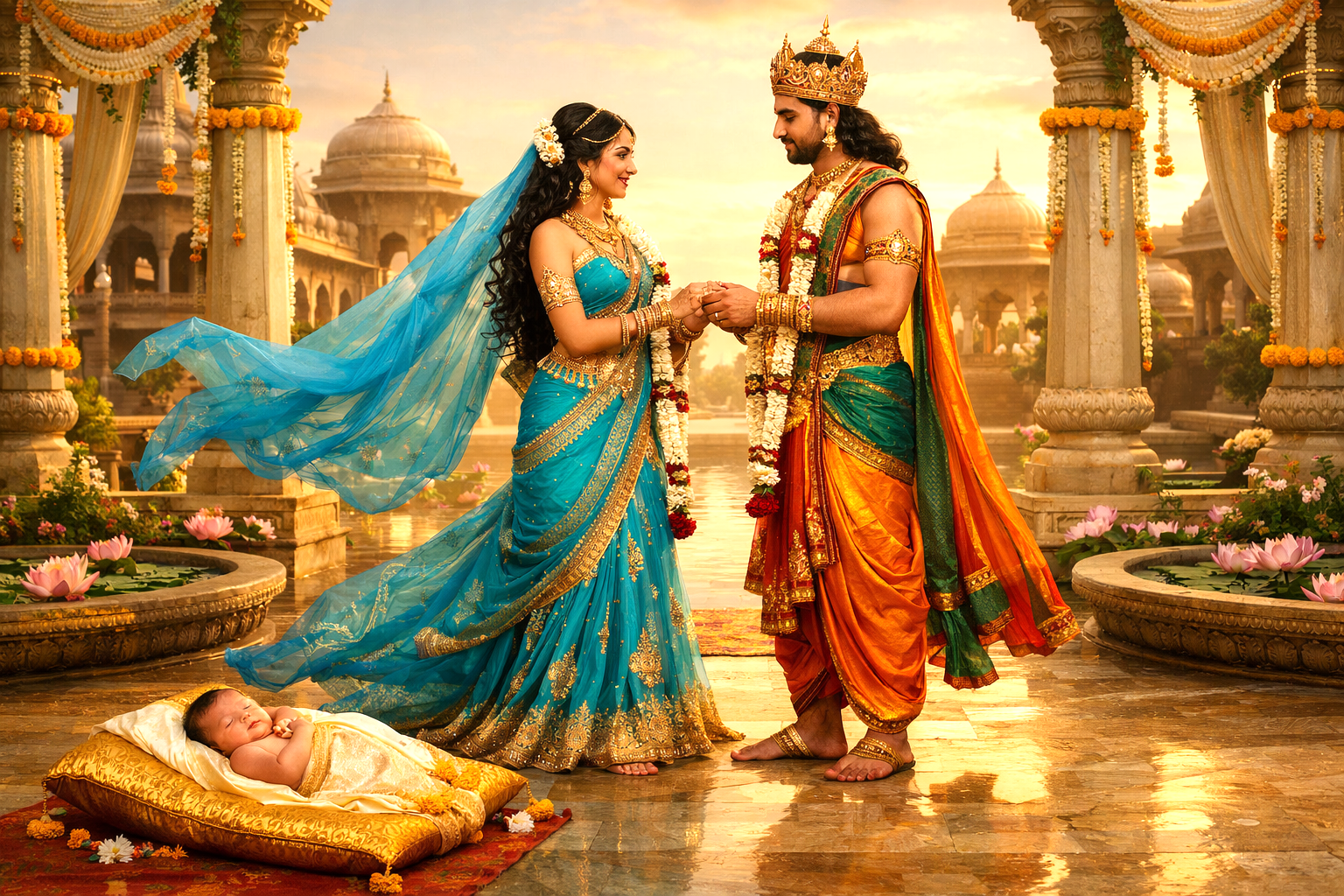
Ganga's marriage to King Shantanu is central to the Mahabharata. She agreed to marry him on the condition that he never question her actions. One by one, she gave birth to seven sons and drowned each in her waters, liberating celestial beings from a curse. When the eighth son arrived, Shantanu broke his promise and questioned her. This son, Bhishma, was allowed to live. Ganga, her pact broken, left the mortal king and returned to her elemental form, eventually merging with the ocean at Ganga Sagar.
Her Message of Perpetual Forgiveness
The ever-flowing river offers a profound message of renewal and unconditional grace. The empowering message of Ganga about forgiveness and purification is that no sin is too great to be washed away, and a new beginning is always possible. Her waters accept all who come to her, without judgment. She teaches that by letting go of past mistakes and impurities, and by allowing her grace to flow through us, we can be spiritually cleansed and reborn. She is a symbol of selfless giving, constantly flowing to nurture and purify the world, asking for nothing in return.
The Sacral Chakra and a Silver Purifying Ray
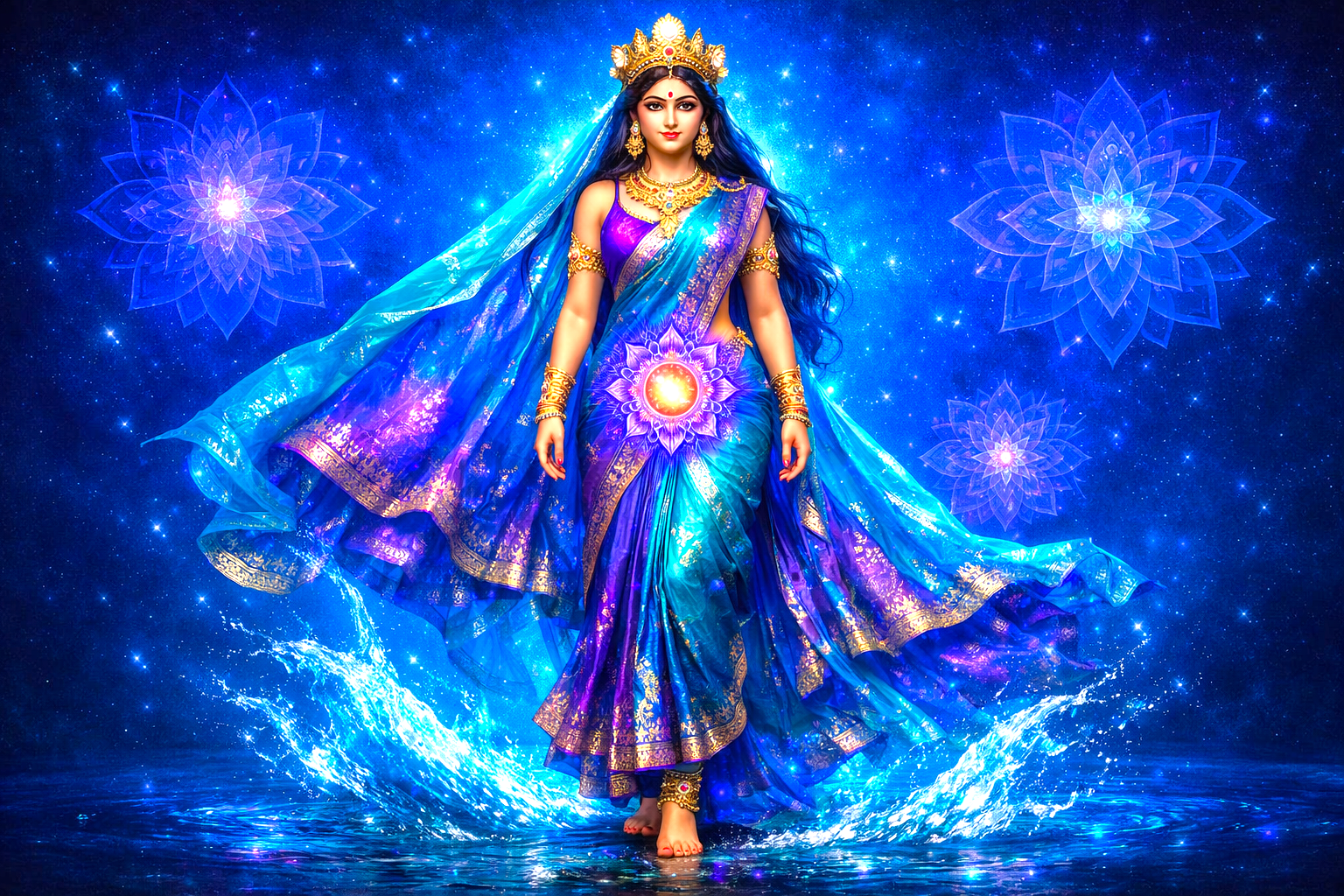
As the embodiment of the sacred waters, Ganga's energy is deeply connected to the body's fluid and creative centers. She is the ruling deity of the Svadhisthana (Sacral) Chakra, the center of the water element, emotions, and creative flow. The frequency that Ganga embodies purification, emotional release, and the fluid movement of life force. Her aura is a cleansing silver-white ray of purity and grace. Meditating on her flow helps to release emotional blockages and purify the energy channels of the body. Ganga Divine Flowing Grace
The Purifying Power of Her Sacred Waters
Ganga's primary "weapon" is not for destruction but for spiritual liberation. The divine power of Gangajal to wash away negative karma is her most potent attribute. For a devotee, a single drop of her water is considered more powerful than any celestial weapon in the fight against inner demons and past sins. It is a weapon against impurity, ignorance, and the bonds of a difficult karma. By bathing in her waters or consuming Gangajal, a devotee believes they are wielding the ultimate tool of spiritual purification, a force that can neutralize negativity and set the soul on a path towards liberation.
The Moon, Water, and Flowing Geometry
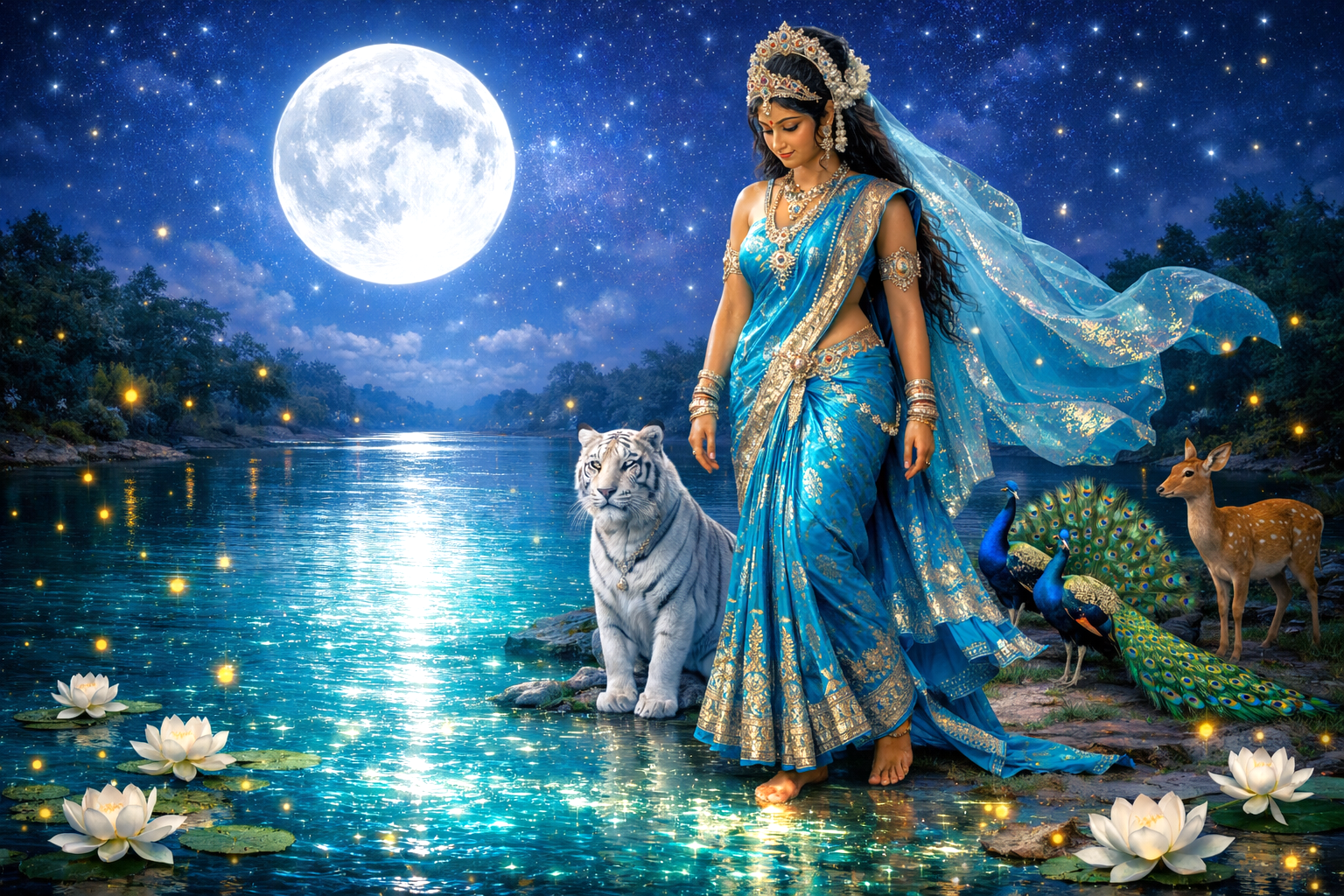
Ganga’s divine essence is reflected in the celestial bodies and elements that govern emotion and fluidity. The astrological planet associated with Ganga is the Moon, which rules the mind, emotions, and the water element. The zodiac sign of Cancer, a water sign ruled by the Moon, also resonates with her nurturing and motherly qualities. Her sacred geometry is not a fixed shape but the meandering, flowing line of the river itself, representing the path of life. The ever-changing yet constant flow is her sacred pattern.
The Grandeur of the Ganga Aarti Ritual
One of the most breathtaking rituals in the world is the daily offering of light to the great river. The spectacle of the Ganga Aarti ceremony in Haridwar and Varanasi is an unforgettable experience. Every evening at sunset, priests perform a highly choreographed ritual on the banks of the river, offering multi-tiered lamps with swirling flames to the goddess. Accompanied by the chanting of mantras, the ringing of bells, and the blowing of conch shells, the ceremony is a powerful and immersive act of devotion, thanking the goddess for her life-giving presence and seeking her continued blessings for the world.
The Final Sacred Rite of Passage
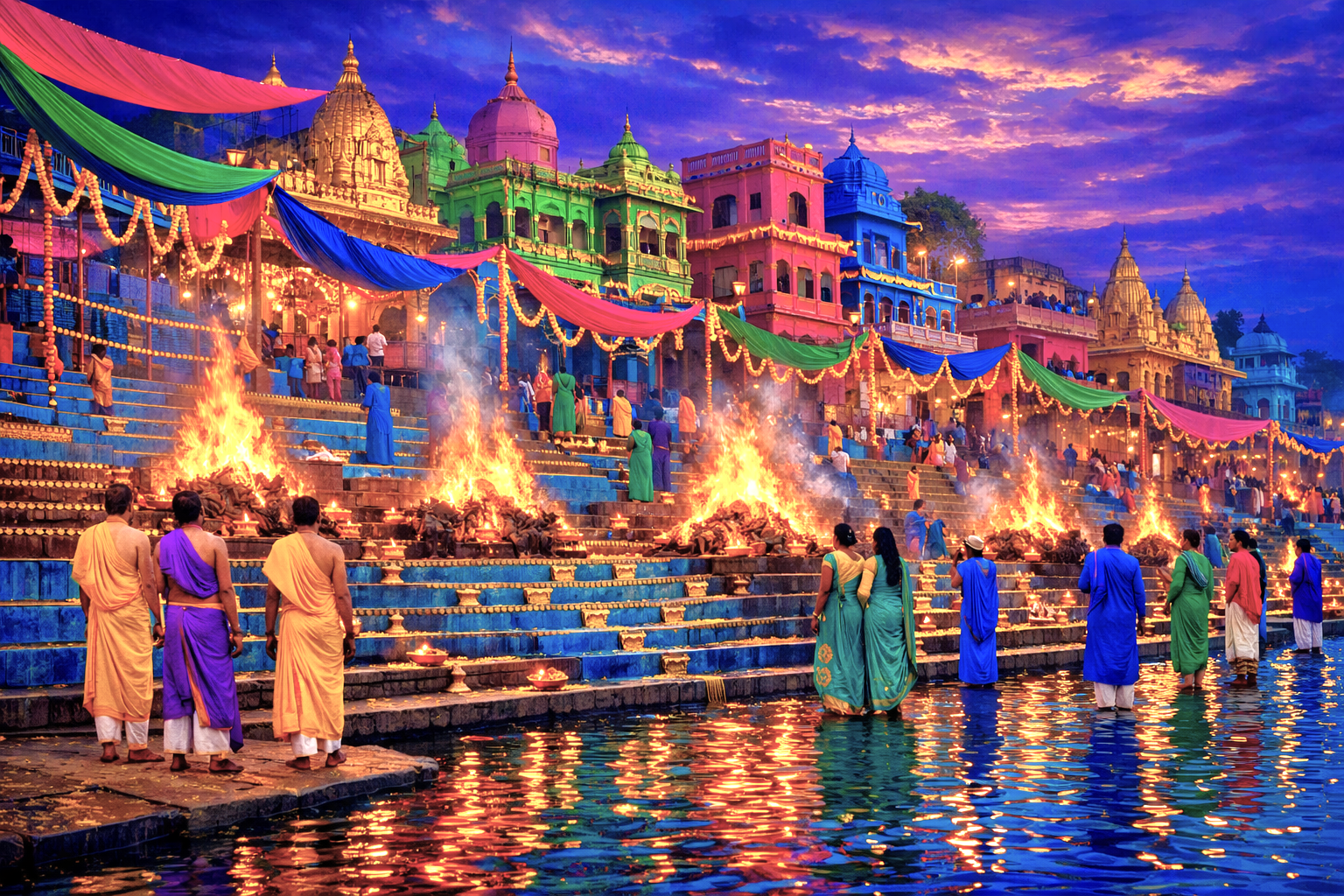
For devout Hindus, Ganga plays a crucial role in the ultimate rite of passage. The significance of cremation on the banks of the Ganga in Varanasi is profound. It is believed that to die and be cremated on her banks, especially in the holy city of Kashi (Varanasi), is to be granted immediate liberation (moksha) from the cycle of birth and death. The sacred ghats are lined with funeral pyres, and families bring their departed loved ones from all over the world for this final, sacred ritual, entrusting their souls to the purifying holy river. Ganga Divine Flowing Grace
The Lifeline of a Nation
Beyond mythology, Ganga is the physical and spiritual lifeline of India. The role of the River Ganga as the lifeline of North India is undeniable. Her waters irrigate vast agricultural plains, providing food for hundreds of millions of people. Her banks are home to some of the most ancient and sacred cities in the world. She is a source of livelihood, transportation, and sustenance for a massive population. This earthly role as a provider reinforces her mythological status as the nurturing, all-giving mother, making her sacred in both a spiritual and a very practical sense.
Step Inside The Story - View All Tour Itineraries & Details

We’re here to offer genuine, thoughtful guidance if your interested in travelling to India. As a small, dedicated team, we pay close attention to every detail so you can focus on enjoying the experience while we take care of the planning. We believe the best trips begin when someone truly listens to what you want and how you like to travel, so the journey feels right for you and contributes to a happy, positive group on tour. Our communication stays clear, straightforward, and respectful at every step, with the goal of helping you feel understood, supported, and confident from first contact to the end of your journey.
Click Catherine Frith - About The Founder
Click Discover Life Travel - All Tours and More
Click Why We Are Different - Unique, Safe, Transparent