A Unique Look Into Indian History
Wodeyar Dynasty: Mysore - India
Discover Life Travel
Mysore Before the Wodeyar Reign
In the late 14th century, the region of modern-day Mysore was a feudatory state under the powerful Vijayanagara Empire. The area was administered by a local viceroy stationed at Srirangapatna, who governed on behalf of the emperor. The political authority in the Mysore region pre-1399 was centered around the viceroyalty, which managed local chieftains and collected revenue. However, as the central authority of the Vijayanagara Empire began to wane in the subsequent centuries, it created a power vacuum, allowing ambitious local leaders and feudatories to assert their independence and carve out their own kingdoms. Wodeyar Dynasty Mysore India
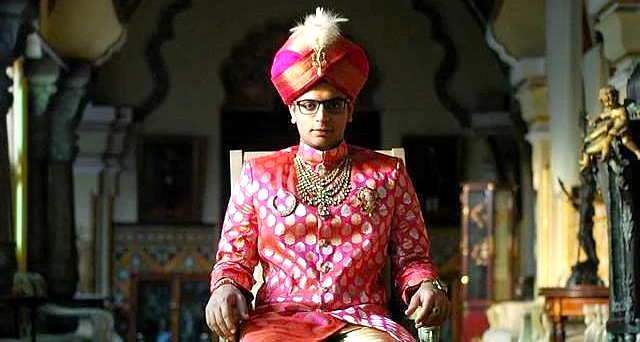
Wodeyar Dynasty - Mysore India: The Arrival of Two Princes
The Wodeyar dynasty traces its origins to 1399 with the arrival of two princely brothers, Yaduraya and Krishnaraya, from Dwaraka in Gujarat. Legend holds that they arrived in Mysore to find the local royal family in peril. After saving the princess and defeating a rival chieftain, Yaduraya married the princess and established his rule, becoming the first monarch. The founding of the Wodeyar Dynasty by Yaduraya was thus a mix of romance and martial prowess, establishing a lineage that would rule the region for over five centuries from their seat of power in Mysore.
The Maharaja's Disciplined Daily Life
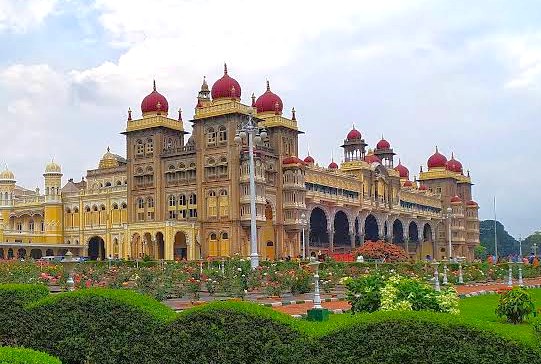
The daily life of an enlightened monarch like Krishnaraja Wodeyar IV was a model of discipline and public service. Hailed as a Rajarshi (saintly king) by Mahatma Gandhi, his day was meticulously planned. It began with prayers and physical activity, followed by hours in the Diwan (office), personally reviewing state files and development projects. The daily administrative routine of Krishnaraja Wodeyar IV involved meeting with his Diwan, engineers, and educators. His evenings were dedicated to cultural patronage, enjoying Carnatic music or philosophical discussions, embodying the ideal of a modern, progressive ruler. Wodeyar Dynasty Mysore India
Society Under the Mysore Maharajas
Society under the Wodeyars was a traditional agrarian structure with a well-defined caste hierarchy. The social structure and village life in the Kingdom of Mysore centered around agriculture, with the village as the primary unit of administration. The government, particularly under progressive Diwans, made significant efforts towards social reform. This included promoting education for all, including women and lower castes, and working to abolish untouchability. While traditional norms remained strong, the Wodeyar era was marked by a conscious and steady push towards modernization and social equity for its subjects.
The Famed Palace Kitchens of Mysore
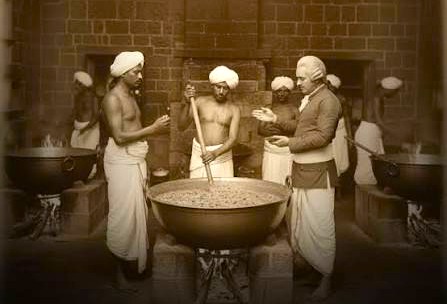
The royal kitchens of the Mysore Palace were legendary, serving a sophisticated cuisine known as Mysuru Rasabaksha. The traditional recipes of the Mysore Palace royal kitchen featured a perfect balance of flavors, with famous dishes like the Mysore Pak (invented in the palace), Bisi Bele Bath, and various payasams. The kitchen was a massive establishment, employing hundreds of cooks and assistants to prepare elaborate meals for the royal family, palace staff, and state banquets. This cuisine blended local Karnataka traditions with influences from other parts of India, creating a unique and celebrated gastronomic heritage.
Justice Under Diwans and British Law
The Wodeyar judicial system evolved significantly over the centuries. Initially based on traditional Hindu law, it was modernized during the 19th and 20th centuries. The modernization of the legal system under the Diwans of Mysore saw the establishment of a hierarchy of courts, with the Chief Court as the highest judicial body. Influenced by the British Indian legal framework, laws were codified, and an independent judiciary was fostered. This ensured a rule of law that was largely fair and accessible, contributing to the kingdom's reputation as a well-administered "model state." Wodeyar Dynasty Mysore India
Chamundeshwari, The Royal Patron Deity
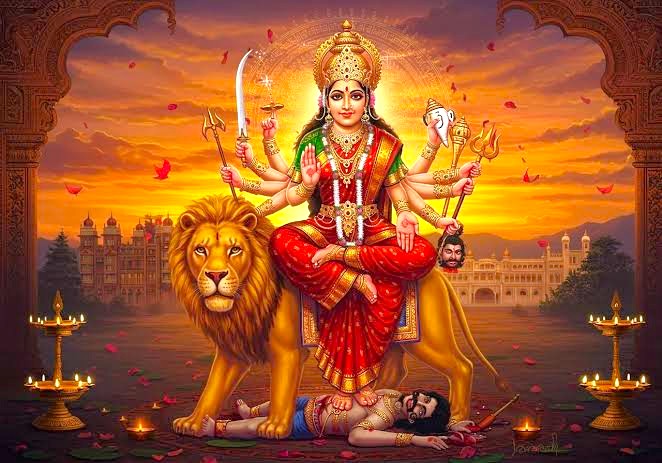
The Wodeyars were deeply devout Hindus and patrons of religion, with a special reverence for their guardian deity. The worship of Goddess Chamundeshwari by the Wodeyar Dynasty is central to their identity. The magnificent Chamundi Hills overlooking Mysore became the spiritual heart of the kingdom, with the rulers making frequent pilgrimages and lavish endowments to the temple. While being ardent Shaivites and Vaishnavites as well, they maintained a policy of religious tolerance, patronizing all faiths and ensuring that their kingdom was a place of harmony for all communities.
The Unrivaled Spectacle of Mysore Dasara
No event better captured the grandeur of the Wodeyar court than the annual Dasara festival. The history and celebrations of the Mysore Dasara festival made it world-famous. For ten days, the city would erupt in celebration, culminating in a grand procession on Vijayadashami day. The Maharaja, seated in a golden howdah atop a decorated elephant, would lead a spectacular parade of the army, courtiers, and entertainers through the city streets. This event was not just a religious festival but a powerful display of the kingdom's prosperity, military might, and cultural vibrancy.
The Maharaja's Court of Modern Thinkers
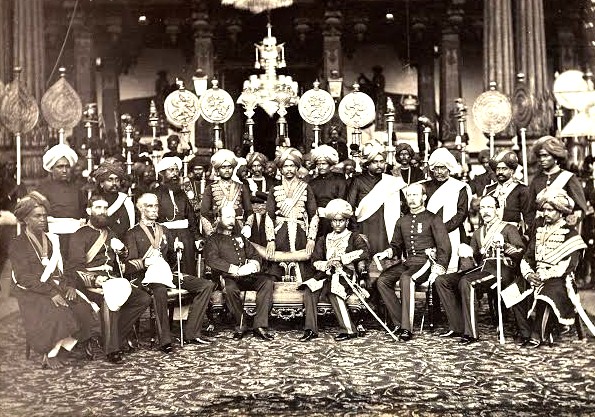
The Wodeyar court, especially in its later years, was a unique blend of royal tradition and progressive administration. The role of Diwans like Sir M. Visvesvaraya in Mysore's development was immense. These brilliant administrators, chosen by the Maharaja, effectively ran the government. The court was a hub of innovation, where plans for industrialization, education, and infrastructure were conceived. While traditional pomp and ceremony were maintained, the real business of the court was the forward-thinking governance that transformed Mysore into one of India's most advanced princely states.
Resilience Against Hyder Ali and Tipu
The dynasty's history is marked by a remarkable struggle for survival. In the 18th century, their power was completely usurped by their ambitious commander, Hyder Ali, and his son, Tipu Sultan. The dynasty's loss of power to Hyder Ali and Tipu Sultan saw the royal family placed under house arrest for decades. However, they demonstrated incredible resilience. Following Tipu Sultan's defeat and death at the hands of the British in 1799, the Wodeyars were restored to the throne, reclaiming their ancestral kingdom through a strategic alliance. Wodeyar Dynasty Mysore India
Royal Marriages and Powerful Maharanis
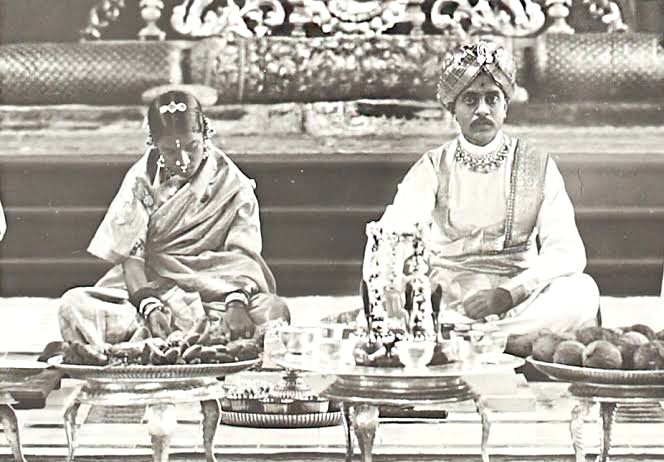
Marriages were carefully arranged to ensure the continuation of the lineage and forge social alliances. The influence of Maharanis in the Mysore royal family was significant. Queens like Kempananjammanni Vani Vilasa Sannidhana, who ruled as regent for her young son Krishnaraja Wodeyar IV, proved to be able and wise administrators. Though living within the confines of palace traditions, these royal women were often highly educated and played a crucial role in the upbringing of future rulers and the patronage of religious and charitable institutions.
The Flourishing of Mysore-Style Art
The Wodeyars were extraordinary patrons of art and culture, fostering a unique aesthetic. The development of the Mysore school of painting is a key part of their legacy. This art form is known for its elegance, subtle colors, and the use of gesso and gold leaf for intricate relief work. The court also nurtured giants of Carnatic music and patronized the creation of musical instruments like the veena. This deep commitment to the arts made Mysore a cultural capital, preserving and enriching the classical traditions of South India for centuries. Wodeyar Dynasty Mysore India
Royal Cremations at Madhuvana
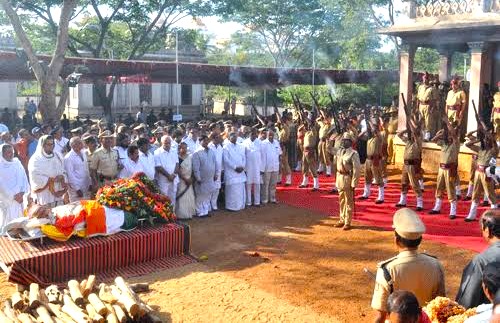
The final rites of the Wodeyar royalty were conducted with solemn dignity according to Hindu traditions. Upon the death of a monarch, the body was prepared for cremation in a public ceremony that allowed the subjects to pay their last respects. The location of the Wodeyar royal cemetery Madhuvana is on the banks of the Kaveri River near Mysore. This tranquil spot became the designated site for the royal family's cremations. The funeral ceremonies were elaborate affairs, blending state mourning with deeply personal religious rites for the departed soul.
Building Hospitals for Public Health
Breaking from purely traditional medicine, the later Wodeyar rulers were pioneers in public healthcare. The establishment of modern hospitals by the Mysore Maharajas was a cornerstone of their progressive agenda. Krishnaraja Wodeyar IV and his government founded numerous hospitals, including the Cheluvamba Hospital for women and children and the Krishnarajendra Hospital. These institutions provided modern medical care to all citizens, dramatically improving public health and life expectancy, and were part of a broader vision to create a healthy and productive society. Wodeyar Dynasty Mysore India
The Great Krishnaraja Sagar Dam
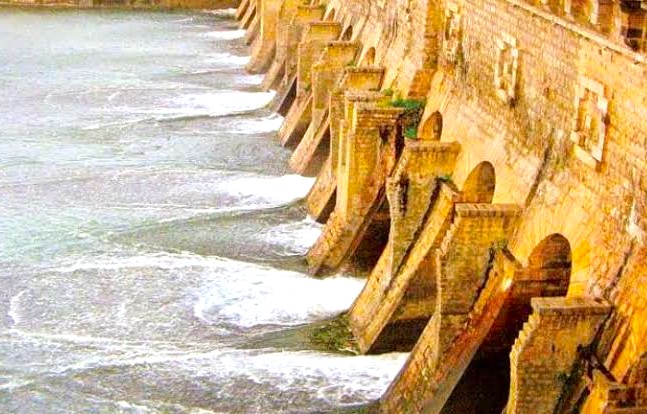
One of the most enduring legacies of the Wodeyar is a monumental feat of engineering. The construction of the Krishnaraja Sagar (KRS) Dam under Wodeyar rule was a visionary project, championed by the Maharaja and executed by the brilliant Diwan, Sir M. Visvesvaraya. Completed in 1932, this massive dam across the Kaveri River was designed to provide drinking water to Mysore and Bangalore and to irrigate vast tracts of arid land. It stands as a powerful symbol of the dynasty's commitment to long-term planning and technological advancement for public welfare.
The British Rendition of Mysore
In a unique event in colonial Indian history, the British, who had taken direct control of Mysore in 1831 citing misrule, returned the kingdom to the Wodeyar family. The Rendition of Mysore in 1881 to Chamarajendra Wodeyar X was a pivotal moment. The British handed back the administration to the young, educated Maharaja, re-establishing direct Wodeyar rule under the terms of a new treaty. This act of trust began the most progressive era in Mysore's history, as the subsequent Maharajas and their Diwans worked to build a "model state."
Accession into the Dominion of India
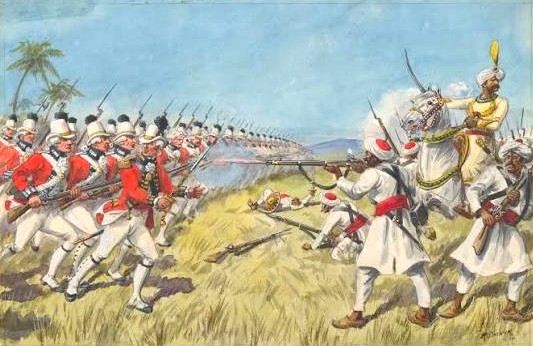
The end of the British Raj in 1947 spelled the end of the Wodeyars' monarchical rule. The signing of the Instrument of Accession by Jayachamarajendra Wodeyar was a smooth and patriotic transition. The last ruling Maharaja of Mysore readily agreed to merge his kingdom with the newly independent Dominion of India. He served as the first Governor (Rajpramukh) of the newly formed Mysore State. This selfless act ensured a peaceful integration and marked the end of a 550-year-old ruling dynasty, transforming the kingdom into a democratic entity.
Emergence of Modern Karnataka State
Following the end of monarchical rule, the legacy of the Wodeyars continued within a new democratic framework. The formation of Karnataka state from the old Mysore kingdom was the final step in this transition. In 1956, the States Reorganisation Act expanded Mysore State to include Kannada-speaking areas from neighboring states. In 1973, the state was officially renamed Karnataka. The modern state, with its capital in Bangalore (a city heavily developed by the Wodeyars), inherited the strong administrative, industrial, and educational foundation laid by the visionary Maharajas.
Step Inside The Story - View All Tour Itineraries & Details
We’re here to offer genuine, thoughtful guidance if your interested in travelling to India. As a small, dedicated team, we pay close attention to every detail so you can focus on enjoying the experience while we take care of the planning. We believe the best trips begin when someone truly listens to what you want and how you like to travel, so the journey feels right for you and contributes to a happy, positive group on tour. Our communication stays clear, straightforward, and respectful at every step, with the goal of helping you feel understood, supported, and confident from first contact to the end of your journey.
Click Catherine Frith - About The Founder
Click Discover Life Travel - All Tours and More
Click Why We Are Different - Unique, Safe, Transparent