Unique Insights Into The Rules Of War
Wars of Ancient India
Discover Life Travel
The Land Before the Wars
Before battlefields bore witness to the clash of empires, the Indian subcontinent was a land of harmonious kingdoms, tribal communities, and spiritual sanctuaries. These regions, rich in culture and resources, eventually became areas of contention as rulers sought to expand their influence. Early texts like the Rigveda describe skirmishes between clans over cattle and territory, demonstrating how warfare evolved from small-scale conflicts to battles with enormous armies. The gods played a formative role in these early struggles. Deities like Indra, the god of thunder and war, were believed to grant victories, and elaborate rituals were often performed before conflicts. Kings consulted priests and astrologers for favorable timings of war, laying the groundwork for rules that blended spirituality with strategy. Wars of Ancient India
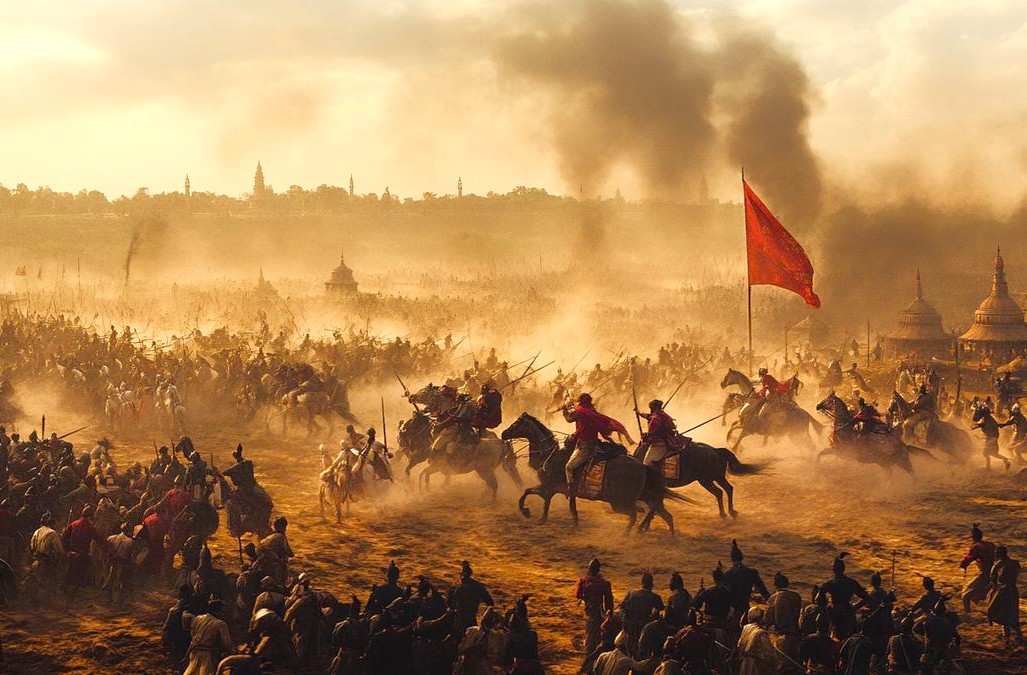
Wars of Ancient India: War Must Be Legible
The ideal battlefield is not a fog of secret murders; it is a recognized contest. Open mustering, standards, drums, and formal challenges make war visible and accountable - both sides know a fight is coming, and civilians can understand where danger concentrates. This doesn’t erase strategy, but it discourages turning war into pure deception against the helpless. Declared conflict also keeps room for negotiation, because there is a shared acknowledgement that a dispute exists and can be settled. Once war is legible, it can be bounded - by time, by place, and by rules of conduct.
Do: make hostilities clear; keep recognizable battle-lines.
Don’t: replace war with covert assassination; blur battle into banditry.
Fix Time and Place: Keep Battle Contained
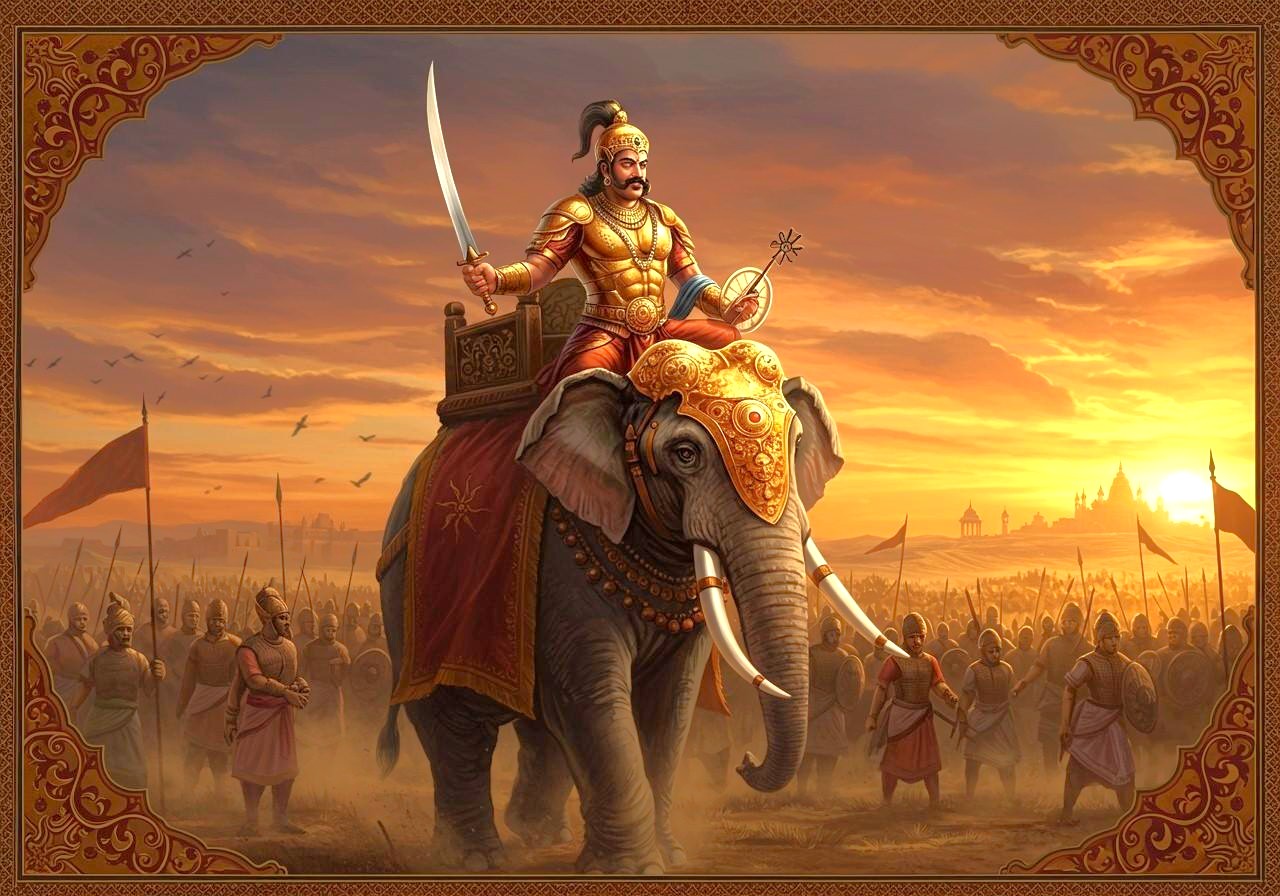
Classical ideals prefer engagement within defined fields and defined windows rather than endless roaming violence. A bounded battlefield allows command and control, reduces accidental civilian harm, and helps both sides distinguish combat from massacre. Daylight fighting is often idealized because visibility supports recognition, signals, and restraint; when darkness takes over, discipline collapses easily into panic and cruelty. Containment also implies responsibility: if you bring an army, you must prevent it from turning the countryside into the battlefield. With the arena set, the next duty is to keep noncombatants out of the contest.
Do: choose clear battle ground; halt when order breaks.
Don’t: turn villages into battle zones; let pursuit become uncontrolled. Wars of Ancient India
Shield Noncombatants: Spare the Lifelines of Society
A kingdom is more than its army, so the “clean” war ideal protects farmers, artisans, traders, and travelers as the realm’s continuity. Wells, fields, and homes are not supposed to become convenient pressure points, because destroying them wins territory but ruins peace. Even when supplies are needed, the expectation is controlled requisition—not predation that turns soldiers into predators of the people. This restraint also reduces cycles of revenge: sparing civilians makes surrender and settlement possible. Once civilians are protected, diplomacy can operate safely, starting with those who carry messages between camps.
Do: protect civilians and essentials; restrict pillage and arson.
Don’t: punish innocents to break morale; burn food and water systems.
Honor the Messenger: Parley Must Be Safe
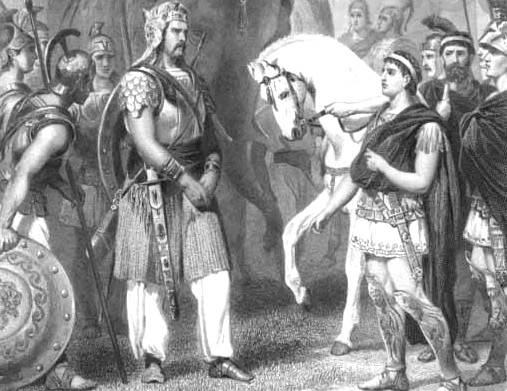
Between armies, envoys function as the conflict’s safety valve. If a messenger can be killed, negotiation becomes impossible and every dispute becomes a fight to exhaustion. Classical norms often treat harming envoys as dishonorable because it attacks speech and settlement - the only tools that can end killing without total destruction. You may reject a proposal, insult it, or refuse terms, but the channel itself is protected. Keeping parley safe also prevents a common corruption: using “talks” as a trap. With diplomacy guarded, engagement can proceed as a regulated contest rather than a war on communication.
Do: guarantee safe passage for envoys; respect truce signals.
Don’t: kill messengers; lure opponents into ambush under a flag of talk. Wars of Ancient India
Match Equals: Proportional Force and Worthy Opponents
A recurring ethical image is equals fighting equals - not because categories are perfect, but because the deeper principle is proportionality. Honor is tied to accepting risk, not harvesting easy kills. When superior numbers or superior weapons crush the clearly weaker without necessity, the battle becomes slaughter and breeds long-term hatred. Matching also disciplines arrogance: it urges warriors to seek a worthy contest, and rulers to keep engagements within reason. This ideal doesn’t erase tactics, but it defines what counts as admirable. Once proportionality is accepted, the code tightens further: even a worthy opponent must not be struck when unready.
Do: choose proportionate targets; avoid unnecessary overwhelming force.
Don’t: swarm the helpless; boast about “victory” over the defenseless.
Do Not Strike the Unready: Mercy in the Instant
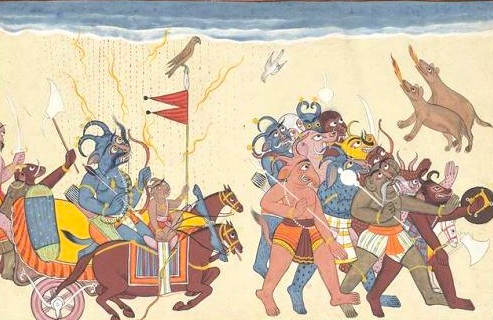
Many dharma‑yuddha ideals focus on micro-moments: the opponent who is disarmed, fallen, surrendering, or unable to respond. The rule is simple - victory must be earned against resistance, not extracted from helplessness. This restrains the most volatile driver of atrocity: vengeance in the heat of battle. It also makes surrender meaningful; if surrender guarantees nothing, no one surrenders, and every fight becomes a desperate last stand. Restraint here is not weakness - it is self-command. Once behavior is regulated at the moment of contact, the next question is the ethics of means: which weapons and methods are acceptable.
Do: accept surrender; pause when the enemy cannot defend.
Don’t: kill the disarmed or incapacitated; turn retreat into execution.
Weapons and Methods: Win Without Cruelty as the Goal
War is violent, but the ideal code resists inventive cruelty - methods that exist mainly to terrorize, degrade, or harm beyond the contest. The underlying logic is future-facing: a society that normalizes cruelty in war imports cruelty into peace. Ethical weapon conduct also preserves reciprocity; if both sides accept limits, battle remains bounded instead of escalating into anything-goes destruction. This doesn’t mean “gentle war,” it means controlled war - force tied to military purpose. But limits only hold if armies remain governable, which brings the narrative to discipline: formations, signals, and obedience are moral instruments, not merely tactical ones.
Do: keep methods tied to military aims; enforce limits consistently.
Don’t: use terror against civilians; treat suffering as entertainment or proof of power. Wars of Ancient India
Formations and Command: Discipline Is a Moral Duty

Ancient Indian war writing emphasizes order - ranks, formations, signals, and command hierarchy - because disorder is where atrocity breeds. An ethical code is meaningless if leaders cannot stop their own troops from looting, burning, or slaughtering the vulnerable. Command, therefore, is not just cleverness; it is restraint in motion: knowing when to advance, when to halt pursuit, and when to accept a boundary. A ruler who declares a righteous war but permits undisciplined plunder contradicts his own claim. Discipline makes boundaries real. After discipline during battle comes discipline after battle - how you treat the wounded and fallen proves what your victory means.
Do: maintain clear orders; punish looting and disobedience.
Don’t: reward brutality; allow soldiers to “freelance” violence.
After the Clash: Care for Wounded and Respect the Dead
The ethical arc continues beyond combat. Honorable victory includes allowing retrieval of bodies, treatment of wounded, and space for rites - because suffering is not a trophy. This restraint reduces vendetta and signals that the conflict had limits, making peace more achievable. It also recognizes a practical truth: today’s enemy may be tomorrow’s subject, ally, or neighbor under treaty. Humiliation of the fallen turns grief into permanent hostility. Care does not erase responsibility for war, but it prevents the war from poisoning the next generation. Once the wounded are addressed, the next test is how captives and spoils are handled - whether force becomes governance or becomes predation.
Do: allow aid and recovery; permit rites and respectful handling of bodies.
Don’t: mutilate, mock, or deny rites; treat suffering as spectacle. Wars of Ancient India
Captives and Spoils: Restraint in Victory
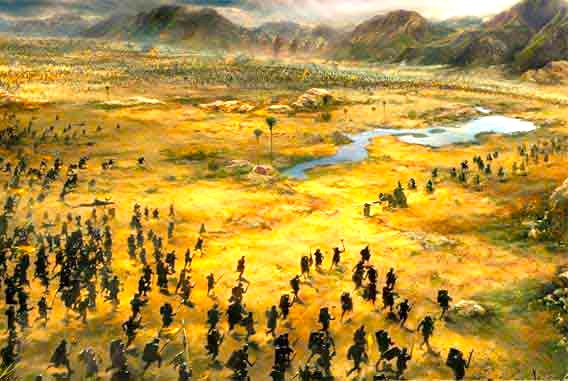
Capturing an enemy transforms them from threat into responsibility. Ideals often favor controlled detention, exchange, ransom, or conditional release over automatic killing, because mercy stabilizes postwar order and reduces endless retaliation. Likewise, victory does not grant unlimited license to plunder; unchecked looting turns armies into bandits and ruins the realm you claim to win. The moral burden falls on leaders to stop their own men when adrenaline demands reward. A disciplined victory is one that can end. Once captives and spoils are governed, the final rule becomes the hardest: concluding the conflict with terms that restore life rather than extending hate.
Do: treat prisoners as governed captives; regulate spoils strictly.
Don’t: execute captives as default; let “reward” become mass theft.
Ending the War: Restoration Over Annihilation
The closing ideal is not permanent enmity but re-established order. War should end with terms - boundaries, oaths, tribute, restitution, reconciliation - so society can resume farming, trade, worship, and law. A ruler’s true success is not how long the enemy suffers, but how quickly the realm becomes livable again. This is where all previous rules converge: if you protected civilians, restrained cruelty, honored parley, disciplined troops, and treated captives humanely, you have built a bridge to peace. If you violate those boundaries, even “victory” becomes an unstable occupation. The battlefield, in this tradition, is a chapter - its meaning is judged by the peace that follows.
Do: end with clear terms; rebuild and normalize civic life quickly.
Don’t: pursue extermination as policy; prolong war to feed pride or profit.
Step Inside The Story - View All Tour Itineraries & Details

We’re here to offer genuine, thoughtful guidance if your interested in travelling to India. As a small, dedicated team, we pay close attention to every detail so you can focus on enjoying the experience while we take care of the planning. We believe the best trips begin when someone truly listens to what you want and how you like to travel, so the journey feels right for you and contributes to a happy, positive group on tour. Our communication stays clear, straightforward, and respectful at every step, with the goal of helping you feel understood, supported, and confident from first contact to the end of your journey.
Click Catherine Frith - About The Founder
Click Discover Life Travel - All Tours and More
Click Why We Are Different - Unique, Safe, Transparent