Unique Insights Into The Indian Epic's
Ramayana: India
Discover life Travel
The Odyssey of Rama
The Ramayana is an ancient Sanskrit epic attributed to the sage Valmiki, chronicling the life and trials of Rama, the prince of Ayodhya. Spanning seven books known as Kandas, the narrative explores the concepts of 'Dharma' or duty, honor, and the victory of good over evil. Set in the fertile plains of northern India and extending to the island of Lanka, it provides a blueprint for the ideal human conduct, known as 'Maryada Purushottama'. The text incorporates geographical accounts, moral discourses, and spiritual allegories. It serves as a cornerstone of Indian culture, offering deep insights into the nature of sacrifice, the strength of devotion, and the unwavering pursuit of truth. Ramayana India
Ramayana India: Origins of the Solar House
The narrative begins in the city of Ayodhya, the capital of the Kosala Kingdom, ruled by King Dasharatha of the Ikshvaku lineage. For years, the King remained childless until he performed the 'Putrakameshti' sacrifice in 5000 BCE. From this ritual, four sons were born: Rama to Queen Kausalya, Bharata to Queen Kaikeyi, and the twins Lakshmana and Shatrughna to Queen Sumitra. Rama, the eldest, was identified as a divine manifestation born to rid the world of the demon king Ravana. The princes were educated in the Vedas and martial arts by the sage Vashistha. This period established the foundation of a harmonious royal family, where the brothers were bound by deep affection and a shared commitment to the welfare of their subjects.
Defending the Sacred Hermitage
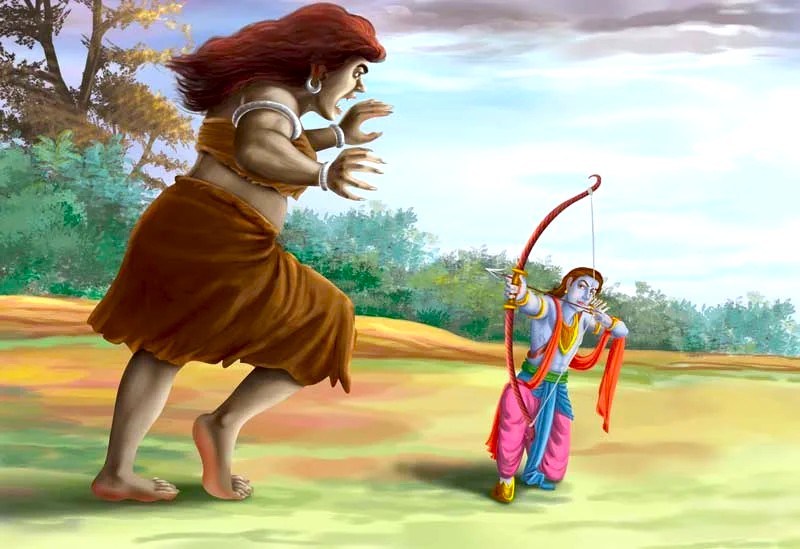
The sage Vishvamitra arrived in Ayodhya to request Rama’s help in protecting his sacrificial fires from the demons Tataka, Maricha, and Subahu. Despite his youth, Rama, accompanied by Lakshmana, traveled to the forest and defeated the predatory spirits. Vishvamitra rewarded the princes with divine weapons and taught them advanced military strategies. This journey served as Rama’s first encounter with the forces of chaos outside the palace walls. It demonstrated his innate courage and his willingness to serve the spiritual community. The successful defense of the hermitage proved that the young prince possessed the discipline and power necessary to fulfill his destiny as the protector of the righteous and the restorer of order. Ramayana India
Breaking the Bow of Shiva
Vishvamitra led the princes to the kingdom of Mithila, where King Janaka held a challenge for the hand of his daughter, Sita. The task was to string the massive bow of Shiva, which no other suitor could even lift. Rama not only lifted the bow but broke it into two pieces with his immense strength. This act secured his marriage to Sita, while his brothers married Sita’s sister and cousins. The union of Rama and Sita represented the perfect alignment of strength and virtue. The population of both kingdoms celebrated the alliance for many days. This marriage solidified the bond between the Solar and Janaka lineages, creating a powerful political and spiritual union in the northern plains.
Sentence of the Fourteen Years
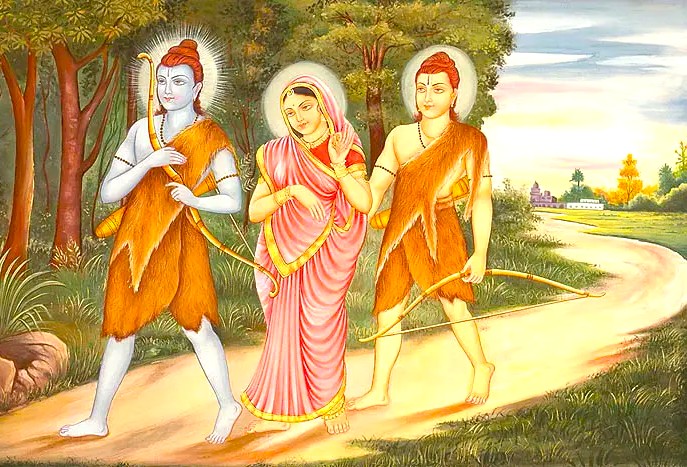
As Dasharatha prepared for Rama’s coronation, Queen Kaikeyi, influenced by her maid Manthara, demanded two boons: the exile of Rama for fourteen years and the installation of her son Bharata as King. Bound by his word, the heartbroken King granted the requests. Rama, prioritizing his father’s honor over his own rights, accepted the sentence without hesitation. Sita and Lakshmana insisted on accompanying him into the wild forests. This event marked the total sacrifice of personal ambition for the sake of parental duty. The citizens of Ayodhya wept as the trio departed, marking the beginning of a decade of hardship that would test the limits of their endurance and their commitment to their principles. Ramayana India
Life in the Dandaka Forest
The exiles spent their years in the Dandaka forest, living in simple leaf huts and surviving on forest produce. They visited the hermitages of various sages, including Atri and Agastya, receiving spiritual guidance and divine artifacts. The forest was inhabited by numerous tribal groups and predatory demons who harassed the peaceful seekers. Rama and Lakshmana spent their days hunting for food and patrolling the perimeter of their dwelling to ensure Sita’s safety. Their daily life was defined by austerity and constant vigilance. This period of isolation allowed them to connect deeply with the natural world and the spiritual traditions of the forest, preparing them for the greater conflict that awaited them in the southern reaches.
Abduction of the Silent Princess
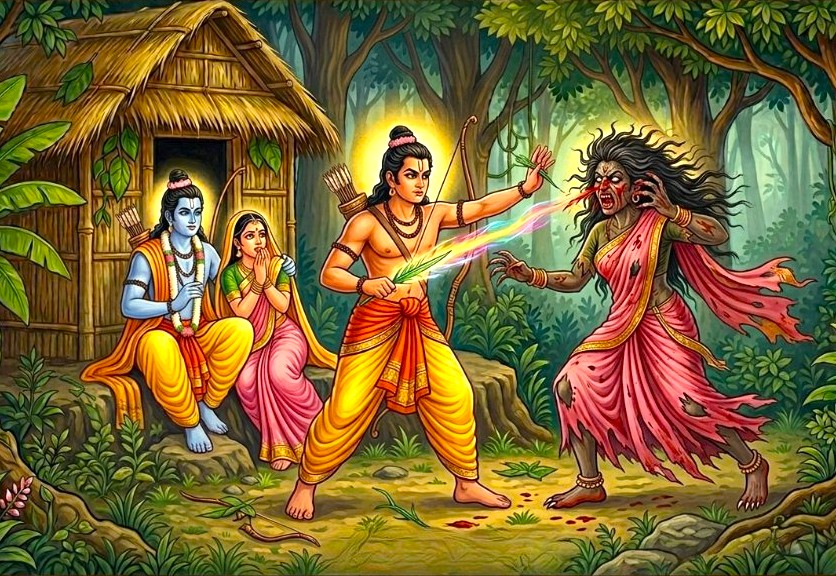
In the final year of exile, the demoness Shurpanakha attempted to entice Rama and later attacked Sita, leading Lakshmana to disfigure her. Seeking revenge, her brother Ravana, the King of Lanka, devised a plan to abduct Sita. Using a magical golden deer to lure Rama and Lakshmana away, Ravana forcibly took Sita to his island fortress. Rama was devastated by the loss and began an exhaustive search through the southern forests. This phase of the narrative shifted from peaceful forest living to an urgent quest for justice. The abduction proved that even the most virtuous can suffer great loss, requiring them to gather new allies and strength to confront a formidable and deceptive enemy.
Alliance with the Vanara Tribes
During his search, Rama encountered the Vanara king Sugriva and his loyal counselor Hanuman. Rama helped Sugriva regain his kingdom from his brother Vali, and in return, the Vanara army pledged to find Sita. Hanuman, possessing the power of flight, leaped across the ocean to Lanka and located Sita in the Ashoka grove. He provided her with Rama’s ring as a token of hope and burned parts of the city to demonstrate the power of Rama’s allies. This alliance with the forest dwellers represented the unification of different species against a common tyrant. The cooperation between Rama and the Vanaras showed that justice can be achieved when diverse groups work together under a righteous leader. Ramayana India
Building the Bridge of Stones
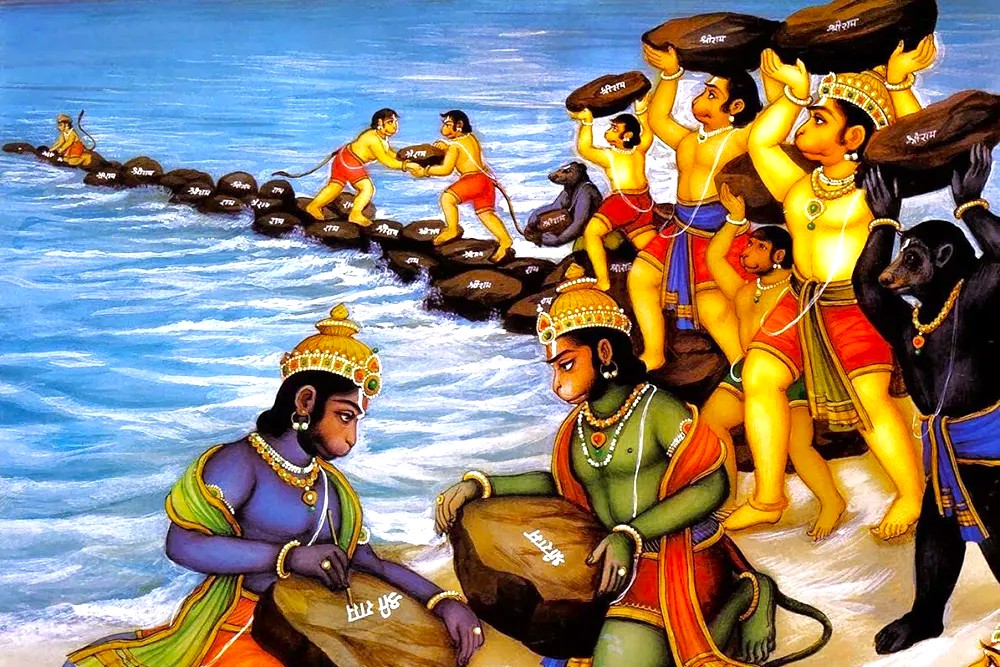
To reach Lanka, the Vanara army constructed a massive bridge across the ocean, known as the Rama Setu. Led by the architects Nala and Nila, they used stones that were said to float when inscribed with Rama’s name. The construction took five days and involved millions of workers from the forest tribes. This engineering feat demonstrated the collective will and devotion of the army. The bridge served as a physical path for the forces of dharma to invade the stronghold of adharma. Upon reaching the shores of Lanka, Rama offered a final chance for peace, but Ravana’s pride made war inevitable. The transition from the mainland to the island marked the beginning of the decisive battle for the future of the world.
Battle of the Island Fortress
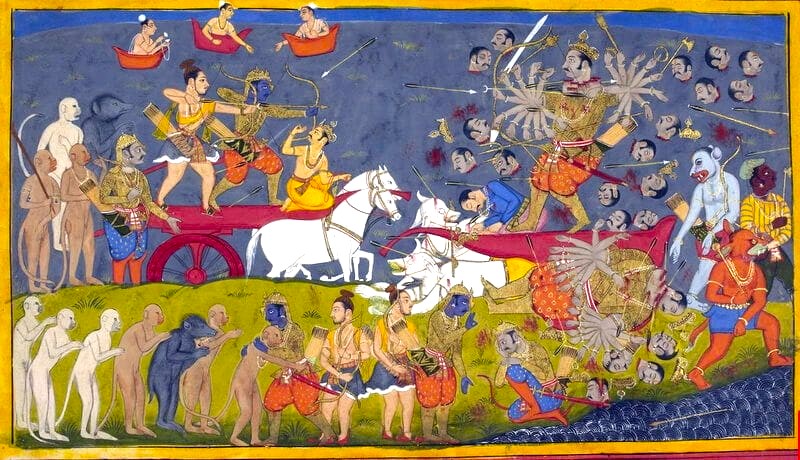
The war in Lanka lasted for several weeks, featuring intense combat between the Vanara warriors and the Rakshasa legions. Many great commanders, including Ravana’s brother Kumbhakarna and his son Indrajit, fell in the conflict. Rama utilized divine arrows to counter the magical warfare of the demons. The death toll was massive on both sides, with the fields of Lanka soaked in blood. Hanuman traveled to the Himalayas to bring the Sanjivani herb to revive the fallen Vanaras, including a wounded Lakshmana. Rama eventually killed Ravana with the Brahma-astra, ending the reign of the demon king. The victory was a triumph of discipline and truth over the chaotic and selfish forces that had terrorized the three worlds. Ramayana India
Fire of the Ritual Purity
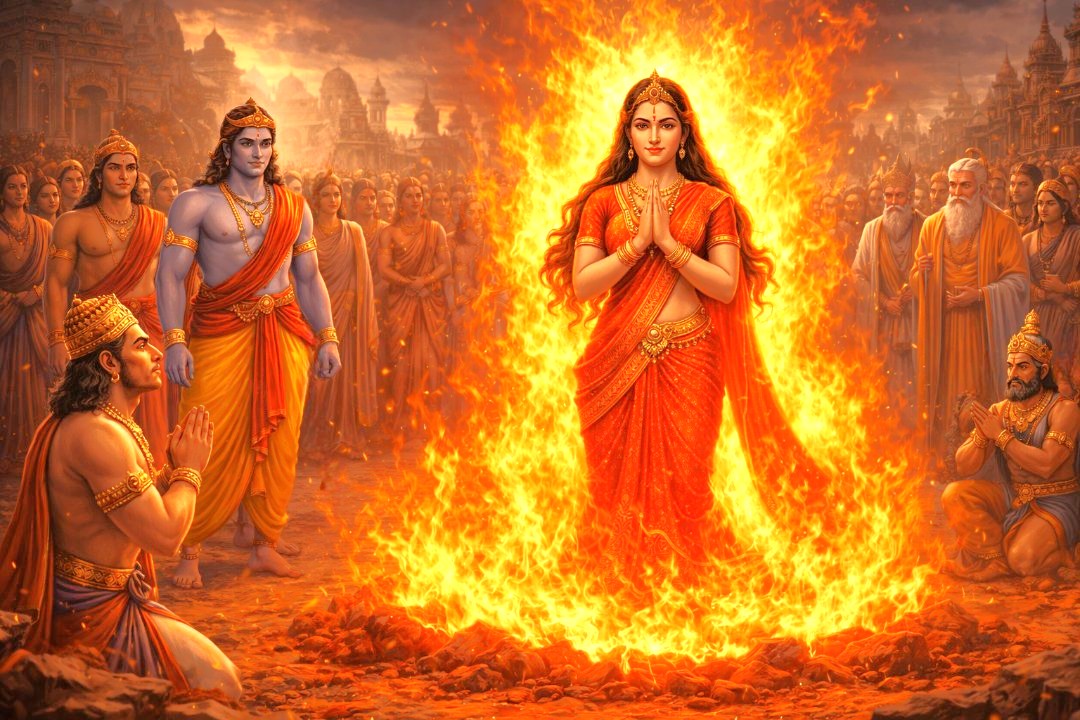
After the war, Rama met Sita, but he required her to undergo a trial by fire, known as the 'Agni Pariksha', to prove her purity to the world. Sita entered the flames, and the god of fire, Agni, brought her out unharmed, testifying to her innocence. This event was a difficult moment that highlighted the conflict between personal trust and public duty. Rama then appointed Vibhishana, Ravana’s righteous brother, as the new King of Lanka. The exiles, joined by their allies, returned to Ayodhya in the Pushpaka Vimana, an aerial chariot. Their return marked the end of the fourteen years of hardship and the beginning of a new era of prosperity for the long-suffering citizens of the Kosala kingdom.
Reign of the Ideal King
Rama was crowned King of Ayodhya, marking the start of 'Rama Rajya', an era of perfect justice, peace, and abundance. Under his rule, there was no disease, poverty, or crime. The King performed various sacrifices, including the Ashvamedha, to ensure the welfare of the people. His daily life was dedicated to the administration of the law and the hearing of public grievances. Rama prioritized the opinions of his subjects, which eventually led to the difficult decision to send a pregnant Sita into the forest to satisfy public doubts about her honor. His reign became the standard for all future rulers, emphasizing that the leader’s primary duty is to the truth and the well-being of the collective over personal happiness. Ramayana India
Reunion in the Hermitage
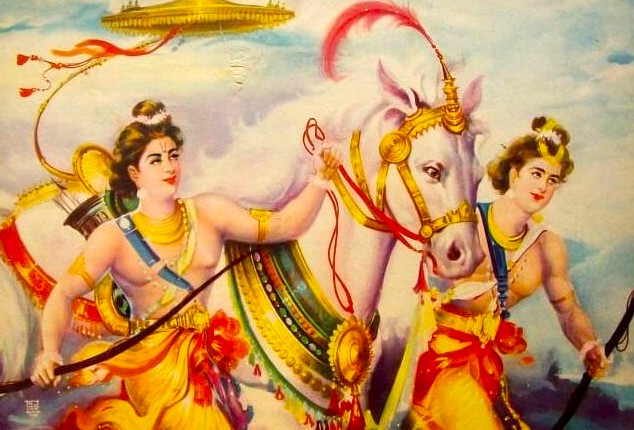
Years later, Rama encountered his twin sons, Lava and Kusha, who had been raised in the hermitage of Valmiki. The boys traveled to Ayodhya and sang the Ramayana in the royal court, revealing their identity to their father. Sita was called back to the court, but instead of proving her purity again, she asked her mother, the Earth, to receive her. The ground opened, and Sita disappeared into the depths, leaving Rama in deep sorrow. This final separation marked the conclusion of their earthly journey together. Rama spent his remaining years ensuring the stable succession of his sons and the continued prosperity of the kingdom before deciding that his divine mission on earth was complete.
Spiritual Lessons of the Path
The Ramayana teaches that 'Dharma' is the highest goal of human life, requiring the sacrifice of personal desires for the sake of truth. It emphasizes the importance of keeping one's word and fulfilling one's roles as a son, brother, husband, and ruler. The story shows that devotion and loyalty, exemplified by Hanuman and Lakshmana, are essential for overcoming great obstacles. It proves that evil, no matter how powerful, is eventually destroyed by the steady application of righteousness. The epic encourages the cultivation of patience, self-control, and compassion. By detailing the life of Rama, it reminds the audience that every individual has a duty to uphold the moral order of the universe, even in the face of extreme suffering. Ramayana India
Departure of the Solar King
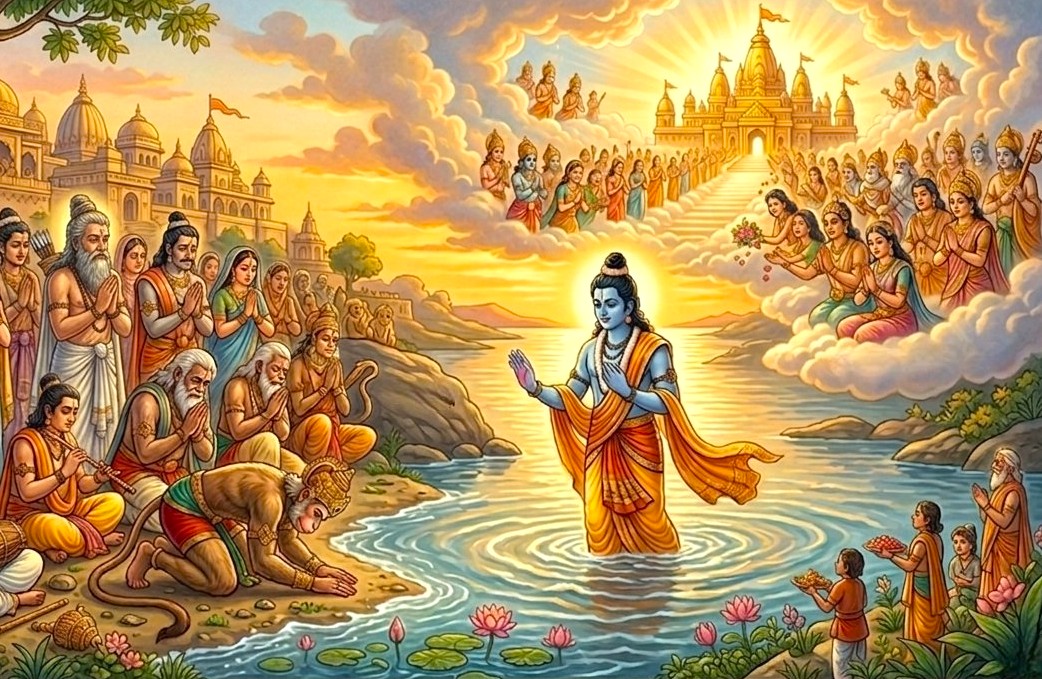
The decline of the immediate presence of the Solar King began as Rama decided to leave the mortal world and return to his divine form. He gathered his brothers and the citizens of Ayodhya at the banks of the Sarayu River. Rama entered the water, followed by his loyal companions and subjects, ascending to the celestial realms. He left the kingdom in the hands of his sons, who established their own capitals at Shravasti and Kushavati. This departure marked the end of the Treta Yuga and the beginning of a transition toward a more complex age. The centralized spiritual authority of Rama’s reign was replaced by the historical records and memories that would guide future generations in their pursuit of the ideal life.
Step Inside The Story - View All Tour Itineraries & Details

We’re here to offer genuine, thoughtful guidance if your interested in travelling to India. As a small, dedicated team, we pay close attention to every detail so you can focus on enjoying the experience while we take care of the planning. We believe the best trips begin when someone truly listens to what you want and how you like to travel, so the journey feels right for you and contributes to a happy, positive group on tour. Our communication stays clear, straightforward, and respectful at every step, with the goal of helping you feel understood, supported, and confident from first contact to the end of your journey.
Click Catherine Frith - About The Founder
Click Discover Life Travel - All Tours and More
Click Why We Are Different - Unique, Safe, Transparent