Unique Insights Into The Deities Of India
Rama: Exile of the Golden Heir
Discover Life Travel
The Eternal Avatar
At the ghats of the Sarayu River in Ayodhya, Uttar Pradesh, elders recount how Rama descended as an avatar of Vishnu to restore dharma. Born to King Dasharatha and Queen Kausalya, with co-queens Kaikeyi and Sumitra, Rama’s childhood unfolded within marble halls overlooking the river’s shimmering expanse. Even as a boy, he was unusually serene, protective, and fair, treating servants like family and animals with tender care. The background of his birth is woven with the king’s horse sacrifice and divine boon granting four sons - Rama, Bharata, Lakshmana, Shatrughna. Yet the heart of his origin is this: divinity chose to walk as a vulnerable human, in a real city by a real river, proving that the highest righteousness can be lived in ordinary earthly circumstances. Rama Exile of the Golden Heir
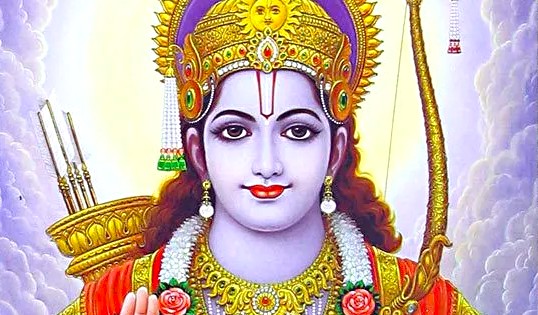
Rama Exile of the Golden Heir: Ayodhya, Living City of Rama
In today’s Ayodhya, around the Ram Janmabhoomi site and Hanuman Garhi, the story of Rama is carried by temple bells, traffic horns, and market cries. Pilgrims walk past neon-lit shops selling sweets and garlands, then bow at shrines where old stone idols glow in the lamplight. Near Ram Ki Paidi, the riverfront steps, saffron flags flutter as the Sarayu reflects the sky’s changing colors, recalling countless evenings when people have chanted “Shri Ram” together. This exact location in India is both ancient and intensely contemporary, where smartphone cameras and incense smoke mingle. Here Rama is not distant mythology: he is invoked before exams, surgeries, business ventures, marriages. The city itself feels like a vast, breathing temple dedicated to his memory and ideals.
Sacred Symbols of Shri Rama
Rama’s symbols speak silently of his inner nature. His bow (Kodanda), often shown in paintings and murtis in Kanak Bhawan, Ayodhya, represents strength held in perfect restraint - power that awakens only to protect innocence and justice. His arrows symbolize focused intention and unwavering clarity cutting through confusion. The blue complexion evokes the vast sky and deep ocean, hinting at infinite compassion, patience, and depth of consciousness. His calm tilak on the forehead indicates awakened spiritual insight guiding worldly duty. The lotus at his feet suggests purity that can bloom in any mud of circumstance. Together, these symbols form a visual mantra: live with courage, but without cruelty; be strong, but guided by conscience; stay rooted in purity even amid life’s most difficult tests.
Rama’s Lineage of Living Virtues
Rama’s family in Ayodhya’s palace complex is a tapestry of symbolic qualities. His father Dasharatha (“ten-charioted”) mirrors the human mind trying to steer many directions, noble but fallible; his tragic promise to Kaikeyi shows how unexamined attachments cause sorrow. Kausalya, Rama’s mother, is nurturing wisdom; Kaikeyi reflects impulsive desire; Sumitra embodies quiet, supportive strength. Rama’s wife Sita personifies Earth’s patience, purity, and unshakable devotion. Their sons Lava and Kusha represent dharma reborn in a new generation, reciting their father’s story as a moral compass for society. Brothers Lakshmana (loyal sacrifice), Bharata (selfless renunciation of throne), and Shatrughna (destroyer of inner enemies) each illuminate another ray of love. This lineage is less a dynasty than a living textbook of virtues families can emulate. Rama Exile of the Golden Heir
From Playful Prince to Groom
Rama’s journey from childhood to marriage travels from Ayodhya (Uttar Pradesh) to Mithila (near Janakpur, Nepal–Indian cultural region), retold lovingly in Ayodhya’s satsangs. As a boy, he excelled in archery, scriptures, and ethics, yet remained humble, sharing his toys and food, intervening when weaker children were bullied. Under sage Vishwamitra’s guidance, he protected ashrams from demons, revealing early that his strength served peace, not ego. In King Janaka’s court at Mithila, he effortlessly lifted and broke Lord Shiva’s bow, a feat no warrior could achieve, thus winning Sita’s hand. That shattering sound signified the breaking of old limitations, making way for a union of dharma (Rama) and pure devotion (Sita). The playful prince thus stepped into the role of a deeply responsible, devoted husband.
Son, Husband, Father, King
Along Ram Ki Paidi in Ayodhya, people meditate on Rama’s many roles, seeing their own lives reflected. As a son, he honors Dasharatha’s painful promise to Kaikeyi, accepting fourteen years of exile without resentment - teaching that integrity sometimes demands personal loss. As a husband, he stands by Sita through forests, danger, and social doubt, even when destiny later forces heartbreaking separation. As a father to Lava and Kusha, he endures distance while ensuring they are raised in righteousness under sage Valmiki, valuing their spiritual growth above his emotional comfort. As a king, he embodies Rama Rajya, governing so justly that peace, prosperity, and fairness prevail. These transitions show how one soul, grounded in dharma, can play multiple demanding roles without betraying inner truth.
Eternal Tales Along the Sarayu
At Ram Katha Park in Ayodhya, storytellers keep Rama’s legends alive under open skies. Children and elders alike listen spellbound to tales of his forest exile with Sita and Lakshmana, the golden deer that lured them into danger, and Ravana’s cunning abduction of Sita. They hear of Rama’s alliance with Sugriva, the monkey king, and Hanuman’s monumental leap from shore to Lanka, symbolizing devotion crossing all limits. The building of the Rama Setu, a bridge of stones buoyed by faith, and the climactic war with Ravana are recited as both history and allegory. Each episode - whether painful, heroic, or tender - echoes along the Sarayu, reminding listeners that every life contains exiles, battles, friendships, and homecomings shaped by daily choices. Rama Exile of the Golden Heir
Chariot, Bowstring, Song of Dharma
Though Rama is not linked to a single fixed vāhana like some deities, images around Ayodhya often show him upon a chariot, especially during Ram-lila enactments. The chariot symbolizes the human personality: body, senses, and mind that must be carefully steered by the reins of discrimination and guided by dharma. Rama’s most iconic “instrument” is the bow and bowstring; its resonant twang is a sacred sound heard only in defense of truth, never in cruelty. In devotional practice, his true music is the kirtan of his name, sung with harmonium and tabla in lanes near Hanuman Garhi and the new Ram Mandir. That chorus - “Shri Ram Jai Ram Jai Jai Ram” - turns everyday streets into a moving orchestra of faith, tuning hearts to justice, courage, and compassion. Rama Exile of the Golden Heir
Wars That Conquer Inner Demons
The great war in Lanka, remembered from Ayodhya’s stages to Rameswaram, Tamil Nadu, is more than a clash of armies. Rama’s enemy Ravana embodies uncontrolled desire, arrogance, and misused knowledge; his brother Kumbhakarna represents spiritual sleep and laziness; Indrajit personifies pride in occult or material powers. Rama fights not with hatred, but with clarity and necessary force, supported by Hanuman, Sugriva, Jambavan, and an entire vanara army symbolizing awakened, coordinated inner energies. When Ravana finally falls, it is not just a political victory; it is the conquest of ego by disciplined virtue. Festivals like Dussehra, celebrated even in Ayodhya, dramatize burning Ravana’s effigy to remind people that their real battlefield lies within, where anger, greed, and delusion must be faced and transformed.
From Royal Wedding to Ascension
Rama’s life from marriage to departure arcs across joy, duty, and bittersweet sacrifice. After returning victorious to Ayodhya, he and Sita are welcomed with lamps and flowers, inaugurating a golden era called Rama Rajya, where citizens thrive and justice prevails. Yet whispers of doubt about Sita’s purity spread, compelling Rama, as king, to choose the kingdom’s trust over personal happiness, and he sends his beloved to the forest—an agonizing decision still debated in Ayodhya’s discussions. Years later, his sons Lava and Kusha confront him unknowingly through song, eventually revealing their identity in a heart-wrenching reunion. Finally, at Guptar Ghat on the Sarayu, Rama is believed to have walked into the river and ascended, signifying a conscious, serene return of divinity to its higher realm after completing its earthly mission. Rama Exile of the Golden Heir
Rama’s Empowering Call to Humanity
Before the Ram Darbar in temples like Treta ke Thakur in Ayodhya, the tableau of Rama, Sita, Lakshmana, and Hanuman radiates an unspoken teaching. Rama’s life proclaims that dharma is an active, daily choice, not blind rule-following; it requires reflection, courage, and the willingness to accept consequences. He shows that power must protect the weak, not exploit them; that leadership means bearing discomfort so others can live in safety and dignity. His story does not deny suffering, misunderstandings, or moral complexity, but insists that integrity remains possible even in crisis. For modern humanity facing ethical confusion, environmental crises, and social fragmentation, Rama’s message is empowering: one steadfast heart, rooted in conscience and compassion, can influence an entire civilization’s destiny. Rama Exile of the Golden Heir
Solar Frequency of Rama’s Healing
While classical scriptures do not specify an exact healing frequency in hertz for Rama, modern spiritual and sound-healing communities sometimes link his energy with the Sun (Surya) and heart-centered vibrations. The Sun symbolizes clarity, vitality, and the courage to stand in one’s truth, all qualities Rama embodies. Devotees may use symbolic frequencies like 432 Hz or 528 Hz while chanting “Shri Ram,” believing these tones foster harmony, love, and cellular balance - though this is a devotional innovation, not ancient canon. Rama’s planetary association with the Sun also suggests meditating or chanting at sunrise or noon, when solar energy is strongest, visualizing golden light filling the body. Ultimately, beyond numbers and scales, the true “frequency” of Rama is the inner shift from fear to faith, confusion to luminous understanding. Rama Exile of the Golden Heir
Heart Chakra Ray of Rama
In subtle-body meditation practiced along the tranquil corners of Ram Ki Paidi, seekers often feel Rama’s presence as a warmth in the Anahata (heart) chakra and Manipura (solar plexus) chakra. The heart center reflects his boundless compassion, forgiveness, and loyal love for Sita, his brothers, and his people. The solar plexus corresponds to his regal courage, self-discipline, and sense of sacred responsibility as king. Devotees visualize his energy as a golden-blue ray in the auric field: gold for truth, justice, and royal radiance; blue for protective strength and calm authority. While these chakra and color associations are part of modern esoteric and bhakti traditions rather than strict scriptural doctrine, they help practitioners internalize Rama not just as a distant deity but as a living current of balanced love and power within their own spiritual anatomy.
Brahmastra and the Battle of Lanka
In ritual halls and storytelling venues of Ayodhya, priests recount how Rama wielded celestial weapons granted by rishis and gods. Among them, the Brahmastra, carrying the creative and destructive power of Brahma, is the most awe-inspiring. On the battlefield of Lanka (Sri Lanka), when Ravana’s might - fortified by boons and penance - threatens to crush dharma, Rama considers each escalation carefully. Only when all lesser means fail, and to end suffering swiftly, does he invoke the supreme weapon, directing it with absolute precision and intention. The location and context highlight a profound lesson: higher powers, whether spiritual or technological, must be governed by ethics, restraint, and compassion. Rama’s use of Brahmastra is not glory in destruction, but a reluctant, measured act to restore harmony when no other path remains.
Sunlit Miracles of Ram’s Name
Around the newly built Ram Mandir and older shrines in Ayodhya, local people quietly share recent miracles attributed to Rama’s grace. A shopkeeper tells how, during financial collapse, he began daily sunrise recitations of “Shri Ram Jai Ram Jai Jai Ram” in a simple C major or G major kirtan at home; within months, debts eased and unexpected opportunities appeared. A mother recounts her child’s recovery from severe illness after collective chanting at Hanuman Garhi, attributing the turnaround to Rama’s compassionate glance. These modern stories, born in a very real Indian city, affirm that Rama’s presence is not confined to ancient pages; it continues to guide, heal, and reorganize lives toward hidden order and grace. Rama Exile of the Golden Heir
Step Inside The Story - View All Tour Itineraries & Details
We’re here to offer genuine, thoughtful guidance if your interested in travelling to India. As a small, dedicated team, we pay close attention to every detail so you can focus on enjoying the experience while we take care of the planning. We believe the best trips begin when someone truly listens to what you want and how you like to travel, so the journey feels right for you and contributes to a happy, positive group on tour. Our communication stays clear, straightforward, and respectful at every step, with the goal of helping you feel understood, supported, and confident from first contact to the end of your journey.
Click Catherine Frith - About The Founder
Click Discover Life Travel - All Tours and More
Click Why We Are Different - Unique, Safe, Transparent