Unique Insights Into The Deities Of India
Nagas: Architects of the Underworld
Discover Life Travel
The Earth-Born Serpent Progeny
The origin of the Nagas is a tale of cosmic parentage and a powerful mother's curse. The story of the birth of the Naga race from Kadru is a foundational myth. Kadru, a daughter of the creator Prajapati Daksha, was married to the great sage Kashyapa. Granted a boon to have a thousand powerful children, she laid a thousand eggs. After a long incubation, these eggs hatched, bringing forth the first Nagas - a mighty race of divine, serpent-like beings. Their traditional abode is Patala, the mystical subterranean kingdom of the Nagas, a realm of unimaginable beauty and wealth located deep within the Earth, filled with palaces studded with precious gems. Nagas Architects of the Underworld
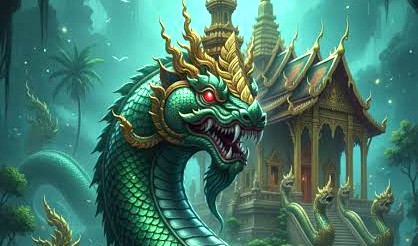
Nagas Architects of the Underworld: The Hood, The Jewel, The Earth
The symbolism surrounding the Nagas is rich with themes of power, protection, and transformation. The symbolism of the Naga's protective cobra hood represents their role as divine guardians of treasures, sacred places, and esoteric knowledge. Many Nagas are said to carry a luminous Nagamani, the sacred jewel of the serpent race, on their heads, a gem that dispels darkness, cures disease, and bestows fortune. Their connection to the Earth and water represents fertility, life force, and the primal, chthonic energies that lie hidden beneath the surface of our world. The shedding of their skin symbolizes cyclical renewal, rebirth, and immortality.
The Great Serpent Kings' Family
The Nagas are a vast and powerful clan with a divine lineage. Their mother is Kadru, and their father is the sage Kashyapa, who also fathered the gods, demons, and other celestial beings, making the Nagas cousins to all of them. The divine family of the Nagas and their mother Kadru is vast, but it is led by the great Serpent Kings. These include Shesha, the thousand-headed king who serves Lord Vishnu; Vasuki, the king who became Lord Shiva's ornament and the rope for churning the ocean; and Takshaka, another powerful king whose story is central to the Mahabharata. This family represents the raw, powerful forces of nature. Nagas Architects of the Underworld
An Infancy Bound by a Curse
The early life of the Naga race was defined by a moment of deceit and a mother’s terrible curse. In a dispute with her sister Vinata, Kadru cheated to win a bet and, as a consequence, enslaved Vinata and her son, Garuda. Later, when her own Naga sons refused to participate in another deceitful act, a furious Kadru cursed them, proclaiming that they would be consumed in the great fire sacrifice of King Janamejaya. The story of Kadru's curse upon the Naga race filled the young serpents with terror and led them to disperse across the world, seeking refuge and performing penance to escape their grim fate, shaping their destiny forever.
The Churning of the Milky Ocean
One of the most vital stories in Hindu mythology showcases a Naga king's immense power and sacrifice. During the Samudra Manthan, the churning of the cosmic ocean, the gods and demons needed a rope of unimaginable strength to churn Mount Mandara. They appealed to Vasuki, the King of the Nagas. In a great act of cosmic service, the story of Vasuki Naga becoming the rope for the churning is legendary. He allowed himself to be wrapped around the mountain, enduring immense pain as the gods and demons pulled him for a thousand years, proving the Nagas' incredible strength and their pivotal role in the universe's great events.
Guardians of the Cosmic Bed
Nagas are powerful beings who serve the highest gods. The greatest of all Nagas is the thousand-headed Ananta Shesha. The story of Shesha Naga as the eternal bed of Vishnu is a symbol of cosmic stability. Shesha floats upon the causal ocean, and in the coils of his massive body, Vishnu rests in a state of cosmic sleep between cycles of creation. It is said that when Shesha uncoils, time moves forward and creation begins. His thousand hoods form a protective canopy over Vishnu's head. He is the ultimate servant and devotee, representing the eternal, stable foundation upon which the entire cosmos rests. Nagas Architects of the Underworld
The Fierce Feud with Garuda
A central conflict in Naga lore is their eternal and bitter enmity with their half-brother, the mighty eagle-god Garuda. The story of the enmity between the Nagas and Garuda began when Kadru enslaved Garuda's mother, Vinata. To free his mother, Garuda had to steal the nectar of immortality for the Nagas. Though he succeeded, he tricked them out of drinking it. From that day on, Garuda became the sworn enemy and hunter of all serpents. This eternal war represents the cosmic opposition between the celestial (sky/eagle) and the chthonic (earth/serpent) forces of nature, a dynamic and powerful rivalry.
The Great Snake Sacrifice
The curse of their mother Kadru eventually came to pass. The story of King Janamejaya's Sarpa Satra (snake sacrifice) was an act of terrible vengeance. To avenge the death of his father, Parikshit, who was killed by the bite of the Naga king Takshaka, Janamejaya initiated a fire sacrifice of such power that it began drawing every snake in the universe into the flames. The Naga race faced complete annihilation. Their ultimate triumph was their survival, secured only by the timely intervention of the wise young sage Astika, who was half-Naga himself and successfully pleaded with the king to end the sacrifice. Nagas Architects of the Underworld
The Message of Transformation
The Nagas offer a powerful message of renewal, guardianship, and respect for hidden power. The empowering message for humanity from the Naga spirits is that profound transformation is possible. Just as a snake sheds its old skin to be reborn, we too must shed our old beliefs, habits, and egos to grow spiritually. They teach that great treasures - both material and spiritual - are often hidden and require courage and respect to access. They are guardians of the life-giving waters and the riches of the Earth, reminding us to honor and protect our natural world, for it holds the secret to life, abundance, and renewal.
The Serpent Power of Kundalini
The Nagas are the ultimate symbol of the primary life-force energy within the human body. They are intrinsically linked to Kundalini Shakti, the coiled serpent power at the base of the spine. This dormant spiritual energy, when awakened, travels up the spinal column, activating each chakra. This entire process is represented by a rising serpent. The key frequency the Nagas embody is the primal, creative life force itself. They are connected to the Muladhara (Root) Chakra, the foundation of our energy system. Their energy is a vibrant, earthy ray, promoting healing, regeneration, and powerful spiritual awakening. Nagas Architects of the Underworld
Venom, The Double-Edged Weapon
The Nagas' primary and most feared weapon is their potent venom. The symbolism of the Naga's poison as a celestial weapon is that of a dual-edged sword. Their venom can bring swift death, representing the destructive and dangerous forces of nature. However, in controlled amounts, venom is also the source of powerful antivenoms and medicines, representing its potential for healing and transformation. This duality teaches that the most powerful forces in the universe, like anger or desire, can be either destructive poisons or, when mastered and transmuted, can become potent tools for spiritual growth and the destruction of the ego. Nagas Architects of the Underworld
Ketu, Rahu, and Earth's Geometry
Naga influence permeates the esoteric realms of astrology and sacred patterns. The astrological connection of the Nagas to Rahu and Ketu is fundamental. Rahu (the North Node) and Ketu (the South Node) are the lunar nodes, often depicted as a serpent's head and tail, which dictate deep karmic patterns and spiritual lessons in a person's life. The Nagas' sacred geometry is the spiral, the symbol of cosmic evolution and coiled energy. This spiral is seen in the shape of a coiled snake and in the upward path of the awakened Kundalini energy, representing the journey from the material world to higher consciousness.
Krishna's Dance on the Serpent
A famous story from Krishna's life involves a confrontation with a powerful Naga. The story of Krishna subduing the serpent Kaliya took place in the Yamuna River near Vrindavan. The multi-headed serpent Kaliya had poisoned the river, making it uninhabitable. The young Krishna leaped into the water and, after a fierce battle, began to dance on Kaliya's many heads, playing his divine flute. Subdued by Krishna's divine weight and grace, Kaliya begged for mercy. Krishna spared him, ordering him to leave the river and reside in the ocean, thus purifying the waters and demonstrating his divine mastery over even the most powerful forces of nature. Nagas Architects of the Underworld
A Devotee's Miraculous Protection
Tales of the Nagas protecting their devotees are common in southern India, where they are revered as guardians. One local miracle story of Naga protection from Kerala tells of a family living on ancestral property that contained a sacred serpent grove (sarpa kavu). Developers tried to force them to sell the land so it could be cleared. The family refused. One night, the developers sent men to illegally cut down the trees. As they approached the grove, a massive, luminous king cobra appeared, hood flared, blocking their path. Terrified by the divine apparition, the men fled and never returned, and the family believes the Naga guardian of their land protected them. Nagas Architects of the Underworld
Guardians of Subterranean Realms
The Nagas are the undisputed kings and guardians of the underworld. The role of the Nagas as protectors of Patala loka is their primary duty. This subterranean realm is said to contain immense riches, including precious gems and esoteric knowledge, which the Nagas diligently guard. They are the protectors of all the treasures of the Earth. This lore positions them as gatekeepers to deeper levels of consciousness and hidden spiritual truths. To access these inner riches, one must approach with respect and purity of heart, earning the trust of these powerful, ancient guardians who can either block the path or grant entry.
The Offering of Milk and Faith
The worship of Nagas is an ancient and widespread tradition in India. The significance of offering milk to Nagas during Nag Panchami is a key ritual. Nag Panchami is a festival dedicated to their worship, where devotees offer milk, sweets, and flowers to serpent idols or live cobras. The offering of milk is a symbol of peace, requesting the Nagas to protect the family from snakebites and to bestow blessings of fertility, wealth, and well-being. It is an act of honoring the sacred bond between humans and these powerful earth spirits, acknowledging their power and seeking their divine grace and protection.
Naga Sculptures in Sacred Temples
The presence of Nagas is a constant feature in the sacred architecture of India. The symbolism of Naga carvings guarding temple entrances is a common sight. Carved images of multi-headed cobras often flank the doorways of temples, especially those dedicated to Shiva and Vishnu. In this role, they act as divine sentinels, preventing impure or negative energies from entering the sacred space. Their presence signifies that one is entering a realm of potent spiritual power, a space protected by ancient and formidable guardians. These carvings are a constant reminder of the Nagas' role as protectors of the divine. Nagas Architects of the Underworld
The Serpent of Time's End
Just as Shesha Naga supports creation, he also plays a role in its dissolution. At the end of a cosmic cycle (kalpa), the role of Shesha Naga in the destruction of the universe is to bring things to a close. It is said that from his thousand mouths, he will breathe forth a great venomous fire that will consume all the three worlds, burning away all of creation and reducing it to its primordial essence. This act is not one of evil, but a necessary part of the cosmic cycle, clearing the slate for Lord Brahma to begin the process of creation anew. Shesha is thus the alpha and the omega, the foundation and the fire of dissolution.
The Human-Serpent Shape-Shifters
Nagas are renowned for their magical ability to change their form. The ability of the Nagas to shapeshift into human form is a prominent feature in their folklore. These divine beings can take on a fully human appearance at will, often to interact with the mortal world. Many stories tell of beautiful Naga princesses (Nagini or Nagakanya) falling in love with human heroes, or of powerful Naga kings visiting earthly courts in human guise. This ability represents their mastery over the illusory nature of form and their role as beings who bridge the gap between the human world and the hidden, mystical realms.
Step Inside The Story - View All Tour Itineraries & Details

We’re here to offer genuine, thoughtful guidance if your interested in travelling to India. As a small, dedicated team, we pay close attention to every detail so you can focus on enjoying the experience while we take care of the planning. We believe the best trips begin when someone truly listens to what you want and how you like to travel, so the journey feels right for you and contributes to a happy, positive group on tour. Our communication stays clear, straightforward, and respectful at every step, with the goal of helping you feel understood, supported, and confident from first contact to the end of your journey.
Click Catherine Frith - About The Founder
Click Discover Life Travel - All Tours and More
Click Why We Are Different - Unique, Safe, Transparent