A Unique Look Into Indian History
Maurya Dynasty: Delhi
Discover Life Travel
A Prelude to Greatness
Before the Mauryas rose, the Indian subcontinent was a patchwork of warring states and republics known as the Mahajanapadas. The powerful but deeply unpopular Nanda Empire, centered in Magadha, dominated the Gangetic plain, infamous for its avarice and low-born status. In the northwest, the remnants of Alexander the Great's invasion had created a power vacuum. The political fragmentation in pre-Mauryan India created a volatile environment of shifting alliances and constant warfare, a landscape ripe for a visionary leader to conquer and unify under a single, powerful banner. Maurya Dynasty Delhi
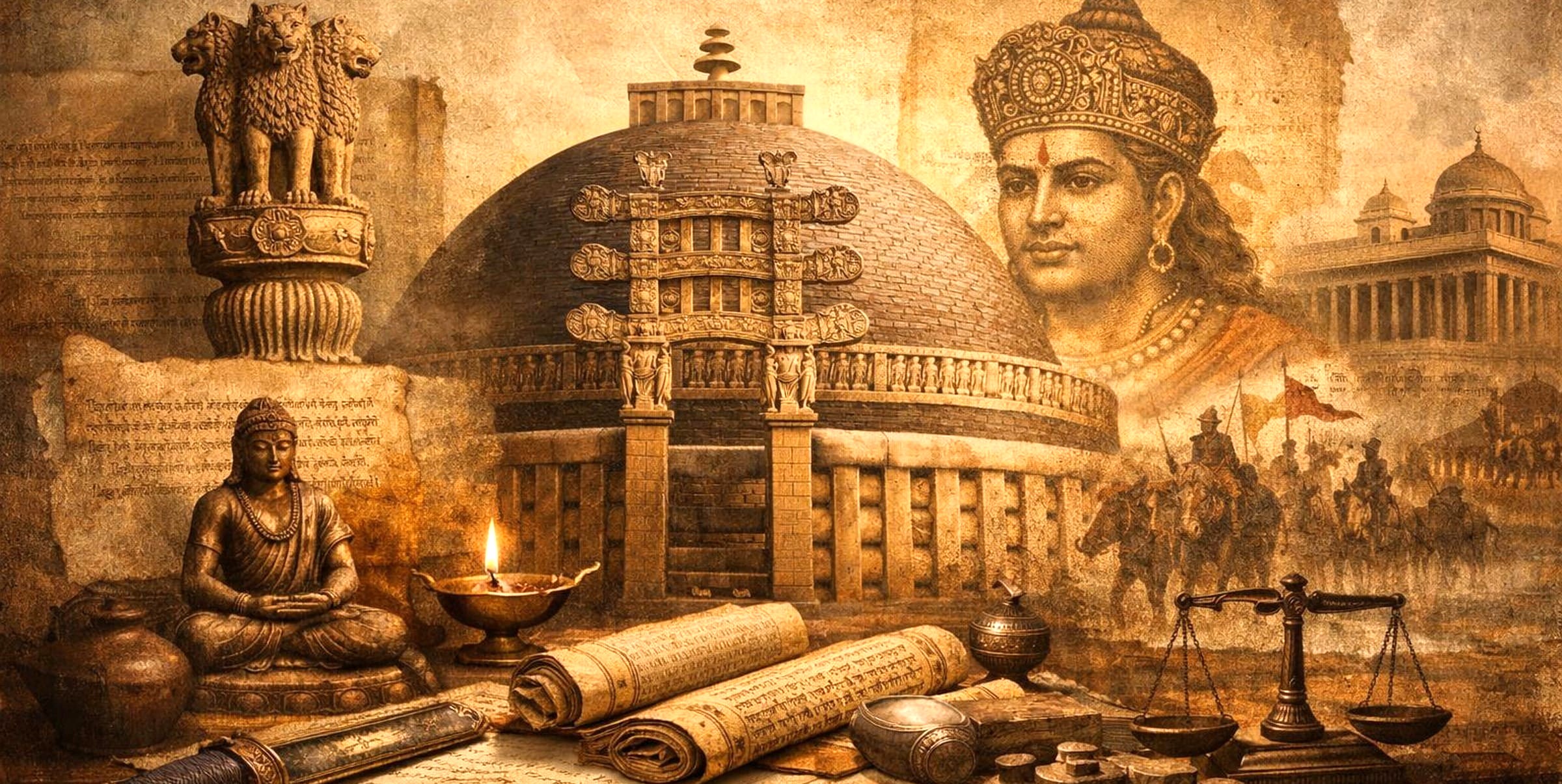
Maurya Dynasty Delhi: The Scholar and the Shepherd Boy
The genesis of the empire is a legendary tale of intellect meeting destiny. The brilliant but insulted Brahmin scholar, Chanakya (or Kautilya), vowed to destroy the arrogant Nanda king. He journeyed across the land, searching for a worthy instrument for his revenge. He found him in a young boy, Chandragupta Maurya, playing the game of kings with his friends. Recognizing his innate leadership, Chanakya's discovery of Chandragupta Maurya forged a formidable alliance, with the scholar mentoring the youth to become the founder of India's greatest indigenous empire.
A Day in the Imperial Capital
A day in the life of a Mauryan emperor in the grand wooden palace of Pataliputra was a masterclass in vigilance and administration. As described by the Greek ambassador Megasthenes, the king was constantly guarded and rarely slept in the same room twice. Mornings were for public audiences and receiving reports from his vast network of spies. Afternoons were dedicated to overseeing the empire’s sprawling bureaucracy, from revenue collection to public works. The daily life of a Mauryan emperor was a tightly scheduled, high-security affair at the heart of a complex imperial machine. Maurya Dynasty Delhi
Life Under the Emperor's Gaze
For the common citizen, life was orderly and secure, but lived under the constant watch of the state. The empire was divided into provinces, districts, and villages, each with its own hierarchy of officials. A vast network of spies reported on everything from public dissent to the honesty of administrators. Key industries like mining, forestry, and liquor production were state-controlled. The empire's centralized administrative system, as outlined in Chanakya's Arthashastra, was incredibly thorough, creating a highly organized, if somewhat Orwellian, society designed for maximum efficiency and control.
Feeding an Imperial Machine
The Mauryan state fed a colossal army and a vast bureaucracy through meticulous organization. The royal kitchens were part of a larger, state-controlled supply chain. A "Superintendent of Agriculture" oversaw production, and massive state-run granaries stored surpluses to be used for the army, officials, and as a buffer against famine. The food production and logistics in the Mauryan empire were a function of state, not a private enterprise, ensuring the imperial machine was always fueled and ready for action, a key component of its stability and power. Maurya Dynasty Delhi
The Law of the Lion Capital
Justice in the empire was systematic and often severe, based on the principles laid out in the Arthashastra. A network of civil and criminal courts operated throughout the realm. Judges and magistrates were appointed to handle everything from commercial disputes to treason. Punishments were harsh, including fines, mutilation, and the death penalty, to act as a strong deterrent. The judicial system described in the Arthashastra was designed not just to resolve disputes but to maintain absolute order and protect the interests and security of the state above all else.
From Brahmanism to the Buddha's Path
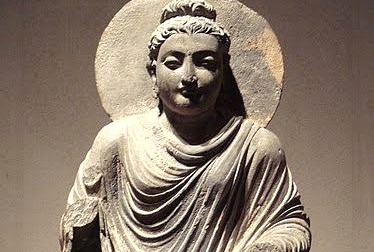
The early Mauryan emperors followed traditional faiths. Chandragupta, influenced by Brahmanical teachers like Chanakya, later abdicated and became a Jaina monk. However, the dynasty's spiritual destiny was transformed by Chandragupta's grandson, Ashoka. Horrified by the carnage of his own conquest of Kalinga, he underwent a profound change of heart. Ashoka the Great's conversion to Buddhism was a pivotal moment, shifting the empire's focus from military conquest to the moral and spiritual conquest of "Dharma."
The Emperor's Rock Edicts
Ashoka's "festivals" were a unique and enduring form of public communication. He eschewed grand processions for a more profound legacy: he had his ethical teachings, his "Dharma," carved onto pillars and rock faces across the length and breadth of India. Written in local scripts like Brahmi and Kharosthi, they were placed along trade routes and in cities. The purpose of Ashoka's Rock and Pillar Edicts was to create a permanent moral charter for his empire, communicating his policies on compassion, non-violence, and religious tolerance directly to his subjects. Maurya Dynasty Delhi
The Court of Spies and Philosophers
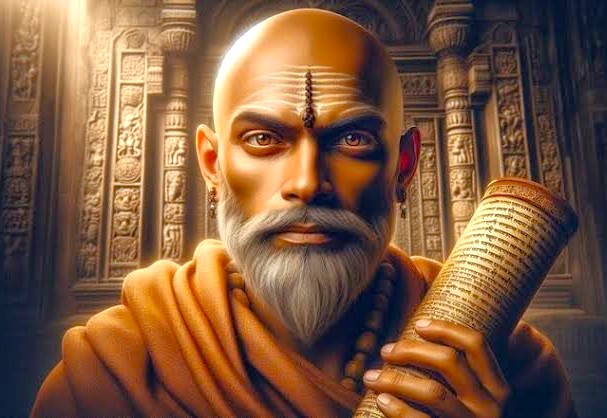
The Mauryan court was not a place of frivolous entertainment but the nerve center of a political-intelligence apparatus. It was dominated by the genius of figures like Chanakya, who served as prime minister. It was also an international hub, hosting foreign ambassadors like Megasthenes from the Seleucid Empire. The court’s primary function was statecraft, driven by a constant flow of information from the empire-wide spy network. The role of spies and ambassadors in the Mauryan court was critical, providing the intelligence needed to manage a vast, multi-ethnic empire.
The Elephant Armies Conquer Kalinga
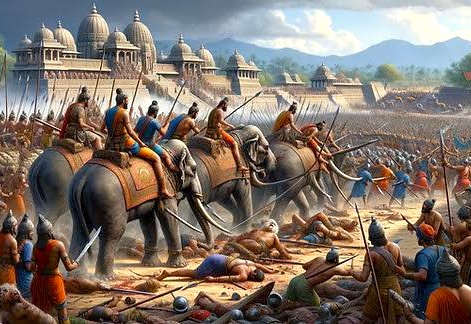
The military was one of the largest and most formidable in the ancient world, featuring a massive infantry, cavalry, and a fleet of chariots. Its most terrifying component was its corps of thousands of war elephants. The devastating power of this army was unleashed in the Kalinga War, a brutal campaign of conquest led by Ashoka. Though he was victorious, the slaughter of over 100,000 people horrified the emperor. The military campaign and aftermath of the Kalinga War became the catalyst for Ashoka’s transformation from a ruthless conqueror to a patron of peace.
Alliances Sealed Across Continents
Mauryan diplomacy was as powerful as its army. The dynasty's founder, Chandragupta, famously defeated Alexander's general, Seleucus I Nicator. In the ensuing peace treaty, Chandragupta gained vast territories and, it is believed, married a Seleucid princess, forging a powerful Greco-Indian alliance. This diplomatic tradition continued under his successors. The Hellenistic and Mauryan diplomatic relations were extensive, with Ashoka later sending "Dharma" missions to the courts of Greece, Egypt, and Macedonia, spreading his message of peace far beyond India's borders. Maurya Dynasty Delhi
The Birth of Indian Stone Art
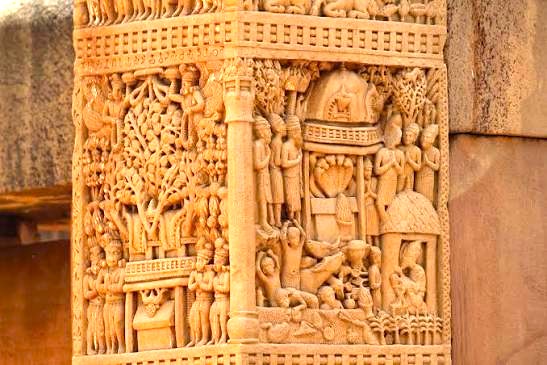
While earlier architecture used wood, the Mauryans, particularly Ashoka, ushered in the age of monumental stone art and architecture in India. He commissioned the construction of thousands of stupas and viharas (Buddhist monasteries). His most famous legacy is the highly polished sandstone pillars, crowned with magnificent animal capitals. The Ashokan pillars and their Lion Capital (now India's national emblem) represent the pinnacle of Mauryan artistry, a sublime blend of Persian and indigenous styles that became the first great imperial art of India.
Imperial Passage to the Afterlife
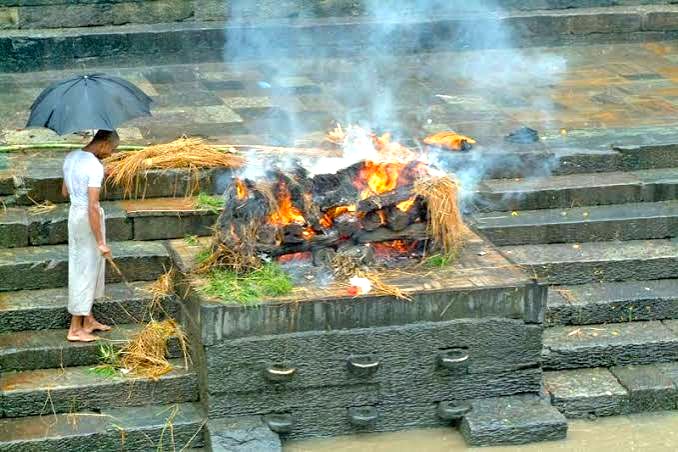
The funeral rites for a Mauryan emperor would have been a major state affair, conducted with Vedic or, in Ashoka's case, Buddhist ceremonies. For Chandragupta, who ended his life as a Jaina ascetic, the final rite would have been the voluntary fast-unto-death, Sallekhana. Ashoka's relics, after his cremation, were said to have been divided and enshrined in stupas across his empire. The distribution of the Buddha's relics by Emperor Ashoka served as a model, turning the remains of revered figures into focal points for devotion and pilgrimage.
Hospitals for Man and Beast
In a revolutionary move guided by his new Buddhist ethics, Ashoka implemented what may be the world's first state-sponsored public health system. His rock edicts speak of establishing medical facilities for both humans and animals throughout his empire and even abroad. He ordered the planting of medicinal herbs and the digging of wells along roads for the benefit of travelers and livestock. The establishment of hospitals for humans and animals by Ashoka was a radical act of compassion, a tangible application of his policy of Dharma. Maurya Dynasty Delhi
Highways, Wells, and Imperial Unity
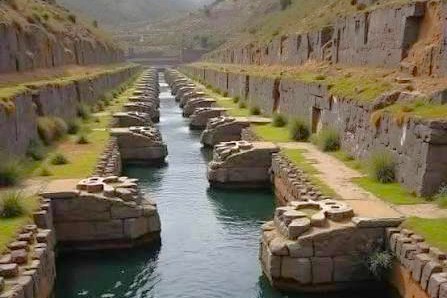
The Mauryans were master builders of infrastructure, which was essential for holding their vast empire together. They built a network of royal highways, most famously the "Uttarapatha" or Northern Road, the precursor to the Grand Trunk Road, which connected the empire from east to west. Along these roads, they planted trees for shade, dug wells for water, and built rest houses for travelers. The construction of roads and infrastructure by the Mauryan empire was crucial for military movement, trade, and the swift communication needed to administer their sprawling territories.
A General's Treachery, an Empire's End
After Ashoka's death, the empire began to decline under a series of weaker rulers. The final blow came not from a foreign invader but from within. Around 185 BCE, during a military parade, the last Mauryan emperor, Brihadratha, was assassinated by his own commander-in-chief, Pushyamitra Shunga. This dramatic public coup d'état brought the illustrious Mauryan dynasty to an end. The founding of the Shunga dynasty by Pushyamitra marked the collapse of India's first great empire and the beginning of a new period of political fragmentation.
Step Inside The Story - View All Tour Itineraries & Details

We’re here to offer genuine, thoughtful guidance if your interested in travelling to India. As a small, dedicated team, we pay close attention to every detail so you can focus on enjoying the experience while we take care of the planning. We believe the best trips begin when someone truly listens to what you want and how you like to travel, so the journey feels right for you and contributes to a happy, positive group on tour. Our communication stays clear, straightforward, and respectful at every step, with the goal of helping you feel understood, supported, and confident from first contact to the end of your journey.
Click Catherine Frith - About The Founder
Click Discover Life Travel - All Tours and More
Click Why We Are Different - Unique, Safe, Transparent