Unique Insights Into The Deities Of India
Karni Mata: Peace Without a Sword
Discover Life Travel
The Weaver of Destiny
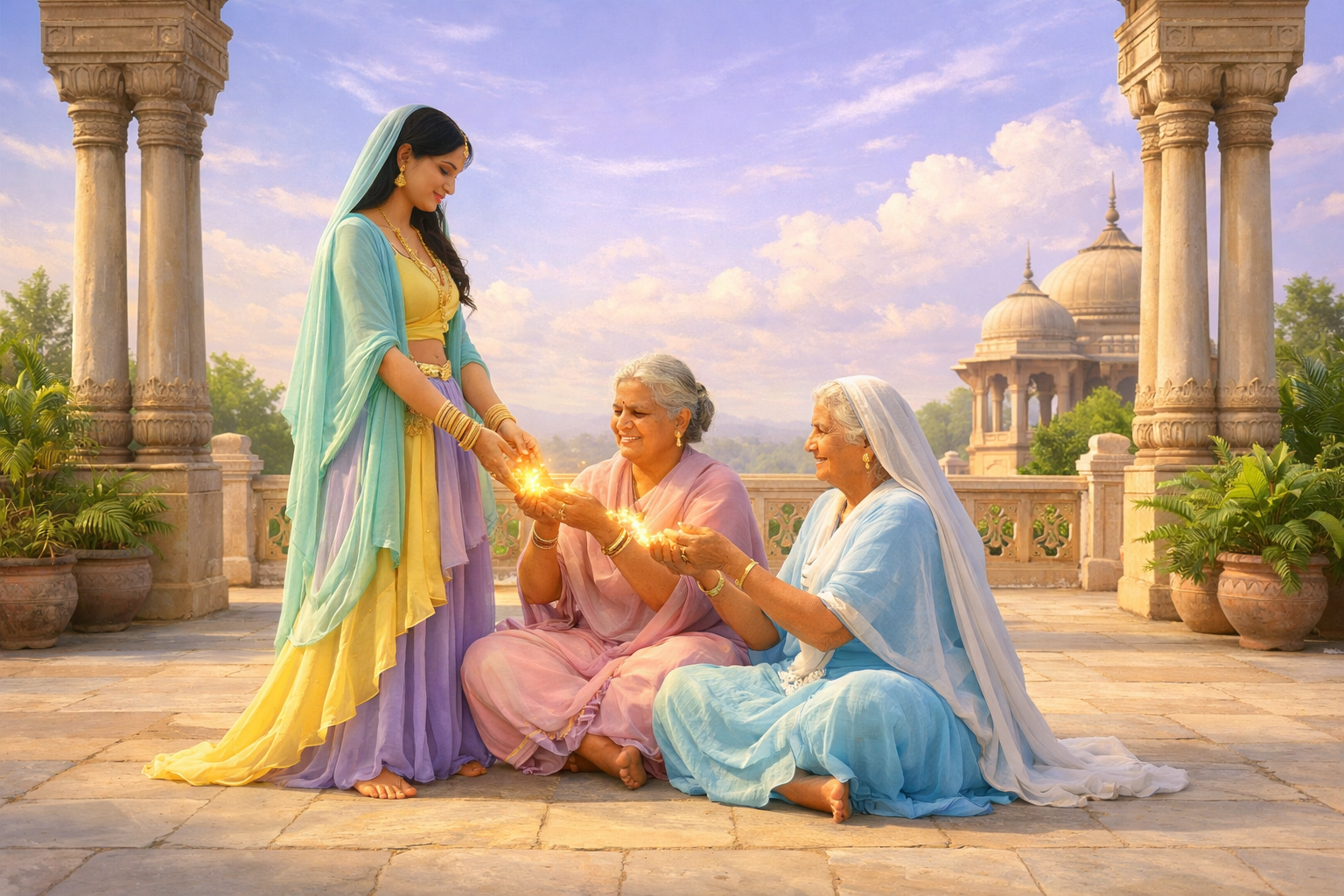
In the 14th century, in the village of Suwap in Rajasthan, a child was born to Mehoji Charan and his wife Deval Devi. The divine birth story of the mystic Karni Mata tells that she was born as Ridhu Bai. For a long time, she did not speak, causing her family great concern. However, at the age of five, she miraculously cured her aunt's crooked fingers with a single touch. When her aunt, overjoyed, called her "Karni" (one who works miracles), she spoke for the first time, accepting the name. This first miracle revealed her as a divine being, an incarnation of the warrior goddess Hinglaj Mata, born to protect her people. Karni Mata Peace Without a Sword
Karni Mata Peace Without a Sword: The Sacred Rat Temple of Deshnoke
Karni Mata's primary and most famous abode is a place of unique and astonishing devotion. The sacred geography of the Karni Mata Temple at Deshnoke, located about 30 kilometers from Bikaner in Rajasthan, is her earthly seat of power. This magnificent marble temple is not famous for its gold, however, for its inhabitants: over 25,000 holy black rats, called kabbas (little children), who are believed to be the reincarnated souls of her clansmen. Devotees from all over the world travel to this world-famous holy rat temple of Rajasthan to receive the blessings of the goddess and her sacred, four-legged children.
The Holy Rats and the Auspicious White One
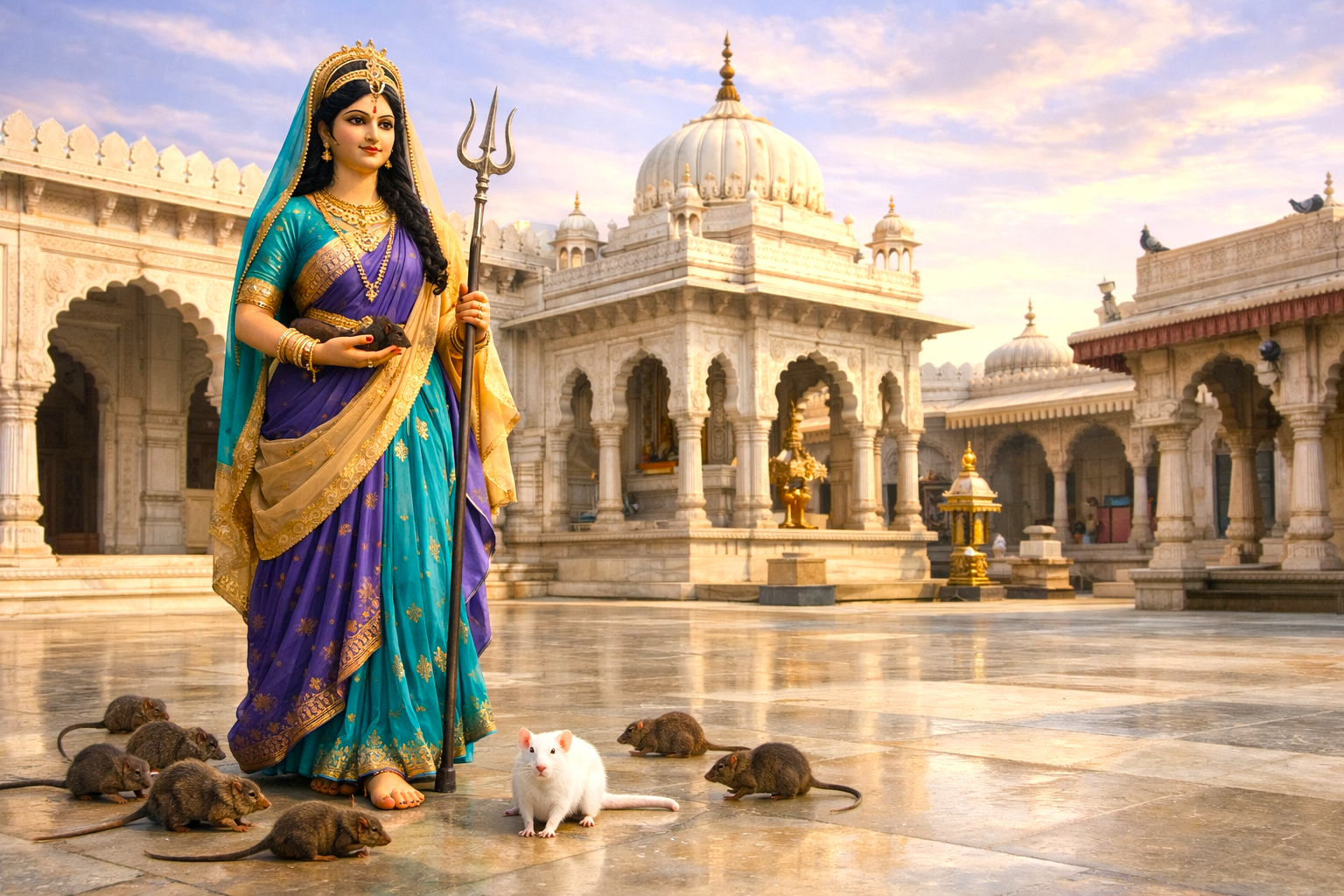
The symbols of Karni Mata are unique in the Hindu pantheon, blending the fierce with the unexpected. Her most famous symbols are the sacred rats, or kabbas, that inhabit her temple, representing her clansmen and her promise that her devotees will never be separated from her. Among the thousands of black rats, the most powerful symbol is the rare and auspicious white rat of Karni Mata Temple. Sighting one of these few white rats is considered a sign of immense blessing and answered prayers. Her other primary symbol is the mighty Trishula (trident), representing her power as an incarnation of the warrior goddess Durga, the destroyer of evil. Karni Mata Peace Without a Sword
A Family of Bards, A Lineage of Sages
Karni Mata’s family places her within the revered Charan caste of Rajasthan, known as divine bards and poets. Her father was Mehoji Charan and her mother was Deval Devi. In her earthly life, she was married to Depaji Bithu of Sathika village. However, she expressed no interest in worldly married life. She arranged for her younger sister, Gulab Bai, to marry her husband instead, so he could have children and a happy family life. While she had no biological children of her own, she lovingly adopted her sister's son, Lakhan, as her own stepson, a decision that would lead to one of her most famous miracles.
The Miracle Child Who Refused a Mortal Life

From her earliest years, Karni Mata demonstrated her divine nature and disinterest in worldly affairs. The childhood of the mystic sage Karni Mata was marked by a series of miracles that revealed her identity. After her marriage to Depaji, she led a life of asceticism within the marriage. The story of Karni Mata renouncing her marital duties is a testament to her divine purpose. She convinced her husband and family of her spiritual path, arranging for her sister to take her place. This act established as a spiritual mother to her entire community. Karni Mata Peace Without a Sword
The Serpent's Venom Turned to Curdled Milk
One of Karni Mata's most famous miracles demonstrates her absolute power over life and death. The story of Karni saving a boy from a snakebite is a beloved local legend. A young merchant's son, Jagdu, was fatally bitten by a venomous snake. His grieving family brought his body to Karni Mata. She calmly approached the boy, but instead of using mantras, she chastised the serpent for its audacity. She then struck the ground with her foot, and miraculously, the potent venom in the boy's veins turned into harmless curdled milk, which he vomited up as he returned to life, perfectly healthy.
The Divine Lion of the Desert Goddess
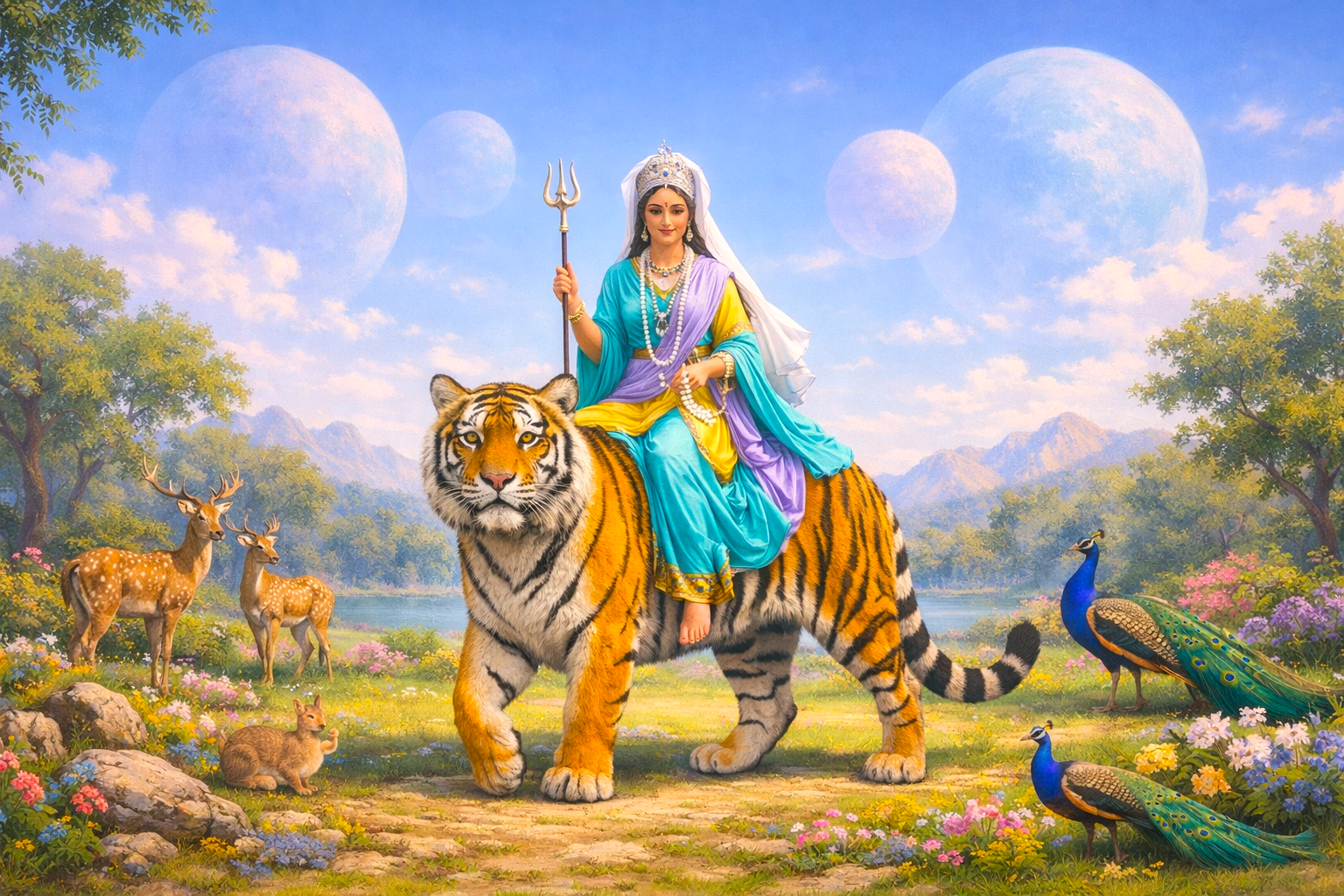
As an incarnation of Durga, Karni Mata's divine vehicle is the most powerful and regal of all beasts. Her vahana is the mighty lion, the symbolic vehicle of Durga. While she traveled on foot or by camel during her earthly life, in her divine form, she is depicted riding the lion, symbolizing her complete mastery over the raw power of nature, her supreme courage, and her royal authority as a protector-goddess. She has no primary musical instrument, but the sound associated with her is the collective chittering of thousands of her sacred kabbas in her temple, a unique and constant prayer.
The Goddess Who Defeated the God of Death
Karni Mata’s greatest triumph was not against a demon, but against the unchangeable law of death itself. The story of her confronting Yama, the God of Death, is her most profound legend. When her beloved stepson, Lakhan, drowned in a tank while trying to drink water, the heartbroken Karni Mata declared he would not be taken. She journeyed to the underworld and demanded his life back from Yama. When Yama refused, stating it was against cosmic law, the enraged goddess declared that none of her clansmen would ever enter Yama's halls again. Instead, upon death, they would be reincarnated as kabbas in her temple, and from there, as humans in her own family, creating a unique cycle of rebirth under her personal protection. Karni Mata Peace Without a Sword
The Pillar of Fire and a Mystical Disappearance
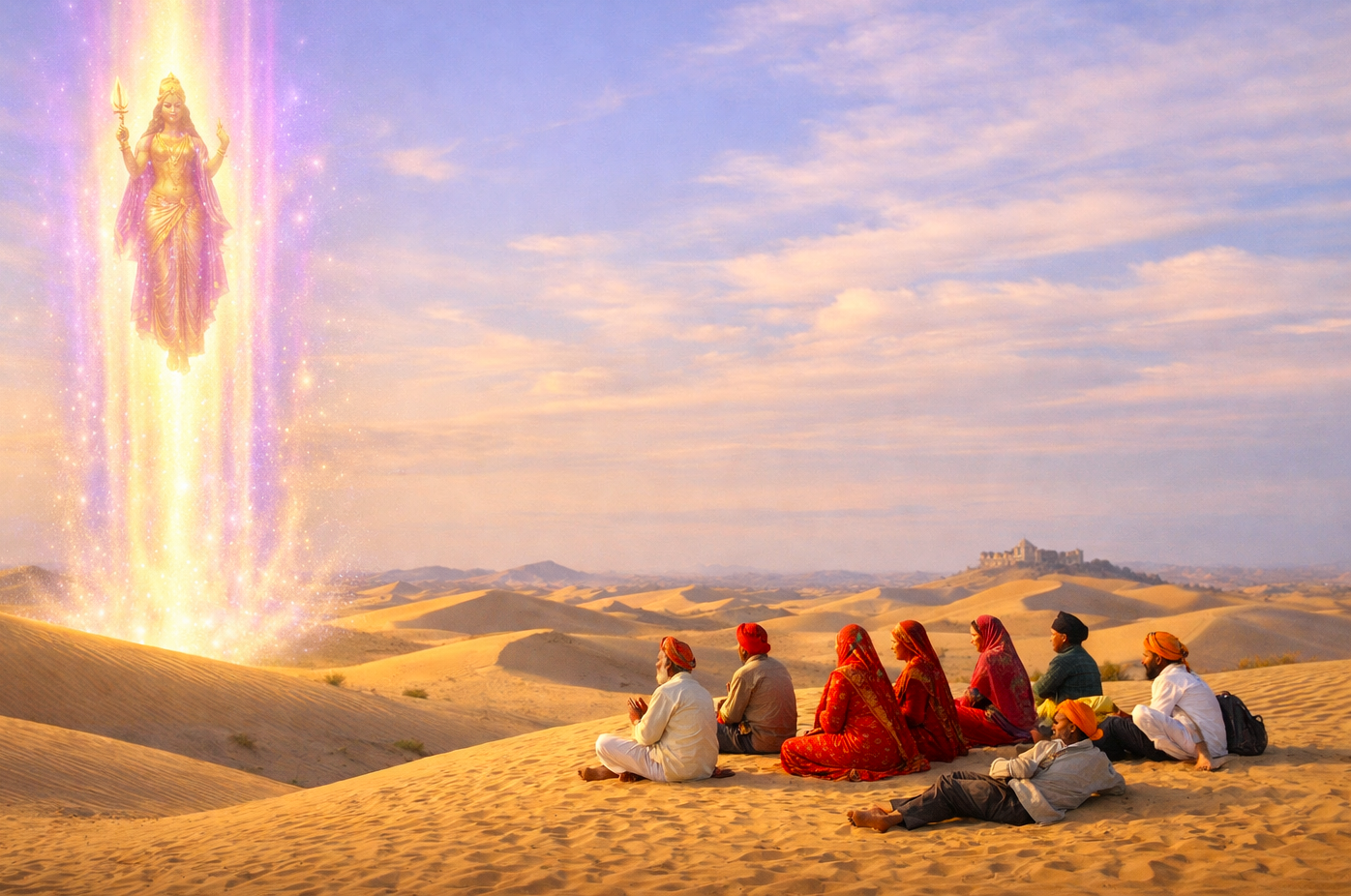
At the age of 151, Karni Mata decided her earthly mission was complete. The story of Karni Mata’s mystical disappearance - her divine ascension. While traveling back to Deshnoke with her followers, she asked the caravan to stop for water. She walked away from the group towards a dune and was suddenly seen rising into the sky as a brilliant pillar of divine light. She then vanished completely, leaving only her footprints behind. This act was not a death, but a lila of merging her physical form back into her divine, energetic essence, proving she was a being beyond the normal cycle of mortality.
A Message: The Mother's Protection Is Absolute
The life of Karni is a powerful testament to the fierce, protective love of the divine mother. The empowering message for humanity from Karni Mata is that a true devotee is never abandoned. Her promise to keep her clansmen with her as reincarnated rats is a symbol of her absolute commitment to her people. She teaches that the protection of the divine mother is so powerful it can challenge the laws of death itself. Her life is a message of strength, courage, and the assurance that faith in her provides a shield against all harm, both in this life and the next. Karni Mata Peace Without a Sword
The Root Chakra and a Fiery Orange-Red Ray
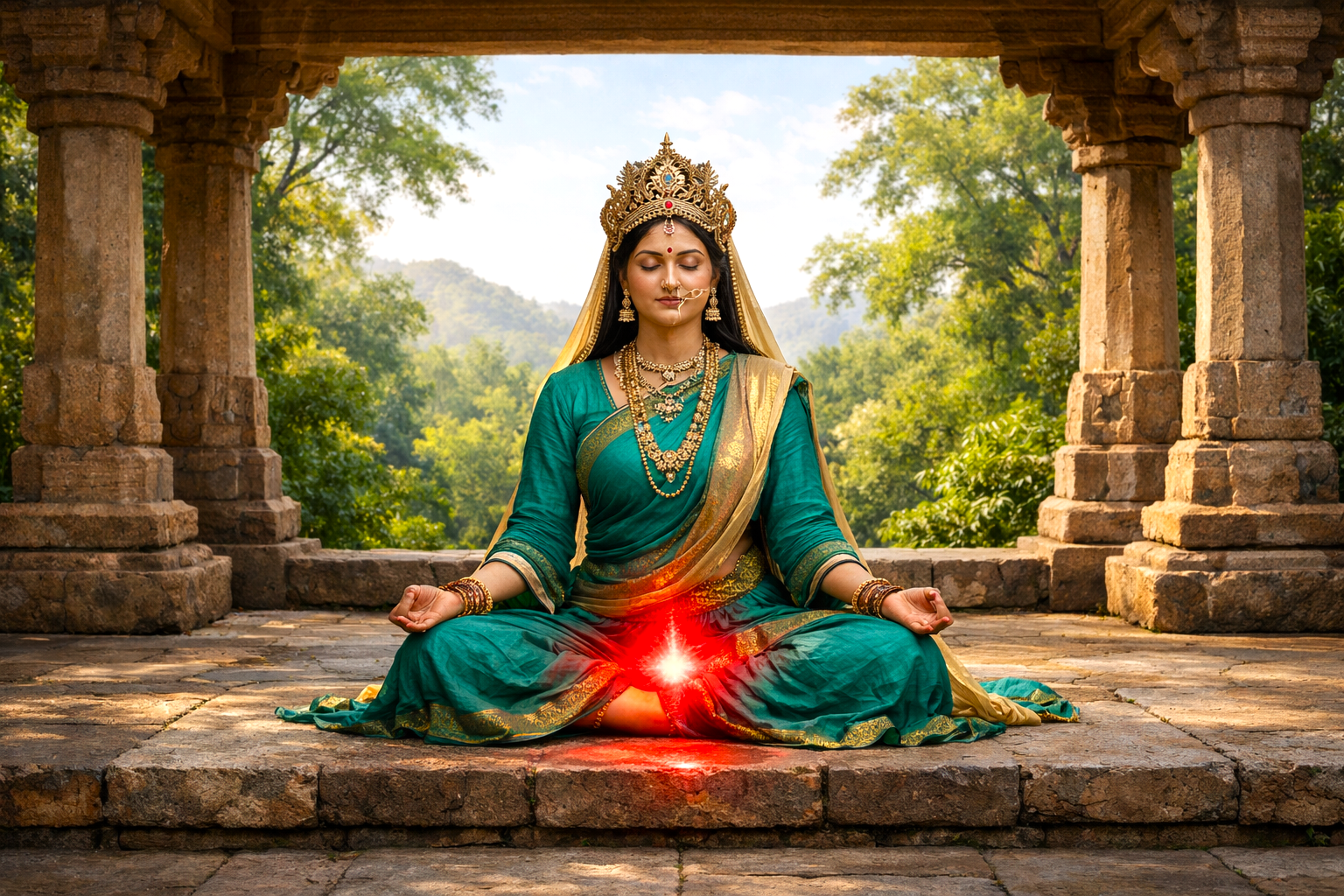
As a warrior goddess deeply connected to the earth, her people, and their survival, Karni Mata's energy is centered at the base of the spine. She is a powerful embodiment of the Muladhara (Root) Chakra, the center of stability, security, and tribal identity. The key frequency that Karni Mata embodies is that of fierce, unwavering maternal protection. Her auric field would be a powerful, fiery orange-red ray, the color of the Rajasthani desert sands mixed with the primal fire of the warrior goddess Durga, representing her immense earthly power and her ferocious protective instincts.
The Divine Trident That Protects the Kingdom
As a warrior form of the great goddess, Karni Mata wields the most powerful of all divine weapons. The power of Karni Mata's divine Trishula (trident) is a symbol of her ability to destroy evil and protect her devotees. Legends state that she used her spiritual power, symbolized by the trident, to protect the forts of Bikaner and Jodhpur from enemy attacks. Laying the very foundation stone of Bikaner fort, she blessed it with her power, ensuring its invincibility. Her weapon is a divine tool of protection for her chosen kingdom.
The Planets Mars and the Moon: The Warrior Mother
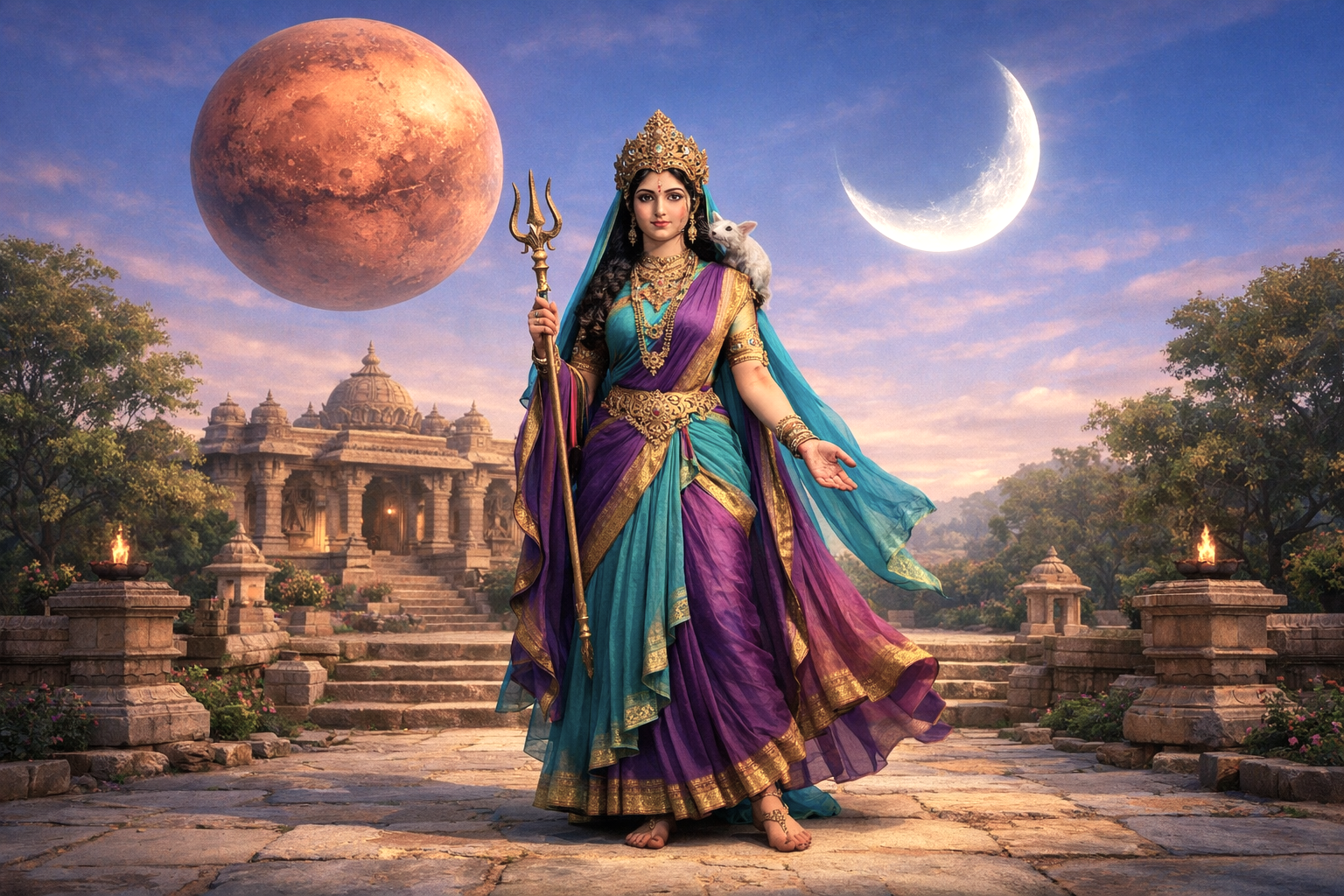
Karni Mata's dual nature as a fierce warrior and a loving mother figure is perfectly reflected in two powerful planets. Her power, courage, and role as a protector of kingdoms link her directly to the fiery and martial energy of the planet Mars. Her intense devotion to her clan, her maternal promise to keep her "children" with her forever, and her role as a nurturing, beloved figure connect her profoundly to the maternal, protective energy of the Moon. Karni Mata embodies the rare combination of a fierce Martian warrior with the unwavering, protective heart of a Cancerian Moon. Karni Mata Peace Without a Sword
A Modern Miracle of a Soldier's Survival
Devotees, especially soldiers from the region, still pray to Karni Mata for protection. A modern miracle of Karni Mata’s grace is a story told by a soldier who served in a border conflict. Caught in an intense firefight and separated from his unit, he was sure he would die. An army of rats suddenly swarmed out of a nearby bunker, creating a chaotic diversion that drew the enemy's attention for just a few crucial seconds. This allowed him to escape to a safe position. He believes with all his heart that the goddess sent her sacred kabbas onto the battlefield to save his life.
The Goddess Who Blessed the Founding of Bikaner
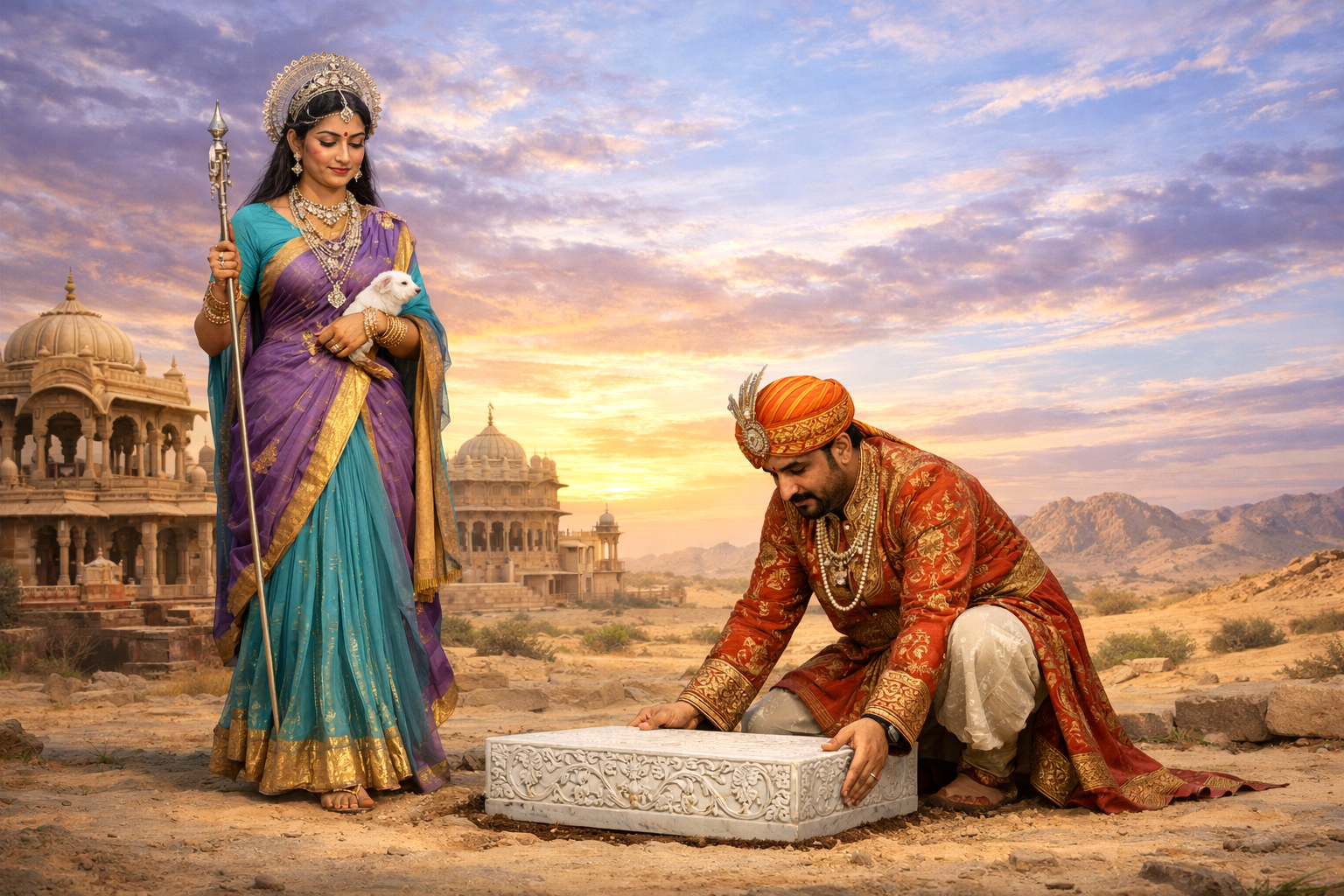
The story of Karni Mata and the founding of Bikaner is a cornerstone of the region's history. When Rao Bika, the son of the king of Jodhpur, wanted to found his own kingdom, he sought the blessings of the powerful mystic. Karni Mata approved of his quest and personally laid the foundation stone of the Bikaner fort in 1488, blessing him and prophesying that his rule would be even more glorious than his father's. Her patronage ensured the stability and success of the new Rathore kingdom.
Step Inside The Story - View All Tour Itineraries & Details
We’re here to offer genuine, thoughtful guidance if your interested in travelling to India. As a small, dedicated team, we pay close attention to every detail so you can focus on enjoying the experience while we take care of the planning. We believe the best trips begin when someone truly listens to what you want and how you like to travel, so the journey feels right for you and contributes to a happy, positive group on tour. Our communication stays clear, straightforward, and respectful at every step, with the goal of helping you feel understood, supported, and confident from first contact to the end of your journey.
Click Catherine Frith - About The Founder
Click Discover Life Travel - All Tours and More
Click Why We Are Different - Unique, Safe, Transparent