Unique Insights Into India
Kalpas: A Day of Brahma
Discover Life Travel
The Timeless Rhythm of Creation
The Kalpa, meaning a cosmic formation or aeon, represents a single day in the life of Brahma, the creator within the Vedic cosmology. This period lasts for 4.32 billion human years, encompassing the birth, evolution, and eventual dissolution of the material universe. Located within the Satyaloka, the highest spiritual plane, this cycle governs the rhythmic manifestation of all living beings and planetary systems. The Kalpa is divided into fourteen Manvantaras, each overseen by a different Manu. This temporal framework ensures the orderly progression of souls through various life forms. It serves as the ultimate clock of the universe, dictating the rise and fall of celestial dynasties and the periodic cleansing of the cosmic order through the process of Pralaya, where the material world returns to a state of potential before the next dawn of the creator. Kalpas A Day of Brahma
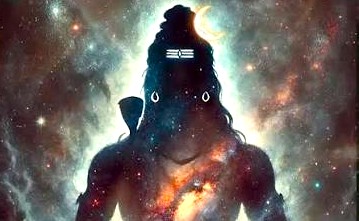
Emergence from the Primal Void: Kalpas A Day of Brahma
Before the current Kalpa began, the universe existed in a state of total dissolution known as Mahapralaya. The character Brahma emerged from a lotus springing from the navel of Vishnu to commence the task of formation. This process started exactly 1.97 billion years ago according to the current Varaha Kalpa records. The space was initially a void where the first elements of heat, air, and water were stabilized. Brahma utilized the power of Tapas or intense meditation to project the blueprints of the planetary systems. This pre-history was defined by the absence of physical form, where only the vibration of the primordial sound existed as a foundation for the coming material expansion of the Jivas.
Engineering the Satyaloka Courts
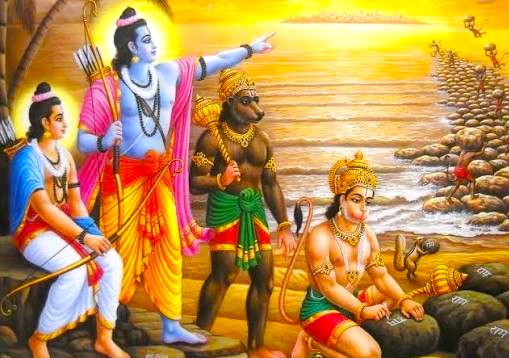
The construction of the Satyaloka, the headquarters of the creator, occurred at the very start of the Kalpa. These celestial structures were projected through thought-form, utilizing the subtle substance of Akasha. The design focused on infinite geometry to house the growing population of Devas and Prajapatis. Within these halls, the character Brahma manages the administrative duties of the universe. The population of this high plane includes the four Kumaras and various sages who exist in a state of perpetual youth. These structures are designed to withstand the minor dissolutions that occur at the end of each Manvantara, serving as a permanent record of the cosmic laws that govern the movement of every star and galaxy in the manifest world. Kalpas A Day of Brahma
Progeny of the Mindborn Sages
Notable family lineages began with the Prajapatis, the mind-born sons of Brahma, including characters like Daksha, Bhrigu, and Angiras. These lineages were responsible for the biological expansion of the universe. The first Manu, Swayambhuva Manu, and his wife Shatarupa, established the human population statistics, starting with their children Priyavrata and Uttanapada. These families were tasked with the governance of the earth and the lower heavens. The administration of these lineages ensures that the physical and spiritual laws are maintained across the generations. Their daily life involves the performance of Yajna to sustain the energy levels of the planets, ensuring that the Jivas can fulfill their karmic duties within the allotted time of the Kalpa.
Chronicles of the Deva Wars
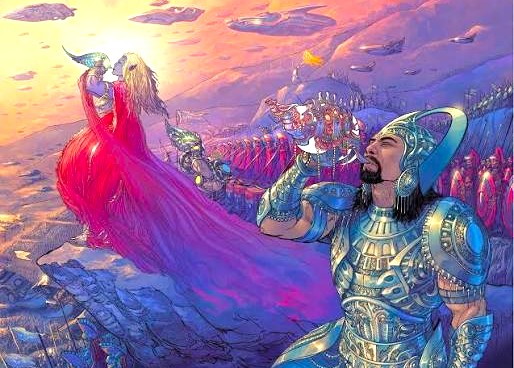
The battle chronicles of the Kalpa are defined by the perpetual struggle between the Devas and the Asuras for control over the celestial nectar. One major conflict occurred during the fourth Manvantara, led by the character Indra against the demon Vritra. These battles were fought using weapons of sound and light that could alter the rotation of the planetary bodies. The outcomes of these encounters determined the spiritual climate of the earth for millions of years. The population of the heavens fluctuated as warriors from both sides were promoted or demoted based on their actions.
Sustenance of the Celestial Nectar
Food traditions in the higher planes center on the consumption of Amrita, a divine nectar that provides immortality and perfect health. In the kitchens of the Satyaloka, this substance is prepared through the distillation of solar energy and cosmic sound. The quantities consumed are measured in drops, as a single drop can sustain a jiva for a thousand years. For the lower planes, the traditions involve the preparation of 'Havis', or offerings of clarified butter and grains during the sacred fire rituals. These food preparations are timed with the movements of the constellations to ensure maximum nutritional and spiritual potency. The consumption of these items is a ritual act that connects the individual with the life-force of the entire Kalpa.Kalpas A Day of Brahma
Rites of the Triple Sandhya
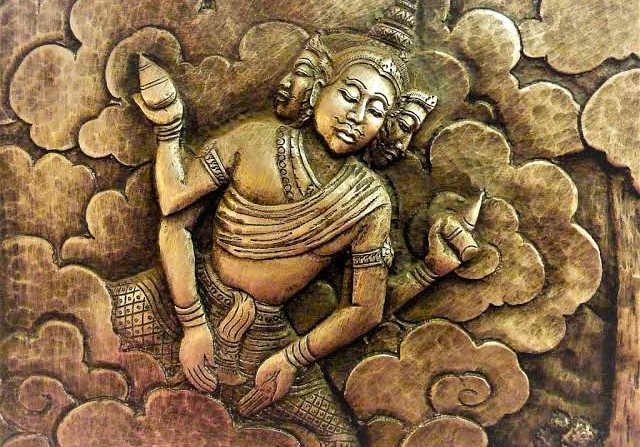
Religious practices within the Kalpa are governed by the Sandhyavandanam, a ritual performed at the junctions of dawn, noon, and dusk. These rites are conducted by the population of sages and householders to maintain the stability of the cosmic threads. The practice involves the chanting of the Gayatri mantra and the offering of water to the Sun. In the higher realms, these rituals are performed with mental focus, where the practitioner identifies with the light of the creator. These practices have remained unchanged for 4.32 billion years, ensuring that the spiritual frequency of the universe remains aligned with the source. The performance of these rites is vital for the prevention of premature dissolution and the health of the planetary systems. Kalpas A Day of Brahma
Veins of the Akasha Ganga
Water systems in the celestial realms are centered on the Akasha Ganga, a river of light that flows from the spiritual dimensions into the material world. This river provides the essential purification for the souls descending into physical form. The engineering of these flows was managed by the character Bhagiratha in a later Manvantara to bring the water to the parched earth. The celestial river is diverted through stone-like structures of light to reach the various planetary systems. These systems utilize the resonance of the moon to regulate the tides and the moisture levels of the soil. The availability of this sacred water is essential for the performance of the daily rituals and the maintenance of the life-cycles of all living beings. Kalpas A Day of Brahma
Protocols of the Prajapati Court
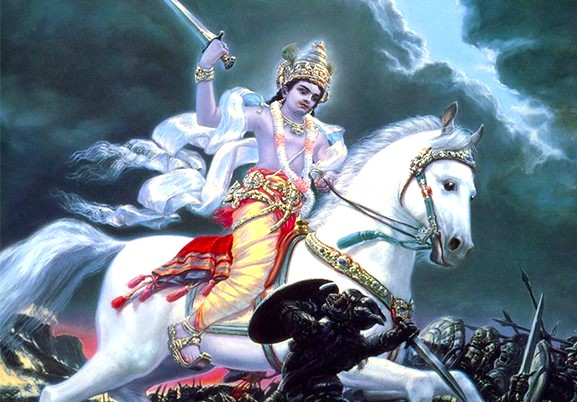
Daily life for the royal family of the Satyaloka involves the continuous monitoring of the cosmic records. The King of the heavens, Indra, oversees the weather and the seasonal cycles, while his Queen, Shachi, manages the social welfare of the celestial inhabitants. Their children are educated in the science of 'Vyakaran' and 'Jyotisha' to understand the mechanics of the Kalpa. The palace life is a blend of intense meditation and administrative rigor, where every thought is used to direct the energy flows of the universe. Despite their high status, the celestial royals are subject to the laws of time, preparing for the transition of power that occurs at the end of each seventy-one cycles of the four ages. Kalpas A Day of Brahma
Rhythms of the Manvantara Transition
Festivals in the cosmic calendar mark the transition from one Manu to the next. The Manvantara-Sandhya is a period of 1.7 million years that serves as a festival of renewal. During this time, the population of the universe gathers in the higher planes to witness the installation of the new Manu and the Saptarishis. Another key event is the Brahma-Muhu-rat, held every morning of the Kalpa at 4:00 AM celestial time. These events involve massive processions of Gandharvas and Apsaras who perform music and dance. These celebrations are timed with the alignment of the galactic centers to ensure the infusion of new energy into the planetary grids, providing a sense of joy and continuity for all beings.
Alchemy of the Soma Forest
Medicinal practices in the Satyaloka utilize the Soma plant, a lunar herb that provides the essence of life and healing. Healers known as the Ashvins prepare specialized tonics from this herb to treat the exhaustion of the celestial staff. Medicines used include 'Sanjivani' for the restoration of life and various minerals extracted from the planetary cores. These traditions are documented in the Ayurveda, which was first revealed by the creator at the start of the Kalpa. The preparations involve the use of copper vessels and the chanting of specific healing vibrations. These remedies ensure that the population of the higher planes remains free from the decay that affects the beings in the lower, more dense dimensions of the material world.
Sanctity of the Lunar Union
Marriage traditions among the celestial lineages include rituals where the bride and groom are united through the alignment of their soul-frequencies. Women like Saraswati and Savitri play a central role as the creative energy or 'Shakti' that allows the creator to function. Marriage for these women is a tool for the stabilization of the cosmic energy. Daily life for the women of the Satyaloka involves the cultivation of the arts and the supervision of the spiritual education of the Jivas. These unions are seen as the blending of the masculine and feminine principles of the universe. The rituals are performed in the presence of the sacred fire, witnessing the commitment of the couple to the maintenance of the cosmic order. Kalpas A Day of Brahma
Trade of the Subtle Elements
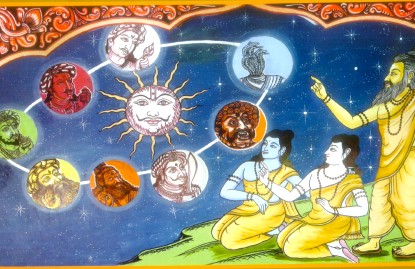
Trade routes in the Kalpa follow the 'Devayana' and 'Pitriyana', the paths of the gods and the ancestors. These routes facilitate the movement of souls and refined energies between the various planetary systems. By 1,000,000 BCE in celestial time, these routes were established to link the earth with the higher solar regions. The trade involves the exchange of 'Punya' or merit and refined sensory experiences. These paths are managed by the Vasus and the Rudras who ensure the security of the transit. The efficiency of these routes allows for the balanced distribution of life-force across the universe. This system of exchange ensures that even the most remote planetary colonies remain connected to the central spiritual authority of the Satyaloka.
Chronology of the Seven Days
The week in the life of the creator follows a rhythmic progression where each day is a Kalpa of 4.32 billion human years. Brahma's week comprises seven such days, followed by nights of equal duration called Nitya Pralaya. A single human year is merely a fraction of a second in this celestial calendar. The population of the universe undergoes a total of 14 Manvantara transitions during one day. As the week progresses, the creative energy fluctuates, peaking during the midday of each Kalpa. This temporal structure means that a full celestial week spans 60.48 billion human years of manifest existence. This staggering timeline reflects the vastness of the cosmic administrative task, where the rising and setting of the sun for humanity is but a momentary pulse in the eternal week of the creator. Kalpas A Day of Brahma
Sunset of the Brahma Dynasty
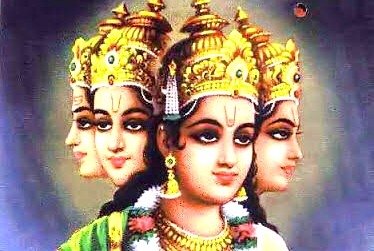
The decline of the current Brahma Dynasty will occur at the end of the hundredth year of the creator's life, a period known as Mahapralaya. By this time, the population of the universe will have completed its karmic journey, and the material world will begin to contract. The centralized authority of the current Brahma will be replaced by a period of absolute stillness as the creator returns to the source. The replacement of the physical universe with the primal void marks the conclusion of the material aeon. This transition ensures that the energy of the cosmos is recycled and prepared for the next cycle of creation, where a new Brahma will emerge to begin the task of formation once again.
Step Inside The Story - View All Tour Itineraries & Details
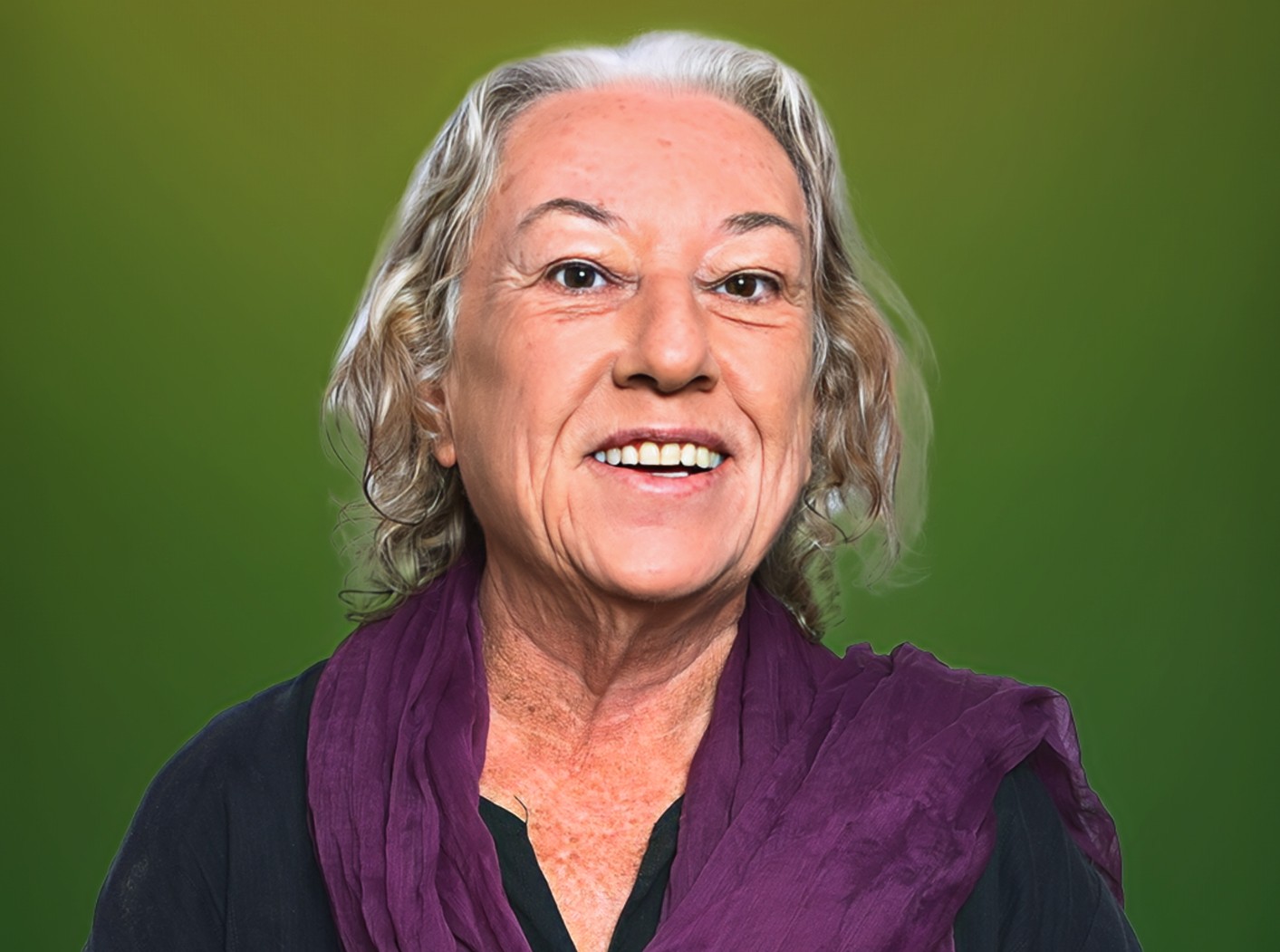
We’re here to offer genuine, thoughtful guidance if your interested in travelling to India. As a small, dedicated team, we pay close attention to every detail so you can focus on enjoying the experience while we take care of the planning. We believe the best trips begin when someone truly listens to what you want and how you like to travel, so the journey feels right for you and contributes to a happy, positive group on tour. Our communication stays clear, straightforward, and respectful at every step, with the goal of helping you feel understood, supported, and confident from first contact to the end of your journey.
Click Catherine Frith - About The Founder
Click Discover Life Travel - All Tours and More
Click Why We Are Different - Unique, Safe, Transparent