Unique Insights Into The Deities Of India
Jatayu: Solar Born Vulture King
Discover Life Travel
The Epic Legend
The Jatayu hails from a lineage of immense divine power, born at a time of cosmic beginnings. The divine origin story of Jatayu and his brother Sampati marks them as the sons of Aruna, the divine charioteer of the Sun God, Surya. Aruna himself was the elder brother of the great eagle-god, Garuda, the vehicle of Vishnu. This direct connection to the solar deity and the lineage of Garuda imbued Jatayu with celestial strength, incredible eyesight, the power of flight, and a noble, righteous nature. He was a demigod in the form of a mighty vulture, born to be a king and destined to play a crucial role in the great battle between Dharma and Adharma. Jatayu Solar Born Vulture King
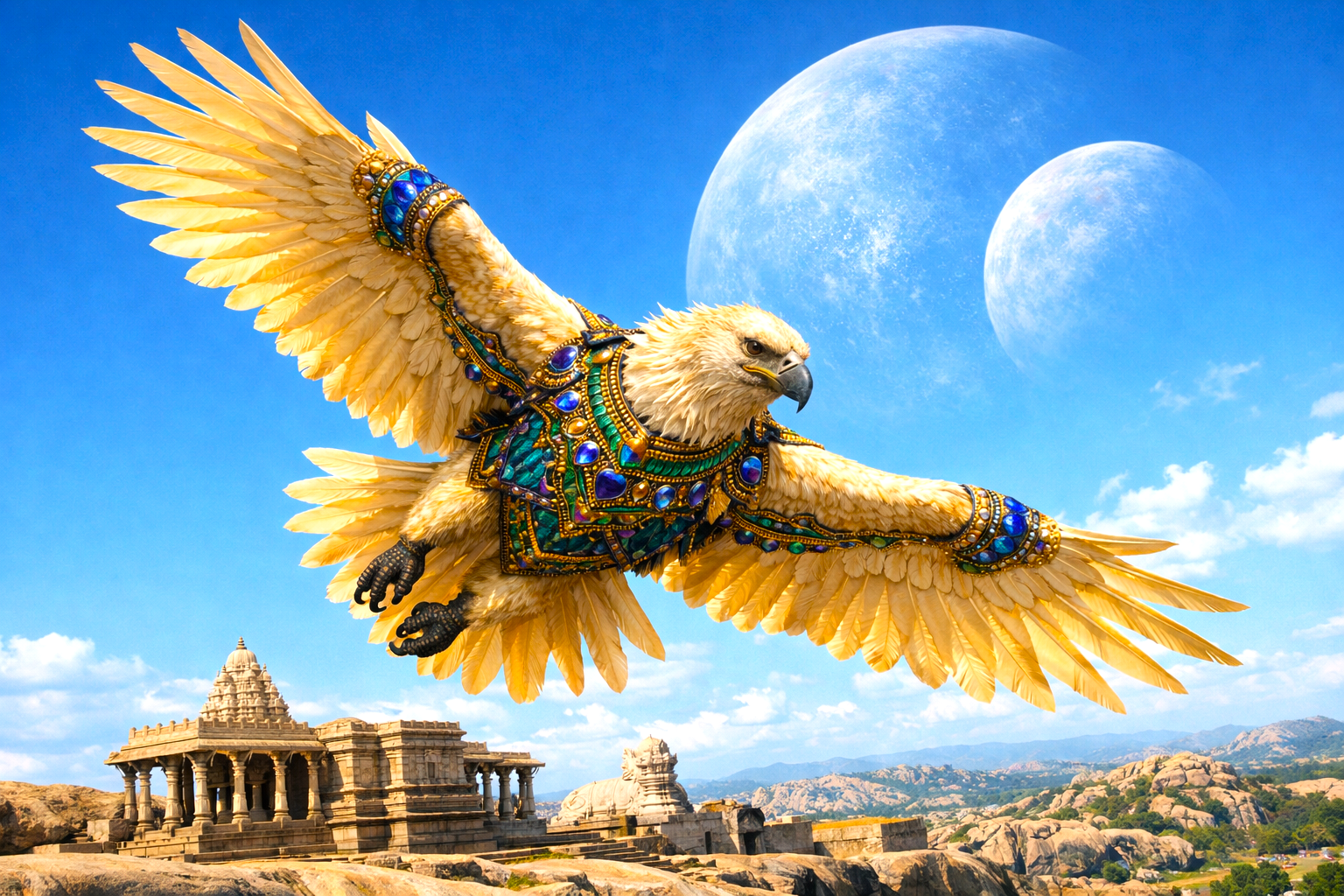
Jatayu Solar Born Vulture King: The Guardian of Dandaka Forest
While his lineage was celestial, Jatayu's chosen abode was the earthly realm, where he acted as a noble sovereign. The role of Jatayu as the King of Vultures in the Dandaka Forest established him as a powerful and respected protector of the region. He ruled from his perch, his keen eyes watching over the vast expanse of the forest. It was here that he met and befriended the great King Dasharatha of Ayodhya, Rama's father, long before Rama's birth. This ancient friendship and his role as the forest's guardian set the stage for his fateful and protective encounter with the exiled princes of Ayodhya.
The Emblem of Selfless Courage
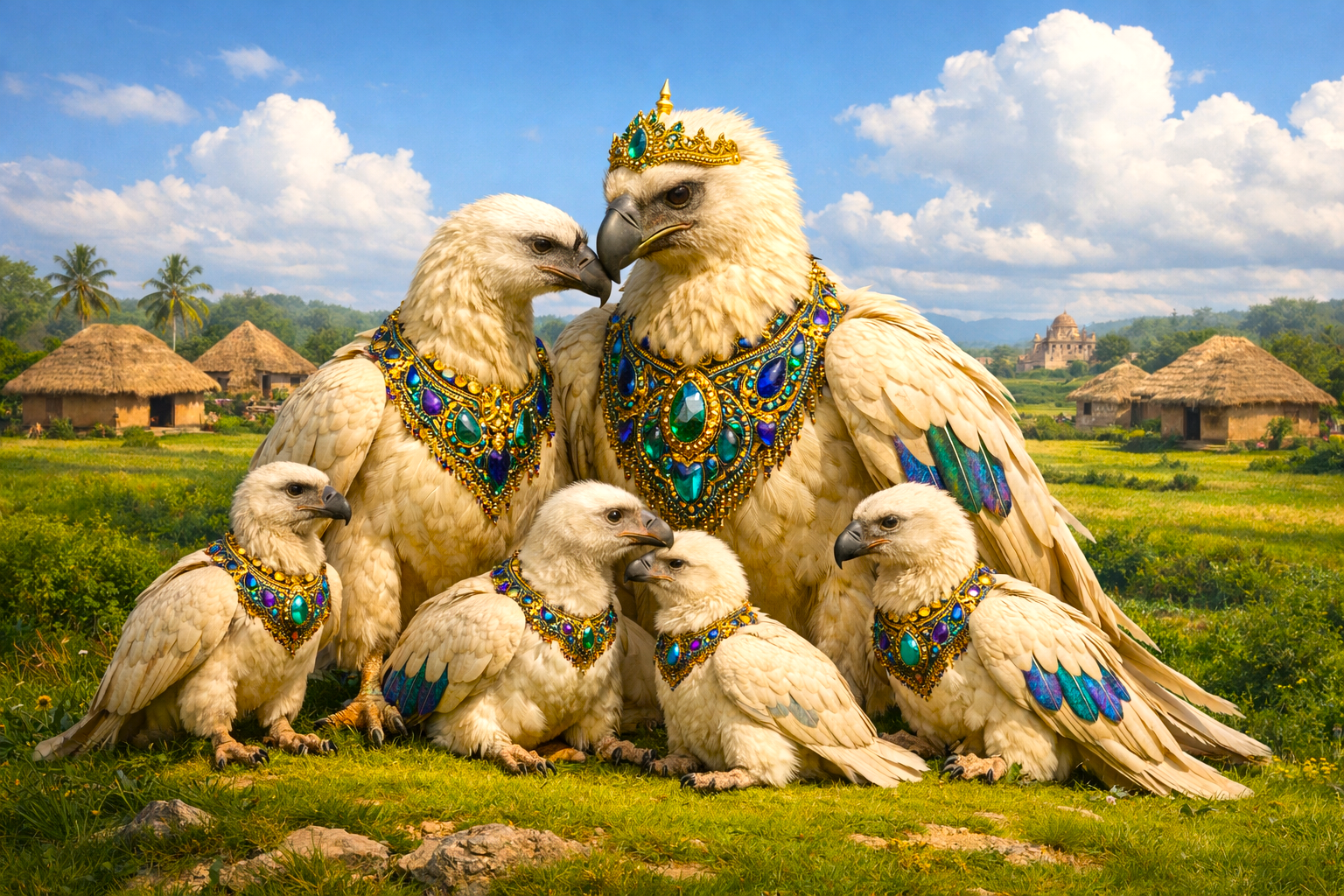
Jatayu is the ultimate embodiment of selfless valor and the courage to stand up for righteousness, regardless of the cost. The symbolism of the divine vulture Jatayu is that of sacrifice, duty, and unwavering loyalty. As a vulture, often seen as a creature of death, his story transforms this image into one of noble sacrifice. He represents the principle that one must intervene when witnessing a great evil, even when the odds are impossible and the personal cost is one's own life. His clipped wings symbolize the price of fighting for Dharma, and his ultimate death in Rama's lap symbolizes the divine reward for such a selfless act. Jatayu Solar Born Vulture King
A Tale of Two Divine Brothers
Jatayu's family story is defined by his relationship with his elder brother, Sampati. The story of Jatayu and his brother Sampati is a tale of both youthful pride and profound sacrifice. As powerful young demigods, they were competitive and often tested their immense strength against each other. This fraternal bond, however, was also one of deep love. Their shared parentage from the solar charioteer Aruna made them brothers in power and purpose, though fate would set them on very different paths—one to a direct, fiery sacrifice, and the other to a long wait that would also prove crucial to Rama's mission.
The Sunward Flight and Sacrificial Wings

A famous story from their youth explains why Jatayu survived while his brother suffered. The story of Jatayu flying too close to the sun with Sampati is a classic tale of youthful hubris. In a competition to see who could fly higher, the two brothers soared towards the sun. As they got closer, the younger Jatayu, reveling in the flight, did not notice the sun's scorching heat beginning to burn his wings. Seeing his brother in peril, the elder Sampati flew above him, shielding Jatayu with his own wings. Jatayu was saved, but Sampati's wings were burned away completely, and he fell to the earth, grounded for the rest of his life. Jatayu Solar Born Vulture King
A Father's Friend, A Prince's Protector
During their exile in the Dandaka forest, Rama, Sita, and Lakshmana had a crucial encounter. The story of Jatayu meeting Rama and introducing himself is a touching moment of loyalty spanning generations. The brothers initially mistook the colossal vulture for a demon. Jatayu quickly allayed their fears, introducing himself as a dear friend of their late father, King Dasharatha. He recounted his noble lineage and, with great affection, pledged his loyalty to them. He promised to act as a guardian, vowing to protect the divine mother Sita while they were in the forest, a promise he would honor with his own life.
A Valiant Stand Against the Demon King
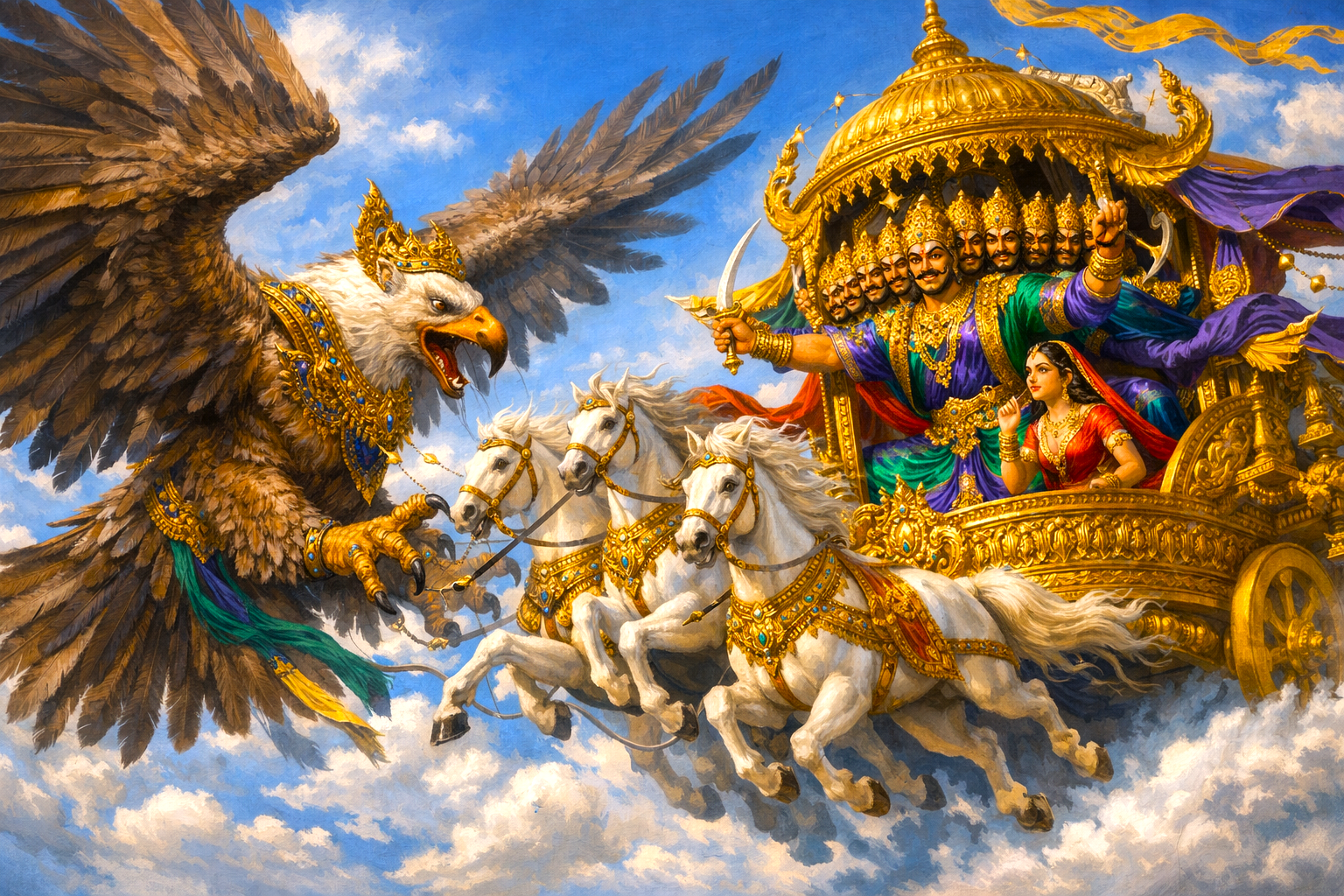
Despite his advanced age, Jatayu fought with the fury and strength of his youth. The epic battle between Jatayu and Ravana in the sky was a fierce and bloody affair. He attacked Ravana with his powerful beak and sharp talons, breaking his bow, destroying his chariot, and killing his demonic mules. He tore at Ravana's flesh, matching the powerful demon king blow for blow. For a time, it seemed the noble bird might actually win, as he temporarily incapacitated Ravana, demonstrating his immense strength and his unwavering resolve to protect Sita at any cost.
The Clipped Wings of a Fallen Hero
Ravana, enraged and battered by the relentless assault of the great vulture, finally resorted to his most powerful weapon. The story of how Ravana defeated Jatayu is a moment of tragic villainy. Drawing his divine sword, the Chandrahasa, Ravana mercilessly sliced off Jatayu's wings, leaving the great bird dismembered and helpless. Mortally wounded, Jatayu fell from the sky, crashing to the earth, his body broken but his spirit undefeated. He had failed to save Sita, but he had succeeded in fulfilling his dharma to fight against evil until his very last breath.
The Dying Breath That Revealed the Truth
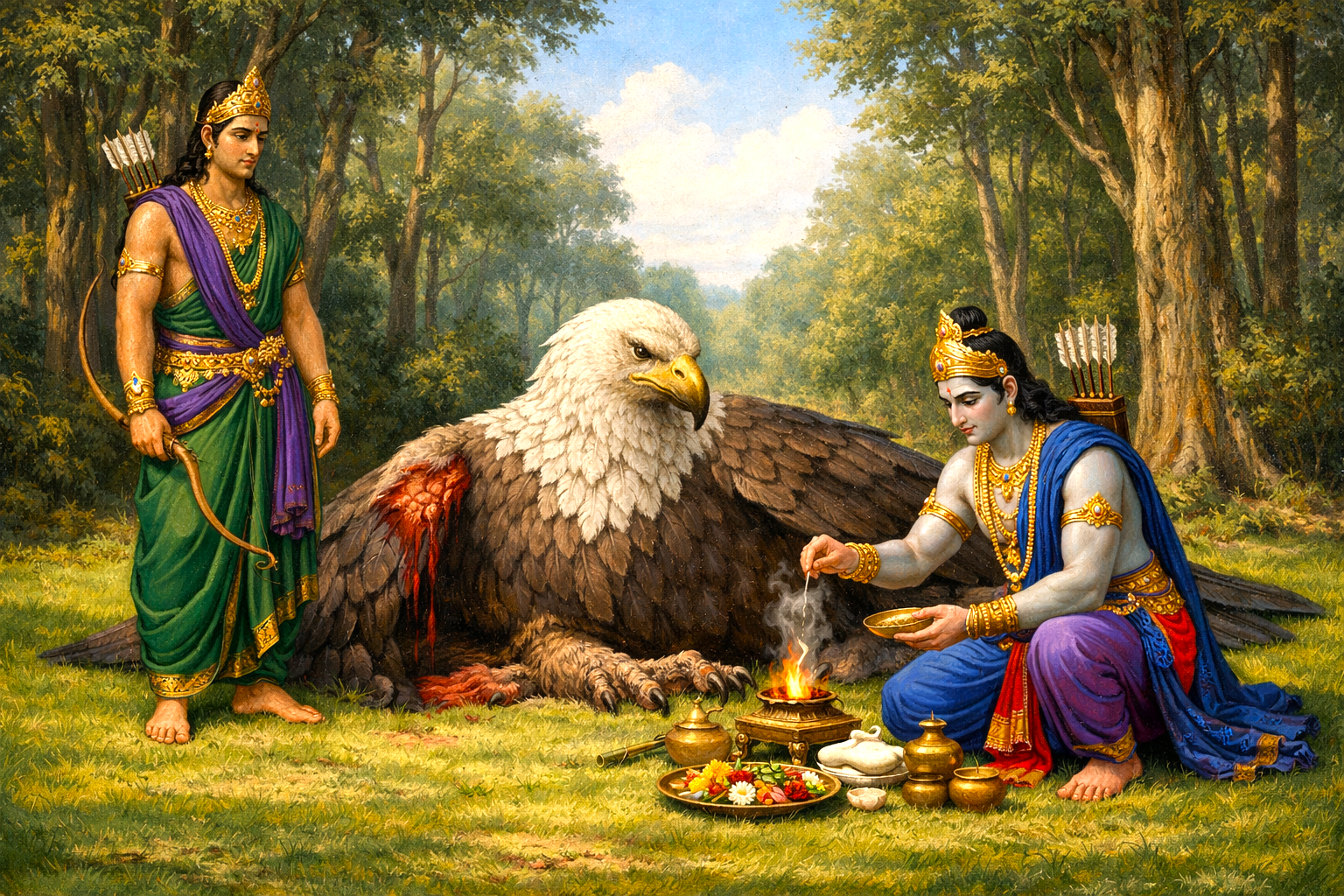
Though defeated, Jatayu clung to life for one final, crucial purpose. The role of Jatayu in informing Rama about Sita's abduction was his last great service. When Rama and Lakshmana, distraught at finding their hermitage empty, began their desperate search, they stumbled upon the dying king of vultures. With his last ounces of strength, Jatayu recounted the entire story to Rama: how Ravana had abducted Sita and how he had fought and been defeated. Crucially, he told Rama that the demon king was headed south, giving the princes the first vital clue in their quest to find her.
A Sacred End in the Arms of the Divine
After delivering his final, vital message, the noble Jatayu was ready to depart from the world. The story of Jatayu's death in the lap of Lord Rama is a moment of supreme divine grace. As he finished his tale, the great bird looked upon his beloved master's son and peacefully breathed his last. Rama, who had lost his father and now his wife, was overcome with grief at losing this loyal, father-like protector. He held the dying bird in his arms, cradling him with a love and sorrow that elevated the vulture-king to the status of a revered family member. Jatayu Solar Born Vulture King
The Divine Rites of a 'Father'
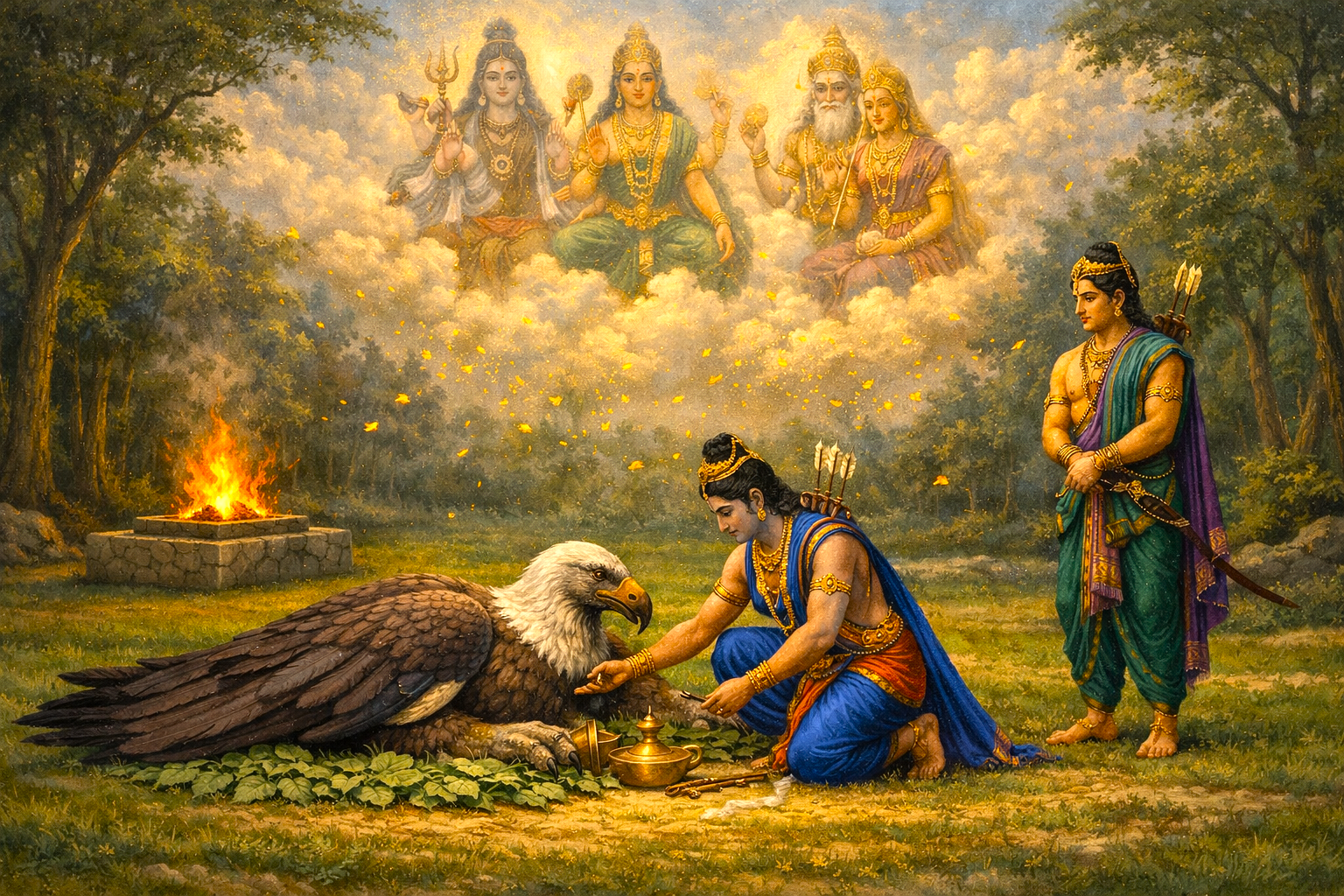
In an act of profound love and respect, Rama decided to give his father's friend the funeral rites befitting a king and a father. The story of Lord Rama performing Jatayu's last rites is a testament to the honor Rama bestowed upon him. He and Lakshmana gathered wood and prepared a funeral pyre. Rama, with tears in his eyes, lit the pyre himself, performing the sacred rituals usually reserved for one's own father. As he did so, he declared that Jatayu was as venerable to him as his own father, King Dasharatha. With these rites, Rama granted Jatayu moksha, complete liberation from the cycle of birth and death.
A Message of Unconditional Courage
Jatayu’s life is a powerful and timeless message about duty and courage. The empowering message from Jatayu's sacrifice is that one has a moral obligation to intervene in the face of injustice, regardless of the personal risk. He teaches that age is no barrier to valor and that a promise made must be honored, even unto death. His story is a powerful call to action, inspiring all to stand up for what is right, to protect the vulnerable, and to fight against evil, even when the enemy seems invincible. True victory, his life shows, is not in winning the battle, but in having the courage to fight it. Jatayu Solar Born Vulture King
The Jatayu Earth's Center in Kerala
The legacy of the great vulture-king is immortalized in a magnificent modern monument. The Jatayu Earth's Center nature park in Chadayamangalam, Kerala, is home to the world's largest bird sculpture. The colossal concrete statue of Jatayu depicts him lying on his back, wings clipped, talons clenched in pain, exactly as he was said to have fallen after his battle with Ravana. The sculpture rests on the very spot where local legend says he fell to the earth. This monumental tribute serves as a powerful pilgrimage site and a testament to the enduring story of his selfless sacrifice.
The Vulture as a Symbol of Dharma
Jatayu's story single-handedly transforms the image of the vulture in Hindu culture. The symbolism of the vulture in Hinduism as a noble creature is almost entirely due to Jatayu. Typically associated with death and impurity, Jatayu's character imbues the vulture with qualities of loyalty, nobility, courage, and self-sacrifice. He is a divine being in the form of a vulture, and his actions sanctify the entire species in the context of the epic. He proves that nobility is not a matter of form or appearance, but of action and adherence to Dharma.
The Gaze of a King, The Heart of a Devotee
Ultimately, Jatayu is revered as a great devotee of Lord Rama. The worship of Jatayu as a great Bhakta (devotee) is a key aspect of his legacy. While he was a king in his own right, and a friend to royalty, his final act was one of pure devotion. He gave his life in service to Rama's consort and found his ultimate liberation in Rama's presence. His story shows that devotion is not limited to humans or sages; it is a universal path open to all beings, and that the highest reward for a life of service is to die in the arms of the divine, with the lord's grace as one's final blessing.
We’re here to offer genuine, thoughtful guidance if your interested in travelling to India. As a small, dedicated team, we pay close attention to every detail so you can focus on enjoying the experience while we take care of the planning. We believe the best trips begin when someone truly listens to what you want and how you like to travel, so the journey feels right for you and contributes to a happy, positive group on tour. Our communication stays clear, straightforward, and respectful at every step, with the goal of helping you feel understood, supported, and confident from first contact to the end of your journey.
Click Catherine Frith - About The Founder
Click Discover Life Travel - All Tours and More
Click Why We Are Different - Unique, Safe, Transparent