Unique Insights Into The Gods Of India
Dhritarashtra: Father of One Hundred
Discover Life Travel
The Prince Born of Fear and Darkness
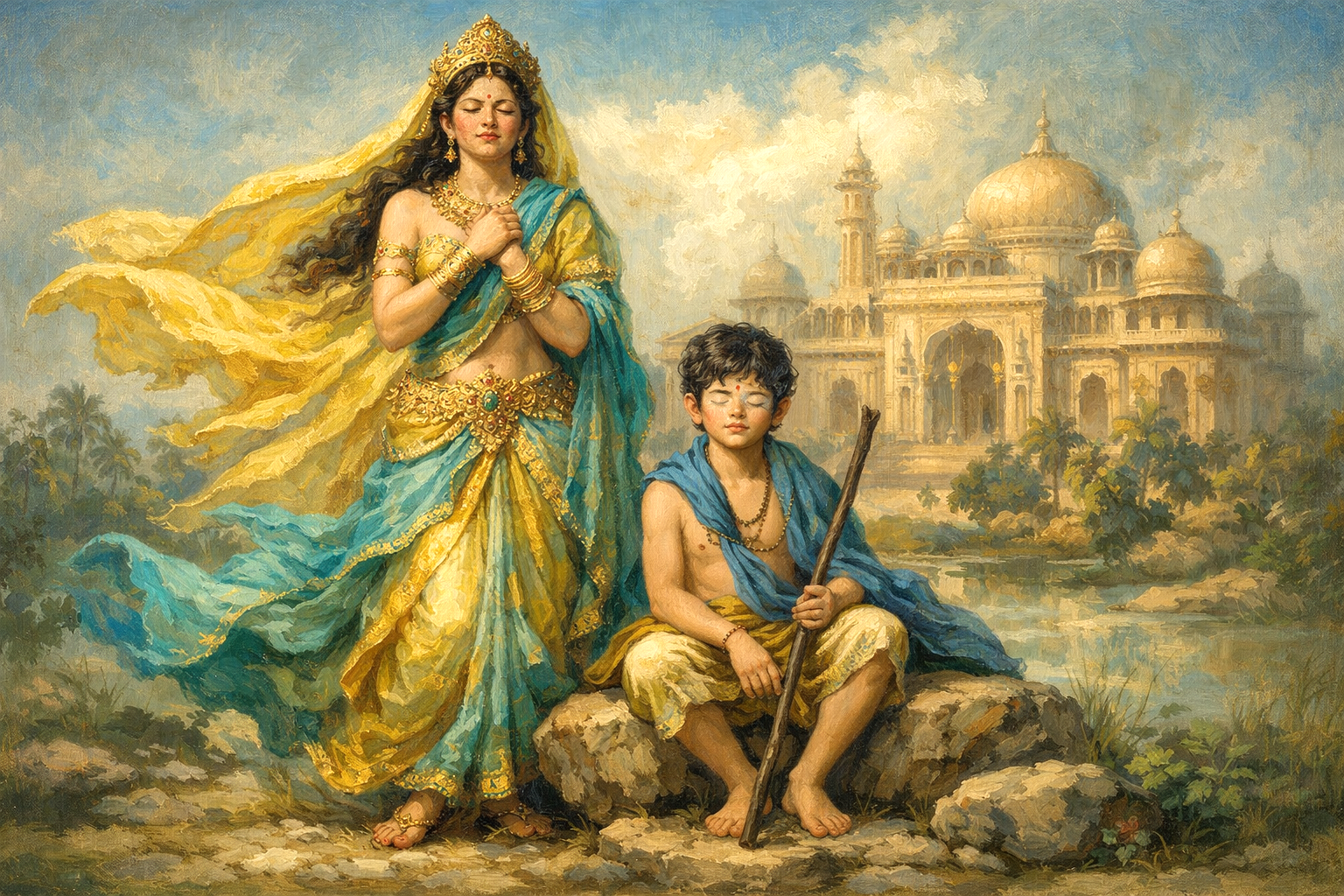
To continue the Kuru lineage after both her sons died childless, Queen Satyavati commanded her firstborn, the sage Vyasa, to impregnate her widowed daughters-in-law. The elder princess, Ambika, was terrified by Vyasa's fierce, ascetic appearance. The divine but tragic origin story of Dhritarashtra is that at the moment of conception, Ambika shut her eyes in fear. Because of this act, her son was born congenitally and incurably blind. This physical blindness was a dark omen, a physical manifestation of the spiritual and moral blindness that would come to define his tragic reign as the king of Hastinapura. Dhritarashtra Father of One Hundred
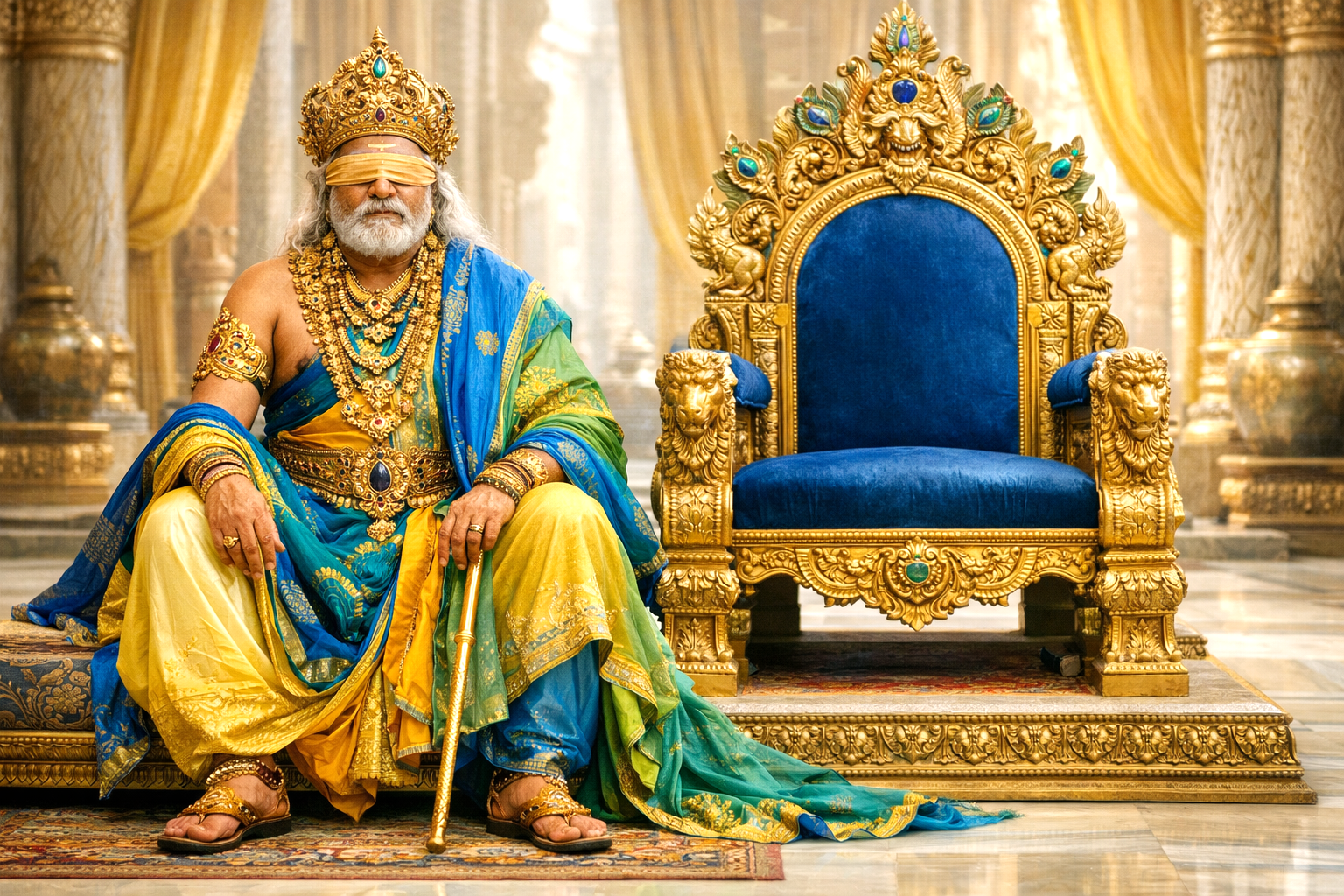
The Throne Room of a Blind King: Dhritarashtra Father of One Hundred
Dhritarashtra’s entire life was centered around a single location he could never truly possess in his own right. The sacred geography of the Kuru capital, Hastinapura, was his world. His story unfolds almost entirely within the confines of the royal palace and, most importantly, the assembly hall. This throne room of Hastinapura was Dhritarashtra's seat of power, yet it was a throne he only held as a regent, first for his younger brother Pandu and later for his own son, Duryodhana. It was a location of immense wealth and authority, but for Dhritarashtra, it was a place of constant anxiety, political maneuvering, and the stage for his greatest moral failures.
The Empty Throne and the Iron Statue
The most potent symbols of Dhritarashtra are not objects he wielded, but those that represent his core tragedy. His primary symbol is the empty throne, representing the legitimate kingship he could never claim due to his blindness, a constant reminder of his perceived inadequacy. His other key symbol is the iron statue of Bhima, which he crushed in a vengeful hug after the war. This represents his hidden, immense strength and his deep-seated, hypocritical rage. His blind, obsessive attachment to his son, which rendered him incapable of seeing justice. Dhritarashtra Father of One Hundred
The Patriarch of the Doomed Kaurava Clan
Dhritarashtra’s family was the very heart of the Mahabharata conflict. Biologically, his father was the great sage Vyasa, and his mother was the Kuru queen Ambika. He was the elder brother to the pale Pandu and the wise, low-born Vidura. He married the virtuous princess Gandhari of Gandhara, who famously blindfolded herself for life to share in her husband's darkness. He was the father of the one hundred Kaurava brothers, led by his arrogant and wicked eldest son, Duryodhana, and a single daughter, Dushala. As the patriarch of this clan, his blind love for his children would lead them all to their doom.
A Youth Passed Over for a Younger Brother
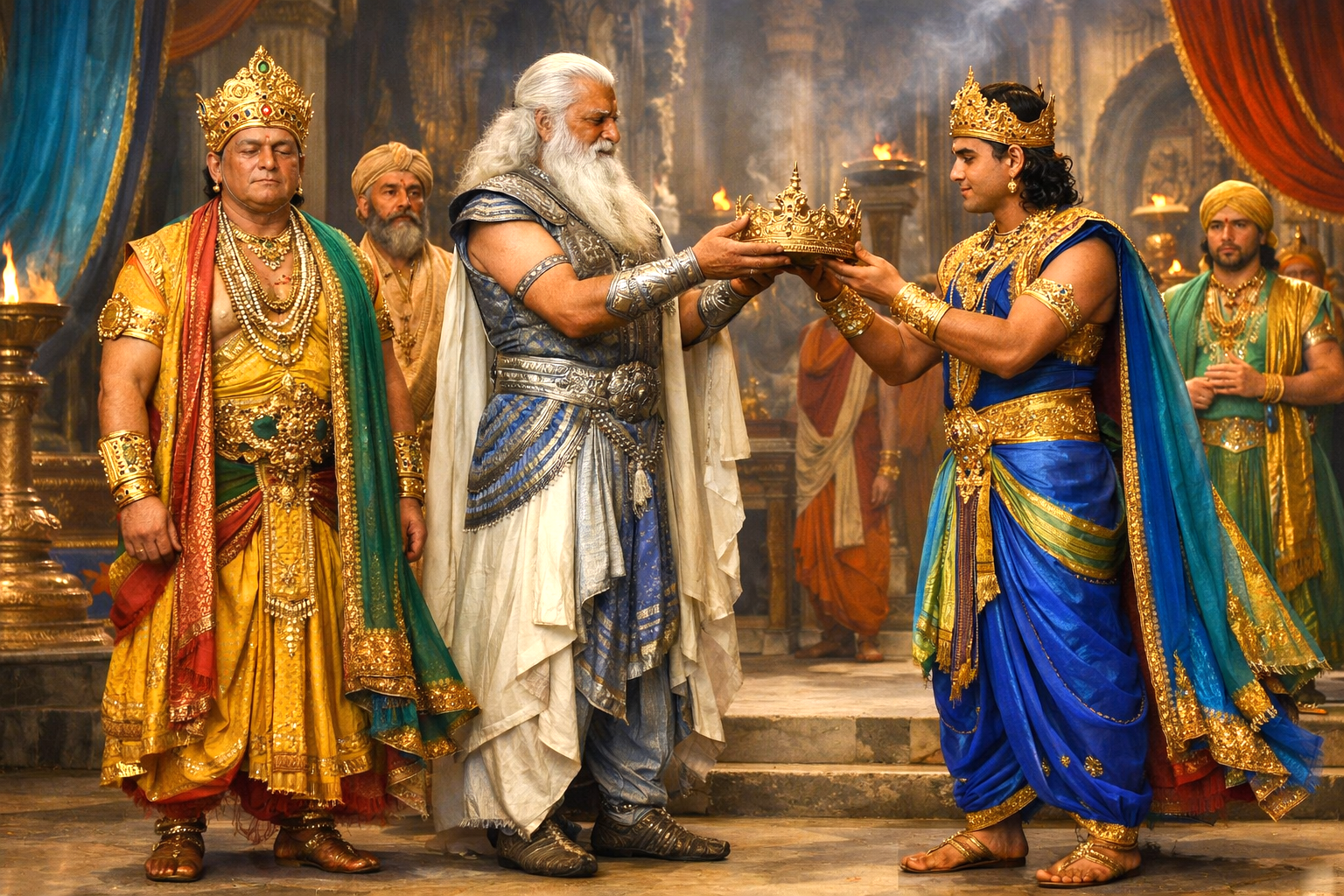
Despite being the eldest son, Dhritarashtra's youth was defined by a deep and abiding sense of rejection. The story of Dhritarashtra being denied the throne was the first great wound to his pride. Due to his blindness, the royal council, led by Bhishma, deemed him unfit to be king. The crown was instead given to his younger, healthier brother, Pandu. This decision, though practical, fostered a lifelong resentment and a secret, burning ambition in Dhritarashtra's heart. A powerful prince who was forever denied the ultimate prize of kingship.
The Regent King Who Ruled by Proxy
After King Pandu's death in the forest, Dhritarashtra finally ascended to the throne, but only as a regent king, holding it in trust for Pandu's sons, the Pandavas. The role of Dhritarashtra as the regent-king of Hastinapura was his chance to prove his worth. However, his reign was characterized by weakness and vacillation. He was king in name only, constantly swayed by the wicked counsel of his son Duryodhana and his brother-in-law, Shakuni. He was a puppet ruler, his authority constantly undermined by his own inability to make a firm, righteous decision against the will of his beloved, evil son. Dhritarashtra Father of One Hundred
The Silent Sanction of a Daughter's Disrobing
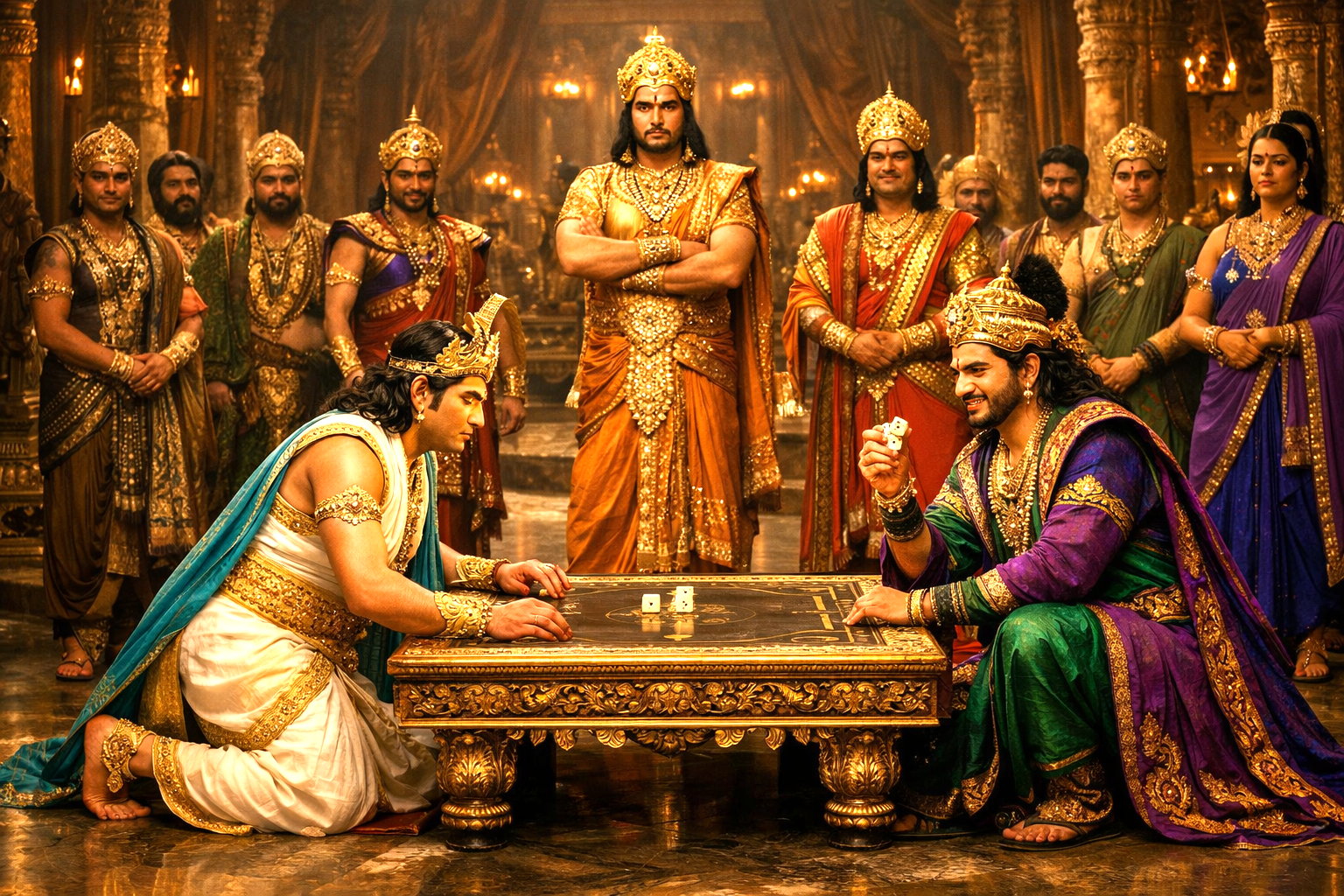
Dhritarashtra's most profound moral failure occurred during the infamous dice game. After his son had deceitfully won all the Pandavas' possessions, including their wife Draupadi, she was dragged into the hall to be publicly disrobed. The story of Dhritarashtra's silence during her disrobing is the defining. As the king, he had the authority to stop the atrocity. Torn between his duty and his love for his son, he remained silent. His inaction was a form of sanction - failure to protect his daughter-in-law made the Kurukshetra War inevitable.
A Crushing Embrace of Vengeful Grief
After the war had ended and all his sons were dead, the victorious Pandavas came to seek the old king's blessings. The story of Dhritarashtra's attempt to kill Bhima reveals the depths of his hidden rage. Feigning an embrace of reconciliation, the blind king, who possessed the strength of a hundred thousand elephants, intended to crush the life out of Bhima, the killer of his beloved Duryodhana. The prescient Lord Krishna, knowing his intent, pushed the real Bhima aside and substituted an iron statue. Dhritarashtra embraced the statue with all his might, shattering it to pieces, a terrifying display of his grief-fueled hypocrisy. Dhritarashtra Father of One Hundred
The Final Walk into a Forest Inferno
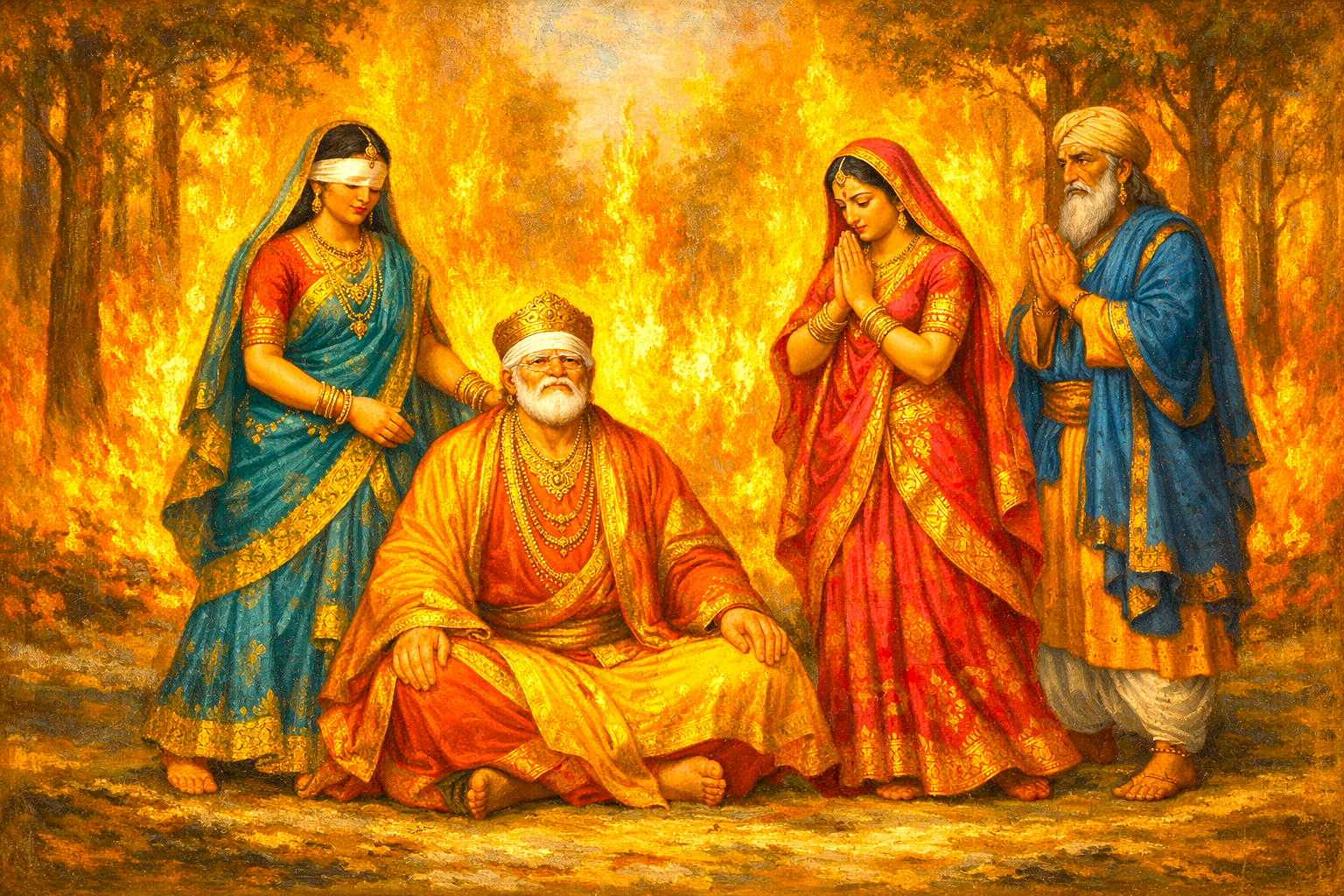
Fifteen years after the war, haunted by his grief and guilt, Dhritarashtra finally decided to renounce his royal life. The story of Dhritarashtra’s death in a forest fire is a somber end to a tragic life. Along with his wife Gandhari, his sister-in-law Kunti, and his half-brother Vidura, he retired to the forest to live as an ascetic. One day, a great forest fire broke out, surrounding them. Urged to flee, Dhritarashtra, Gandhari, and Kunti refused, choosing to face their end. They sat in a meditative posture and calmly allowed the flames to consume them.
A Message: Inaction in the Face of Evil Is Itself Evil
Dhritarashtra’s life is one of the Mahabharata’s most powerful and tragic cautionary tales. The warning from Dhritarashtra's life about blind attachment is profound. He was not an actively evil man like his son, but his weakness, his moral cowardice, and his obsessive love for his child made him an enabler of evil. His message is that inaction in the face of injustice is a great adharma. By refusing to restrain his son, he became complicit in all of his son's crimes. His life is a timeless lesson for all leaders: a failure to uphold Dharma out of personal attachment will lead to nothing but sorrow and total destruction.
The Blocked Third Eye and a Murky Grey Ray
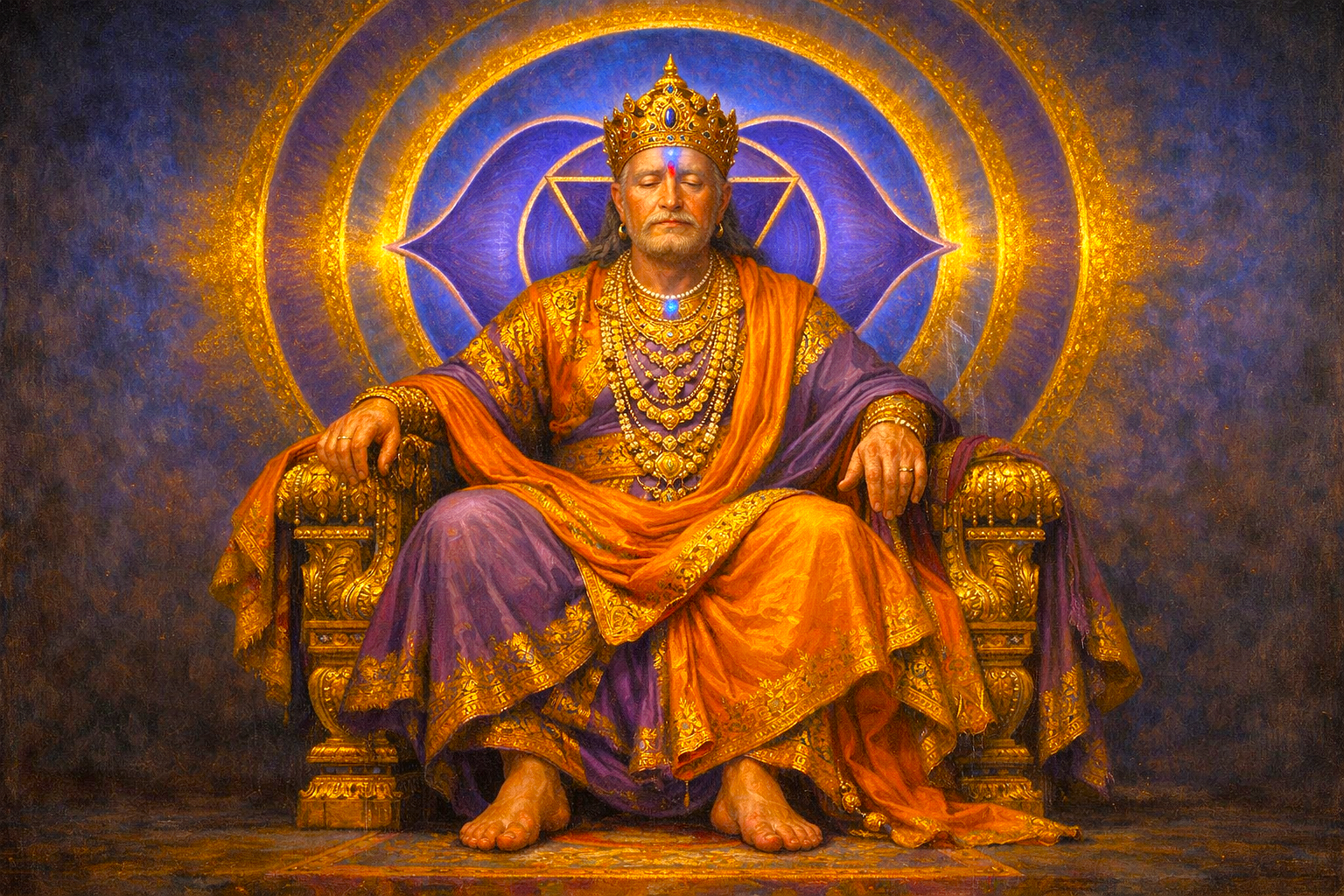
As a man whose entire tragedy stemmed from a lack of inner vision and wisdom, Dhritarashtra’s energy is centered on a blocked higher chakra. He is the embodiment of a blocked Ajna Chakra (Third Eye). While physically blind, his more profound blindness was spiritual and intellectual, an inability to see the clear path of Dharma. The key frequency that Dhritarashtra embodies is that of willful ignorance and clouded judgment. His auric field would be a dense, murky, and sorrowful grey ray, the color of smoke and confusion.
The Hidden Power of a Hundred Thousand Elephants
Dhritarashtra's "weapon" was not one he ever used in battle, but a secret, immense power he held in his own body. The divine strength of Dhritarashtra, equal to 100,000 elephants, was a boon he possessed. This incredible physical power, which he demonstrated by crushing the iron statue of Bhima, makes his inaction even more tragic. He had the physical strength to restrain his sons and enforce his will at any time. His failure to do so was not a failure of power, but a failure of the will to use that power for the sake of righteousness. His strength was a weapon he kept hidden and only unleashed in a moment of vengeful hypocrisy. Dhritarashtra Father of One Hundred
An Afflicted Sun and a Dominant Moon
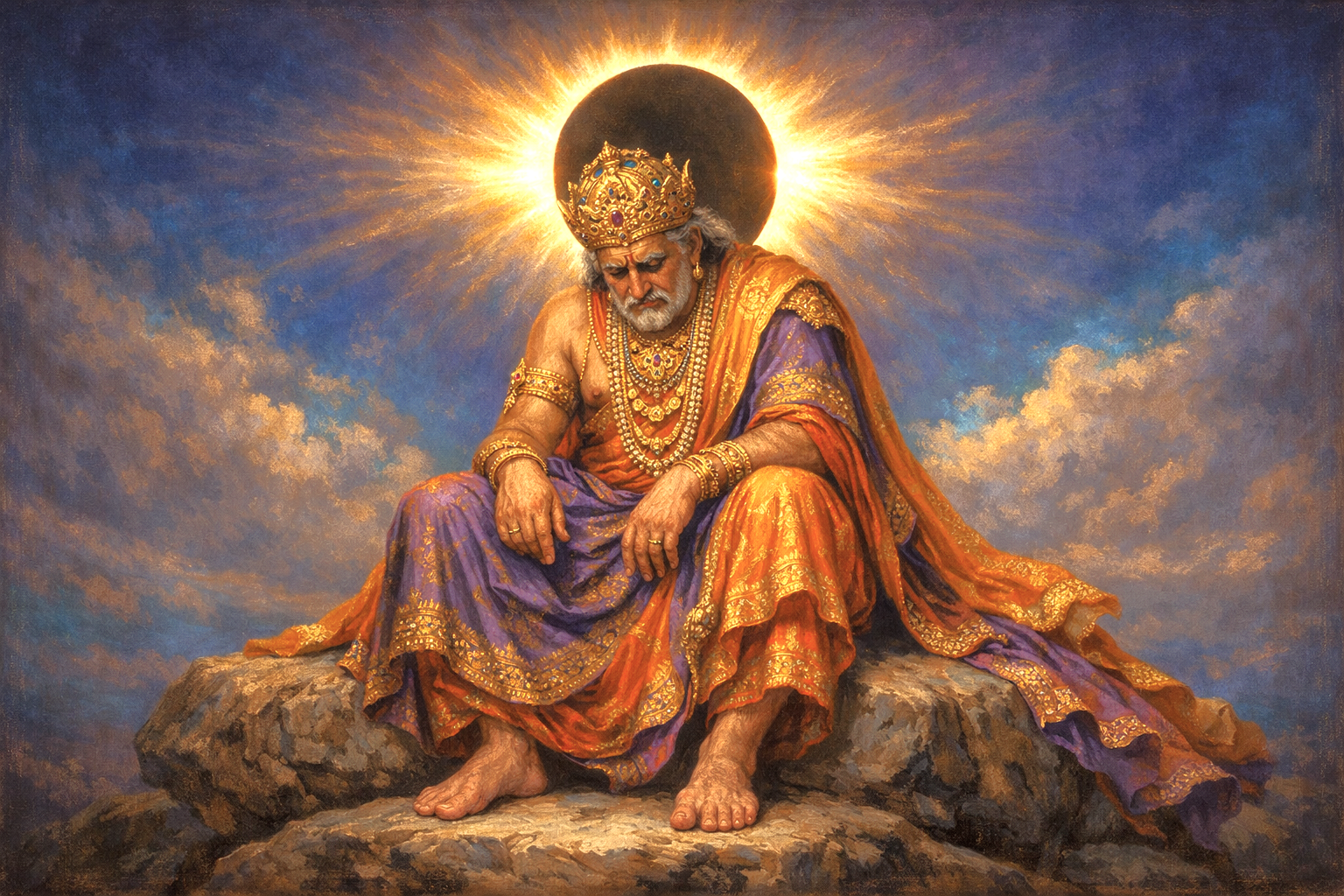
Dhritarashtra’s character is a perfect astrological case study of a weak king and an overbearing mind. His kingship is a textbook example of a weak or afflicted Sun in a horoscope, the planet that governs royalty, authority, and dharma. A weak Sun makes a leader who has the title but not the true authority or moral clarity to rule. His flaw of putra-moha is a classic example of an overpowering and afflicted Moon, the planet of the mind, emotions, and attachments. His entire life was ruled by his emotional attachment to his son (Moon), which completely eclipsed his royal duty (Sun).
Step Inside The Story - View All Tour Itineraries & Details

We’re here to offer genuine, thoughtful guidance if your interested in travelling to India. As a small, dedicated team, we pay close attention to every detail so you can focus on enjoying the experience while we take care of the planning. We believe the best trips begin when someone truly listens to what you want and how you like to travel, so the journey feels right for you and contributes to a happy, positive group on tour. Our communication stays clear, straightforward, and respectful at every step, with the goal of helping you feel understood, supported, and confident from first contact to the end of your journey.
Click Catherine Frith - About The Founder
Click Discover Life Travel - All Tours and More
Click Why We Are Different - Unique, Safe, Transparent