Unique Insights Into The Religions Of India
Dalai Lama Reincarnations India
Discover Life Travel
Throughout History: The Dalai Lamas
The title "Dalai Lama," which translates to "Ocean of Wisdom," was first granted to Sonam Gyatso, the third incarnation, in 1578 by Altan Khan, a Mongol ruler. The Dalai Lamas are understood to be manifestations of Avalokiteshvara (known as Chenrezig in Tibetan), the Bodhisattva of Compassion, who embodies the ideal of selfless love and concern for all sentient beings. Dalai Lama Reincarnations India
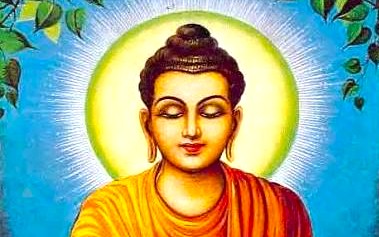
Dalai Lama Reincarnations India: First Dalai Lama: Gedun Drupa (1391–1474)
Recognized retrospectively as the first Dalai Lama, Gedun Drupa was born in Gyurmey Rupa, Tibet. A pivotal figure in the early spread of Tibetan Buddhism, he founded the Tashi Lhunpo Monastery in 1447, which became an important center for the Gelugpa tradition. His teachings laid the groundwork for future leaders in Tibetan Buddhism, emphasizing the path to enlightenment.
Second Dalai Lama: Gedun Gyatso (1475–1542)
Gedun Gyatso, born in Tanag Sekme, Tibet, was a significant force in enhancing the prominence of Buddhism during his lifetime. He was instrumental in establishing the Chokorgyel Monastery and diligently worked on expanding Buddhist teachings and practices throughout Tibet.
Third Dalai Lama: Sonam Gyatso (1543–1588)
Sonam Gyatso, born in Tolung, Tibet, became the first Dalai Lama to hold this title during his lifetime. His recognition by Altan Khan marked a transformative relationship between Tibetan Buddhism and the Mongol leaders, which facilitated the spread of Buddhist teachings in Mongolian territories.
Fourth Dalai Lama: Yonten Gyatso (1589–1617)
Yonten Gyatso, born in Mongolia to a prince of the Tumet tribe, illustrated the deepening ties between Tibet and Mongolia. Overcoming challenges associated with his foreign origins, he was acknowledged as the fourth Dalai Lama and traveled to Tibet, continuing the efforts of his predecessors in advocating for the Gelugpa order, while navigating significant political upheaval.
Fifth Dalai Lama: Ngawang Lobsang Gyatso (1617–1682)
Known as the "Great Fifth," Ngawang Lobsang Gyatso, from Chonggye, is one of the most notable figures in Tibetan history. His leadership unified the political and religious systems in Tibet. Under his rule, the Potala Palace was constructed in Lhasa, becoming the traditional residence of the Dalai Lamas. His reign was marked by cultural and political advancements, including the consolidation of both religious and governmental authority.
Sixth Dalai Lama: Tsangyang Gyatso (1683–1706)
Tsangyang Gyatso, born in Tawang, India, is unique due to his unconventional lifestyle. Known for his poetry and affinity for worldly pleasures, he diverged from monastic expectations. During his troubled tenure, which was marked by political discord, his mysterious disappearance fueled myths and speculation, adding a layer of intrigue to his legacy. Dalai Lama Reincarnations India
Seventh Dalai Lama: Kelzang Gyatso (1708–1757)
Born in Lithang, Tibet, Kelzang Gyatso's era saw a restoration of stability after the tumultuous reign of his predecessor. Brought to the Potala Palace as a child, he worked towards reinforcing the influence of the Gelugpa sect and fostering peaceful relations among neighboring regions.
Eighth Dalai Lama: Jamphel Gyatso (1758–1804)
Originating from Lhari, Tibet, Jamphel Gyatso’s time as Dalai Lama was marked by relative peace and growth in artistic and scholarly pursuits. He made essential contributions to the refurbishment of the Potala Palace and other monastic structures, deepening the commitment to Tibetan scholarly traditions.
Ninth Dalai Lama: Lungtok Gyatso (1805–1815)
Lungtok Gyatso, who took on the role at a tender age, had a brief and tragic life. His reign ended with his passing at the age of nine under mysterious circumstances. Despite his short tenure, he left an impression on Tibetan society with his peaceful nature and charming presence.
Tenth Dalai Lama: Tsultrim Gyatso (1816–1837)
Born in Lithang, Tibet, Tsultrim Gyatso also faced an early death, passing away at just twenty-one. His administration was characterized by efforts to maintain unity within the Gelugpa order amid the numerous internal and external challenges he encountered.
Eleventh Dalai Lama: Khedrup Gyatso (1838–1856)
Khedrup Gyatso, emerging from Gathar, Tibet, focused on continuity and stability during his reign, contributing to the expansion and education of Buddhist teachings. His leadership coincided with increasing foreign influences and significant internal issues, yet he managed to enhance monastic life. Dalai Lama Reincarnations India
Twelfth Dalai Lama: Trinley Gyatso (1857–1875)
Trinley Gyatso’s reign, marked by early contact with foreign entities, ended prematurely when he passed away at the age of eighteen. Throughout his brief tenure, he continued efforts made by previous Dalai Lamas to uphold the stability of Tibet’s governance and religious institutions.
Thirteenth Dalai Lama: Thubten Gyatso (1876–1933)
From Thakpo Langdun, Tibet, Thubten Gyatso is notable for modernizing various aspects of Tibetan life while reinforcing national sovereignty. His leadership came during a transformative time marked by invasions and interactions with British India. He undertook significant reforms to refresh Tibet’s military and administrative structures, crucial for maintaining its autonomy.
Fourteenth Dalai Lama: Tenzin Gyatso (1935–present)
The current Dalai Lama, Tenzin Gyatso, born Lhamo Dhondrub in Taktser, Amdo, Tibet, was recognized in 1939. Officially becoming the Dalai Lama in 1940, he assumed political power shortly before the 1959 Tibetan uprising, after which he fled to India. In Dharamsala, he established the Tibetan government-in-exile. Known globally for his advocacy of peace, compassion, and interfaith harmony, he was awarded the Nobel Peace Prize in 1989, inspiring countless individuals with his teachings and humanitarian work.
The Search for the Next Dalai Lama: Identifying the Reincarnation
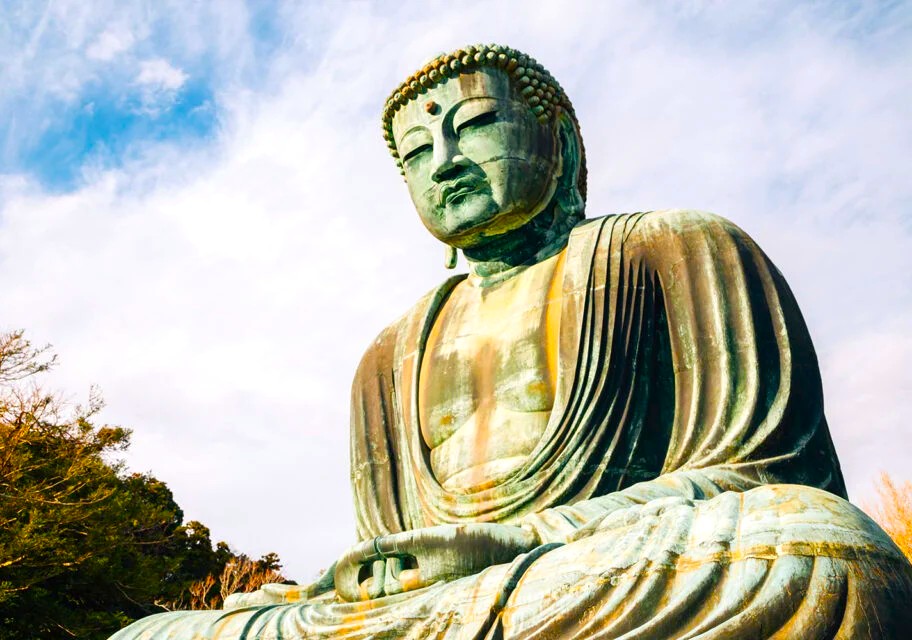
Finding the next Dalai Lama is a deeply significant and carefully orchestrated process rooted in Tibetan Buddhist tradition. Following the passing of a Dalai Lama, the search for his reincarnation begins, often initiated by senior monks and spiritual leaders within the Gelugpa school of Tibetan Buddhism. This search is not merely a task of locating a child; it is a spiritual quest to identify a being believed to be a manifestation of Avalokiteshvara, the Bodhisattva of Compassion, who incarnates to guide and inspire humanity.
The Process of Identification
The search typically starts within regions known to have a strong spiritual connection to the previous Dalai Lama. The senior monks consult various oracles and engage in extensive prayers and rituals to seek divine guidance on where the new Dalai Lama might be found. This often includes interpreting signs, prophecies, and auspicious visions that may direct them to the right location.
Once a candidate is identified, the process of verification begins. This involves observing the child - often a boy between the ages of 2 and 4 years - who displays signs and characteristics believed to be indicative of his previous incarnation. Monks may present the child with a series of objects, some belonging to the previous Dalai Lama and some not. The child's ability to identify and prefer the correct items is considered a strong indication of his identity.
Additionally, the child may demonstrate extraordinary understanding of Buddhist teachings or engage in seemingly wise behavior beyond their years, further affirming their potential as the reincarnation. Families of the children identified often go through a period of emotional upheaval, as the possibility of their child being the Dalai Lama carries immense honor but also profound responsibility. Dalai Lama Reincarnations India
Family Reactions and Responsibilities
Upon being approached about their child’s potential role as the next Dalai Lama, families exhibit a range of reactions. Many experience a significant mix of pride and apprehension. The honor of having a child chosen as the Dalai Lama comes with the awareness that the child will be taken away from the family to fulfill his spiritual destiny. Parents often face a bittersweet mix of joy and sorrow, as their loved one is prepared for a life dedicated to the service of others.
When a child is confirmed, the families must prepare for their separation. They may be consulted and involved during the early stages of the child’s education, as the new Dalai Lama will live and study in monasteries, focusing on both spiritual and philosophical teachings. Families receive blessings and guidance from senior monks, helping them understand the spiritual significance of this transition.
The Emotional Landscape
For the children themselves, the journey begins at a tender age, around 2 to 4 years old. As they grow, they adapt to their new roles with the aid of devoted mentors and spiritual leaders. Their education is rigorous, encompassing extensive training in Buddhist philosophy, languages, and rituals. The expectations placed upon them are significant, but the presence of supportive communities helps provide a nurturing environment.
As word spreads about the identification of the new Dalai Lama, it often evokes a deep sense of excitement and reverence within the Tibetan community. The news resonates far beyond family circles, prompting celebrations and ceremonies honoring the new incarnation. The community acknowledges that this child embodies the lineage’s wisdom and compassion, bringing a renewed sense of hope and continuity to the Buddhist tradition.
This process, thus, not only fulfills a spiritual quest but also serves as a powerful reminder of the interconnectedness of life and the enduring legacy of compassion that flows through the lineage of the Dalai Lamas. Through this spiritual lineage, followers hold on to their beliefs despite the challenges presented by time, geopolitical changes, and cultural shifts.
Other Reincarnations of the Buddha
Siddhartha Gautama: The Historical Buddha (6th–4th century BCE)
Born in Lumbini (now in Nepal), Siddhartha Gautama renounced his princely life in search of enlightenment. Achieving this enlightenment beneath the Bodhi Tree in Bodh Gaya, he spread his teachings across Northern India until his death in Kushinagar, laying the foundation for Buddhism.
King Vessantara: The Paragon of Generosity
A celebrated incarnation in Buddhist literature, King Vessantara is known for his ultimate acts of generosity, giving away all his possessions, including his family. His story, found in the Jataka tales, serves as a moral example, particularly observed in regions like Thailand and Laos.
Sumedha: The First Bodhisattva Vow
The beginning of the Buddha's incarnations is attributed to Sumedha, who made a vow to become a Buddha in the presence of Dipankara Buddha. This early commitment set the stage for his many lives characterized by compassion and altruism.
Avalokiteshvara: The Bodhisattva of Compassion
Revered in Mahayana Buddhism, Avalokiteshvara symbolizes boundless compassion. His many forms can be found in religious art and texts across Tibet, China, and Japan, representing the aspiration to alleviate the suffering of all beings.
Maitreya: The Future Buddha
Maitreya is the anticipated future Buddha, prophesied to appear when the teachings of Gautama Buddha have faded. His image is often used to signify hope and the promise of continued spiritual guidance. Dalai Lama Reincarnations India
King Sibi: The Compassionate Ruler
Another vital figure in the Jataka tales, King Sibi demonstrated profound self-sacrifice by offering his flesh to save a dove. His narrative, celebrated in both Theravada and Mahayana streams, emphasizes the ideals of compassion and altruism. Dalai Lama Reincarnations India
Bodhisattva Manjushri: Embodiment of Wisdom
Manjushri represents wisdom within Mahayana Buddhism. Often depicted wielding a sword and a sutra, he symbolizes the discernment that cuts through ignorance and is significant in various cultures, including China, Japan, and Nepal.
Significant Sites Associated with the Buddha and His Incarnations
Lumbini: The Birthplace of Siddhartha Gautama
Now a UNESCO World Heritage Site, Lumbini is marked by the Maya Devi Temple, commemorating the birth of the Buddha.
Bodh Gaya: The Site of Enlightenment
Home to the Mahabodhi Temple, this UNESCO World Heritage Site marks the location where the Buddha attained enlightenment.
Sarnath: The First Sermon
Sarnath is where Buddha delivered his initial teaching to his five former companions, introducing the principles of the Four Noble Truths and the Eightfold Path.
Kushinagar: The Site of Parinirvana
Kushinagar is significant as the place where Gautama passed away, attaining Parinirvana, making it an essential pilgrimage destination.
Dharamsala: The Exiled Government
Dharamsala serves as the residence of the 14th Dalai Lama and houses the Tibetan government-in-exile, playing a critical role in preserving Tibetan culture and identity.
Potala Palace: The Traditional Residence
The Potala Palace in Lhasa was the historical home of the Dalai Lamas until 1959. Its unique construction and spiritual significance continue to symbolize the heart of Tibetan Buddhism.
In the End
The lineage of the Dalai Lamas, encompassing the Third to the Fourteenth, illustrates a profound history of spiritual leadership intertwined with political challenges and cultural developments. Each incarnation helped safeguard and promote Tibetan Buddhism, navigating the complexities of their respective eras. These figures symbolize compassion, wisdom, and resilience, embodying the lasting legacy of the Buddha’s teachings and their influence across centuries and cultures. Dalai Lama Reincarnations India
Step Inside The Story - View All Tour Itineraries & Details

We’re here to offer genuine, thoughtful guidance if your interested in travelling to India. As a small, dedicated team, we pay close attention to every detail so you can focus on enjoying the experience while we take care of the planning. We believe the best trips begin when someone truly listens to what you want and how you like to travel, so the journey feels right for you and contributes to a happy, positive group on tour. Our communication stays clear, straightforward, and respectful at every step, with the goal of helping you feel understood, supported, and confident from first contact to the end of your journey.
Click Catherine Frith - About The Founder
Click Discover Life Travel - All Tours and More
Click Why We Are Different - Unique, Safe, Transparent