Unique Insights Into The British In India
British East India Company
Discover Life Travel
The First Landing (1600-1608)
The British journey in India began on December 31, 1600, when Queen Elizabeth I granted a royal charter to the East India Company. Their first ships, led by Captain James Lancaster, arrived in Surat, Gujarat, in 1608, seeking permission to establish trading relationships . Initially, they were just one of many European trading companies, competing with the Portuguese and Dutch for trading privileges. British East India Company
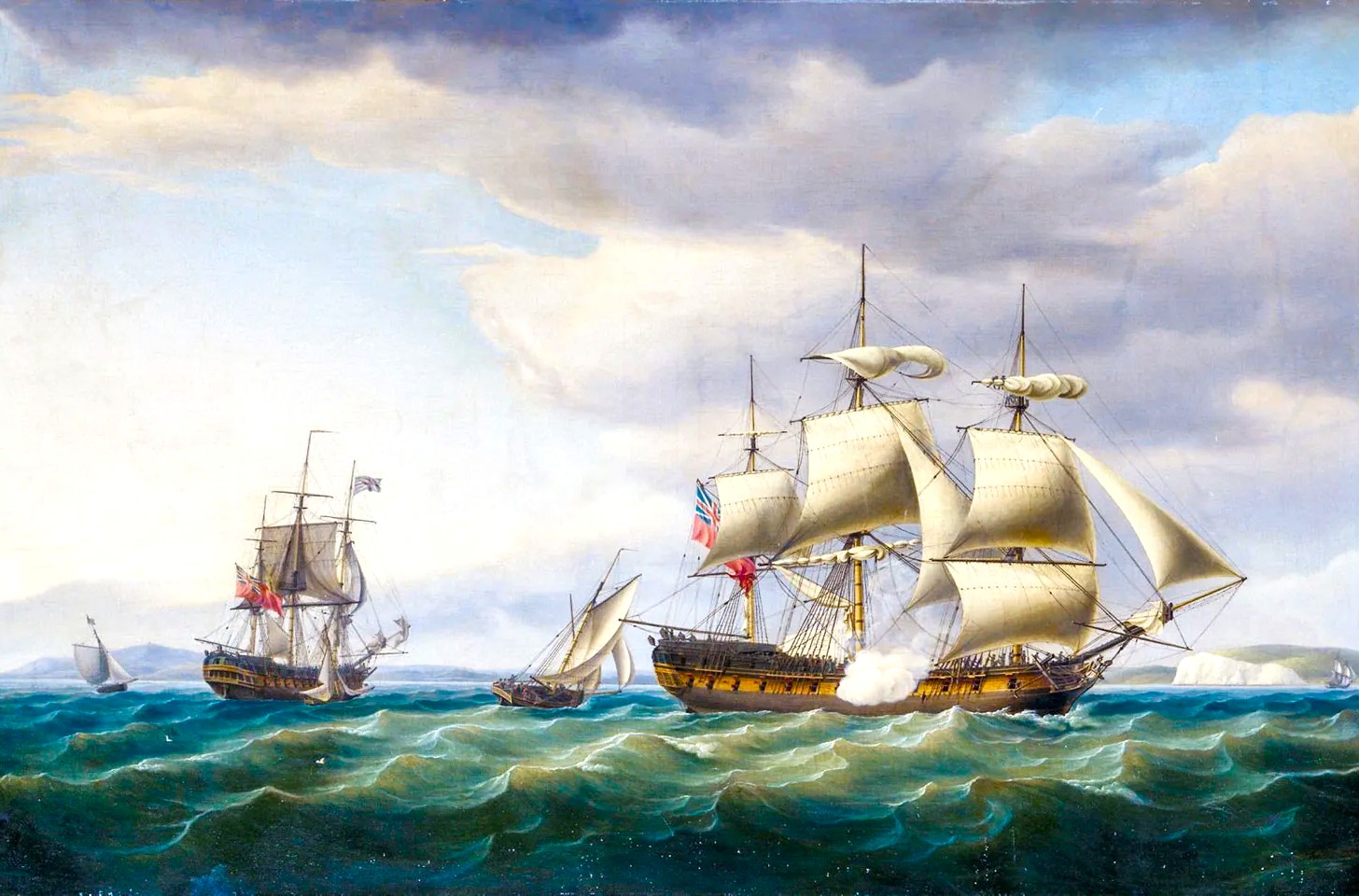
British East India Company: Securing Surat (1612-1615)
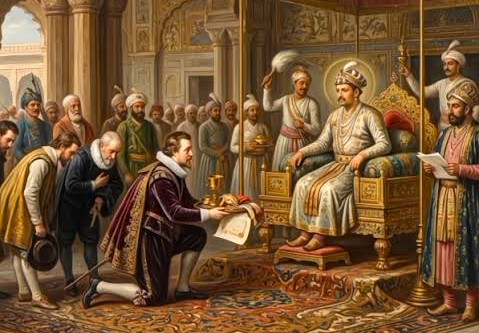
One of the era’s pivotal moments occurred in 1612 when Captain Thomas Best led a naval engagement off Surat, delivering a decisive blow to Portuguese forces. The victory captured the attention of Mughal Emperor Jahangir, who granted the newcomers their initial permission to engage in trade within his dominions. Three years later, in 1615, Sir Thomas Roe arrived at Jahangir’s court representing King James I as ambassador, securing essential trading rights and inaugurating the first factory, a trading post, at Surat. This sequence established a framework for sustained English commercial activity in western India and laid groundwork for broader overseas enterprise. Its impact extended across ports, policies, and future partnerships.
The Coastal Strategy (1639-1668)
The Company strategically established three main trading posts along India's coastline. In 1639, they founded Fort St. George in Madras (Chennai) after purchasing land from a local ruler. Bombay (Mumbai) came into their possession in 1668 as part of Catherine of Braganza's dowry when she married England's Charles II. These ports were carefully chosen for their natural harbors and access to inland trade routes. British East India Company
Calcutta's Foundation (1690)
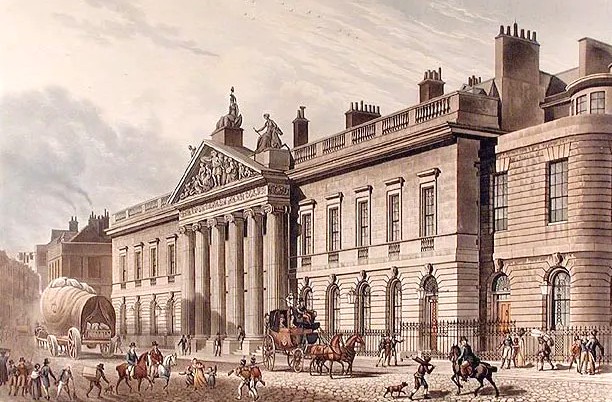
Calcutta’s foundation in 1690 was a pivotal moment in the British East India Company’s expansion in India. Job Charnock, an official of the Company, established the settlement by consolidating three small villages-Sutanuti, Govindapur, and Kalikata-on the eastern banks of the Hooghly River. Its location was chosen for strategic reasons: the deep waters of the Hooghly River allowed large ships to dock, making it ideal for trade, while the surrounding marshes offered natural protection from potential invaders.
Charnock’s efforts were supported by permission from the Nawab of Bengal, Ibrahim Khan, allowing the Company to use the area for commercial purposes. In 1696, this vision gained further permanence when the construction of Fort William commenced. Originally intended as a trading depot with basic defensive structures, Fort William became the administrative and military nucleus of the settlement.
By 1698, the Company solidified its authority over the region by purchasing the zamindari rights to the three villages from the Nawab’s administration. This legal foothold allowed them to collect taxes and administer the area, transforming it into one of British India’s three Presidency cities, alongside Madras and Bombay. Over time, Calcutta evolved into a thriving commercial hub, marking the beginning of British consolidation in eastern India.
Early Trading Patterns
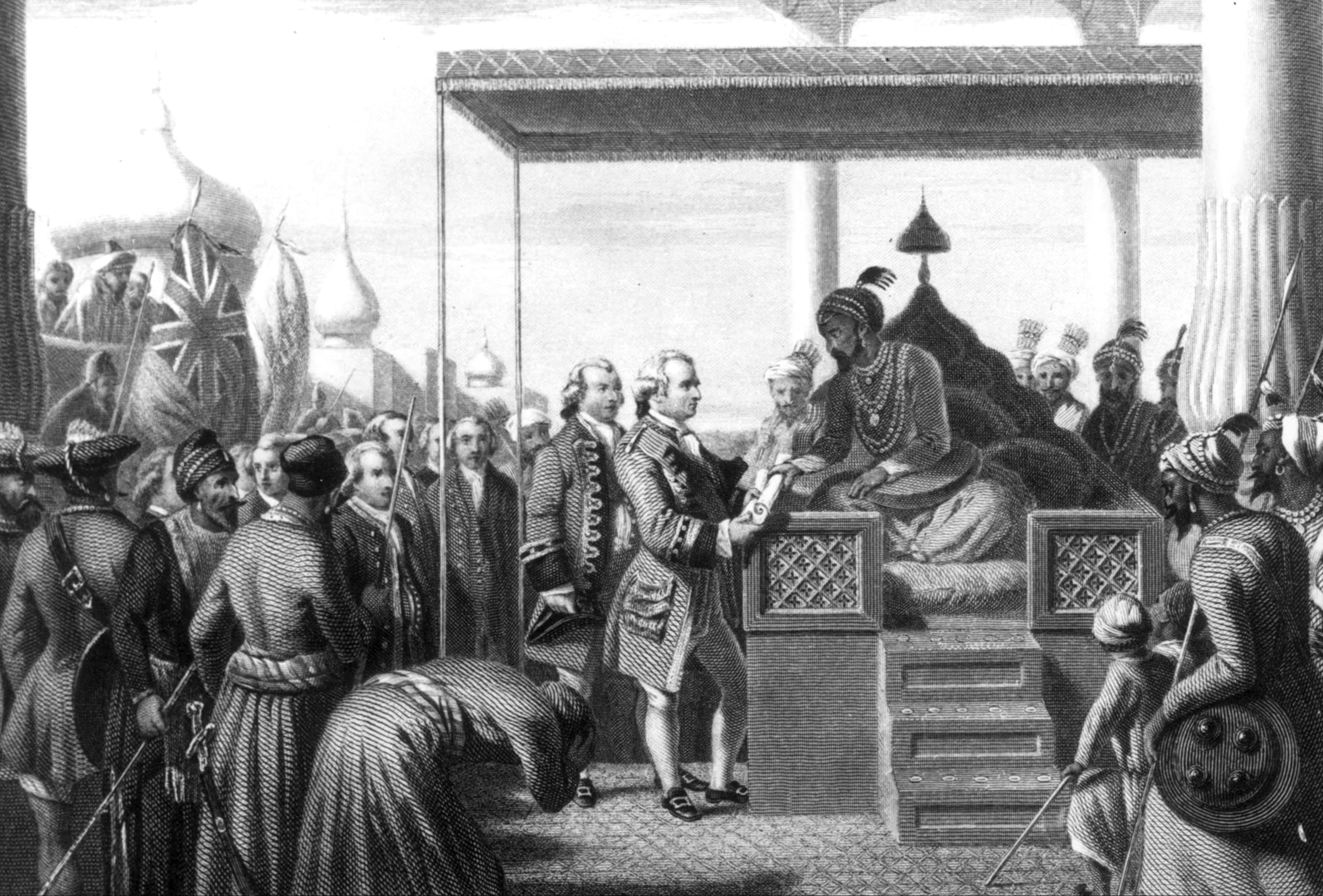
The company’s early trading focus encompassed spices, textiles, and luxury commodities. It exported Indian textiles to Southeast Asia and to England, while importing bullion, silver, and gold from markets. Monies and cargo moved aboard ships sailing from England, their hulls heavy with precious metal that merchants used to acquire Indian wares. The venture proved extraordinarily lucrative; Indian textiles, in particular, commanded strong demand across European markets, driving volume and profit. Merchants cultivated networks, negotiated favorable rates, and sustained turnover between continents. The buoyant trade reshaped supply chains, stimulated textile innovation, and helped establish enduring commercial ties between Britain, India, and pivotal Asian port cities, laying foundations for future expansion worldwide. British East India Company
The Diplomatic Game in Early Colonial India
During the initial phase of British presence in India (1600-1700), the East India Company operated as merchants rather than rulers, masterfully playing a complex diplomatic game. Their survival and success depended on carefully cultivating relationships across multiple power centers and hierarchies of Indian society.
Key Diplomatic Relationships
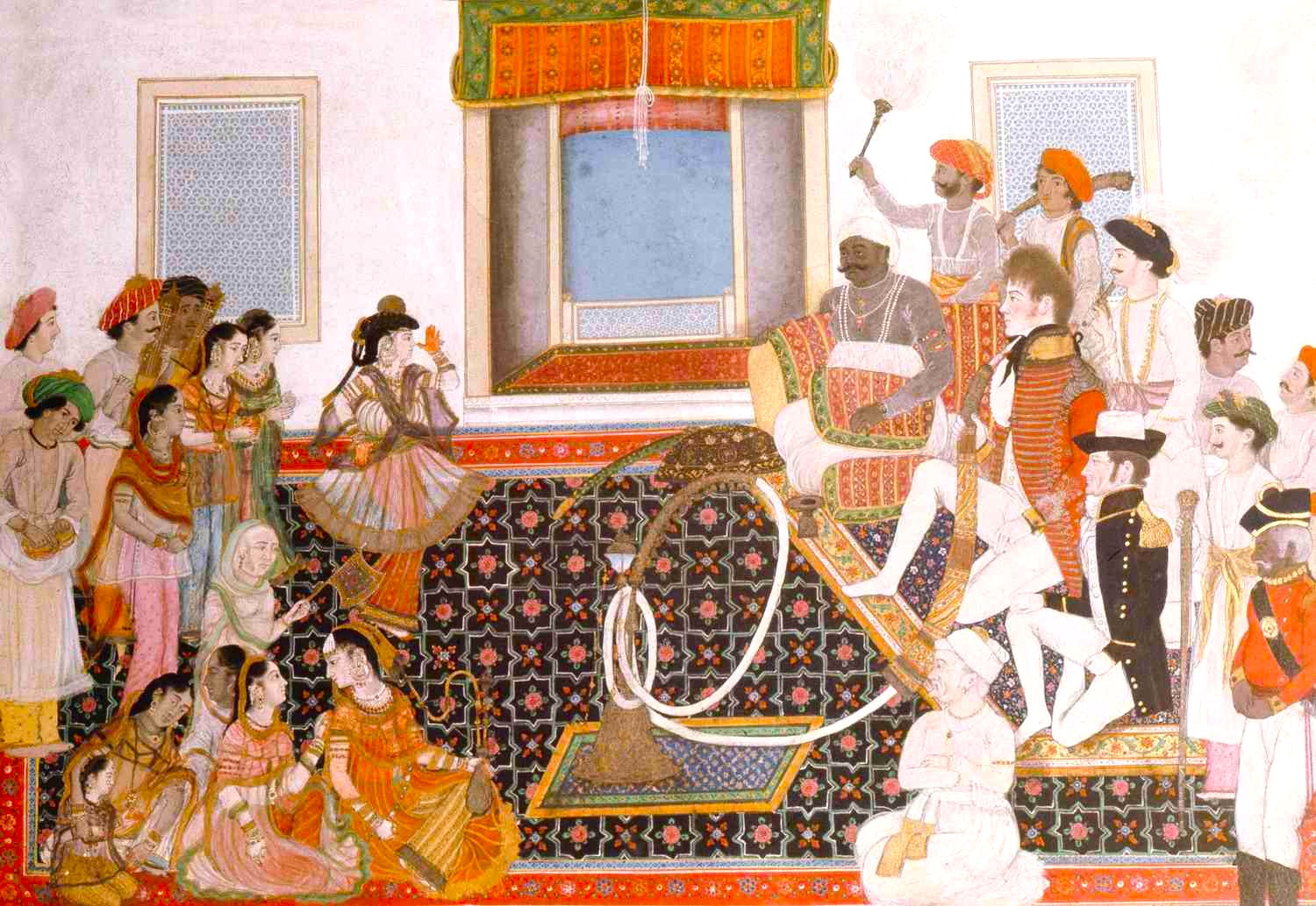
- The Mughal Emperor's Court
- Regular gifts (Nazrana) were presented to maintain favor
- Company representatives adopted Mughal court etiquette
- Special envoys like Sir Thomas Roe (1615-1619) maintained permanent diplomatic presence
- Trading privileges were secured through formal imperial farmans (royal decrees)
- Regional Governors (Subadars)
- Local permissions for trade were negotiated
- Regular tribute payments ensured smooth operations
- Company factors maintained personal relationships with key officials
Disputes were resolved through formal diplomatic channels:
- Local Rulers and Zamindars
- Land rights were negotiated for factories and settlements
- Local customs and traditions were respected
- Company merchants learned local languages
- Local power structures were carefully mapped and documented
- Other European Trading Powers
- Territorial boundaries were negotiated with Portuguese and Dutch
Trading rights were sometimes shared or divided. Military non-aggression pacts were maintained and Intelligence about Indian politics was occasionally shared. The Company maintained detailed records of these diplomatic interactions, employing specialized staff including:
- Native language translators
- Local agents (dubashes)
- Protocol officers
- Intelligence gatherers
This diplomatic foundation, built through careful negotiation and respect for local power structures, would later prove crucial when the Company transitioned from trading to territorial power. The knowledge gained during this period about Indian political systems, social hierarchies, and cultural practices formed the basis for later colonial administration. British East India Company
The Mughal Emperor in Delhi
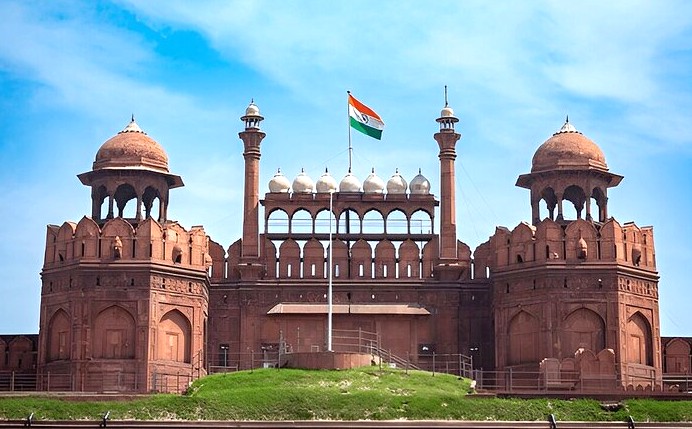
- Regional governors (subadars)
- Local rulers and zamindars
Other European trading companies
Setting the Stage By 1700, the Company had established a strong commercial presence in India with:
- Multiple trading posts along both coasts
- Warehouses and small settlements
- A network of Indian merchants and middlemen
- Basic defensive fortifications
- Diplomatic relationships with key power centers
This initial phase of British presence in India was characterized by cautious commercial expansion rather than territorial ambition. The Company representatives behaved like supplicants before Indian rulers, seeking trade privileges through diplomacy and gifts. However, these humble beginnings laid the groundwork for what would become one of history's most significant colonial enterprises
Merchants and Markets: India's Economic Glory
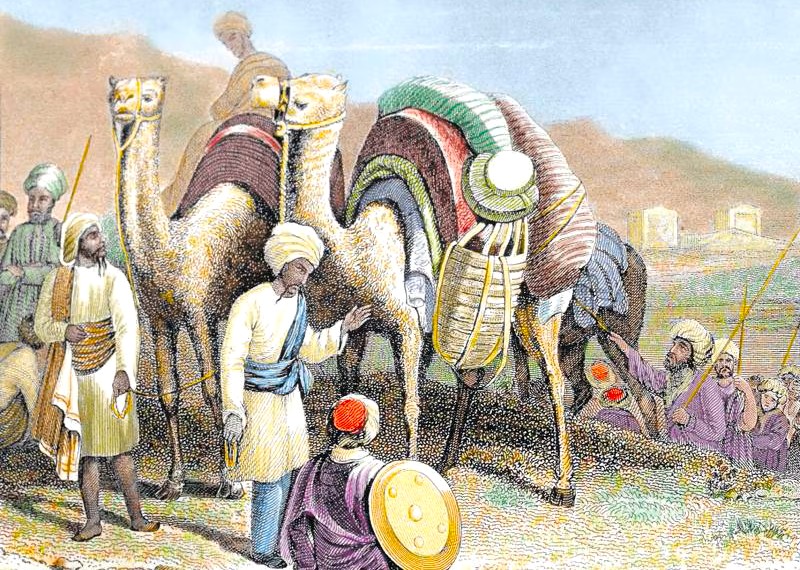
During this era, India's wealth was extraordinary. Bengal's markets pulsed with merchants from every corner of the world, trading fine silks for currency and goods. In Gujarat, artisans produced intricate pieces that reached European royal courts, signaling India's skilled reach. Bihar's fields produced abundant harvests, feeding growing urban centers and sustaining commerce. Meanwhile Rajputana's warriors preserved their fierce independence, yet acknowledged Mughal authority when practical. The overall picture was one of vast resource wealth and complex exchange networks, with maritime routes and overland caravans carrying luxury textiles, precious metals, spices, and artisanal crafts to distant buyers. This prosperity helped fuel imperial economies and shaped cross-continental trade patterns across centuries worldwide. British East India Company
The Death of an Empire (1707) The Final Breath of Centralized Power
Aurangzeb's death in 1707 marked the beginning of the Mughal Empire's decline. His successor, Bahadur Shah I, inherited a vast but crumbling realm, strained by continuous warfare and exhausted finances. Bahadur Shah struggled to keep the empire intact, but his short reign (1707-1712) exposed deep fractures within the Mughal system.
The Rise of Regional Powers The Rajput Rebellion, Shifting Balance
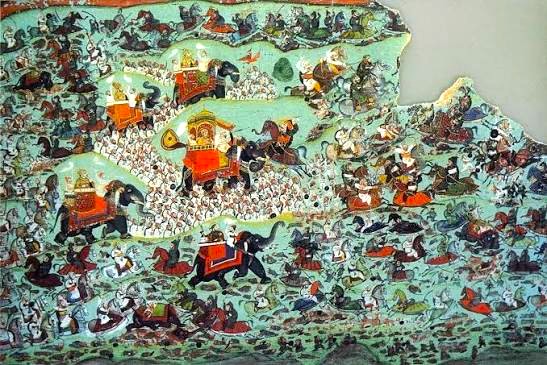
Amber and Jodhpur, once crucial allies, began asserting their independence and resisting imperial oversight. Simultaneously, the Marathas expanded their reach in the Deccan, employing guerrilla tactics under the leadership of Shahu Maharaj and the Peshwas to seize territory and assert authority. This shift reflected a widening recalibration of power across the peninsula, as mountain routes and plains alike witnessed new lines of influence. Rajput polities pursued autonomy in a landscape reshaped by ambitious empires, while Maratha leadership leveraged mobility, strategic alliances, and administrative reforms to consolidate control and project strength beyond their traditional boundaries. The era thus witnessed a marked reordering of regional power across the vast subcontinent, indeed worldwide. British East India Company
Administrative Collapse: The Empty Throne
In the administrative system, the central authority diminished further as influential nobles and regional governors seized power and resources for themselves. Bengal, Hyderabad, and other regions drifted into autonomy while continuing to pay nominal allegiance to Delhi. This period of decentralization left Mughal rulers with limited control, paving the way for rising powers like the British to exploit the chaos and establish dominance over a fractured subcontinent.
The End of Unity: The Colonial Dawn
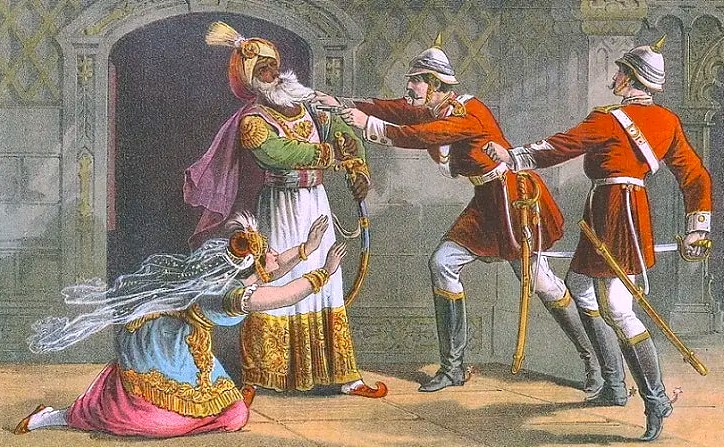
Aurangzeb's death marked a transition from centralized rule to a fragmented political landscape shaped by regional powers and foreign intervention, a turning point that would shape the subcontinent for centuries. With Aurangzeb's death, the era of centralized empire gave way to a mosaic of regional polities and foreign influence, a pivotal moment that would steer the subcontinent's trajectory for generations. Aurangzeb's demise ended centralized authority and ushered in a diverse array of regional powers and external involvement, a turning point whose consequences would echo across the subcontinent for centuries. British East India Company
Artisans and Industry: The Economic Tapestry
The economic landscape of pre-British India was a tapestry of prosperity. The textile industry flourished in Bengal, with master weavers creating pieces so fine they could pass through a ring. International trade networks connected Indian ports to markets from Arabia to Southeast Asia. The agricultural sector thrived, supporting a population that contributed nearly a quarter of the world's GDP.
The Cultural Renaissance: Resilience Amid British Invasion
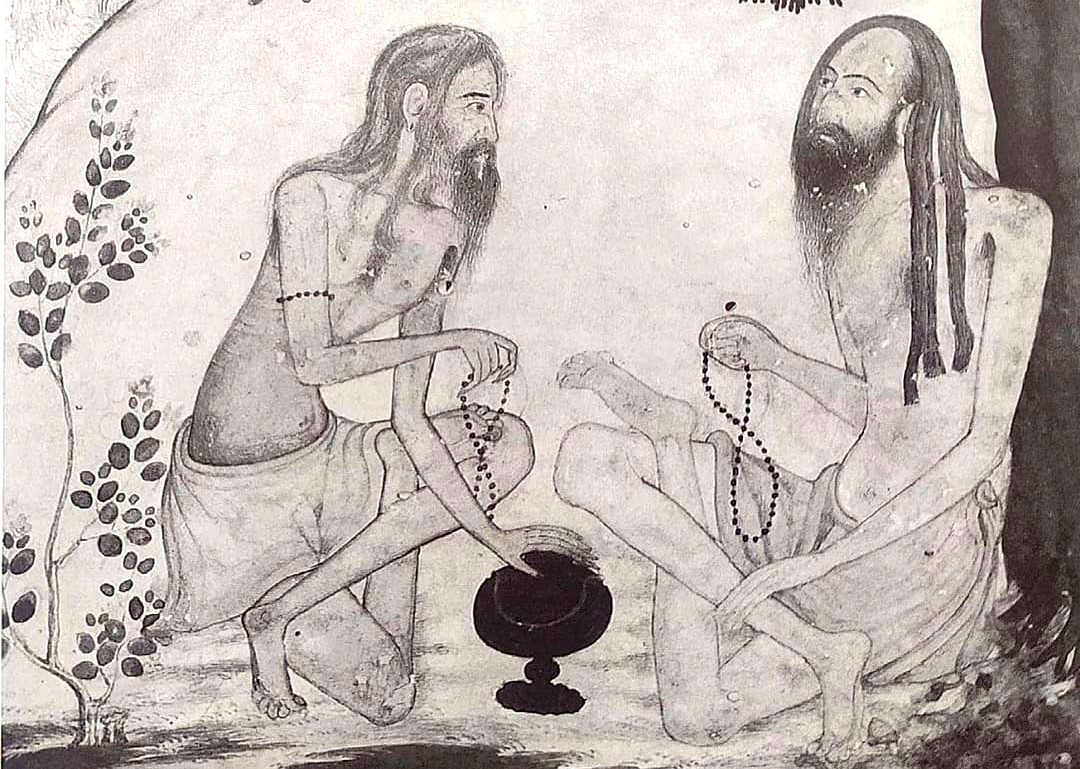
As British influence expanded across India in the 18th and 19th centuries, the courts of Indian rulers remained vibrant centers of art and culture, resisting the homogenizing effects of colonial control. Rajput courts patronized miniature paintings, and the Mughal court in Delhi maintained its traditions of Persian poetry and calligraphy, even as its political influence waned. Similarly, the Maratha and Mysorean courts encouraged regional art forms, highlighting India’s determination to retain its cultural identity despite external domination. However, the British often disregarded or misunderstood this flourishing cultural landscape, seeing it as outdated. British East India Company
Traditional Medicine and Colonial Ignorance
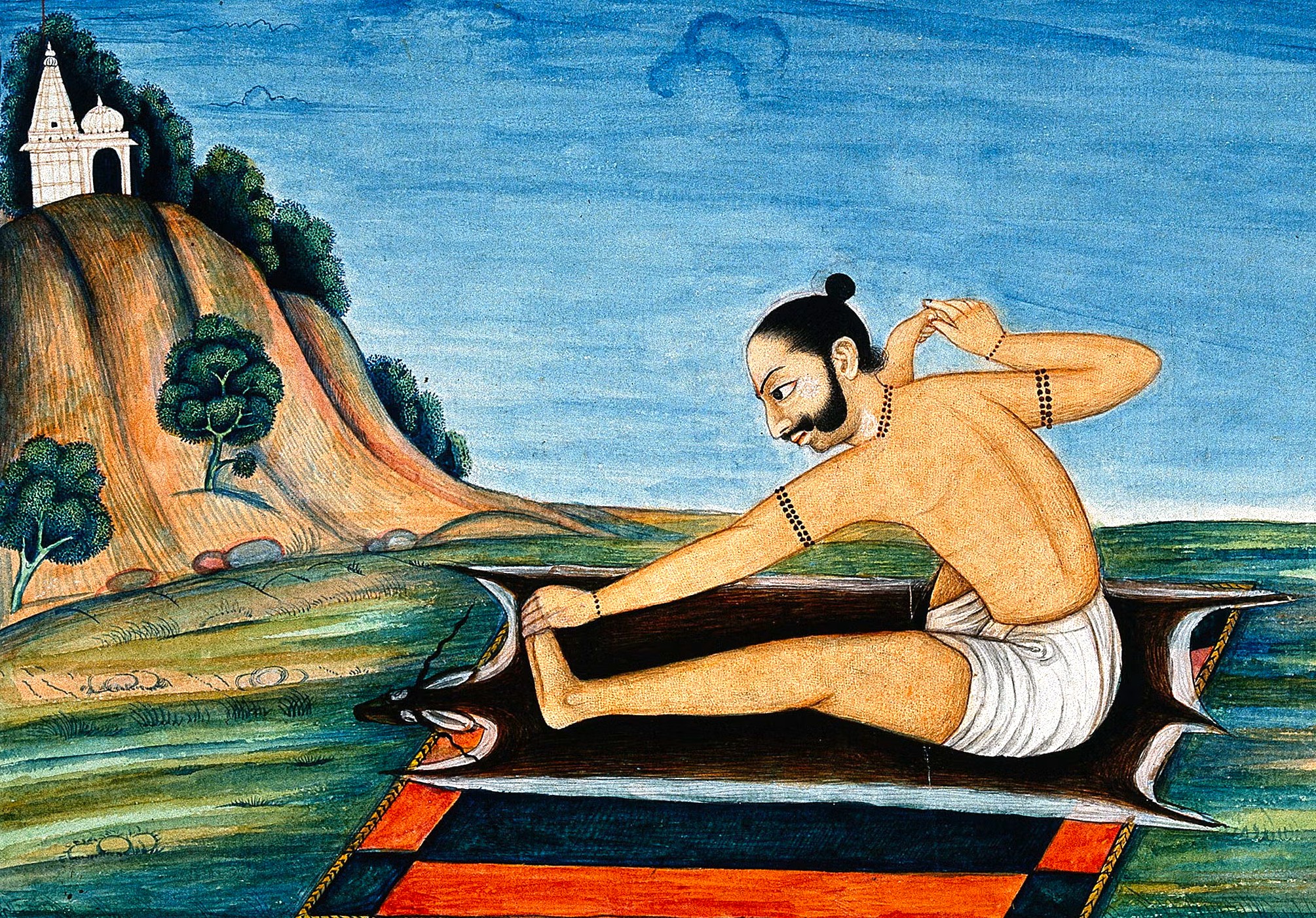
Ayurveda continued to evolve during this period, with practitioners documenting medicinal plants and diseases while communities relied on indigenous knowledge. This contrasted with British efforts to introduce Western medicine and marginalize traditional systems. Colonial intervention often viewed Ayurveda as unscientific, leading to the decline of state-supported research and eroding the influence of native health systems. Despite this, Ayurvedic practitioners kept the tradition alive in local communities, creating a quiet cultural resistance against British dominance.
Education: Native Heritage vs. Colonial Education
Traditional educational institutions, including gurukuls and madrasas, faced challenges as the British began introducing modern, Western-style education. Persian, once the administrative and cultural language of India, gave way to English, which the British promoted as the medium of instruction. As British schools grew in influence, the rich Sanskrit, Persian, and regional language traditions were gradually undermined. Colonial education aimed to create a class of "brown Englishmen" who would assist in administration, further alienating Indians from their cultural heritage. British East India Company
Architecture: A Tale of Two Influences
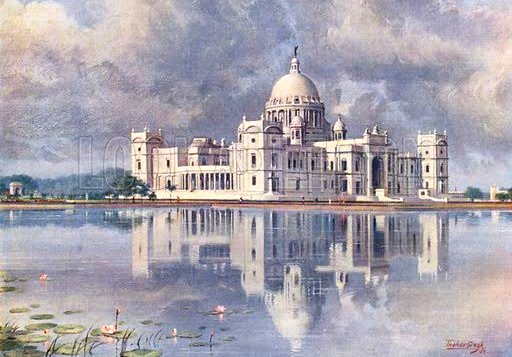
While local rulers continued building magnificent structures reflecting regional styles, the British introduced neoclassical and Gothic architecture to assert their administrative and cultural dominance. Indian structures, such as the Mughal-inspired Red Fort and Mysorean palaces, competed symbolically with British buildings like the Victoria Memorial in Calcutta. Nevertheless, Indian architects merged colonial styles with traditional techniques, creating unique syncretic designs that symbolized cultural resilience against Britain's cultural imposition.
Legacy of the Renaissance in Colonial Context
Despite the growing shadow of British influence, India’s cultural renaissance persisted as an act of defiance and identity preservation. Regional courts, traditional medicine, and architectural marvels resisted colonial erasure, showcasing India's ability to balance innovation while clinging to its heritage. This shared cultural vibrancy became a source of pride and later fueled the nationalist movements, which sought to reclaim India's identity from colonial rule. The resilience of these traditions served as a quiet yet powerful counterpoint to British domination, helping sustain India's rich cultural legacy. British East India Company
The Fragmentation Begins
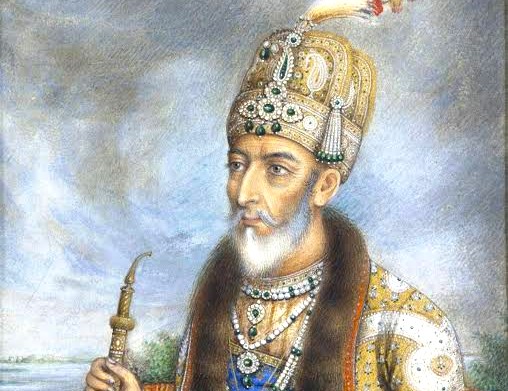
Yet beneath this glittering surface, political fragmentation was taking hold. The Mughal emperor in Delhi, though still revered as a symbolic figurehead, saw his actual power diminishing. Regional governors and princes began operating with increasing autonomy, maintaining their own armies and administrative systems. This decentralization, while allowing for cultural diversity and regional development, would ultimately prove to be India's vulnerability.
The Eve of Change
In the bustling ports and crowded bazaars of 1700s India, few could have predicted that this ancient civilization, contributing nearly a quarter of global wealth, would soon face its greatest challenge from a small island nation thousands of miles away. The stage was set for a transformation that would reshape not just India, but the entire world.
The Education Trap (1835)
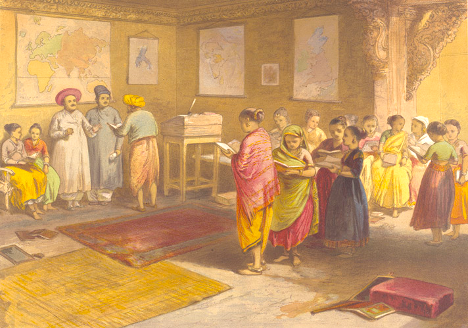
In 1835, Thomas Babington Macaulay introduced his Minute on Education, altering India's educational landscape with lasting consequence. The British framed this as modernization, presenting reform dressed in the language of progress. Beneath that framing lay a calculated strategy, designed to create a subordinate administrative class fluent in English thought and habit. Macaulay stated his aim with clarity, seeking to produce Indians who would serve as interpreters between the British and the millions they governed, a class carrying English tastes, opinions, and intellect into society, forming a bridge in blood and colour, English in every other respect, shaping classrooms and careers across the subcontinent for generations.
Systematic Dismantling of Traditional Learning
The British systematically undermined India's ancient educational institutions:
- Sanskrit pathshalas were defunded
- Persian madrasas lost state support
- Traditional scholars lost patronage
- Indigenous knowledge systems were labeled "primitive"
Creation of a Colonial Education System The new system focused on:
- English language supremacy
- Western curriculum
- British literature and history
- European scientific methods
This created a deep cultural disconnect between educated Indians and their heritage.
Long-term Consequences The impact was profound and lasting
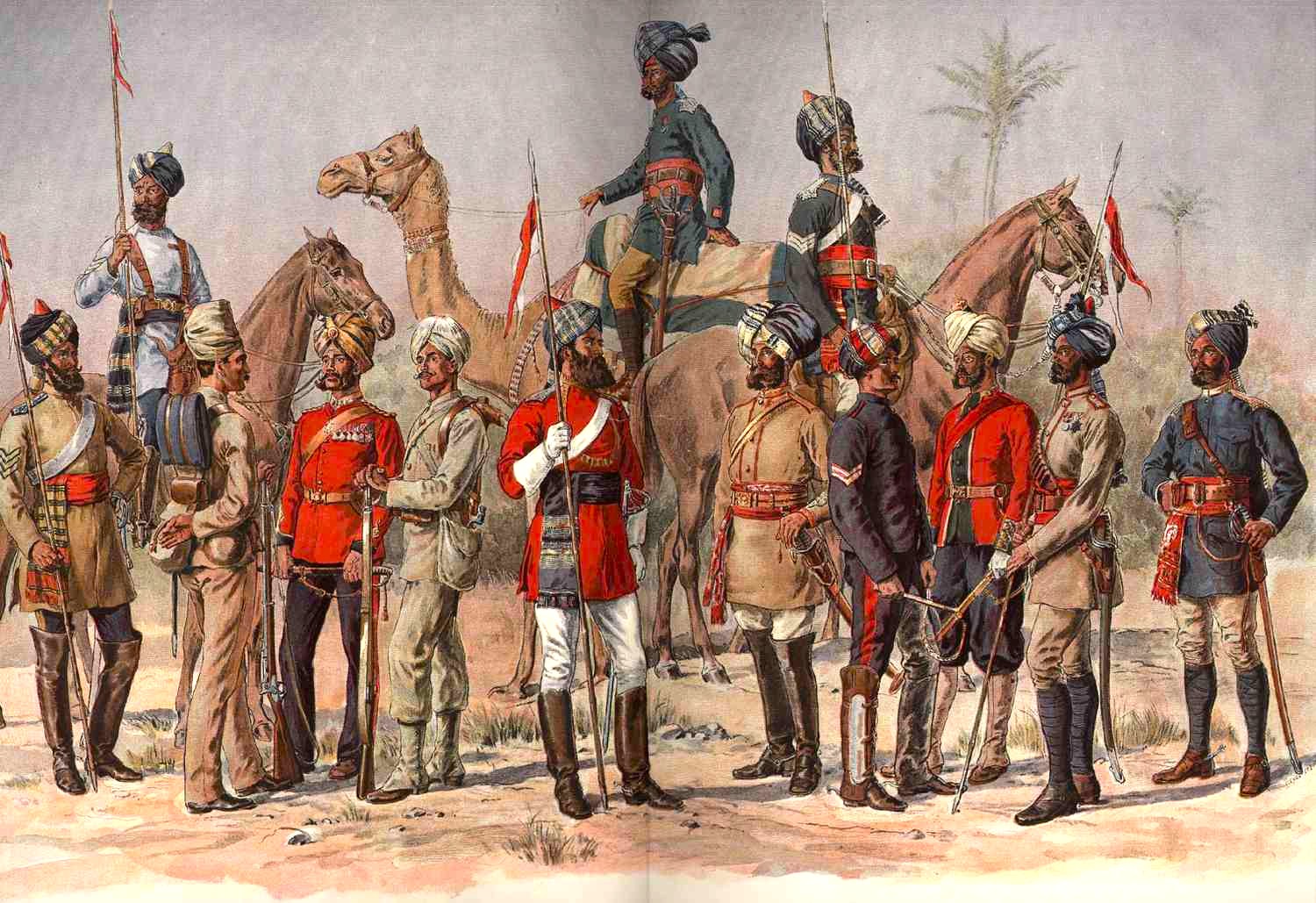
- Created a privileged English-speaking class
- Deepened social divisions
- Weakened connection to indigenous knowledge
- Established linguistic hierarchy
- Generated cultural alienation among educated Indians
This educational policy became a powerful tool of colonial control, creating what critics called "mental slavery" that persisted long after independence. The system produced administrators who could serve British interests while being disconnected from their own cultural roots.
Economic Devastation: Brutal Economic Moves
- Forced Indian farmers to grow indigo and opium instead of food
- Made Indians buy British goods at crazy high prices
- Destroyed the local textile industry by flooding markets with cheap machine-made British cloth
- Turned millions of skilled artisans into unemployed laborers
The Tax Terror The British tax system was ruthless. They demanded high taxes in cash, not crops, forcing farmers to sell their harvest cheap and often go into debt. Even during famines, they wouldn't reduce taxes. This led to massive famines where people starved while food was being exported to Britain. British East India Company
The Railway Myth: An Exploitative Legacy
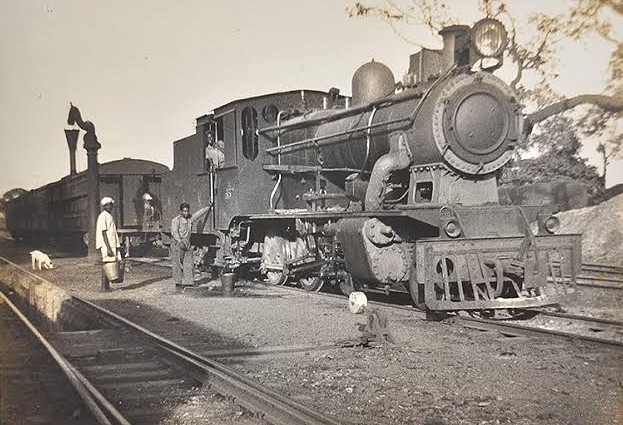
The British often present the railways as a gift of civilization, a narrative built on curated memory. The reality traces a different origin, funded through Indian revenue and constructed through Indian labour, with returns flowing largely toward London investors and colonial administration. Rail lines followed the logic of extraction, connecting cotton fields, coalfields, and ports rather than centres of Indian commerce or community. Freight rates favoured raw material moving outward and British manufactured goods moving inward, binding the subcontinent into a colonial economy. Passenger travel came as a secondary function, shaped around administrative and military mobility, reinforcing imperial control across vast distances and consolidating the machinery of colonial rule everywhere.
Exploitation of Indian Resources
The construction of the railways was funded by Indian taxpayers under the oppressive "guarantee system." British companies were given contracts and assured profits regardless of whether the railways made money, while Indians bore the financial burden. Only British-manufactured goods and equipment were used, ensuring that India’s vast resources enriched Britain rather than benefiting local industries or the economy.
Supporting British Trade and Military Control
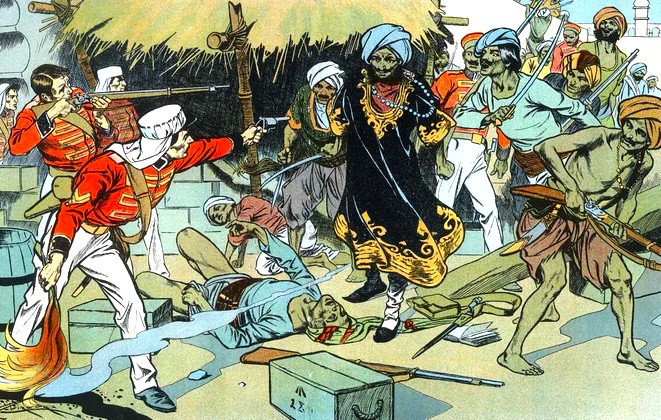
The railways were not built for the convenience of Indians but to support British trade. Raw materials like cotton, indigo, and tea were transported cheaply and efficiently from the interiors to ports for export to Britain. At the same time, manufactured goods from British factories flooded Indian markets. The railways also allowed quick troop movements, reinforcing military dominance over Indian territories during uprisings like the Revolt of 1857. British East India Company
Ignored Local Needs
Although trains connected cities, they failed to benefit the everyday Indian population. Tickets were expensive, and the poor rarely had access. Rail development ignored regional connectivity, focusing only on routes that supported Britain’s economic goals. The policy widened the gap between rich and poor and stunted local economies. The legacy of these railways, though significant in shaping modern India, was rooted in exploitation, not philanthropy. The myth of their benevolent construction obscures their true purpose: to benefit British colonial power, not the Indian people.
Fortress Stations

Railway stations carried the architecture of fortresses, thick walls, elevated platforms, and strategic positioning along key routes. Major junctions housed military barracks, ammunition stores, and emergency supplies within their compounds, blending civilian transit with garrison function. Design choices allowed rapid conversion into defensive positions during periods of unrest, with loopholed walls and reinforced gates standing ready behind ordinary facades. Station staff, particularly Europeans and Anglo-Indians, received training as auxiliary forces, prepared to defend infrastructure alongside regular troops. Walking these platforms today, I sense the layered purpose beneath the Victorian ironwork, transit and control woven into a single structure, engineering quietly serving empire long after the very last passengers moved on. British East India Company
Rapid Response Capabilities to Local Uprisings
- Efficient movement of police forces
- Quick transportation of prisoners
- Emergency supply lines during conflicts
- Communication networks along railway lines
- Military Cost-Effectiveness This railway-based military control was highly cost-effective.
The British could maintain control over vast territories with relatively small forces, as troops could be quickly redeployed where needed. This system allowed Britain to control India with a remarkably small army relative to the population, demonstrating how infrastructure could be used as an instrument of imperial power. British East India Company
The One-Way Trade Pipeline
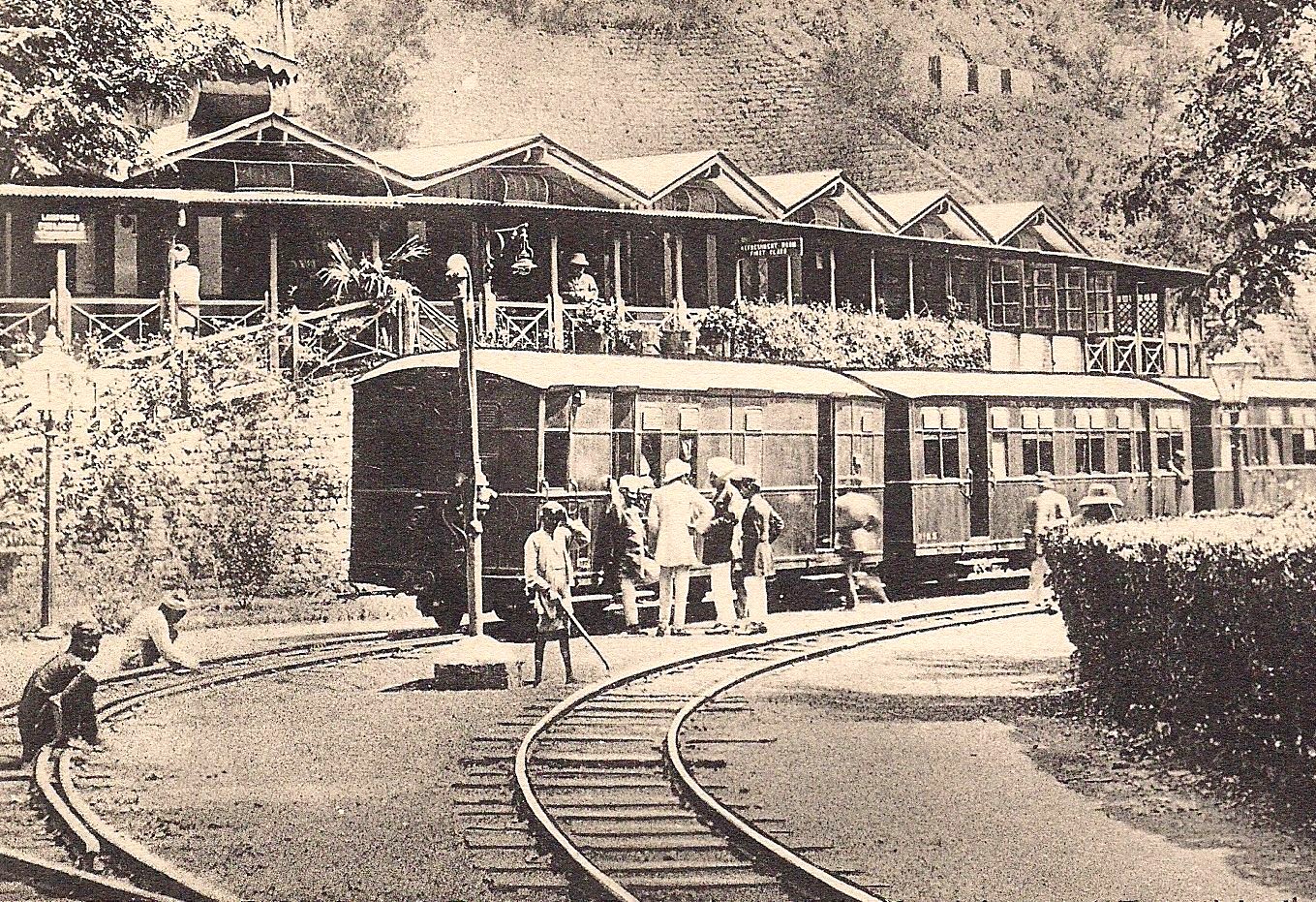
The British railway system was deliberately designed to sustain a one-way trade cycle that served British economic interests while devastating India's traditional economy. Raw materials such as cotton, jute, indigo, tea, and spices were harvested from India's interiors and transported via rail to ports like Bombay, Calcutta, and Madras. From there, they were shipped to Britain's textile mills and factories to fuel industrial production. Once processed, these finished goods - cheaper, mass-produced textiles and other commodities - flooded Indian markets using the same railways, systematically undercutting local artisans and dismantling self-sufficient rural economies.
The Fall of India’s Textile Industry
India, which had long been a global leader in textile production, saw its traditional industries crumble under this exploitative setup. Handmade muslins from Bengal, famous for their quality, could not compete with cheap British machine-made goods. Entire artisan communities, like the weavers of Dacca (modern-day Dhaka), fell into deep poverty as their industries collapsed. Railways enabled British goods to penetrate even the remotest villages, saturating markets and leaving little room for local products to survive.
Enrichment of Britain, Impoverishment of India

While India's resources were siphoned off, British manufacturers profited immensely, and shareholders of railway companies received guaranteed returns. Meanwhile, the Indian population bore the brunt of the exploitation through oppressive taxes and economic displacement. This one-way trade pipeline not only enriched Britain but also systematically impoverished India, paving the way for one of the most exploitative economic systems in colonial history. The railways, marketed as a gift of modernization, were in reality tools of economic subjugation.
Death of Local Industries
Traditional Indian industries, particularly textiles, faced unprecedented destruction. Cities like Dacca, once famous for their fine muslins, saw their artisan communities collapse. The railways enabled British goods to reach even remote villages, flooding markets with machine-made products that were cheaper than handcrafted local items. Skilled craftsmen, unable to compete, were forced into agricultural labor or poverty.
Forced Market Creation: Engineered Economic Domination
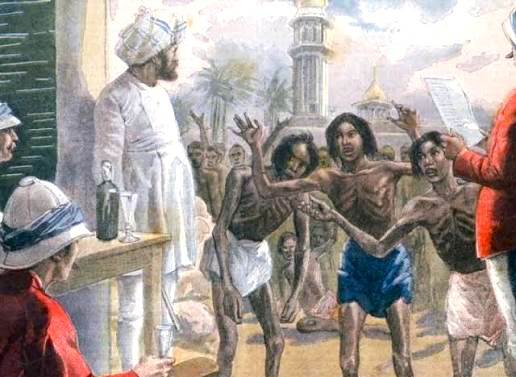
The British constructed a captive market in India through calculated economic policy, precise in intent and execution. Heavy duties, reaching seventy to eighty percent, fell on Indian manufactured goods, particularly the celebrated cotton textiles of Bengal and the Deccan. British products moved through customs virtually tax-free, entering Indian markets at prices local artisans found impossible to match. This price manipulation served a clear purpose, tilting competition entirely toward Manchester mills over village looms. Cotton, once India's signature export, transformed into an import commodity within decades. Artisan communities across weaving centres faced sudden collapse, skills rendered obsolete by policy rather than by any shift in demand or taste.
Railway Distribution Network
The railways became the perfect tool for market penetration. British goods could now reach the remotest villages, destroying local self-sufficiency. The network was designed specifically to connect manufacturing centers to ports and inland markets, creating an efficient distribution system for British products while making local goods increasingly difficult to transport cost-effectively.
Creating Dependencies The British Created Artificial Dependencies Through
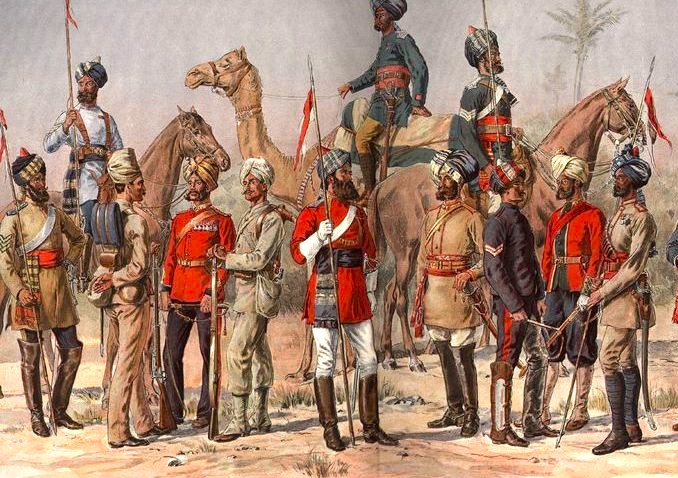
- Forced cash crop cultivation
- Destruction of local manufacturing
- Control of raw material prices
- Monopolization of transport systems
- Manipulation of trade policies
This engineered transformation turned India from a manufacturing powerhouse into a raw material supplier and captive market for British goods, fundamentally altering its economic structure.
The Dependency Trap
From Exporter to Dependent Before British intervention, India dominated global trade in textiles and finished goods. By the late 19th century, this economic giant had been transformed into a dependent market. Statistical evidence shows India's share of world manufacturing dropped from 25% in 1750 to less than 2% by 1900.
- Destroying local manufacturing capabilities
- Forcing cash crop cultivation over food crops
- Controlling shipping and transport
- Manipulating currency exchange rates
- Imposing unfair trade policies
- The Numbers Tell the Story By 1900:
- 80% of India's imports were British goods
- Raw material exports increased by 500%
- Traditional industries declined by 60%
- Nearly 30 million Indians became unemployed artisans
- British imports grew by 1000% between 1850-1900
The Lasting Impact This engineered dependency created long-term consequences.
Step Inside The Story - View All Tour Itineraries & Details

We’re here to offer genuine, thoughtful guidance if your interested in travelling to India. As a small, dedicated team, we pay close attention to every detail so you can focus on enjoying the experience while we take care of the planning. We believe the best trips begin when someone truly listens to what you want and how you like to travel, so the journey feels right for you and contributes to a happy, positive group on tour. Our communication stays clear, straightforward, and respectful at every step, with the goal of helping you feel understood, supported, and confident from first contact to the end of your journey.
Click Catherine Frith - About The Founder
Click Discover Life Travel - All tours and more
Click Why We Are Different - Unique, Safe, Transparent