
Sunsets and Saffron Tour Kashmir India
Avantiswami Temple: Srinagar - Kashmir
Mother Masala Tours
King Avantivarman's Eternal Gift to Kashmir
"Avantiswami" means "Lord of Avanti," referring to Vishnu. Construction began in 855-856 CE under King Avantivarman, founder of the Utpala Dynasty. The complex featured a main shrine within a walled courtyard, crafted from local limestone. It flourished until the 14th century, then lay buried until 19th-century excavations. Though partially preserved, these ruins connect us to Kashmir's rich past, where artistry and devotion merged. Local families maintain cultural ties to this sacred site, offering visitors insights into traditions spanning over a millennium. Avantiswami Temple Srinagar Kashmir.
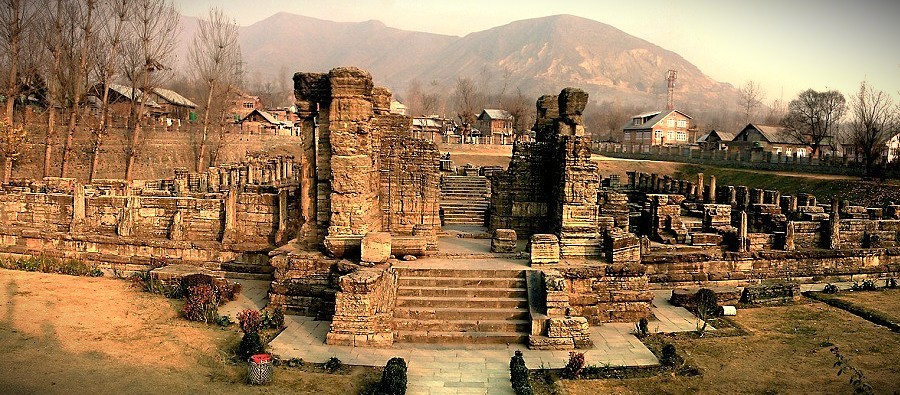
Avantiswami Temple Srinagar Kashmir: Sacred Spaces
The temple houses stone artifacts revealing medieval Kashmir's religious practices. Intricate carvings depict Vishnu's forms, including his Varaha and Narasimha avatars. The layout followed traditional Hindu temple design - central shrine, smaller ritual spaces, gathering hall, and transitional vestibule. Stone fragments display consecration marks and ritual symbols. You'll notice how the temple aligns with cardinal directions, creating harmony between earthly and divine realms. These sacred spaces, though weathered by time, continue to evoke the spiritual purpose for which they were meticulously designed eleven centuries ago.
Ancient Mosaics: Impeccable Craftsmanship
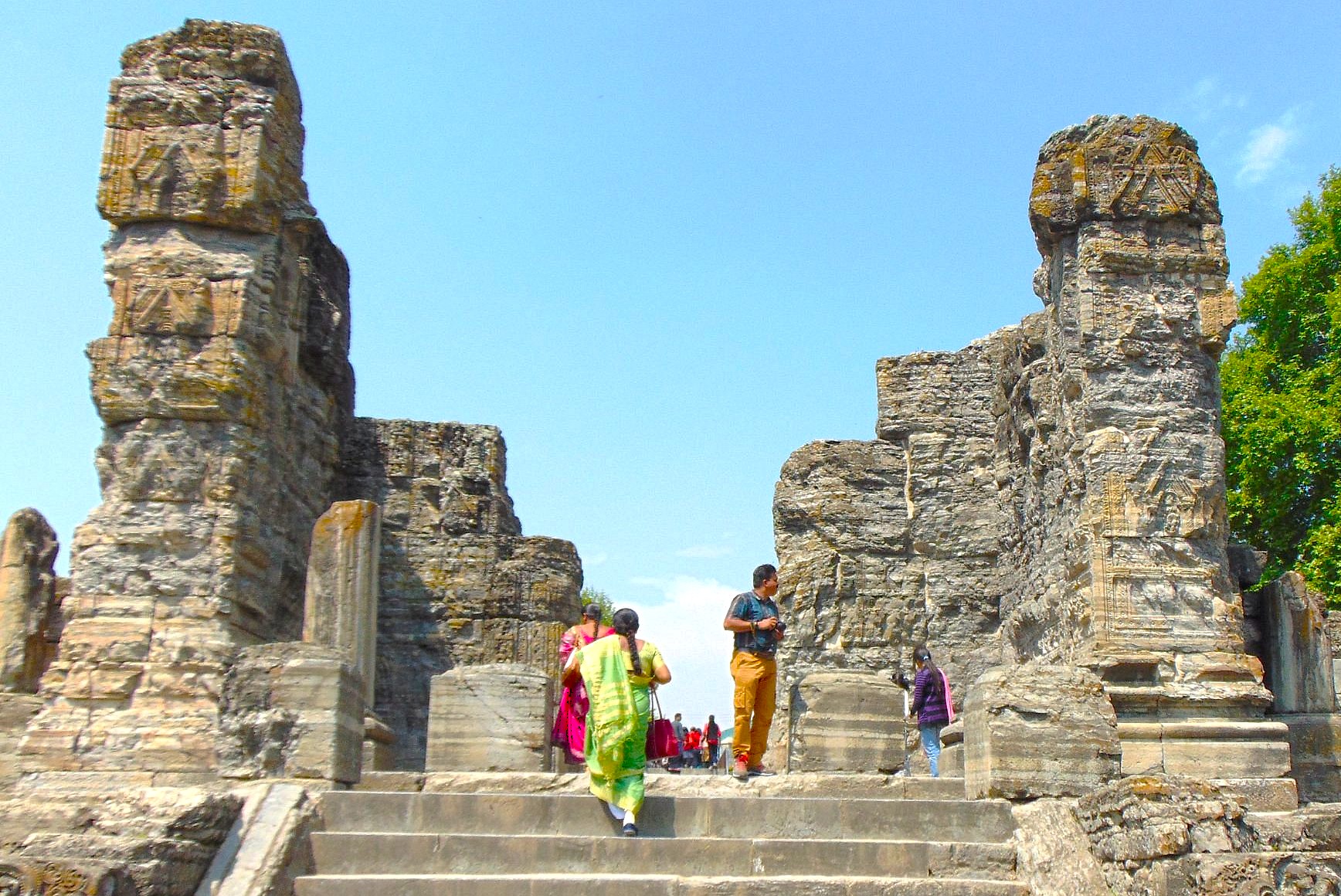
The temple represents the peak Kashmiri Nagara style under the Utpala Dynasty. Master craftsman supervised creations around 860 CE. Remaining panels reveal exquisite skill - flora motifs intertwined with geometric patterns. Each block displays meticulous detail - symmetrical lotus flowers, balanced divine figures, and precise ornamental borders. Craftsmen used undercutting techniques for dramatic shadow effects. Records mention specialized iron tools for creating delicate details. Limestone was used for fine grain quality and polished with progressively finer abrasives.
The Pulse of the Local Community
Locals maintain a special bond with the temple. These hospitable Kashmiris have woven the ancient site into their identity. Elders preserve legends absent from historical texts. Their dialect includes unique terms for temple features that scholars find invaluable. Engaged primarily in agriculture and handicrafts, locals refer to the temple affectionately as "our old palace" or "grandfather's stones." They often guide us through overlooked features, pointing out subtle carvings based on generational knowledge, enhancing our connection to this storied place. Avantiswami Temple Srinagar Kashmir.
Capturing the Magic: A Photographic Haven
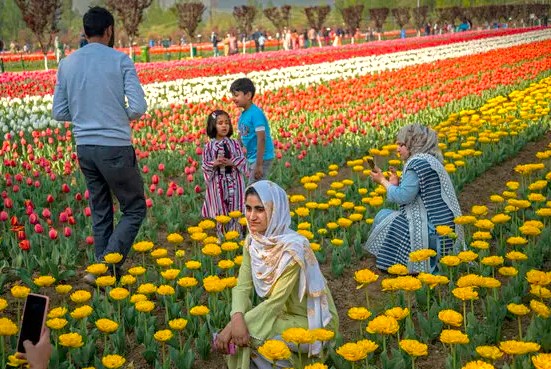
Photography at Avantiswami Temple presents numerous opportunities to capture ancient architecture dating back to the 9th century CE. The stone carvings along temple walls look different as light changes throughout the day, creating interesting pictures from various angles. Temple grounds have fallen columns and broken sculptures that look amazing with mountains in the background. The area around the temple shows beautiful streams and hills that add to the overall scene. Morning visits allow pictures with gentle light that shows the carvings clearly.
A Culinary Journey: Savor the Flavour
Here we taste authentic Kashmiri cuisine with centuries-old roots. Rogan Josh features lamb cooked with aromatic spices including Kashmiri chili, fennel, and ginger - a dish perfected during the 15th century when Persian influences merged with local methods. Preparation involves slow-cooking in earthenware, allowing full flavor development. Family recipes pass through generations with subtle variations. Alongside comes fragrant rice with whole spices and fried onions. We'll conclude with Kahwa - saffron-infused green tea with almonds, cardamom, and cinnamon served in traditional copper cups. These indigenous ingredients create flavors unique to this Himalayan region. Avantiswami Temple Srinagar Kashmir.
The Connection with the Gods
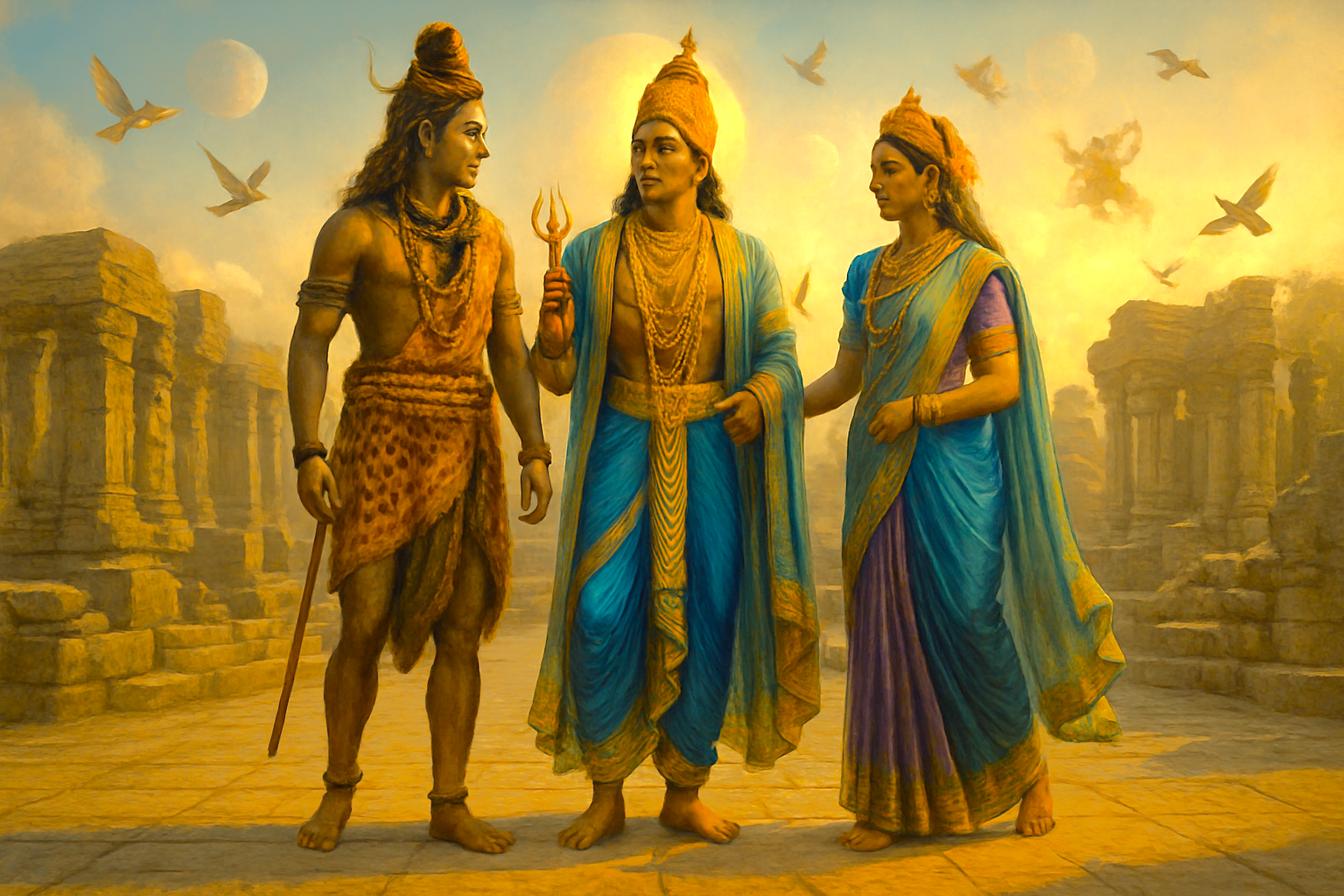
The temple honors Vishnu as Avantiswami,representing cosmic order. King Avantivarman, a devoted Vaishnavite, performed solstice rituals here according to 860 CE texts. The complex included shrines to Vishnu's consort Lakshmi, depicted together on lotus thrones. Stone panels illustrate Vishnu's avatars - Krishna lifting Mount Govardhan and Varaha rescuing Earth Goddess Bhudevi. Legend tells of an underground meditation chamber used by the king before his death in 883 CE. Queen Suryamati continued temple patronage afterward.
Ancient Technologies: Sacred Sound, Geometry & Astrological Influences
The temple incorporates geometric principles based on Vastu Purusha Mandala sacred diagrams. The main shrine follows the golden ratio (1:1.618), creating natural harmonic resonance. Limestone and iron construction enhanced acoustic properties - at certain points, our voices create reverberations matching Solfeggio frequencies of 528 Hz (transformation) and 432 Hz (harmony). The foundation aligns with celestial movements, capturing equinox light in the main shrine. Stone panels bear navagraha (nine planets) markings, suggesting astrological calculations guided design. Pillar positioning created shadow patterns tracking seasonal changes, functioning as an agricultural and religious calendar for ancient worshippers. Avantiswami Temple Srinagar Kashmir.
Serendipitous Meetings: Beyond the Main Path
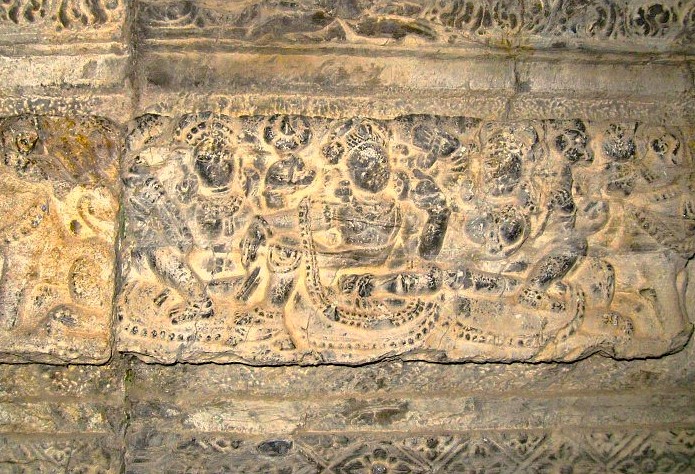
Avantiswami Temple reveals ancient architecture with intricate stone carvings dating back to the ninth century. The massive stone structure stands as a testament to skilled craftsmanship of its era. Walking through the grounds, we notice how sunlight plays across detailed reliefs that tell stories from Hindu mythology. Local artisans work nearby creating traditional handicrafts inspired by designs seen throughout the temple complex. The surrounding landscape enhances the experience with mountains framing this historical site.
Festivals of Devotion: Honouring the Sacred and the Divine
Janmashtami (August - September) brings families to the temple grounds at dawn with flowers and sweets. Sanskrit recitations by Brahmin priests echo through the ruins. During Maha Shivaratri (February - March), devotees perform three-day pujas culminating in midnight ceremonies. Kashmiri Pandits lead rituals following 10th-century traditions. The Jhelum Festival (June 5-10) honors the river goddess with floating lamps released near temple steps - a tradition mentioned in Kalhana's 12th-century Rajatarangini.
Resilience and Renewal: Overcoming Adversity's Challenges
The temple endured many challenges throughout the centuries. Following King Avantivarman's death in 883 CE, flooding damaged structures. The King allocated repair resources despite favoring Shaivism over Vaishnavism. A 1123 CE earthquake collapsed portions of the main shrine, prompting King Sussala's reconstruction efforts, completed by 1130 CE with improved seismic resilience. The harshest period came during Sultan Sikandar's rule (1389-1413), when the temple was partially dismantled. Local families secretly preserved key carved panels by burying them.
Urban Legends: Strange Sightings, Myths and Mysteries
A 12th-century legend speaks of a secret underground chamber containing royal treasures and sacred texts - though archaeological investigations found none. The "Midnight Guardian" legend describes a luminous figure walking the perimeter during full moons, first documented in 1892 reported by many witnesses since. Most intriguing are the "Moving Stones" - carved blocks reportedly changing position slightly over time, always orienting toward the sun. Dr. Anand Sharma's 1977 five-year study found small but measurable changes unexplained by settling or erosion. The foundation contains unusual magnetic properties, disrupting compass readings at specific points.
Pack Your Bags - Join Us in Experiencing the Extraordinary
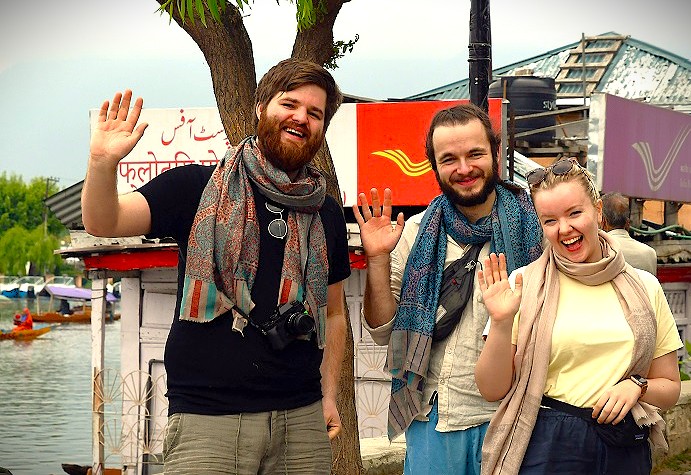
Walking pathways between weathered columns and historic shrines allows everyone to absorb the quiet atmosphere at a comfortable pace. Our guide points out interesting features and shares select information about architectural elements, without overwhelming with excessive historical facts. This relaxed creates a pleasant experience compared to rushed tours at similar historical sites. The landscape complements the stone structures with natural beauty while we take photographs and observe craftspeople working nearby with traditional techniques that connect to the temple's artistic heritage. Avantiswami Temple Srinagar Kashmir.
Symphony of Generosity: Offerings from Wanderers to Residents
The interaction between locals and admirers of Avantiswami Temple Srinagar, creates wonderful exchanges. International preservation experts have trained local craftspeople in conservation techniques, creating sustainable employment while preserving traditional skills. In return, indigenous knowledge has enhanced understanding of historical construction practices. Our purchases of locally produced handicrafts support families while encouraging younger generations to maintain ancestral crafts.
Step Inside The Story - View All Tour Itineraries & Details

We’re here to offer genuine, thoughtful guidance if your interested in travelling to India. As a small, dedicated team, we pay close attention to every detail so you can focus on enjoying the experience while we take care of the planning. We believe the best trips begin when someone truly listens to what you want and how you like to travel, so the journey feels right for you and contributes to a happy, positive group on tour. Our communication stays clear, straightforward, and respectful at every step, with the goal of helping you feel understood, supported, and confident from first contact to the end of your journey.
Click Catherine Frith - About The Founder
Click Discover Life Travel - All Tours and More
Click Why We Are Different - Unique, Safe, Transparent