Unique Insights Into The Indian Gods
Agni: The Eternal Flame of Creation
Discover Life Travel
The Primordial Spark of Creation
Born from the very fabric of the cosmos, Agni is one of the most ancient and essential of all Vedic deities. The story of Agni's origin has multiple versions, reflecting his omnipresence. He is said to have been born from the friction of two sacred sticks, from the celestial heavens as lightning, and within the waters of the primordial ocean. This triune birth establishes his presence in all three realms: heaven, earth, and the atmosphere. His primary location is the Vedi, the sacred fire altar in every home and temple, a divine landmark where he manifests to receive offerings, making him the most accessible of all gods. Agni The Eternal Flame of Creation
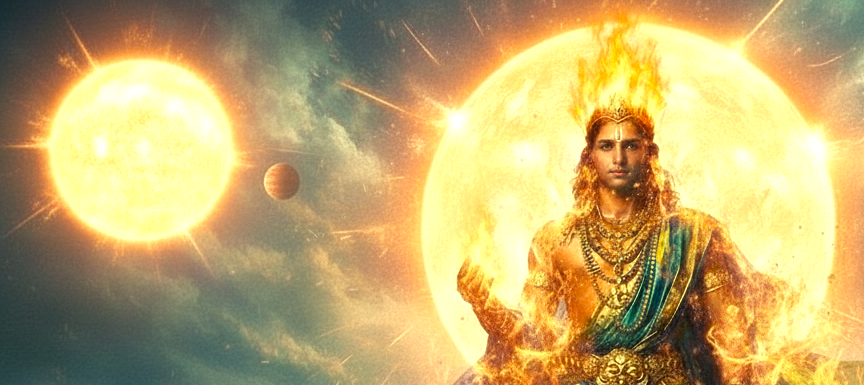
The Seven Tongues of Flame: Agni The Eternal Flame of Creation
The symbols of Agni are all potent emblems of energy, purification, and transformation. The symbolism of Agni's seven tongues of flame is profound; each tongue has a name and is used to consume different types of offerings. His two heads represent the domestic hearth fire and the sacrificial fire. His fiery, radiant form itself symbolizes light, warmth, and the destruction of darkness and impurity. The smoke from his fires represents the pathway that carries prayers and offerings to the celestial realms. The ghee or clarified butter offered to him symbolizes the pure fuel required to sustain spiritual life and knowledge.
Imagine being here - seeing where it happened!
The Family of Divine Energy

Agni's family represents his deep connection to the forces of nature and divine law. Agni and his consort Svaha is central to his role as a receiver of offerings. His wife is the daughter of Daksha. Her name is the sacred chant uttered at the end of every offering made into the fire. Without her, the gods are unable to receive the oblations. This union symbolizes that for any offering to be successful, by a sincere and complete surrender. Their children are Pavaka, Pavamana, and Shuchi - the three forms of fire: electric fire, fire from friction, and solar fire. Agni The Eternal Flame of Creation
The Hidden God's Emergence
Agni The Eternal Flame of Creation. As a primordial force, Agni’s early life is a story of manifestation and purpose. The story of Agni hiding from his divine duty is a famous Vedic tale. Initially, Agni, overwhelmed by the duty of consuming all offerings, hid from the gods in the cosmic waters. Without him, all rituals ceased, and the worlds grew dark and cold. The gods, with the help of the fish, located him. They convinced him of his vital importance, promising him a share of every sacrifice and eternal life. His emergence from hiding and acceptance of his role symbolizes the essential act of kindling the fire for any sacred endeavor to begin.
The Divine Celestial Priest
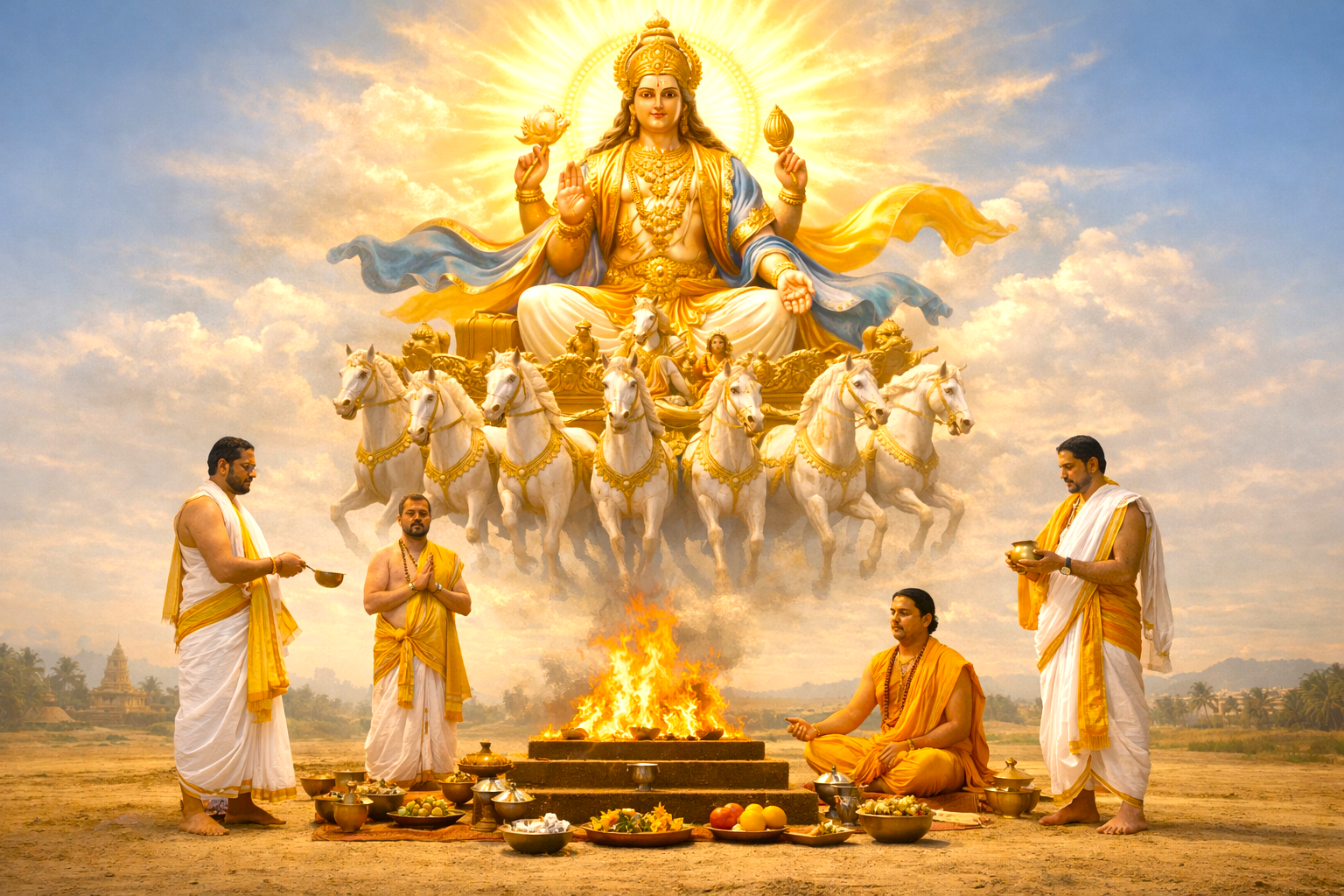
Agni holds the unique and indispensable position as the high priest of the gods. The role of Agni as the divine priest or Hotar is his most important function. In any Vedic sacrifice (yajna), two sets of priests are present: the human priests who perform the ritual on earth, and Agni, who acts as the divine priest. He is the one who sanctifies the ceremony, witnesses the offerings, and carries their essence to the other gods. He is the ultimate intermediary, the perfect link between the mortal and divine realms.
The Swift Divine Messenger
With the speed of thought, Agni bridges the gap between worlds. The role of Agni as the divine messenger of the gods makes him the celestial diplomat. Because he is present both on earth in the fire altar and in the heavens, he is the fastest and most reliable messenger. When humans make offerings and chant mantras, it is Agni who consumes the prayer and delivers its message and essence directly to the intended deity. He then returns with the blessings and boons from the gods. This function makes him a vital, two-way channel of communication, ensuring a constant and dynamic relationship between humanity and the divine. Agni The Eternal Flame of Creation
Touch the Tale: Where the Gods Walked
The Great Ram as a Vehicle
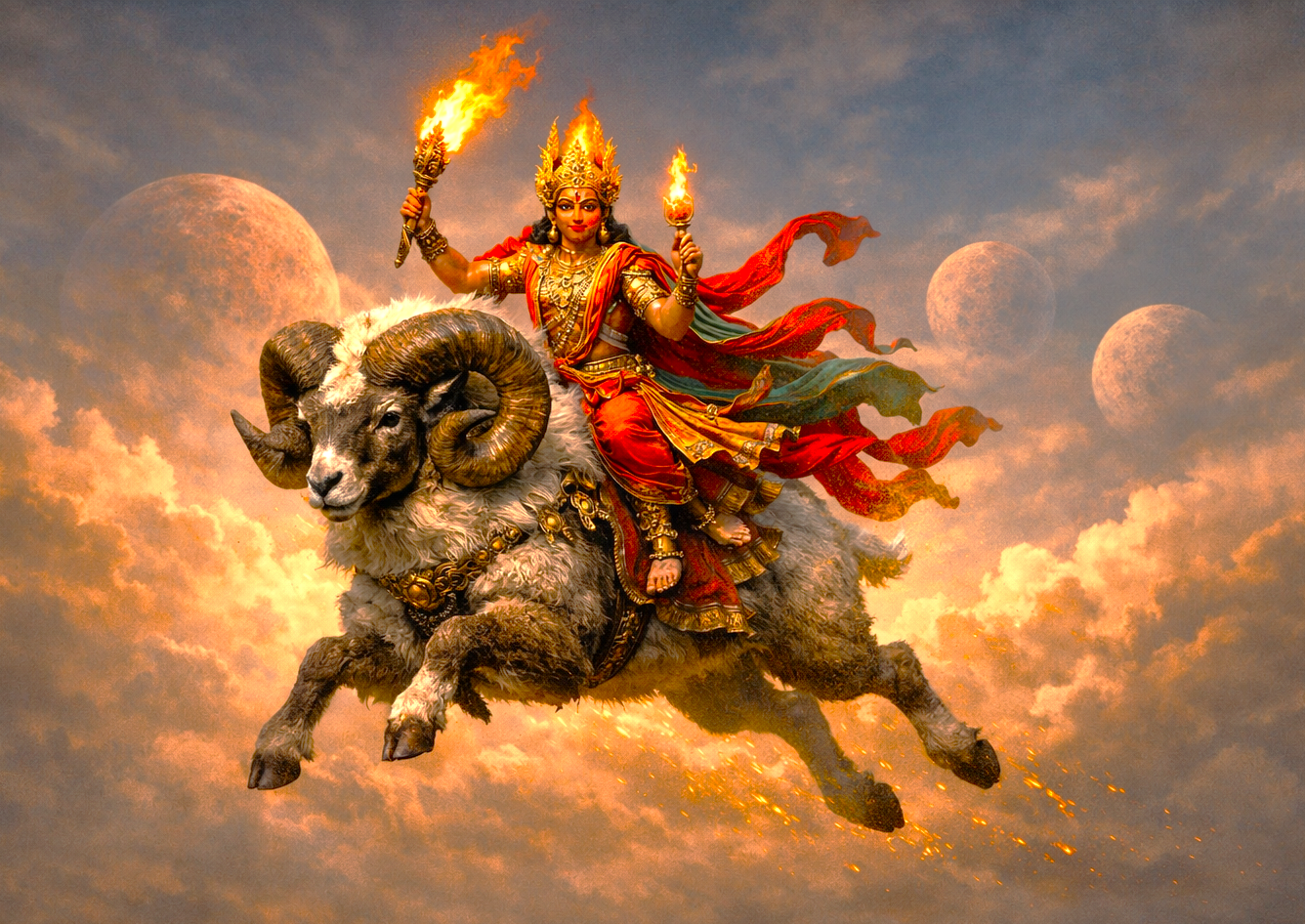
The vehicle that Agni rides is a symbol of fiery energy and sacrificial power. The symbolism of the powerful ram as Agni's vahana is deeply significant. The ram is a creature known for its aggressive, fiery nature, and strong-headed determination, perfectly mirroring the qualities of fire itself. In Vedic rituals, the ram was also a common sacrificial animal, linking the vehicle directly to Agni's primary function as the consumer of sacrifices. Riding atop the ram, Agni is a figure of immense energy, the master of the force of combustion and the sacred fire that drives all cosmic activity.
Triumph Over Darkness and Impurity
Agni's triumphs are daily victories over the forces of negativity. The victory of Agni over darkness, demons, and impurities is his eternal function. Every time a lamp is lit, it is a triumph of Agni over darkness. He is a great Rakshoghna, a slayer of demons, as his sacred light is believed to repel all evil spirits and negative influences. His greatest triumph is his power of purification. By consuming offerings, he purifies them. By witnessing vows, he sanctifies them. He is the ultimate alchemist, whose fiery touch transforms the mundane into the sacred and burns away all sin and impurity, leaving only truth and light. Agni The Eternal Flame of Creation
The Eternal Sacrificial Flame
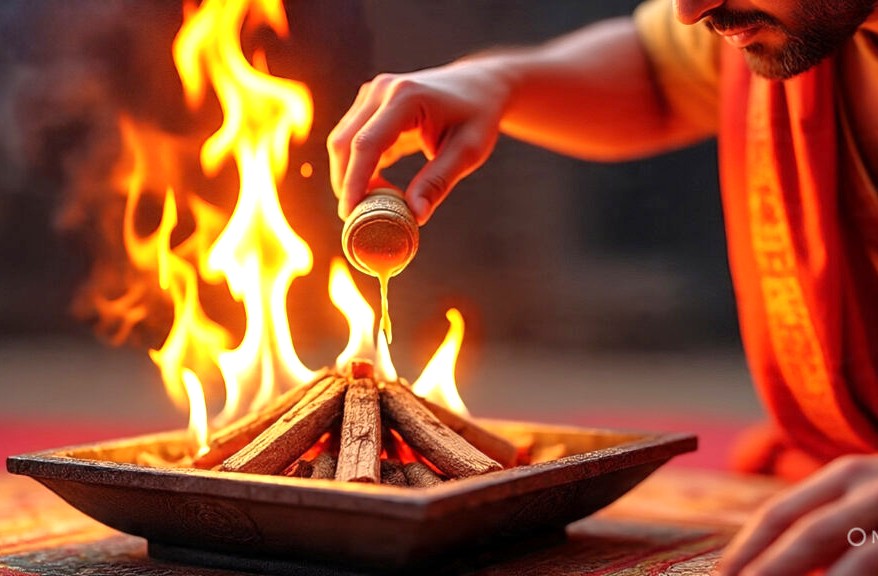
Agni is an immortal god whose existence is tied to the very laws of the cosmos. As a fundamental element, he does not experience death. The concept of Agni's immortality through the sacred fire is central to his worship. His life is renewed every single time a fire is kindled for a ritual. As long as the practice of yajna exists, Agni is reborn, ever-youthful and powerful. His marriage to Svaha is the eternal principle of offering and acceptance, a bond that is renewed with every chant. He is the divine flame that can never be extinguished, a perpetual witness to the unfolding of cosmic time.
See the ancient narratives etched into the heart of the subcontinent
A Message of Inner Illumination
The great fire god offers a brilliant message of inner transformation and a purposeful life. The empowering message from Agni for humanity is to kindle the divine fire of knowledge and passion within oneself. He teaches that just as fire always moves upwards, our aspirations should always be directed towards higher consciousness. He is the fire of digestion that transforms food into energy, and the fire of intellect that digests knowledge into wisdom. He encourages us to live a life of brightness and clarity, to burn away our own impurities through self-discipline (tapas), and to be a source of light and warmth for the world.
The Solar Plexus and Golden Ray
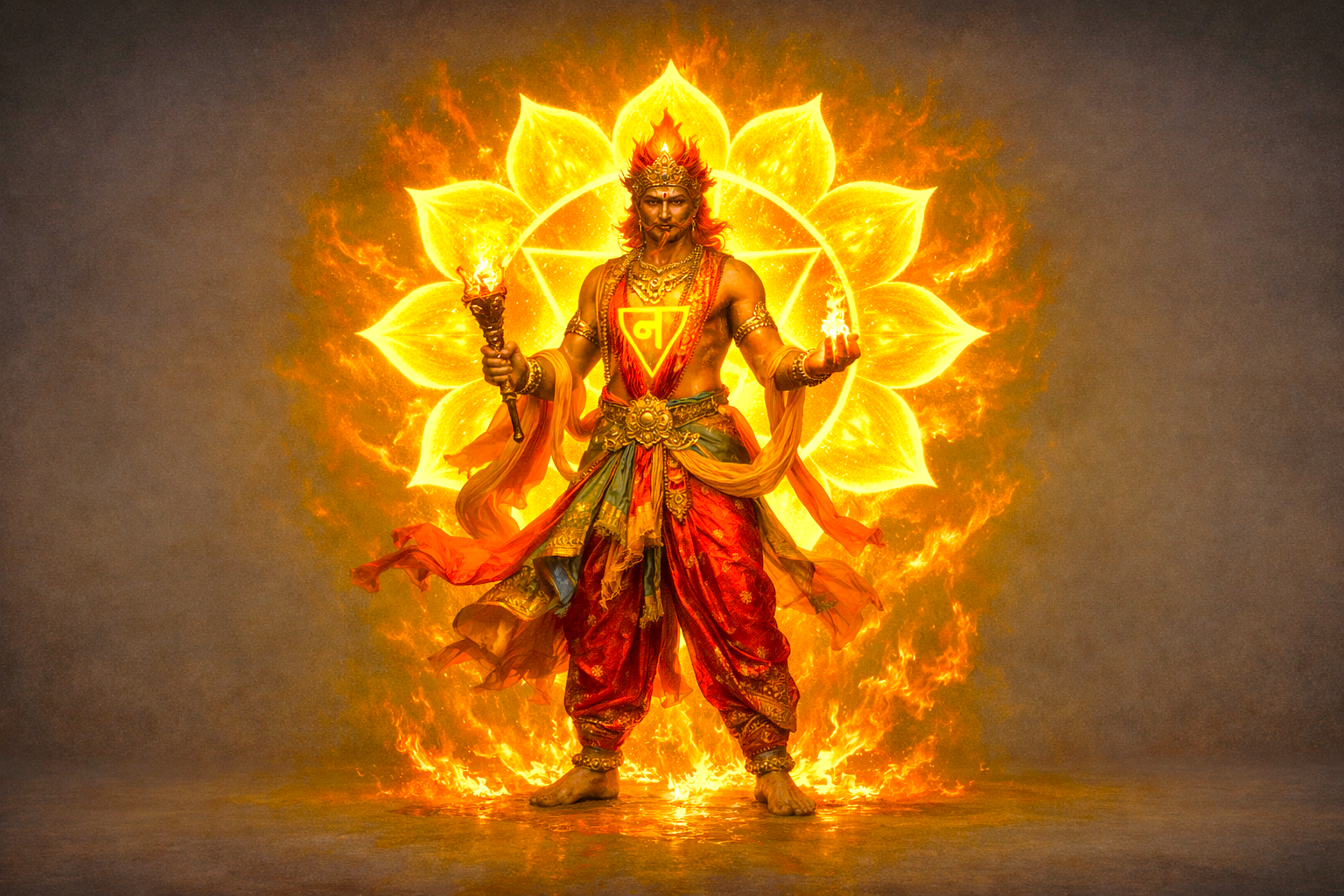
Agni is the pure embodiment of transformative and digestive energy. He is powerfully connected to the Manipura (Solar Plexus) Chakra, the body's fire center. This chakra governs digestion, metabolism, willpower, and personal identity. The key frequency that Agni embodies is that of Tejas, the radiant energy of fire and light that brings about transformation. His aura blazes with a brilliant golden-orange ray of purification and intelligence. Meditating on Agni helps to strengthen one's digestive fire, boost willpower and confidence. Agni The Eternal Flame of Creation
The Blazing Spear of Light
Agni's weapon is a direct extension of his fiery and piercing nature. The symbolism of the divine flaming spear held by Agni represents his power to penetrate darkness and ignorance. This spear is a missile of pure light and heat, a weapon that unerringly strikes its target. It symbolizes the focused power of the intellect, a sharp and piercing wisdom that can cut through delusion. Unlike other celestial weapons that are gifted, Agni's spear is his own essence, a concentrated form of his purifying and illuminating power, used to destroy negativity and light the path of truth for gods and mortals alike.
Echoes of the Ancients: Feel the energy of the sites that inspired a thousand legends
The Sun, Mars, and Fire's Geometry
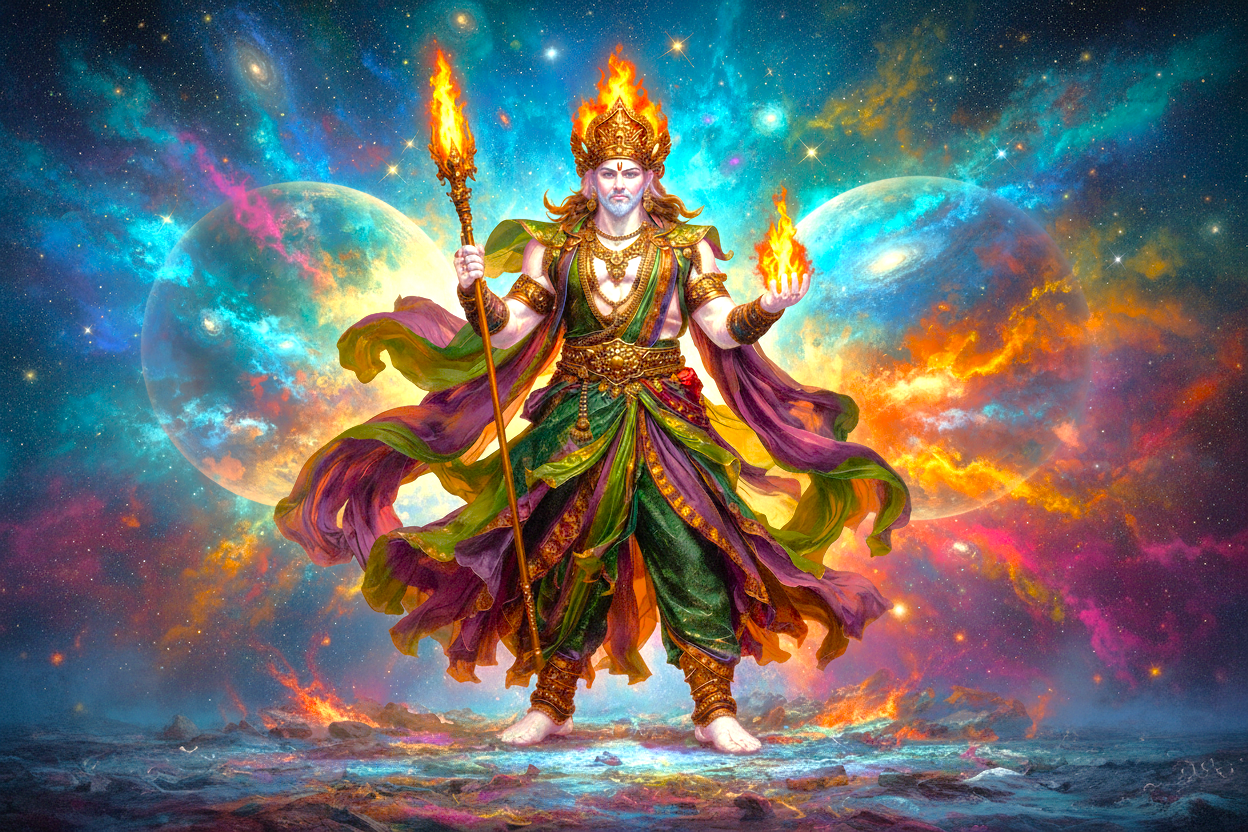
Agni's fiery nature is reflected in the most powerful and energetic of celestial bodies. The astrological planets associated with Agni are the Sun and Mars. The Sun represents the soul, light, and vitality, while Mars governs energy, combustion, and action. The zodiac sign of Aries, a fire sign ruled by Mars, is also deeply connected to his energy. The sacred geometry that perfectly represents Agni is the upward-pointing triangle, the ancient symbol for the element of Fire. Agni The Eternal Flame of Creation
The Eternal Witness to Vows
One of Agni's most critical social and spiritual roles is that of the divine witness. In the Hindu wedding ceremony, the role of Agni as the chief witness is non-negotiable. The bride and groom take their sacred vows of lifelong partnership while circumambulating the sacred fire (Agni Pradakshina). Agni is the divine witness to these vows, and his presence sanctifies the union, making it a sacred and unbreakable bond. This role extends to all solemn oaths and promises; any vow made in the presence of fire is considered to be made directly to a divine authority, ensuring its sanctity and binding nature.
Click Why we are different
The Three Forms of Sacred Fire
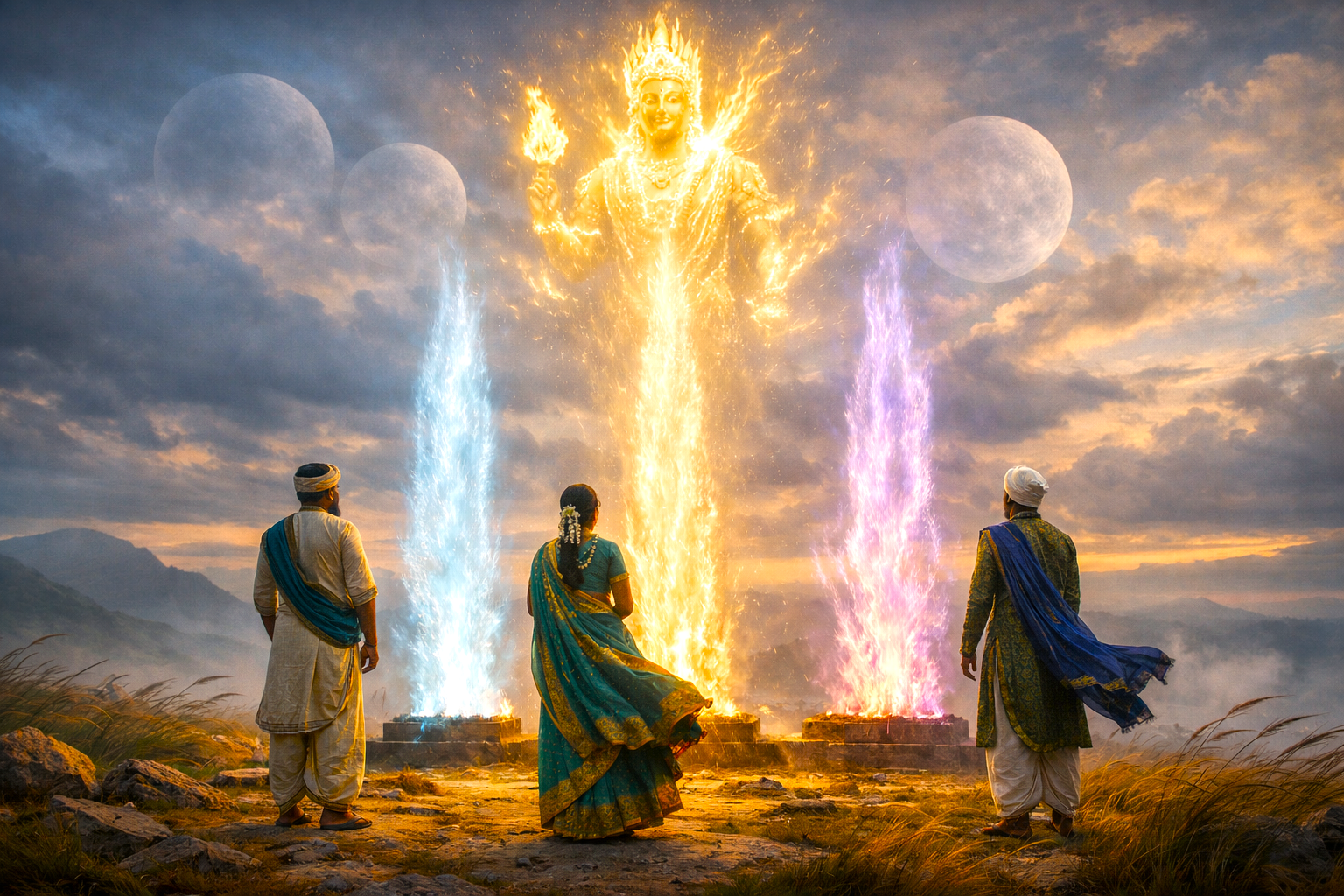
In the Vedic tradition, Agni is worshipped in three primary forms for ritual purposes. The meaning of the three sacred fires of a Vedic household is fundamental to ritual life. These are the Garhapatya (the household fire, located in the west of the altar), which is kept perpetually burning and from which the other fires are kindled; the Ahavaniya (the offering fire, in the east), into which oblations to the gods are poured; and the Dakshinagni (the southern fire), used for offerings to the ancestors. Maintaining these three fires was the sacred duty of a householder, ensuring the well-being of the family, gods, and ancestors.
A Devotee's Experience of Warmth
Miracles of Agni are often experienced as sudden, inexplicable warmth or light. A modern experience of Agni's grace in the Himalayas is shared among trekkers. A small group was caught in a sudden, unseasonal blizzard high in the mountains. Their fire was extinguished, their gear was soaked, and they were slowly freezing. Huddled together in the dark, they began to chant the Gayatri mantra, a prayer to the solar deity. Suddenly, one of them felt a wave of intense heat spread through his body, and then to the others. This inner fire sustained them through the night until the storm passed, a miracle they attribute to the grace of Agni protecting them. Agni The Eternal Flame of Creation
India - Are You Ready? Discover Life Travel - giving back to India, touring with purpose
The Mouth of the Gods
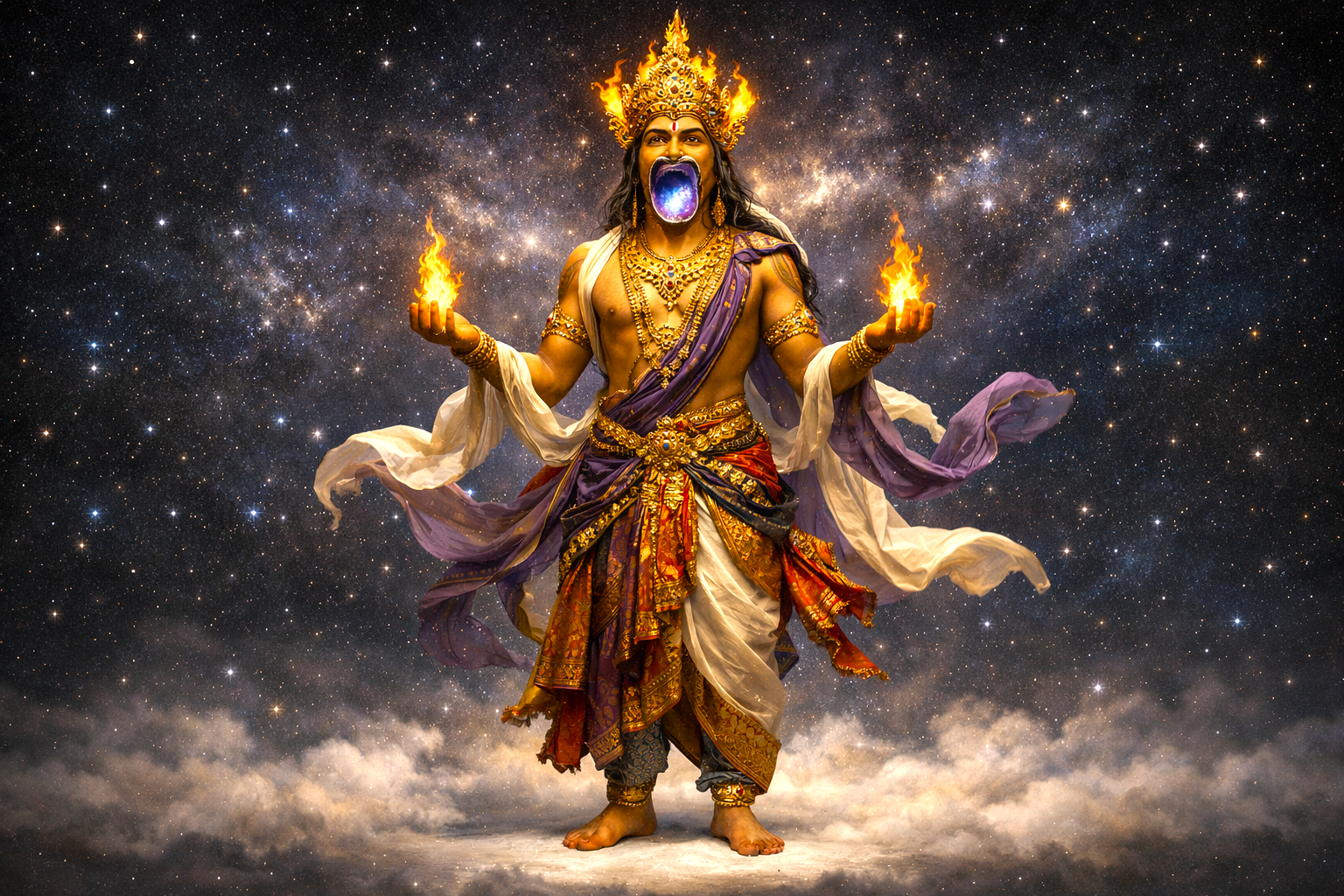
A powerful way to understand Agni is to see him as the sensory organ of the divine. The concept of Agni as the mouth of the gods is a vivid and accurate description of his function. Just as we use our mouths to eat and speak, the gods use Agni as their collective mouth. He "eats" the offerings on their behalf, tasting and metabolizing their essence for all the celestials to share. He also "speaks" for them; the crackling of the sacred fire is often interpreted by priests as a form of divine communication. This makes him the essential point of contact, the literal interface between the human and the divine. Agni The Eternal Flame of Creation.
The Bhrigu Curses the Fire God
A famous story explains why Agni consumes all things, pure and impure alike. The story of the sage Bhrigu's curse upon Agni is a pivotal moment. Bhrigu's wife was abducted, and when he asked Agni if he had seen her, Agni, bound to tell the truth, revealed her location, leading to a tragic outcome. Enraged, Bhrigu cursed Agni to become an "all-devourer," forced to consume everything he touched, including unclean and impure things. A horrified Agni explained he was only following the dharma of truth. Brahma then modified the curse, declaring that just as the sun purifies all it touches, Agni's flames would render everything they consumed pure.
Discover the sacred geography where the great epics unfolded
The Purifier of Goddess Sita
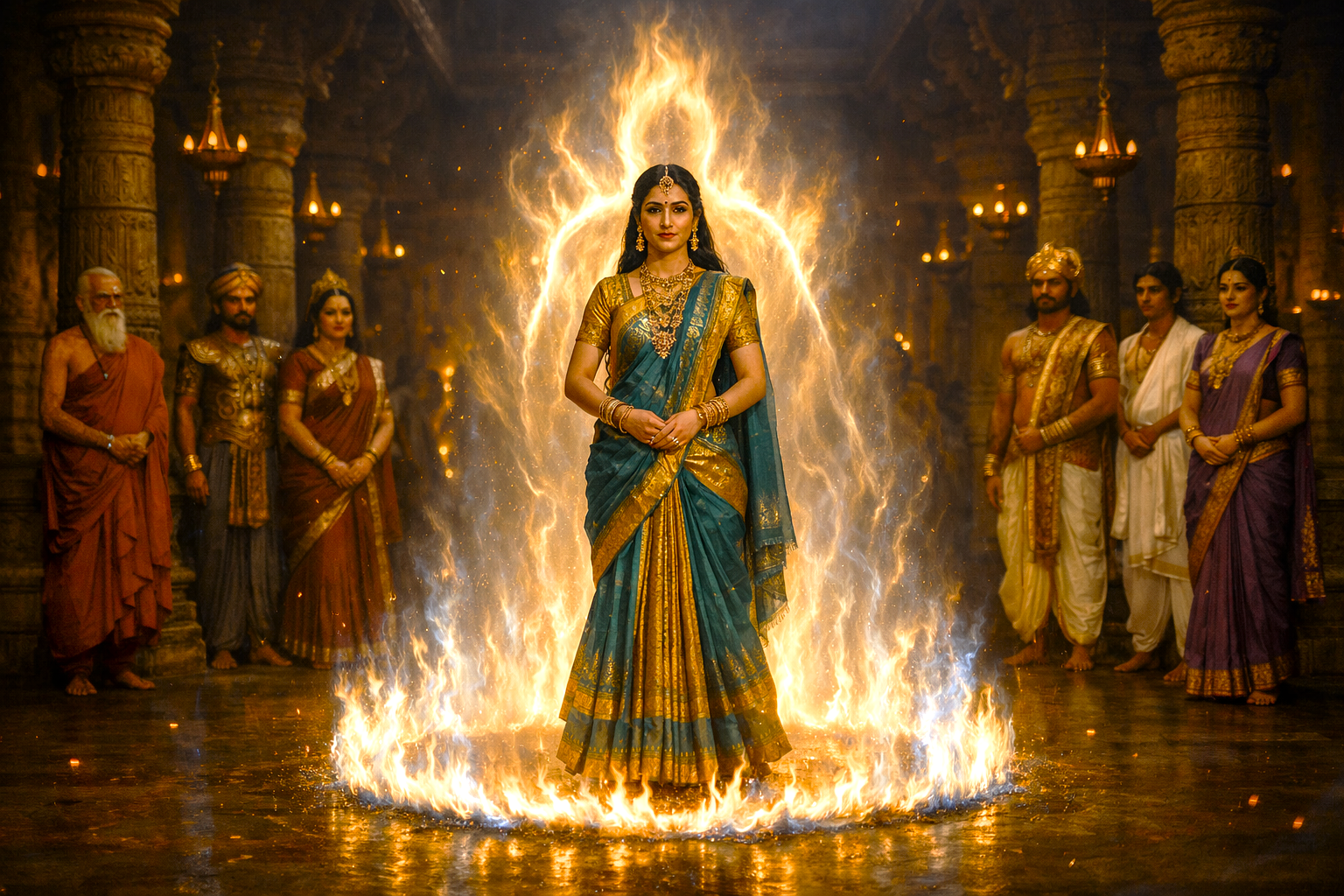
Agni played a crucial role in one of the most dramatic moments of the Ramayana. The role of Agni in Sita's trial by fire (Agni Pariksha) was that of the ultimate verifier of truth. After Sita was rescued from Lanka, Rama asked her to prove her purity. Sita, with unwavering faith, entered a blazing pyre. Instead of being harmed, she was protected by the fire. Then, Agni himself rose from the flames, carrying the unharmed Sita in his arms. He presented her to Rama and the assembled armies, personally and divinely testifying to her absolute purity and chastity.
Step Inside The Story - View All Tour Itineraries & Details

We’re here to offer genuine, thoughtful guidance if your interested in travelling to India. As a small, dedicated team, we pay close attention to every detail so you can focus on enjoying the experience while we take care of the planning. We believe the best trips begin when someone truly listens to what you want and how you like to travel, so the journey feels right for you and contributes to a happy, positive group on tour. Our communication stays clear, straightforward, and respectful at every step, with the goal of helping you feel understood, supported, and confident from first contact to the end of your journey.
Click Catherine Frith - About The Founder
Click Discover Life Travel - All tours and more
Click Why We Are Different - Unique, Safe, Transparent